
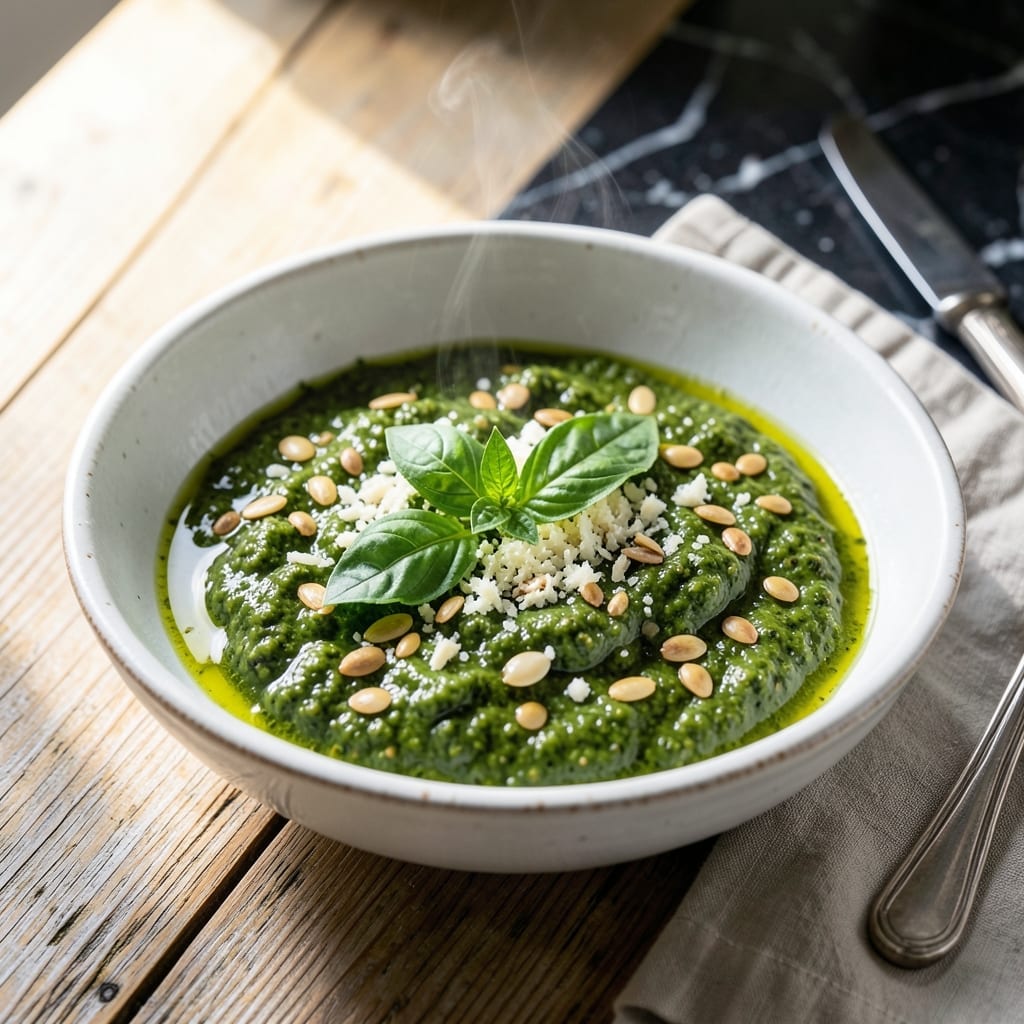
This nut-free pesto delivers the same vibrant basil flavor you love, with a creamy texture that clings perfectly to pasta or spreads smoothly on sandwiches.
The secret is using seeds instead of nuts—sunflower seeds provide the perfect buttery richness while keeping the sauce smooth and allergy-friendly. A touch of parmesan and garlic rounds out the classic profile.
You’ll get a bright green sauce that’s ready in 10 minutes with just a blender or food processor. The flavors meld beautifully, with fresh basil shining through in every bite.
Store in an airtight container in the refrigerator for up to 5 days, or freeze in ice cube trays for future use. This version proves pesto doesn’t need nuts to be restaurant-quality.
Ingredients for Pesto Sauce Recipe No Nuts
Eight simple ingredients transform into creamy, vibrant pesto without a single nut.
| Ingredient | Amount | Notes |
|---|---|---|
| Fresh Basil Leaves 🌿 | 2 cups | Packed, stems removed |
| Sunflower Seeds 🌻 | ½ cup | Raw, unsalted for best texture |
| Parmesan Cheese 🧀 | ½ cup | Freshly grated for smoothness |
| Garlic Cloves 🧄 | 2 cloves | Peeled, roughly chopped |
| Extra-Virgin Olive Oil 🫒 | ¾ cup | High quality for richness |
| Lemon Juice 🍋 | 1 tbsp | Freshly squeezed for brightness |
| Salt 🧂 | ½ tsp | Sea salt preferred |
| Black Pepper 🌶️ | ¼ tsp | Freshly ground |
The basil is non-negotiable here—farmers market bunches have more aroma than grocery store clamshells. Sunflower seeds are the magic swap for nuts; Trader Joe’s and Whole Foods carry them in bulk bins (cheaper and fresher). For the Parmesan, a wedge of Parmigiano-Reggiano grated at home tastes infinitely better than pre-shredded. The olive oil? Use something you’d happily drizzle on bread.
Short on basil? Stretch it with fresh parsley (up to half and half). No sunflower seeds? Pumpkin seeds work great too—same buttery crunch. Out of Parmesan? Pecorino Romano adds more punch. The lemon juice can be bottled in a pinch, but fresh makes the flavors pop. Don’t skip the salt—it wakes up all the other ingredients.
This keeps 5 days in the fridge with a thin oil layer on top to prevent browning. Freeze in ice cube trays for 3 months—perfect for quick pasta nights. That bright green color fades over time, but the flavor stays just as good.
Why You’ll Love This Recipe
- No Food Processor Needed: I just toss everything in the blender—sunflower seeds, basil, the works—and it’s done in seconds.
- Rich and Nutty: The sunflower seeds give it this deep, toasty flavor that’s even better than pine nuts.
- Pasta Night Hero: I drizzle it over hot pasta, stir, and dinner’s ready before the water even boils.
- Stays Fresh for Days: Honestly, it keeps in the fridge for a week, so I make a big batch and use it all week long.
Step-by-Step Instructions for Pesto Sauce
Here’s the method. Simple, straightforward, and it works every time.
Step 1: Toast the Sunflower Seeds
Heat a dry skillet over medium heat. Add the 0.5 cup Sunflower Seeds and toast for 3-4 minutes, stirring frequently, until they turn light golden brown and release a nutty aroma.
Keep a close eye on them—sunflower seeds can go from perfectly toasted to burnt in seconds. Removing them from the heat as soon as they’re golden ensures they add a rich, toasty depth without bitterness. Transfer them to a plate to cool completely.
Step 2: Blend the Basil and Aromatics
In a food processor, combine the 2 cups Fresh Basil Leaves, 2 cloves Garlic Cloves, 0.5 tsp Salt, and 0.25 tsp Black Pepper. Pulse in short bursts until the mixture is finely chopped but not pureed—you want to see flecks of basil.
This step is all about control. Over-processing turns the basil bitter and muddy. I like to scrape down the sides of the bowl between pulses to ensure even chopping. The garlic should be fully incorporated, and the basil should look vibrant green, not dark or mushy.
Step 3: Incorporate Cheese and Sunflower Seeds
Add the cooled 0.5 cup Sunflower Seeds and 0.5 cup Parmesan Cheese to the food processor. Pulse again until the mixture is uniform and the seeds are finely ground. The texture should resemble coarse sand.
The Parmesan adds a salty, umami kick, while the sunflower seeds bring a subtle crunch and nuttiness without overpowering the basil. If the mixture looks too dry or clumps together, it means the seeds released their oils—just pulse a few more times to redistribute.
Step 4: Emulsify with Olive Oil and Lemon Juice
With the food processor running, slowly drizzle in the 0.75 cup Extra-Virgin Olive Oil through the feed tube. This slow addition is key to creating a creamy, emulsified sauce rather than a separated, oily mess.
Once the oil is incorporated, add the 1 tbsp Lemon Juice and pulse for 5-10 seconds to combine. The lemon brightens the flavors and balances the richness of the oil and cheese. Taste and adjust seasoning if needed, though the salt from the Parmesan usually does the trick.
Your pesto should be thick but pourable, with a glossy sheen and a vibrant green color. If it’s too thick, add a splash of water or more olive oil, 1 tablespoon at a time, until it reaches your desired consistency.
Pro Tips For Making Pesto Sauce Recipe No Nuts
- Toast the Seeds: Lightly toast the sunflower seeds in a dry pan for 2-3 minutes until fragrant—I learned this the hard way after tasting flat pesto from raw seeds.
- Blanch the Basil: Drop basil leaves in boiling water for 10 seconds, then shock in ice water. Sounds weird, but it keeps your pesto bright green instead of brown.
- Skip the Blender: Use a food processor or mortar and pestle instead—a blender overheats the oil and turns your pesto bitter.
- Grate Fresh Parm: Pre-grated parmesan has anti-caking agents that make your pesto grainy. I was skeptical until I tried fresh-grated and noticed the difference.
Pro Cooking Tips for Perfect Results
Seed Selection
I always use raw, unsalted sunflower seeds for their mild, buttery flavor. Toast them to light golden brown for maximum nuttiness without bitterness. 3-4 minutes in a dry skillet is perfect. 🔥
Basil Handling
Pack your 2 cups basil tightly for the best flavor. Wash and dry thoroughly first—excess water makes the sauce watery. Pulse in short bursts to avoid over-processing, which turns basil bitter.
Oil Emulsification
Drizzle 0.75 cup olive oil slowly while the processor runs. This creates a creamy, stable emulsion. Use high-quality oil—it’s the backbone of your sauce.
Consistency Control
If your pesto is too thick, add water 1 tbsp at a time. For thinner sauce, use 1 extra tbsp olive oil. The ideal texture clings to pasta but still drizzles.
I prefer mine slightly thicker for spreading on sandwiches. ✨
Flavor Balancing
Taste before finalizing. The 1 tbsp lemon juice brightens the richness. If needed, add ¼ tsp salt or a pinch more pepper to taste.
Nutrition Facts
Frequently Asked Questions
Can I use other seeds instead of sunflower?
Pumpkin seeds work wonderfully with their slightly earthy taste. Pepitas (hulless pumpkin seeds) blend especially smooth. Toast them the same way for best flavor.
What if my pesto turns brown?
Browning happens when basil oxidizes. Press plastic wrap directly on the surface before storing. This blocks air and keeps it vibrant green for 3-4 days.
Is this suitable for nut allergies?
Yes! Made in a nut-free facility with sunflower seeds, it’s safe for most nut allergies. Always check seed packaging for cross-contamination warnings to be sure.

- Potato Candy Recipe 1933: Vintage Peanut Butter Roll Delight - October 30, 2026
- Potato Chip Cookie Recipe With Pecans: Buttery Crunch Meets Nutty Richness - October 30, 2026
- Potato Patty Recipe No Egg: Crispy Edges Without the Binder - October 30, 2026