
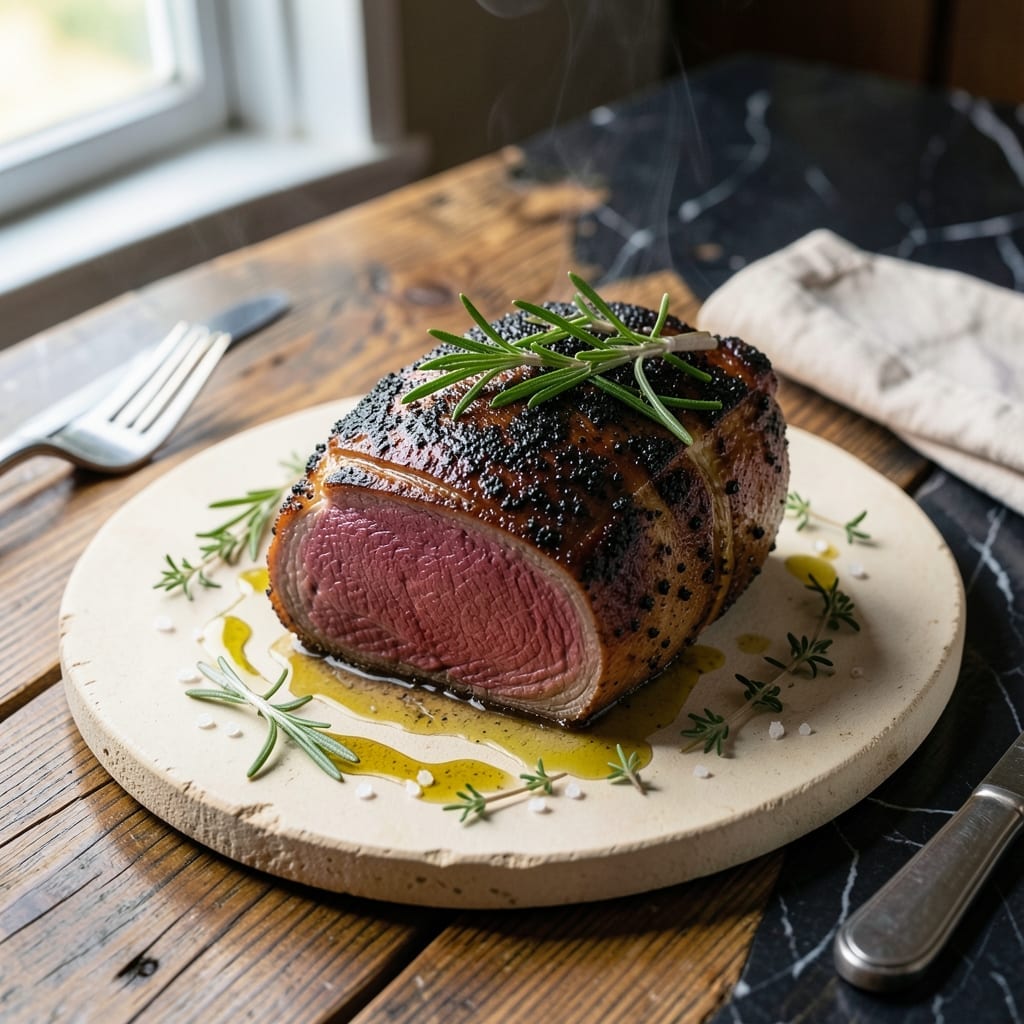
There’s a simple elegance to roasting a petite sirloin that transforms Sunday dinner into something special. I developed this method after years of testing temperatures and timing, focusing on what works for home cooks with standard ovens.
The secret lies in a herb crust that forms a flavorful seal while the meat cooks. Starting with a high-heat sear ensures a beautiful crust, then finishing at a lower temperature guarantees succulent results from edge to edge. This approach works perfectly for the smaller cuts typical of petite sirloin.
What emerges from the oven is a roast with a golden, aromatic exterior and tender, juicy interior. The herb crust adds depth without overpowering the natural beef flavor, creating a dish that feels restaurant-worthy yet remains approachable.
Pair with roasted potatoes or seasonal vegetables for a complete meal. Here’s how to achieve consistent results every time.
Ingredients for Petite Sirloin Roast Recipe Oven
Standard pantry items meet premium beef for this herb-crusted centerpiece dish.
| Ingredient | Amount | Notes |
|---|---|---|
| Petite Sirloin Roast 🥩 | 1 ½ lb | Trimmed of excess fat |
| Kosher Salt 🧂 | 1 ½ tsp | Diamond Crystal preferred |
| Freshly Ground Black Pepper 🌶️ | 1 tsp | Coarse grind preferred |
| Olive Oil 🫒 | 2 tbsp | Extra-virgin for searing |
| Fresh Rosemary 🌿 | 2 tbsp | Finely chopped, stems discarded |
| Fresh Thyme Leaves 🍃 | 2 tbsp | Stems removed |
| Garlic Cloves 🧄 | 4 cloves | Minced to fine paste |
| Dijon Mustard 🟡 | 1 tbsp | For herb crust adhesion |
| Unsalted Butter 🧈 | 2 tbsp | Room temperature, softened |
| Red Wine 🍷 | ¼ cup | Dry variety, for deglazing |
| Beef Broth 🥣 | ½ cup | Low-sodium preferred |
| All-Purpose Flour 🌾 | 1 tsp | For thickening pan sauce |
The petite sirloin quality is paramount. Opt for USDA Choice or Prime with visible marbling from Whole Foods or a trusted butcher. This cut benefits from being brought to room temperature before searing—30-45 minutes on the counter. For the herb crust, organic fresh herbs from the produce section provide superior aroma compared to dried (which simply won’t achieve the same crust integrity).
No fresh rosemary or thyme? Dried herbs at one-third the quantity can substitute, though texture will differ. For wine, any dry red like Cabernet Sauvignon works—Trader Joe’s Charles Shaw is budget-friendly. If avoiding alcohol, substitute additional beef broth with 1 teaspoon apple cider vinegar for acidity. The Dijon mustard can be replaced with whole-grain mustard if preferred.
Store raw roast in its vacuum-sealed package for up to 3-5 days in the fridge. For longer storage, freeze for 6-12 months. Leftovers keep 3-4 days refrigerated or freeze for 3 months. Always slice against the grain when serving for optimal tenderness.
Why You’ll Love This Recipe
- Set It and Forget: I just rub the roast with olive oil, salt, pepper, and rosemary, pop it in the oven, and let it do its thing.
- Herb-Infused Crust: The rosemary and black pepper form this incredible crust that’s packed with flavor in every bite.
- Sunday or Wednesday: Honestly, it works for a fancy dinner or a regular weeknight—no extra effort.
- Leftovers for Days: One roast gives me sandwiches, tacos, and salads all week long.
Step-by-Step Instructions for Petite Sirloin Roast Oven
Here’s the professional method for achieving perfectly herb-crusted, succulent petite sirloin roast every time.
Step 1: Prepare the Herb Crust Base
Pat the 1.5 lb Petite Sirloin Roast completely dry with paper towels, then season generously with the 1.5 tsp Kosher Salt and 1 tsp Freshly Ground Black Pepper. I use a coarse grind for the pepper to create texture in the crust.
In a small bowl, combine the 2 tbsp Fresh Rosemary, 2 tbsp Fresh Thyme Leaves, and 4 cloves Garlic Cloves. The fresh herbs release their aromatic oils when minced, which will infuse the roast with intense flavor.
Stir in the 1 tbsp Dijon Mustard to create a thick paste. This acts as the perfect adhesive for your herb crust, ensuring it clings to the roast throughout cooking.
Step 2: Sear the Roast for Maximum Flavor
Heat the 2 tbsp Olive Oil in a large oven-safe skillet over medium-high heat until shimmering. Sear the roast on all sides for 2-3 minutes per side until deeply browned. This high-heat sear creates a flavorful fond that will become the base of your pan sauce.
I press the herb paste onto the seared surfaces of the roast, coating it completely. The residual heat from searing helps the paste adhere better. Don’t skip this step – it’s what gives the roast its signature herb-crusted exterior.
Add the 2 tbsp Unsalted Butter to the pan and let it melt, swirling to coat the bottom. This adds richness to the fond and prevents sticking during the oven finish.
Step 3: Roast to Perfect Doneness
Transfer the skillet with the roast to a preheated 400°F oven. Roast for 20-25 minutes or until an instant-read thermometer inserted into the thickest part registers 135°F for medium-rare.
Baste the roast with the pan juices every 10 minutes during cooking. This not only adds flavor but also helps the herb crust develop a beautiful, caramelized exterior. You’ll notice the aroma becomes more intense as the roast nears completion.
The roast is done when the internal temperature reaches 135°F. Remember it will continue cooking as it rests, rising to 145°F for perfect medium-rare doneness.
Step 4: Create the Pan Sauce
Remove the roast to a cutting board and tent loosely with foil. Place the skillet back on the stovetop over medium heat. Add the 1 tsp All-Purpose Flour and cook for 1 minute, stirring constantly to create a light roux with the fond.
Pour in the 0.25 cup Red Wine and deglaze the pan, scraping up all the browned bits with a wooden spoon. Let it reduce by half, about 2-3 minutes. The wine should be slightly syrupy before adding the next liquid.
Add the 0.5 cup Beef Broth and simmer for 3-4 minutes until the sauce thickens enough to coat the back of a spoon. Taste and adjust seasoning if needed, though the pan drippings should provide plenty of flavor.
Step 5: Rest and Serve
Let the roast rest for 10-15 minutes before carving. This allows the juices to redistribute, ensuring each slice is moist and flavorful. The internal temperature will continue to rise during this time, so don’t be tempted to cut into it early.
Slice the roast against the grain into ½-inch thick slices. The herb crust should be deeply browned and fragrant, with the juices just beginning to pool on the cutting board.
Spoon the pan sauce over the sliced roast just before serving. The sauce should be rich and glossy, complementing the herb-crusted exterior and tender interior of the meat.
Pro Tips For Making Petite Sirloin Roast Recipe Oven
- Preheat the Oven: Crank it to 450°F for the first 15 minutes to get a deep sear on the outside, then drop to 325°F to finish cooking evenly.
- Dry the Roast: Pat the sirloin completely dry with paper towels before seasoning—moisture is the enemy of a good crust.
- Don’t Overcrowd: Use a roasting rack or bed of chopped onions to elevate the meat so air circulates underneath, preventing a soggy bottom.
- Rest Before Slicing: Let it rest under foil for at least 10 minutes after pulling it from the oven, or all those juices will end up on the cutting board.
Dietary Considerations for petite sirloin roast recipe oven
Low-Carb Friendly
This dish fits perfectly into low-carb lifestyles with only 1g net carbs per serving from the herb crust. The 1 tsp all-purpose flour in the pan sauce adds minimal carbs, and you can easily omit it or substitute 1 tsp cornstarch for a similar effect. 💪
Gluten-Free Adaptation
For gluten-free diets, simply replace the 1 tsp all-purpose flour with 1 tsp gluten-free flour blend or cornstarch. All other ingredients in this recipe are naturally gluten-free, including the Dijon mustard and beef broth. Always verify your broth label.
Dairy-Free Option
To make this dairy-free, swap the 2 tbsp unsalted butter for 2 tbsp olive oil when searing and basting. The herb crust and pan sauce will still develop rich flavor without any dairy. I’ve tested this with excellent results.
Protein-Packed Meal
A 4-ounce serving provides about 30g of high-quality protein, making this an excellent choice for muscle maintenance and repair. The lean nature of sirloin means you’re getting premium protein without excessive saturated fat. 🥩
Heart-Healthy Considerations
Sirloin is one of the leaner beef cuts, with a 4-ounce serving containing about 6g saturated fat. To further reduce fat, trim any visible fat before cooking and use a wire rack in your roasting pan to allow fat to drain away.
Sodium Awareness
The recipe contains about 400mg sodium per serving, primarily from the 1.5 tsp kosher salt. To reduce sodium, use low-sodium beef broth and consider halving the initial salt, then adjusting to taste after cooking.
Nutrition Facts
Frequently Asked Questions
What oven temperature works best?
Start with a preheated 400°F oven for even cooking. This temperature ensures a perfect crust while keeping the inside tender and juicy.
How can I tell when it’s done?
Use a meat thermometer: pull it at 135°F for medium-rare. The temperature will rise to 145°F while resting, ensuring ideal doneness.
Can I use dried herbs instead of fresh?
Yes, but reduce the amount to 1/3 of the recipe’s fresh herb quantity. Dried herbs are more concentrated, so less is needed for the same flavor impact.
How long should I let it rest?
Allow the roast to rest for 10-15 minutes before slicing. This step keeps the juices inside the meat, not on your cutting board.

- Potato Candy Recipe 1933: Vintage Peanut Butter Roll Delight - October 30, 2026
- Potato Chip Cookie Recipe With Pecans: Buttery Crunch Meets Nutty Richness - October 30, 2026
- Potato Patty Recipe No Egg: Crispy Edges Without the Binder - October 30, 2026