
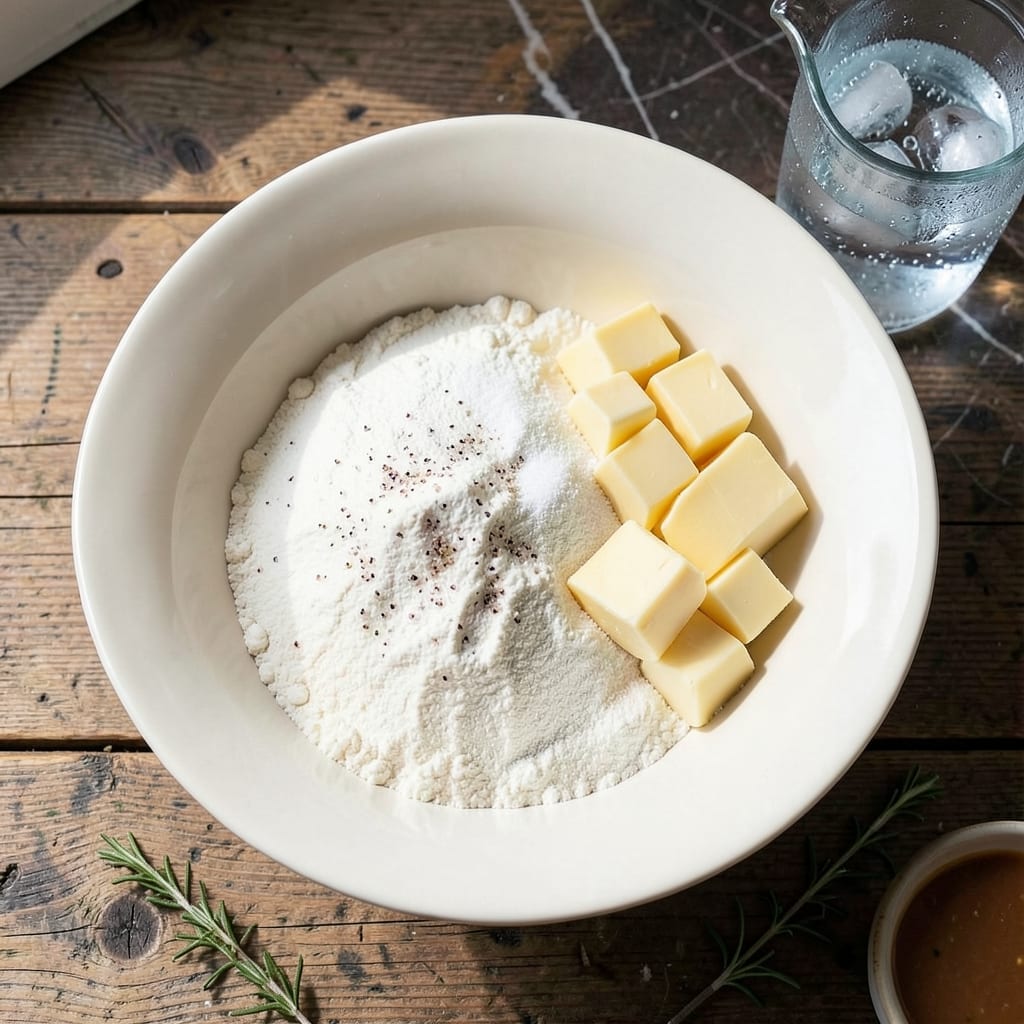
I’ve spent years refining this pie crust to deliver flaky, golden layers without fail. The secret lies in precise measurements by weight, ensuring consistency every time you bake.
Using cold butter and minimal handling prevents tough spots while creating those sought-after layers. The dough comes together quickly, then rests to relax the gluten for effortless rolling.
What emerges from the oven is a crust with perfectly crisp edges and a tender, airy interior. It holds its shape beautifully, whether for pies, tarts, or galettes.
This method removes the guesswork, giving you professional results with a foolproof technique. No more shrinking, cracking, or dense crusts.
Ingredients for Pie Crust Recipe by Weight
Seven ingredients, one perfect crust. Weight ensures flaky layers every bake.
| Ingredient | Amount | Notes |
|---|---|---|
| All-Purpose Flour 🌾 | 2 ½ cups | Weighed for precision, 300g total |
| Unsalted Butter 🧈 | 1 cup | Cold, cubed into 1/2-inch pieces |
| Ice Water 💧 | ½ cup | Plus 1 tbsp as needed |
| Fine Sea Salt 🧂 | 1 tsp | Diamond Crystal preferred |
| Granulated Sugar 🍚 | 1 tbsp | Optional for sweet crusts |
| Distilled White Vinegar 🧪 | 1 tsp | Prevents gluten overdevelopment |
| Vodka 🍸 | 2 tbsp | Optional for extra flakiness |
The flour must be weighed—300g total is the magic number. King Arthur or Gold Medal all-purpose both work beautifully. Butter needs to stay cold (straight from the fridge), and European-style butter (higher fat content) gives you even flakier results. I grab mine from Whole Foods when I want the good stuff, but any store-brand unsalted works fine for everyday baking.
No scale? Spoon and level your flour cups carefully—compacting packs in too much. Swap vodka for more ice water if you don’t have any (the alcohol evaporates during baking, creating air pockets). For a sweeter crust, bump the sugar to 2 tbsp. The vinegar might seem odd, but it’s worth it—apple cider works too if that’s what you’ve got.
Dough keeps wrapped in plastic for 2 days in the fridge, or freeze for 3 months. Let it sit at room temp 10 minutes before rolling. Baked crusts? Cool completely, then store airtight for 1 week.
Why You’ll Love This Recipe
- No-Fuss Measuring: I love that I can skip the cups and just use my scale—no messy flour spills, no packing down ingredients.
- Buttery Layers: The cold butter and flour create that flaky, melt-in-your-mouth texture I can never resist.
- Endless Fillings: Sweet or savory, this crust handles it all, from apple pie to quiche—my go-to for any baking project.
- Budget-Friendly Base: Honestly, it costs pennies compared to store-bought, and I always have the ingredients on hand.
Step-by-Step Instructions for Pie Crust by Weight
Here’s the method that delivers perfect flakiness with precise measurements every time.
Step 1: Combine Dry Ingredients for Even Distribution
In a large bowl, whisk together the 2.5 cups All-Purpose Flour, 1 tsp Fine Sea Salt, and 1 tbsp Granulated Sugar until fully combined. I use a fork for this—it breaks up any lumps in the flour and ensures the salt and sugar distribute evenly throughout the mixture.
This step is crucial for consistent flavor in every bite. The sugar is optional, but I recommend it for sweet pies as it balances the richness of the butter. Diamond Crystal salt dissolves beautifully, but any fine sea salt works here.
Step 2: Cut in Cold Butter for Flaky Texture
Add the 1 cup Unsalted Butter, cubed into ½-inch pieces, to the flour mixture. Using a pastry cutter or your fingers, work the butter into the flour until the mixture resembles coarse crumbs with pea-sized butter pieces visible. I prefer using my fingers—the warmth helps slightly, but work quickly to keep the butter cold.
The key to flakiness is visible butter pieces. If the butter completely incorporates, you’ll lose that layered texture. Stop as soon as you see a mix of crumbly flour and distinct butter chunks.
Step 3: Add Liquid Ingredients to Bind the Dough
Create a well in the center of your flour-butter mixture. Add the 0.5 cup Ice Water, 1 tsp Distilled White Vinegar, and 2 tbsp Vodka to the well. Using a fork, gently mix the liquid into the dry ingredients, starting from the center and working outward.
The vinegar tenderizes the gluten, while the vodka adds flakiness without developing gluten (it evaporates during baking). You’ll need about 1 tbsp additional Ice Water if the dough seems too dry. Mix just until the dough comes together—overworking makes it tough.
Step 4: Chill the Dough for Optimal Handling
Turn the dough out onto a lightly floured surface and gently shape it into a disk about 1 inch thick. Wrap it tightly in plastic wrap and refrigerate for at least 1 hour, or up to 2 days.
This resting period allows the flour to fully hydrate and the butter to firm up. When you roll it out, you’ll notice it holds its shape better and doesn’t shrink during baking. The chilled dough should feel firm but pliable, not rock-hard.
Step 5: Roll and Blind-Bake for Perfect Crust
On a lightly floured surface, roll the chilled dough into a 12-inch circle about ⅛-inch thick. Transfer it to a pie dish, press it gently into the bottom and sides, then trim the edges, leaving a ½-inch overhang.
For pre-baking, line the crust with parchment paper and fill with pie weights or dried beans. Bake at 375°F for 15-20 minutes until the edges are just beginning to turn golden brown. This creates a crisp base for your filling.
Pro Tips For Making Pie Crust Recipe By Weight
- Chill the Butter: Cut your unsalted butter into 1/2-inch cubes and refrigerate for 15 minutes before mixing—I learned this the hard way after ending up with a tough crust from melted butter.
- Weigh the Water: Use a kitchen scale for the ice water too; even a gram or two over can make your crust gummy rather than flaky.
- Skip Overworking: Mix just until the dough comes together, even if it looks shaggy. After burning three batches, I finally figured out that overworking develops gluten, which ruins the tenderness.
- Rest the Dough: Give it a solid 30 minutes in the fridge before rolling—my grandmother swore by this, and she was right: it relaxes the gluten and prevents shrinking.
Wine and Beer Pairings for pie crust recipe by weight
Sweet Pairings
For fruit pies, I love a Moscato d’Asti—its light bubbles and peach/apricot notes complement the buttery crust beautifully. The low alcohol content (around 5-6% ABV) won’t overpower the dessert. Serve chilled at 45-50°F for best results. 🍷
Rich Dessert Wines
A late-harvest Riesling with its honeyed sweetness pairs wonderfully with custard or cream pies. Look for German or Alsace versions with 10-12% ABV. The acidity cuts through the richness while enhancing the crust’s flakiness.
Coffee Lovers
Dark beer enthusiasts should try a stout or porter with chocolate or caramel desserts. Guinness or Founders KBS work particularly well. The roasted malt flavors echo the toasted notes in the crust.
Sparkling Options
For a celebratory touch, Prosecco or Cava offer crisp acidity that refreshes the palate between bites. Their fine bubbles cleanse the palate of the buttery richness. Chill to 40-45°F before serving. ✨
Non-Alcoholic Choices
Sparkling apple cider provides the same effervescent cleanse as wine. I recommend Martinelli’s Gold for its balanced sweetness. For tea lovers, a chilled Earl Grey with bergamot notes pairs surprisingly well.
Nutrition Facts
Frequently Asked Questions
Why use weight instead of volume for pie crust?
Weight measurements are more accurate and consistent. 300g of flour will always be 300g, while a cup can vary by 20-30g depending on how it’s scooped. This precision ensures perfect texture every time.
Can I substitute shortening for butter?
Yes, but the flavor and texture will differ. Shortening creates a flakier crust but lacks butter’s rich taste. Use the same weight as butter, and ensure it’s cold before mixing.
How do I prevent a soggy bottom crust?
Blind-bake the crust at 375°F for 15-20 minutes before adding fillings. Also, brush the pre-baked crust with a thin layer of egg white to create a moisture barrier.
What if my dough cracks while rolling?
Don’t worry—just press the edges together with your fingers. If it’s too dry, sprinkle a few drops of ice water. Chill for 10 minutes before re-rolling if needed.

- Potato Candy Recipe 1933: Vintage Peanut Butter Roll Delight - October 30, 2026
- Potato Chip Cookie Recipe With Pecans: Buttery Crunch Meets Nutty Richness - October 30, 2026
- Potato Patty Recipe No Egg: Crispy Edges Without the Binder - October 30, 2026