
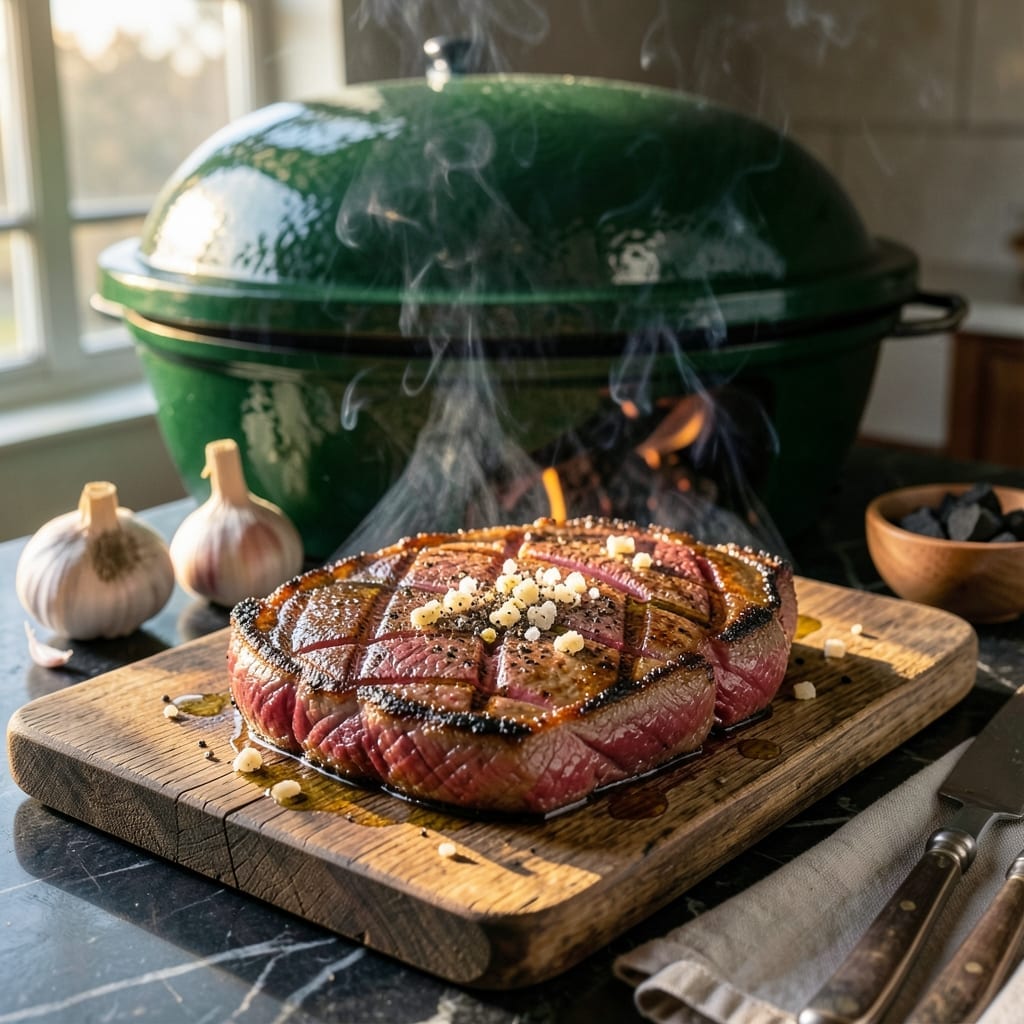
Achieving perfect picanha on the Big Green Egg starts with understanding the cut’s natural richness and the egg’s ability to deliver consistent heat and smoky depth. This Brazilian favorite responds beautifully to high-heat searing and slow cooking.
The top sirloon cap’s fat cap renders down during cooking, basting the meat for unmatched juiciness. I’ve refined this method to ensure the signature crispy exterior while maintaining a tender, medium-rare center throughout.
What emerges is a steak with a deep, smoky crust and buttery interior that captures the essence of churrascaria-style cooking. The fat cap caramelizes into a flavorful bark that complements the beef’s natural richness.
Serve sliced against the grain with traditional accompaniments like farofa or vinagrete. The results speak for themselves.
Ingredients for Picanha Recipe Big Green Egg
Prime picanha, bold seasoning, and smoky charcoal deliver authentic Brazilian churrascaria flavor at home.
| Ingredient | Amount | Notes |
|---|---|---|
| Picanha Steak 🥩 | 2 ½ lb | Top sirloin cap, fat cap intact |
| Coarse Kosher Salt 🧂 | 2 tbsp | Diamond Crystal preferred for texture |
| Freshly Ground Black Pepper 🌶️ | 1 tbsp | Coarse grind for crust formation |
| Garlic Cloves 🧄 | 4 cloves | Smashed, peeled, halved |
| Lump Charcoal 🔥 | 10 lb | Hardwood for consistent heat |
| Pecan Wood Chunks 🪵 | 4 pieces | For smoky depth on Big Green Egg |
| Olive Oil 🫒 | 2 tbsp | High smoke point variety |
| Butter 🧈 | 4 tbsp | Unsalted, for basting finish |
| Fresh Rosemary Sprigs 🌿 | 2 whole | For aromatic basting |
| Fresh Thyme Sprigs 🍃 | 2 whole | Optional for additional herb notes |
| Red Wine Vinegar 🍷 | 2 tbsp | For vinagrete accompaniment |
| White Onion 🧅 | 1 whole | Diced fine for vinagrete |
| Plum Tomatoes 🍅 | 2 whole | Diced for vinagrete |
| Jalapeño Pepper 🌶️ | 1 whole | Seeded, minced for heat |
The picanha is non-negotiable here. Look for top sirloin cap with a thick, intact fat cap—this is what creates that self-basting effect during cooking. Costco or a quality butcher are your best bets for well-marbled cuts. The fat should be bright white, not yellowed. For the charcoal, Jealous Devil or Kamado Joe lump burns hotter and cleaner than briquettes, which is crucial for the Big Green Egg’s precision.
No picanha? Tri-tip or culotte steak are the closest substitutes, though the texture won’t be identical. For the wood chunks, hickory or oak work if you can’t find pecan. The vinagrete can be simplified with just onion and vinegar if tomatoes aren’t in season. Don’t skip the high-smoke-point oil—avocado oil works if you’re out of olive. The butter should be unsalted to control the seasoning.
Store picanha in the fridge for up to 3 days before cooking—any longer and the fat starts to oxidize. The vinagrete keeps for 1 week refrigerated. Leftovers? Slice thin and reheat quickly in a hot pan to preserve the crust. Never microwave—it’ll ruin that perfect texture you worked so hard to achieve.
Why You’ll Love This Recipe
- Minimal Effort: I just season the picanha with salt, pepper, and crushed garlic—no marinade, no fuss. The Big Green Egg does all the work.
- Smoky Perfection: That lump charcoal gives the steak a deep, smoky char while keeping the inside juicy and rich. Honestly, it’s the best way to cook picanha.
- Crowd Pleaser: I serve this at summer cookouts, and it’s always the first thing to disappear. Even my picky nephew goes back for seconds.
- Leftovers Win: The sliced picanha reheats beautifully for next-day tacos or steak sandwiches. I’ll be real: sometimes I make extra just for this.
Step-by-Step Instructions for Picanha on Big Green Egg
Master the technique that delivers smoky, charred perfection with Brazilian flair.
Step 1: Prep the Picanha and Season Generously
Score the fat cap of the picanha steak in a diamond pattern, cutting about ¼-inch deep. This prevents curling during cooking and allows the seasoning to penetrate. Pat the meat dry with paper towels to ensure a good sear.
Rub the picanha with the 2 tbsp olive oil, then apply the 2 tbsp coarse kosher salt and 1 tbsp freshly ground black pepper evenly across all surfaces, pressing the seasoning into the scored fat cap. The coarse texture of Diamond Crystal salt creates the ideal crust.
Step 2: Set Up the Big Green Egg for Reverse Sear
Fill the Big Green Egg with the 10 lb lump charcoal and light it using your preferred method. Once the temperature stabilizes at 225°F, add the 4 pieces pecan wood chunks for a rich, nutty smoke profile.
Place the picanha on the grill grates, fat cap up. Insert a temperature probe into the thickest part of the meat. Close the lid and maintain a steady 225°F for the first phase of cooking. The pecan wood will infuse the meat with a subtle, sweet smoke.
Step 3: Sear for Crust Formation
Once the picanha reaches an internal temperature of 110-115°F (about 1-1.5 hours), remove it from the grill. Increase the Big Green Egg temperature to 450-500°F to create a high-heat searing zone.
Return the picanha to the grill, fat cap down, directly over the hot coals. Sear for 3-4 minutes per side until the fat cap is deeply caramelized and the surface develops a dark, crispy crust. Baste with the 4 tbsp butter, 4 cloves garlic cloves, 2 whole fresh rosemary sprigs, and 2 whole fresh thyme sprigs during the last minute for added aroma.
Step 4: Rest and Slice Against the Grain
Remove the picanha from the grill when it reaches an internal temperature of 130-135°F for medium-rare. Transfer it to a cutting board, tent loosely with foil, and let it rest for 10-15 minutes. This allows the juices to redistribute, ensuring each slice is moist and flavorful.
Slice the picanha against the grain into ½-inch thick strips. The grain runs in one direction, so cutting perpendicular to it shortens the muscle fibers, resulting in a more tender bite.
Step 5: Serve with Brazilian Vinagrete
While the picanha rests, combine the diced 1 whole white onion, 2 whole plum tomatoes, 1 whole jalapeño pepper, and 2 tbsp red wine vinegar in a bowl. Season with a pinch of the coarse kosher salt and mix well.
Serve the sliced picanha immediately with the vinagrete spooned over the top. The bright acidity of the vinagrete cuts through the richness of the meat, balancing the smoky, charred flavors beautifully.
Pro Tips For Making Picanha Recipe Big Green Egg
- Score the Fat Cap: Cut deep crosshatches into the fat—about 1/4 inch apart—to render it properly and prevent curling on the Big Green Egg.
- Salt Generously Early: Coat the picanha with coarse kosher salt at least 40 minutes before cooking; I learned this the hard way after my first few steaks tasted bland.
- Avoid Direct Flare-Ups: Keep the fat cap angled away from direct lump charcoal heat to prevent charring before the inside cooks.
- Rest Under Foil: Tent with foil and rest for 8-10 minutes after pulling it off—this keeps the juices where they belong, not on your cutting board.
Troubleshooting This Recipe
Uneven Cooking
If one end of your picanha is cooking faster, rotate it 180 degrees halfway through the 225°F phase. The Big Green Egg’s heat can vary slightly across the grate. I always place the thicker end toward the hotter side initially. 🌡️
Fat Cap Flare-Ups
When searing at 450-500°F, the rendered fat can cause flare-ups. Keep a spray bottle of water nearby to tame flames quickly. Don’t cover the grill completely—just mist the flames to prevent charring the exterior too much.
Stalled Temperature
If your picanha stalls below 110°F, check your charcoal. Add 2-3 fresh lump charcoal pieces to boost heat. The stall often happens when evaporative cooling slows the cook. Patience is key—rushing with high heat can dry the meat.
Weak Smoke Flavor
For more pronounced smoke, add 1-2 pecan wood chunks every 45 minutes during the 225°F phase. Ensure your wood is dry—damp chunks create bitter, acrid smoke. I soak chunks in water for 10 minutes only if they’re very dry.
Tough Texture
Overcooking is the main culprit. Pull your picanha at 130°F for medium-rare. Let it rest for 10-15 minutes—this is non-negotiable. Slicing too soon causes juices to escape, leaving the meat dry and chewy. 🔥
Dry Crust
If your crust isn’t crispy, your searing temperature wasn’t high enough. The Big Green Egg needs to reach at least 450°F for proper caramelization. Also, ensure the fat cap is scored deeply enough—¼-inch cuts allow for better rendering and crust formation.
Nutrition Facts
Frequently Asked Questions
What’s the best way to score the fat cap?
Cut a diamond pattern about ¼-inch deep across the fat cap. This prevents curling while cooking and helps the seasoning penetrate deeply.
Can I use a different wood for smoking?
Yes! While pecan adds a sweet, nutty flavor, you can also use hickory for a stronger smoke or oak for a more balanced profile. Always use hardwood chunks for the best results.
How do I prevent flare-ups when searing?
Keep a spray bottle of water nearby to tame flames quickly. Avoid covering the grill completely; just mist the flames to prevent over-charring the exterior.
Why is resting the meat important?
Resting for 10-15 minutes allows the juices to redistribute throughout the meat. Slicing too soon causes juices to escape, resulting in a dry, tough texture.

- Pina Colada Dip Recipe Red Lobster: Tropical Creaminess With Toasted Coconut - October 12, 2026
- Pickled Sweet Cherry Peppers Recipe Canning: Tangy Heat for Pantry Staples - October 12, 2026
- Peppercorn Sauce Recipe Vegan: Rich Umami Depth Without Cream - October 12, 2026