
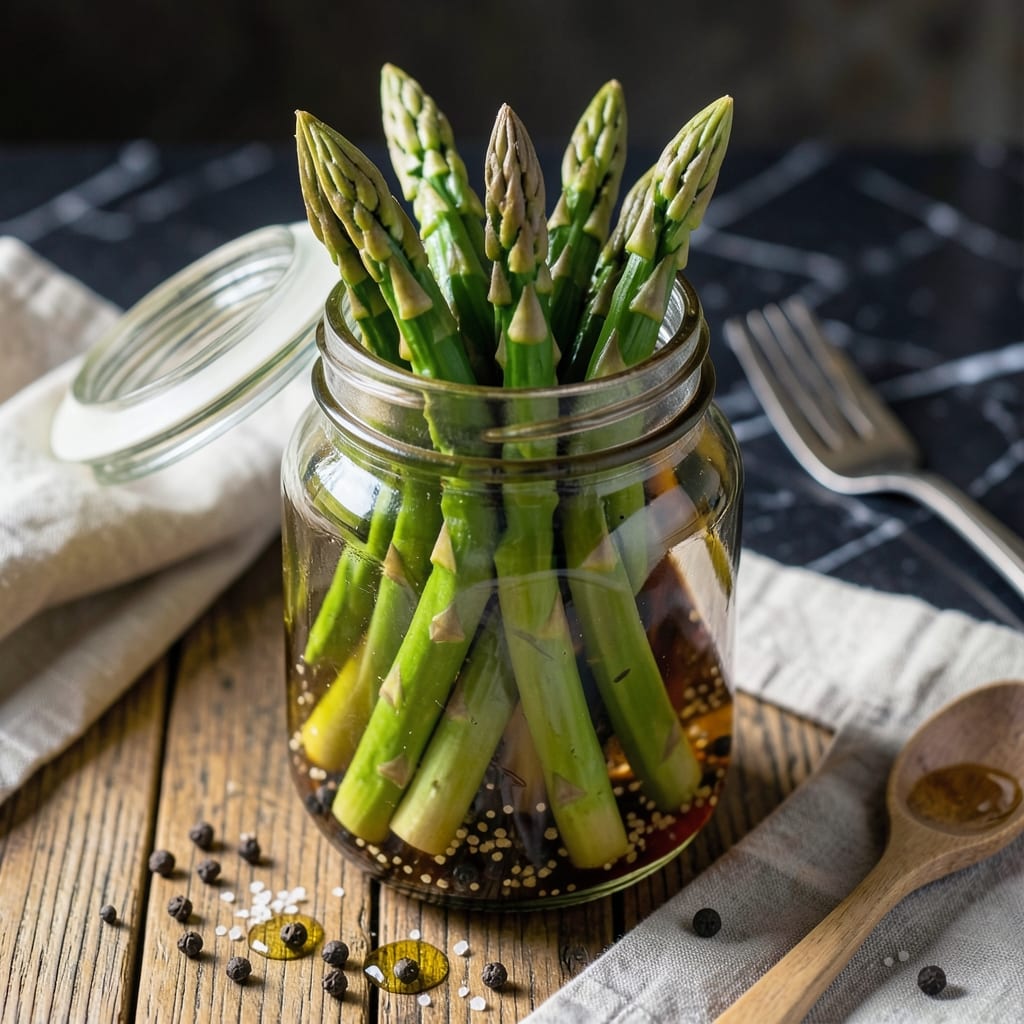
There’s something special about pickling asparagus at the peak of its season. This method preserves its crisp texture while infusing it with a bright, tangy flavor that’s hard to resist.
The brine combines apple cider vinegar with a touch of sugar and salt, creating a balanced profile that enhances the vegetable’s natural sweetness. A few simple steps ensure the asparagus stays firm and vibrant.
Sterilizing the jars and properly preparing the spears guarantees a safe, long-lasting result. The process is straightforward but yields a product that tastes far beyond its effort.
Once jarred, these pickled spears make a refreshing addition to charcuterie boards, salads, or sandwiches. They’re ready to enjoy in just a few days.
Ingredients for Pickled Asparagus Recipe Apple Cider Vinegar
Fresh asparagus, a tangy brine, and a few pantry spices create this vibrant pickled treat.
| Ingredient | Amount | Notes |
|---|---|---|
| Fresh Asparagus Spears 🥬 | 2 lb | Thick spears recommended, woody ends trimmed |
| Apple Cider Vinegar 🍏 | 2 cups | 5% acidity or higher for safety |
| Water 💧 | 2 cups | Filtered or distilled preferred |
| Granulated Sugar 🧂 | 2 tbsp | Organic or raw sugar works too |
| Kosher Salt 🧂 | 2 tbsp | Diamond Crystal preferred for consistent measure |
| Black Peppercorns 🌶️ | 1 tbsp | Whole, lightly crushed |
| Mustard Seeds 🌿 | 1 tbsp | Yellow or brown variety |
| Dried Red Pepper Flakes 🔥 | 1 tsp | Adjust for heat preference |
| Fresh Dill Sprigs 🌿 | 4 sprigs | Optional for aromatic depth |
| Garlic Cloves 🧄 | 4 cloves | Peeled and smashed |
| Bay Leaves 🍃 | 2 whole | Dried, whole leaves |
The asparagus makes or breaks this. Thick spears hold up best to pickling—thin ones get mushy. Look for firm, bright green stalks at farmers markets or well-stocked grocers like Whole Foods. Trim the woody ends (bend each spear—it’ll snap at the right spot). The apple cider vinegar should be raw and unfiltered for the best flavor. Bragg is a reliable brand.
No apple cider vinegar? White vinegar plus a splash of apple juice works in a pinch. Swap mustard seeds for coriander seeds if you prefer a different spice profile. Dried dill can replace fresh at one-third the amount. The sugar can be reduced by half if you like a sharper pickle. For extra crunch, add grape leaves or a pinch of alum to the brine.
These keep beautifully in the fridge for 1 month or can be processed for shelf-stable storage (up to 1 year). The flavors deepen over time, so wait at least 48 hours before tasting. Always use clean, dry utensils when removing spears to prevent contamination.
Why You’ll Love This Recipe
- 5-Minute Prep: I just trim the asparagus, heat the brine, and pour—no fancy steps.
- Tangy Crunch: The apple cider vinegar gives it that bright, zippy kick with every crisp bite.
- Gift-Worthy Jars: I bring these to potlucks and suddenly I’m the hostess with the mostest.
- Fridge Stays Stocked: One batch lasts me weeks, and honestly, they taste even better after a few days.
Step-by-Step Instructions for Pickled Asparagus with Apple Cider Vinegar
This method ensures crisp, tangy spears with perfect texture and balanced flavor every time.
Step 1: Prepare and Trim the Asparagus Spears
Rinse the 2 lb Fresh Asparagus Spears thoroughly under cold water to remove any dirt or grit. Pat them completely dry with clean kitchen towels—excess moisture will dilute your brine and compromise the texture.
Trim the woody ends by bending each spear near the base; it will naturally snap at the point where the tender part begins. For uniform appearance, align the spears and trim the ends to equal lengths. This ensures even pickling and a professional presentation in jars.
Real talk: thicker spears hold up better to pickling than pencil-thin ones. If using thin asparagus, reduce the processing time slightly to maintain crispness.
Step 2: Create the Aromatic Brine Mixture
In a medium saucepan, combine the 2 cups Apple Cider Vinegar, 2 cups Water, 2 tbsp Granulated Sugar, and 2 tbsp Kosher Salt. Bring to a boil over medium-high heat, stirring until the sugar and salt fully dissolve—this should take about 2-3 minutes.
Add the 1 tbsp Black Peppercorns, 1 tbsp Mustard Seeds, 1 tsp Dried Red Pepper Flakes, 4 sprigs Fresh Dill Sprigs, 4 cloves Garlic Cloves, and 2 whole Bay Leaves. Reduce heat to low and let the mixture simmer for 5 minutes to infuse the spices into the liquid.
The brine should become fragrant with visible steam rising from the surface. This infusion step is critical for developing the complex flavor profile that defines well-pickled vegetables.
Step 3: Pack the Jars and Add the Hot Brine
Pack the prepared asparagus spears vertically into clean, hot pint jars, tips facing up. Leave ½ inch of headspace at the top of each jar. Distribute the whole spices from the brine evenly among the jars for consistent flavor in each serving.
Carefully ladle the hot brine over the asparagus, ensuring the spears are completely submerged. Use a chopstick or plastic knife to remove any air bubbles trapped between the spears. The liquid should cover the asparagus by at least ¼ inch.
This submersion is non-negotiable—any exposed portions will develop mold during storage. The spears should remain upright during this process to maintain their shape.
Step 4: Process for Shelf-Stable Preservation
Wipe the rims of the jars with a clean, damp cloth to ensure a proper seal. Apply lids and rings, finger-tightening only—overtightening can prevent proper sealing during processing.
Process the jars in a boiling water bath for 10 minutes (adjust for altitude if necessary). Start the timer only after the water returns to a full, rolling boil. The jars should be completely submerged by at least 1 inch of water during processing.
After processing, carefully remove the jars and place them on a towel-lined countertop to cool. You should hear the satisfying “ping” of lids sealing within 12-24 hours. Any jars that don’t seal properly should be refrigerated and used within 1 month.
Pro Tips For Making Pickled Asparagus Recipe Apple Cider Vinegar
- Trim the Ends: Snap the woody ends off each asparagus spear—they’ll naturally break where the tender part begins. I learned this the hard way after chewing through too many tough stalks.
- Boil the Brine: Heat the apple cider vinegar, water, sugar, and salt just until the sugar dissolves—about 2-3 minutes. Sounds simple, but skipping this step leaves you with grainy, unevenly sweet pickles.
- Pack Them Tight: Stand the asparagus vertically in clean jars, tips up, as snug as possible. If they’re loose, they’ll float and curl during brining, and nobody wants wavy pickled asparagus.
- Cool Before Sealing: Let the brine cool to room temperature before pouring it over the asparagus. I was skeptical until I tried it—hot brine makes the spears mushy, and that’s a texture you can’t fix.
Storing and Reheating This Recipe
Refrigerator Storage
If not processing for shelf stability, store your jars in the fridge. They’ll keep beautifully for up to 1 month in airtight containers. The flavors deepen after 48 hours, so resist the urge to sample immediately.
Shelf-Stable Storage
Properly sealed jars can be stored at room temperature in a cool, dark pantry for up to 1 year. I always label mine with the date using a permanent marker. Check seals before storage—any that didn’t pop should go in the fridge. 💡
Opening and Serving
Once opened, transfer to the fridge and use within 2 weeks. Always use clean, dry utensils to remove spears to prevent contamination. The brine can be reused for a second batch if boiled first.
Reviving Texture
If your asparagus loses some crispness over time, soak in ice water for 15-20 minutes before serving. This works wonders for bringing back that satisfying crunch. Drain well and pat dry before plating.
Freezing Option
While not ideal, you can freeze pickled asparagus for up to 3 months. Drain and pat dry first, then store in freezer-safe bags with as much air removed as possible. Thaw in the fridge overnight.
Flavor Maintenance
The spices in your brine will continue developing over time. For best results, wait at least 3 days before tasting. I notice the garlic and dill flavors become more pronounced after 1 week. ❄️
Nutrition Facts
Frequently Asked Questions
Can I use white vinegar instead of apple cider vinegar?
Yes, but the flavor will be sharper. Add 1 tablespoon of apple juice to 2 cups white vinegar to mimic apple cider’s depth. The acidity level must stay at 5% for safety.
How long before the pickled asparagus is ready to eat?
Wait at least 48 hours for the flavors to develop. For best results, let it sit for 3 days in the fridge. The spears will stay crisp while absorbing the brine’s tangy notes.
Why did my asparagus turn mushy?
This usually happens with thin spears or over-processing. Use thick asparagus and trim woody ends properly. For refrigerator pickles, skip the water bath to preserve texture.
Can I reuse the brine for another batch?
Yes, but boil it first to kill any bacteria. Strain out old spices and add fresh ones for best flavor. Reusing brine more than once isn’t recommended.

- Pina Colada Dip Recipe Red Lobster: Tropical Creaminess With Toasted Coconut - October 12, 2026
- Pickled Sweet Cherry Peppers Recipe Canning: Tangy Heat for Pantry Staples - October 12, 2026
- Peppercorn Sauce Recipe Vegan: Rich Umami Depth Without Cream - October 12, 2026