
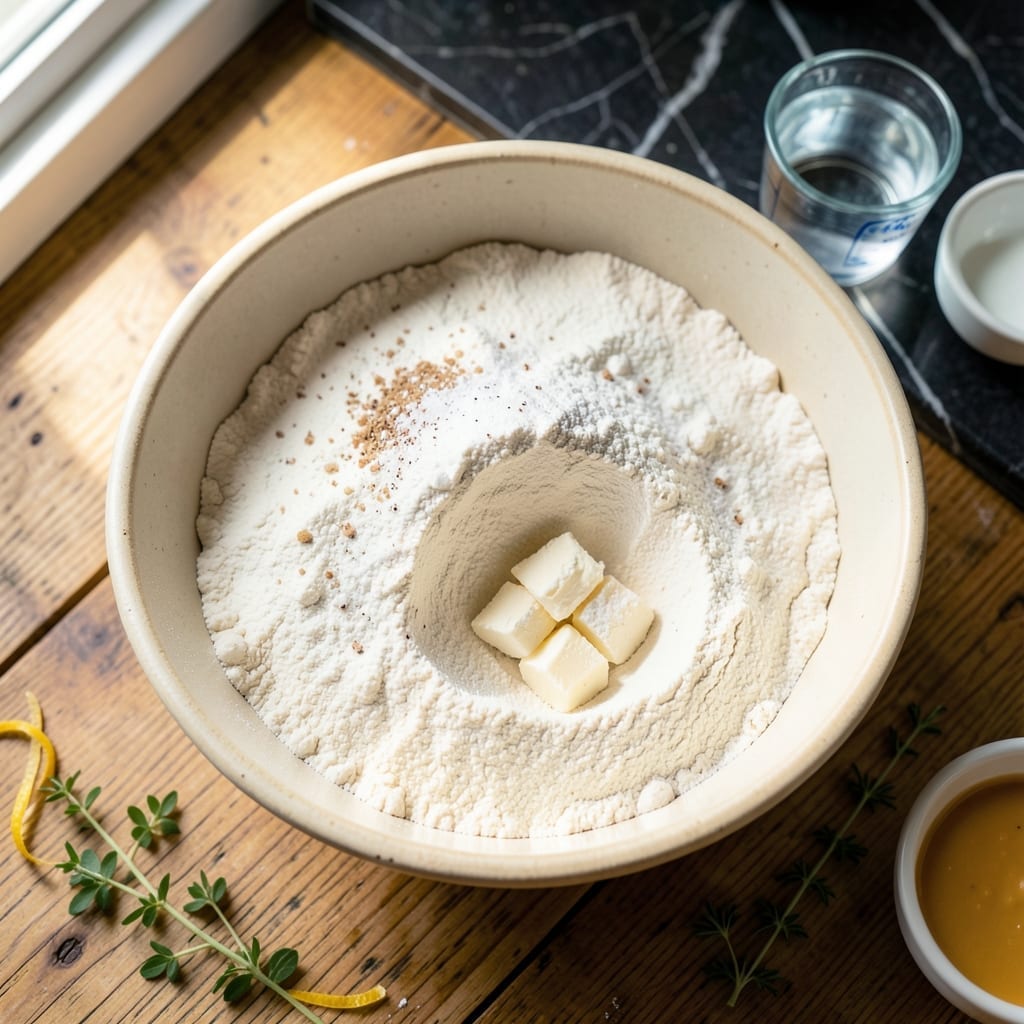
Creating flaky pie dough without butter is easier than you think. My grandmother in Sicily taught me this technique using simple ingredients that deliver professional results every time.
The secret lies in using cold vegetable shortening which creates layers just like traditional butter-based dough. The key is keeping everything ice-cold throughout the process to prevent the fat from melting prematurely.
This method produces a tender, flaky crust that works for both sweet and savory pies. The dough holds its shape while baking and develops that coveted golden-brown finish that makes any pie look bakery-perfect.
With just a few basic ingredients and a little patience, you can achieve pie crust success without dairy. The process is straightforward and the results speak for themselves.
Ingredients for Pie Dough Recipe No Butter
A handful of pantry staples transforms into bakery-quality crust without dairy.
| Ingredient | Amount | Notes |
|---|---|---|
| All-Purpose Flour 🌾 | 2 ½ cups | Sifted for even texture |
| Vegetable Shortening 🫒 | ¾ cup | Cold, cubed, for flakiness |
| Ice Water 💧 | ½ cup | Plus 1-2 tbsp as needed |
| Salt 🧂 | 1 tsp | Fine sea salt preferred |
| Granulated Sugar 🍚 | 1 tbsp | Optional for sweet pies |
| White Vinegar 🍶 | 1 tsp | Or apple cider vinegar |
| Baking Powder 🧂 | ¼ tsp | For extra lift if desired |
The vegetable shortening is non-negotiable here—Crisco is the gold standard for its high melting point and neutral flavor. For best results, chill it for 30 minutes before using and keep it ice-cold throughout. The flour should be all-purpose; while bread flour works, it yields a slightly tougher crust. King Arthur or Gold Medal brands deliver consistent protein content.
No shortening? Cold coconut oil in solid form works at a 1:1 ratio, though it imparts a slight coconut flavor. For a flakier texture, lard can be substituted if dietary restrictions allow. The vinegar tenderizes the gluten—lemon juice at the same amount works equally well. For sweet applications, the sugar can be increased to 2 tablespoons.
The dough keeps in the fridge for 2-3 days or can be frozen for up to 3 months. Wrap tightly in plastic to prevent drying. For best flakiness, let refrigerated dough rest for at least 1 hour before rolling to allow the gluten to relax.
Why You’ll Love This Recipe
- No-Fuss Mixing: I just dump flour, shortening, and ice water together—no butter to soften, no waiting.
- Flaky Every Time: The shortening makes layers so crisp they shatter, with just a hint of sugar to round it out.
- Endless Possibilities: Sweet pies, savory galettes, or even quick hand pies—this dough handles it all.
- Pantry Staples: Honestly, I always have flour and shortening on hand, so I can make this on a whim without a grocery run.
Step-by-Step Instructions for Pie Dough Without Butter
Master this technique for consistently flaky, dairy-free pastry with minimal effort.
Step 1: Combine Dry Ingredients for Optimal Structure
In a large mixing bowl, whisk together the 2.5 cups All-Purpose Flour, 1 tsp Salt, 1 tbsp Granulated Sugar, and 0.25 tsp Baking Powder. This aerates the flour and ensures even distribution of the leavening agent and seasonings throughout your dough.
The sugar adds just enough sweetness for dessert pies while balancing flavors in savory applications. I always sift my flour first, as clumps can create uneven texture in the finished crust. The baking powder provides subtle lift, complementing the flakiness created by the shortening.
Step 2: Cut in Cold Shortening for Maximum Flakiness
Add the 0.75 cup Vegetable Shortening (cold and cubed) to the dry ingredients. Using a pastry cutter or two forks, work the shortening into the flour until the mixture resembles coarse crumbs with pea-sized pieces of shortening visible. This creates the layered structure essential for flaky pastry.
Don’t overwork the mixture—the shortening should remain in distinct pieces rather than fully incorporating into the flour. The cold temperature of the shortening is crucial; if it begins to soften or melt, chill the bowl for 10 minutes before proceeding. These visible fat pockets will create steam during baking, producing those coveted flaky layers.
Step 3: Incorporate Liquid Ingredients Gradually
Create a well in the center of the flour-shortening mixture. Add the 1 tsp White Vinegar and 0.5 cup Ice Water. Using a fork, gently mix the liquid into the dry ingredients, starting from the center and working outward. The vinegar tenderizes the gluten, ensuring a more delicate crust.
Add the liquid 1 tablespoon at a time if needed, but don’t exceed the 0.5 cup initially. The dough should just come together when pressed—it will look shaggy and slightly dry, but resist the urge to add more water. Over-hydrating develops tough gluten, while too little liquid prevents proper binding.
Step 4: Form and Chill the Dough
Turn the dough out onto a lightly floured surface and gently knead it 3-4 times just until it forms a cohesive ball. Divide the dough in half for a double-crust pie or leave whole for a single crust. Shape each portion into a 1-inch thick disk.
Wrap the disks tightly in plastic wrap and refrigerate for at least 1 hour, or up to 2 days. This chilling period allows the gluten to relax and the shortening to firm up, making the dough easier to roll out. It also prevents shrinkage during baking. The dough is ready when it’s firm to the touch but not rock-hard.
For best results, let the chilled dough sit at room temperature for 10-15 minutes before rolling to prevent cracking. This makes it more pliable while still maintaining its structure.
Pro Tips For Making Pie Dough Recipe No Butter
- Chill the Shortening: Freeze your vegetable shortening for 15 minutes before cutting it into the flour—cold fat means flakier layers. I learned this the hard way after my first few pies came out dense and tough.
- Ice Water Only: Use the coldest water possible, straight from the ice tray, and add it 1 tablespoon at a time. Sounds tedious, but it prevents the dough from developing gluten and turning chewy.
- Skip Overworking: Mix just until the dough comes together, even if it looks shaggy. After burning three batches to crispy disappointment, I finally figured out that overmixing = tough crust.
- Rest Before Rolling: Give the dough a solid 30-minute rest in the fridge before rolling—this relaxes the gluten and makes it easier to handle. My grandmother swore by this, and she was right.
Creative Variations of pie dough recipe no butter
Lard-Based Tradition
My grandmother in Sicily always used lard for her pie crusts, and I still love this variation. Replace the shortening with 0.75 cup cold lard for a richer flavor and incredibly tender texture. The lard should be chilled and cubed just like shortening. 💛
Coconut Oil Twist
For a dairy-free option with a hint of tropical flavor, use 0.75 cup solid coconut oil. Chill it thoroughly before using, as coconut oil softens quickly at room temperature. The resulting crust has a subtle sweetness that pairs beautifully with fruit fillings.
Olive Oil Version
This is my go-to for savory pies. Replace shortening with 0.6 cup extra-virgin olive oil (from local Italian delis). The dough will be more tender than flaky, but it develops a wonderful golden color and Mediterranean character. Add an extra 2 tbsp ice water to compensate for the oil’s different texture.
Vegan All-Star
Combine 0.5 cup vegetable shortening with 0.25 cup chilled coconut oil for the ultimate vegan pie crust. This blend gives you the best of both worlds: the flakiness of shortening with the slight sweetness of coconut. I discovered this combo while recreating Nonna’s recipes in America.
Whole Wheat Option
For a nuttier flavor, replace 1 cup of the all-purpose flour with whole wheat flour. The dough will be slightly denser but offers more fiber. Add 1-2 extra tbsp ice water as whole wheat absorbs more liquid. The result is still flaky but with a heartier texture.
Sweet Variation
Increase the sugar to 2 tbsp and add 1 tsp vanilla extract to the liquid ingredients for dessert pies. This creates a sweeter crust that complements fruit fillings perfectly. I always taste the dough with Nonna’s wooden spoon to check the sweetness level. ✨
Nutrition Facts
Frequently Asked Questions
Can I use coconut oil instead of shortening?
Yes! Use 0.75 cup solid coconut oil as a 1:1 substitute. Chill it thoroughly first, as it softens quickly. The result will have a slight coconut flavor that pairs well with sweet fillings.
Why do I need to keep ingredients cold?
Cold fat prevents premature melting, which creates steam pockets during baking for flaky layers. If shortening softens, chill the bowl for 10 minutes before continuing. This is crucial for that perfect texture.
How long can I store the dough?
Wrapped tightly, it keeps in the fridge for 2-3 days or freezes for 3 months. For best results, let refrigerated dough rest for 1 hour before rolling.
What if my dough cracks when rolling?
Let it warm at room temperature for 10-15 minutes first. If it still cracks, gently press the edges together and continue. Avoid over-flouring the surface, which can make it dry.

- Pina Colada Dip Recipe Red Lobster: Tropical Creaminess With Toasted Coconut - October 12, 2026
- Pickled Sweet Cherry Peppers Recipe Canning: Tangy Heat for Pantry Staples - October 12, 2026
- Peppercorn Sauce Recipe Vegan: Rich Umami Depth Without Cream - October 12, 2026