
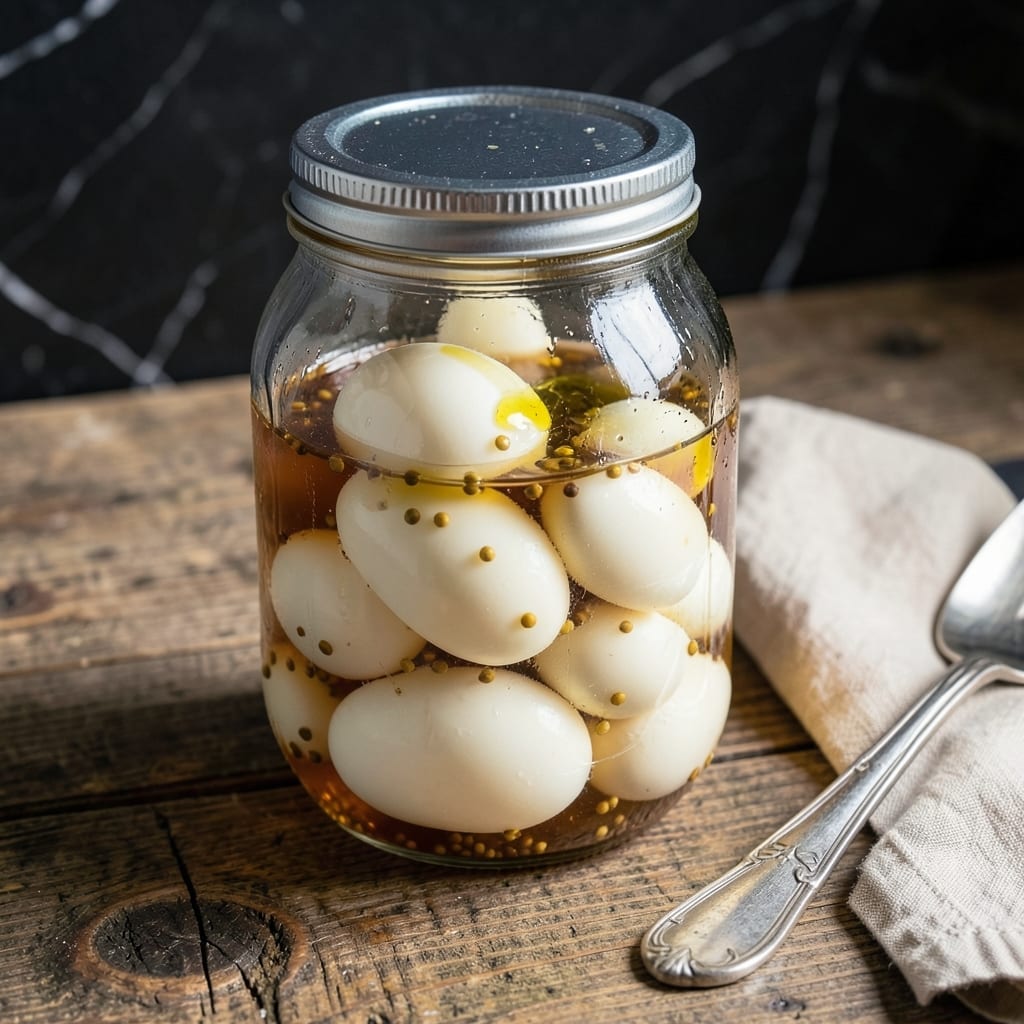
This no-refrigeration method preserves hard-boiled eggs in a tangy vinegar brine, creating a shelf-stable snack or appetizer. The technique relies on proper sterilization and acidity levels to ensure safety without cooling.
I’ve perfected this process to deliver consistent results every time. The eggs absorb the bold flavors of the brine while maintaining their firm texture, making them ideal for picnics, road trips, or pantry staples.
The key is using a high-acid brine and fully submerging the peeled eggs. This approach extends shelf life while keeping the eggs flavorful and safe to store at room temperature.
With just a few simple ingredients and attention to detail, this recipe offers a practical way to enjoy pickled eggs anytime, anywhere.
Ingredients for Pickled Eggs Recipe No Refrigeration
Hard-boiled eggs meet a tangy vinegar brine for shelf-stable, bold-flavored results every time.
| Ingredient | Amount | Notes |
|---|---|---|
| Large Eggs 🥚 | 12 whole | Hard-boiled and peeled |
| White Vinegar 💧 | 2 cups | 5% acidity minimum |
| Water 💧 | 1 cup | Filtered for clarity |
| Pickling Salt 🧂 | 1 tbsp | Non-iodized for purity |
| Granulated Sugar 🍚 | 1 tbsp | Balances acidity |
| Yellow Mustard Seeds 🌿 | 2 tsp | Whole for texture |
| Black Peppercorns 🌶️ | 1 tsp | Whole for infusion |
| Dried Red Pepper Flakes 🌶️ | ½ tsp | Adjust for heat preference |
| Bay Leaves 🌿 | 2 pieces | Dried for aroma |
| Garlic Cloves 🧄 | 4 cloves | Smashed for flavor extraction |
| Small Red Onion 🧅 | 1 whole | Thinly sliced for garnish |
| Fresh Dill Sprigs 🌿 | 4 pieces | Optional for garnish |
The vinegar is non-negotiable here. White vinegar with 5% acidity is the gold standard for pickling—it’s what ensures safety and that sharp tang. Ball or Heinz are reliable brands for consistent results. For the eggs, use the freshest you can find (older eggs peel easier but may lack firmness). The pickling salt is critical; iodized table salt can discolor the brine and eggs.
No pickling salt? Kosher salt at the same volume works, but avoid sea salt—its minerals can cloud the brine. Want more complexity? Add 1 tsp coriander seeds or mustard seeds. Short on time? Pre-boiled eggs from the store are fine (just peel them fresh). The sugar isn’t just for sweetness—it softens the vinegar’s bite without compromising preservation.
Store in sterilized glass jars with tight lids. The eggs keep at room temperature for up to 3-4 months (discard if brine turns cloudy). Refrigerate after opening to extend freshness. The flavor deepens over time, so wait at least 48 hours before tasting.
Why You’ll Love This Recipe
- Set and Forget: I hard-boil the eggs, mix the vinegar brine, and let them sit at room temp—no fridge checks needed.
- Tangy Crunch: The white vinegar and sugar create that perfect sweet-sour bite with every egg.
- Picnic Ready: I pack these for potlucks or hiking trips since they travel well without cooling.
- Pantry Savior: Between us, eggs and vinegar are always in my kitchen, so this costs pennies and uses what I have.
Step-by-Step Instructions for Pickled Eggs No Refrigeration
This shelf-stable method ensures properly preserved eggs with vibrant flavor and lasting quality.
Step 1: Hard-Boil and Peel the Eggs
Place the 12 whole Large Eggs in a large pot and cover with cold water by 1 inch. Bring to a rolling boil over high heat, then remove from heat, cover, and let sit for 12 minutes. This method prevents cracking while ensuring fully set yolks.
Immediately transfer the eggs to an ice bath for 10 minutes to stop the cooking process. Peel the eggs carefully under cool running water to remove any shell fragments. The eggs should be completely cooled before pickling to maintain texture and prevent cloudiness in the brine.
Step 2: Prepare the Pickling Brine
In a medium saucepan, combine the 2 cups White Vinegar, 1 cup Water, 1 tbsp Pickling Salt, and 1 tbsp Granulated Sugar. Bring to a boil over medium-high heat, stirring until the salt and sugar fully dissolve.
Add the 2 tsp Yellow Mustard Seeds, 1 tsp Black Peppercorns, and 0.5 tsp Dried Red Pepper Flakes to the brine. Remove from heat and let the mixture steep for 5 minutes to allow the spices to infuse. The brine should be hot when you pour it over the eggs for proper preservation.
Step 3: Layer Ingredients in Sterilized Jars
Divide the 4 cloves Garlic Cloves (smashed), 2 pieces Bay Leaves, and 1 whole Small Red Onion (thinly sliced) evenly between sterilized pint-sized jars. Place the peeled eggs in the jars, packing them snugly but without crushing.
Pour the hot brine over the eggs, ensuring they are completely submerged. Use a clean spoon to press down any floating eggs and remove air bubbles. The liquid should cover the eggs by at least ½ inch to ensure proper pickling and shelf stability.
Step 4: Seal and Process for Shelf Stability
Wipe the rims of the jars with a clean, damp cloth to ensure a proper seal. Apply the lids and screw on the bands until fingertip-tight. Place the jars in a water bath canner or large pot with enough water to cover by 1-2 inches.
Bring the water to a boil and process the jars for 10 minutes. This step is critical for creating a vacuum seal, which allows the eggs to be stored safely at room temperature. After processing, let the jars cool undisturbed for 12-24 hours before checking the seals.
Once cooled, test the seals by pressing the center of the lid—if it doesn’t pop, the jar is properly sealed. Store in a cool, dark place. The 4 pieces Fresh Dill Sprigs can be added to each jar before sealing for additional flavor, if desired.
Pro Tips For Making Pickled Eggs Recipe No Refrigeration
- Boil Eggs Gently: Simmer eggs for 12-15 minutes in barely boiling water—any harder boil and the whites get rubbery, which ruins the texture when pickled.
- Use Fresh Eggs: Older eggs peel easier but fresh ones hold their shape better in the brine, and I learned this the hard way after a batch fell apart in the jar.
- Skip Tap Water: Chlorine in tap water can cloud your brine and affect flavor, so use filtered or bottled water for the clearest, cleanest pickled eggs.
- Heat the Brine: Dissolve the salt and sugar in hot vinegar and water first—sounds like extra work, but it prevents grainy undissolved bits at the bottom of your jar.
Creative Variations of This Recipe
Spicy Sriracha Version
Add 1 tbsp Sriracha sauce to the brine for a fiery kick. This modern twist pairs the vinegar’s tang with chili heat. I also toss in 1 tsp crushed red pepper for extra warmth.
Sweet and Tangy
Increase sugar to 2 tbsp and add ½ cup apple cider vinegar for a milder, fruitier profile. The eggs develop a candied crust over time. Perfect for those who prefer a less sharp pickle.
Herb-Infused Brine
Swap mustard seeds for 1 tbsp mixed pickling spices and add 4 fresh thyme sprigs. The aromatic herbs create a complex, earthy flavor that deepens with each passing week.
Beet-Pickled Eggs
Add 1 cooked beet (sliced) to each jar for vibrant pink eggs. The beets also sweeten the brine naturally. These make stunning additions to charcuterie boards or holiday spreads.
Smoky Chipotle Style
Infuse the brine with 2 chipotle peppers in adobo and 1 tsp smoked paprika. The smoky depth complements the vinegar’s acidity beautifully. 🌶️
Asian-Inspired Twist
Replace mustard seeds with 1 tbsp grated ginger and 2 star anise pods. Use rice vinegar for a lighter, more delicate flavor profile that works wonderfully in ramen or rice bowls.
Nutrition Facts
Frequently Asked Questions
How long do these eggs last unrefrigerated?
Properly sealed jars last 3-4 months at room temperature. Store in a cool, dark place and discard if the brine appears cloudy or the seal is broken.
Can I use apple cider vinegar instead?
Yes, but ensure it has 5% acidity minimum. The flavor will be slightly fruitier, and the brine may darken over time. Stick to white vinegar for classic results.
Why did my eggs turn greenish?
This happens when eggs are overcooked or the brine’s acidity reacts with iron in the yolk. Use fresh eggs and follow the 12-minute boil time precisely.
Do I need special jars for this?
Use sterilized glass mason jars with new, two-piece lids for safe canning. Avoid reused lids or non-canning jars, as they may not seal properly.

- Pina Colada Dip Recipe Red Lobster: Tropical Creaminess With Toasted Coconut - October 12, 2026
- Pickled Sweet Cherry Peppers Recipe Canning: Tangy Heat for Pantry Staples - October 12, 2026
- Peppercorn Sauce Recipe Vegan: Rich Umami Depth Without Cream - October 12, 2026