
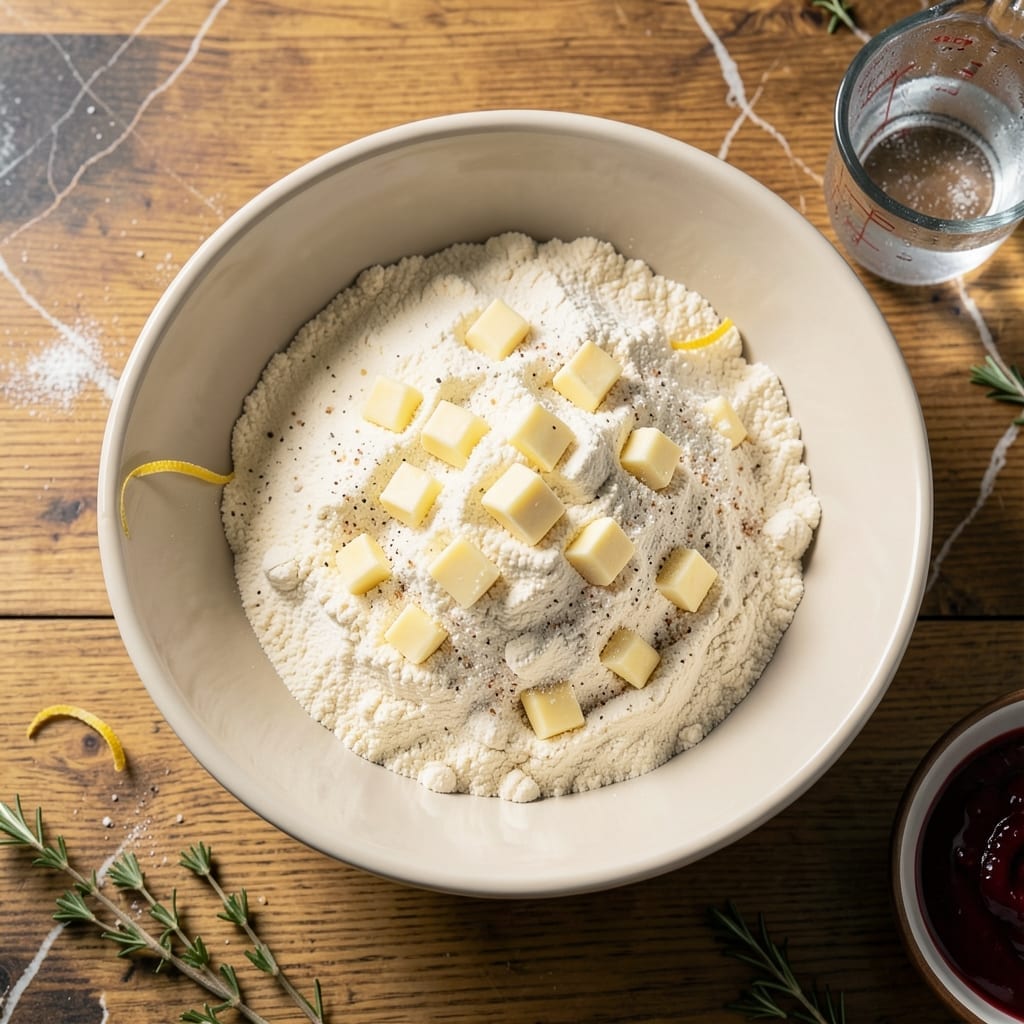
I’ve spent years perfecting pie crust, and this foolproof recipe delivers a flaky, golden base every single time. The secret lies in cold ingredients and minimal handling to prevent tough dough.
This method uses a simple mix of flour, butter, and ice water, with a technique that ensures layers of flakiness. The dough comes together in 10 minutes, then rests briefly before rolling out to the perfect thickness.
What emerges from the oven is a crust so tender it shatters at the touch, with a rich, buttery flavor that complements any filling. It’s the foundation of a perfect pie, whether sweet or savory.
Yields exactly enough for one standard pie, with no leftovers to worry about. Here’s how to make it.
Ingredients for Pie Crust Recipe for 1 Pie
Five simple ingredients create that perfect flaky base for any pie filling.
| Ingredient | Amount | Notes |
|---|---|---|
| All-Purpose Flour 🌾 | 1 ½ cups | Plus extra for dusting surface |
| Unsalted Butter 🧈 | ½ cup | Cut into small cubes, chilled |
| Ice Water 💧 | ¼ cup | Plus 1 tbsp as needed |
| Salt 🧂 | ½ tsp | Fine grain preferred |
| Granulated Sugar 🍚 | 1 tsp | Optional for sweet pies |
The butter must stay ice-cold—cut it into small cubes and return to the fridge between steps. Use high-quality unsalted butter like Plugrá or Kerrygold for the best flavor and texture. All-purpose flour is standard, but White Lily (if available) gives an especially tender crust. Measure by spooning into the cup and leveling off—never scoop directly from the bag.
No unsalted butter? Use salted and reduce the added salt by half. For a richer flavor, substitute European-style butter. The ice water can be vodka or gin (alcohol inhibits gluten formation for extra flakiness). For a whole wheat version, replace up to half the all-purpose flour with whole wheat pastry flour.
The dough can rest in the fridge for up to 2 days or freeze for 3 months. Wrap tightly in plastic to prevent drying. For best results, let chilled dough sit at room temperature for 10-15 minutes before rolling to prevent cracking.
Why You’ll Love This Recipe
- No-Fuss Mixing: I just dump flour, cold butter, and ice water in a bowl—no fancy tools, no stress.
- Buttery Crisp: The butter makes it flaky and rich, with just a touch of sugar for balance.
- Endless Fillings: Sweet or savory, this crust works for apple, pumpkin, or even chicken pot pie.
- Budget Stretch: A single pie crust costs pennies compared to store-bought, and I control the ingredients.
Step-by-Step Instructions for Pie Crust for 1 Pie
Master these simple steps for a perfectly flaky foundation that never fails.
Step 1: Combine Dry Ingredients
In a large bowl, whisk together the 1.5 cups All-Purpose Flour, 0.5 tsp Salt, and 1 tsp Granulated Sugar until evenly distributed. This ensures every bite carries consistent seasoning and subtle sweetness for balance.
I always use fine grain salt here—it dissolves more evenly into the dough. If you’re making a savory pie, you can omit the sugar, but for fruit or custard pies, that teaspoon makes a noticeable difference in flavor depth.
Step 2: Cut in the Cold Butter
Add the 0.5 cup Unsalted Butter (already cut into small cubes and chilled) to the flour mixture. Using a pastry cutter or your fingertips, work the butter into the flour until the mixture resembles coarse crumbs with pea-sized butter pieces visible throughout.
The key to flakiness is keeping the butter cold—it creates steam pockets during baking that separate the dough into layers. Work quickly and avoid over-handling, as warm hands will soften the butter and compromise the texture. If your kitchen is warm, chill the bowl periodically.
Step 3: Add Ice Water Gradually
Make a well in the center of the flour-butter mixture. Add 0.25 cup Ice Water, one tablespoon at a time, mixing gently with a fork after each addition. Stop adding water as soon as the dough begins to come together when pressed—it should hold its shape but not be sticky.
You may not need all the water, or you might need the additional tablespoon mentioned in the ingredients. The amount varies based on humidity and flour brand. The dough is ready when it forms a shaggy mass that cleans the sides of the bowl. Overworking it develops gluten, which makes the crust tough instead of tender.
Step 4: Chill and Rest the Dough
Turn the dough out onto a lightly floured surface and gently shape it into a disk about 1 inch thick. Wrap it tightly in plastic wrap and refrigerate for at least 1 hour, or up to 2 days for convenience.
This resting period allows the gluten to relax and the butter to firm up again, making the dough easier to roll out. It also prevents shrinking during baking. If you’re in a hurry, you can freeze the dough for 20 minutes, but don’t skip this step—it’s essential for that promised flaky texture.
Pro Tips For Making Pie Crust Recipe For 1 Pie
- Chill the Butter: Cut your unsalted butter into small cubes and refrigerate for 15 minutes before mixing—I learned this the hard way after ending up with a tough crust from melted butter.
- Use Ice Water: Fill a cup with water and ice cubes, then measure from that for the coldest possible liquid, which keeps the dough flaky instead of gummy.
- Skip Overworking: Mix just until the dough comes together, even if it looks shaggy—overmixing develops gluten, and that means a chewy crust instead of a tender one.
- Rest the Dough: Wrap the dough and refrigerate for at least 30 minutes before rolling; it relaxes the gluten and makes it easier to handle—my grandmother swore by this, and she was right.
Serving Suggestions for This Dish
Sweet Pie Pairings
For fruit fillings like apple or cherry, brush the baked crust with a thin apricot glaze (melt ¼ cup apricot jam with 1 tsp water) for a glossy finish. A scoop of vanilla bean ice cream on top adds a creamy contrast that I never skip. 💫
Savory Pie Ideas
This crust works beautifully for quiches or pot pies. For a classic quiche Lorraine, pre-bake the crust for 10 minutes before adding the egg custard. The buttery flavor complements the cheesy, bacon filling perfectly.
Presentation Tips
Use a pie shield for the first 20 minutes of baking to prevent over-browning the edges. For a decorative touch, press the tines of a fork around the rim before baking for a scalloped design.
Serving Temperature
Let your pie cool for at least 2 hours before slicing—this allows the filling to set. Serve warm or at room temperature, but never piping hot, as the crust can become soggy from the steam.
Beverage Pairings
A cup of hot coffee or Earl Grey tea balances the richness of fruit pies. For savory pies, a crisp Sauvignon Blanc or hard cider cuts through the buttery crust. 🍷
Leftovers Storage
Store any leftover pie at room temperature for up to 2 days, covered loosely with foil. For longer storage, refrigerate for up to 4 days—just warm slices in a 300°F oven for 10 minutes to revive the crust.
Nutrition Facts
Frequently Asked Questions
Why use ice water in the dough?
Ice water keeps the butter cold, which creates flaky layers. Warm water would melt the butter, resulting in a tough crust instead of a tender one.
Can I use a food processor?
Yes! Pulse the flour and butter until crumbly, then add water gradually. Be careful not to overmix—stop as soon as the dough clumps together.
How do I prevent the edges from burning?
Use a pie shield or cover the edges with foil during the first 20 minutes of baking. This protects them from over-browning.
Can I freeze the dough?
Wrap it tightly in plastic and freeze for up to 3 months. Thaw overnight in the fridge before rolling.

- Potato Candy Recipe 1933: Vintage Peanut Butter Roll Delight - October 30, 2026
- Potato Chip Cookie Recipe With Pecans: Buttery Crunch Meets Nutty Richness - October 30, 2026
- Potato Patty Recipe No Egg: Crispy Edges Without the Binder - October 30, 2026