
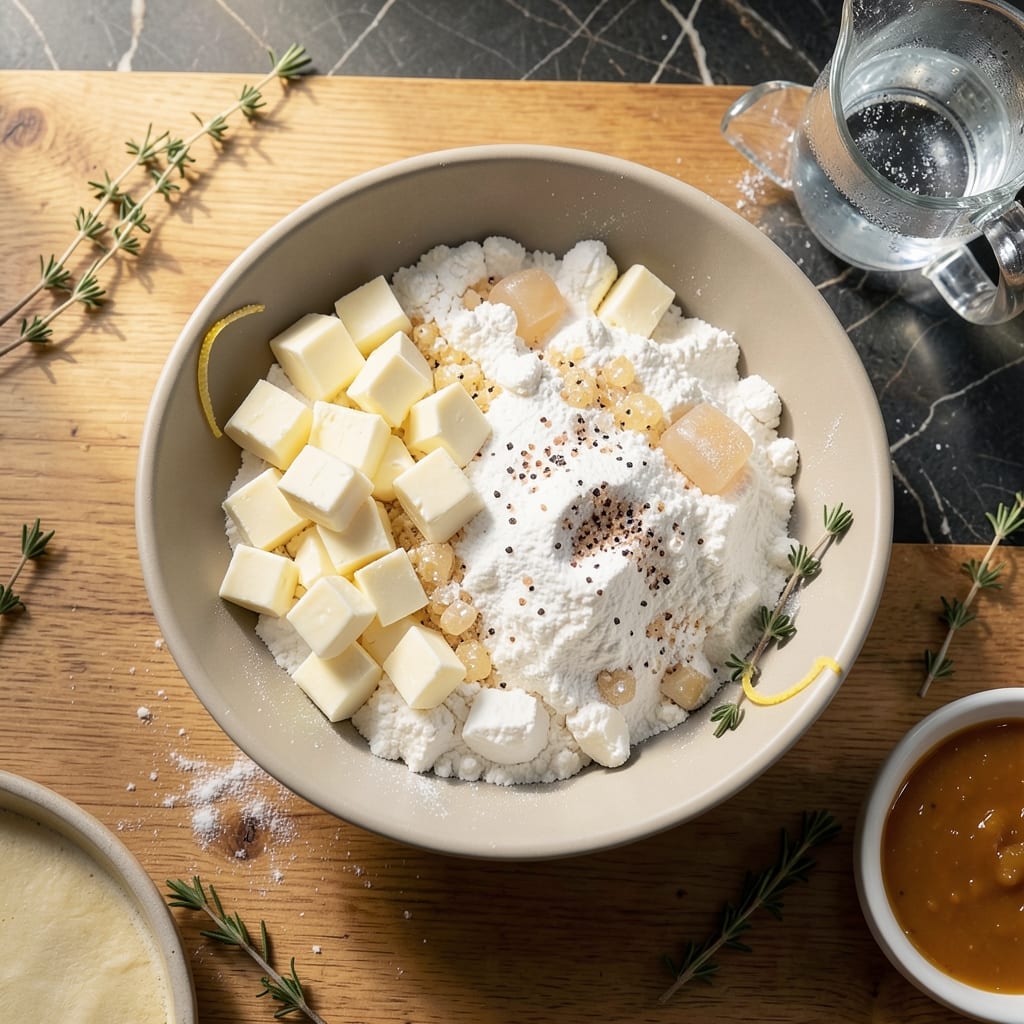
Mastering pie crust transforms your baking from good to extraordinary. A perfect crust delivers flaky layers and a tender bite that complements any filling.
This method focuses on cold ingredients and minimal handling to prevent tough dough. The ratio of fat to flour creates those coveted buttery layers that separate beautifully during baking.
Whether you’re making sweet fruit pies or savory quiches, this foundation works for all. The technique ensures consistent results every time you bake.
From mixing to rolling to blind baking, each step builds toward that ideal texture. These crusts hold their shape while remaining delicate and flavorful.
Ingredients for Pie Crust Recipe Ideas
Cold ingredients and precise ratios create extraordinary flaky pie crust every time you bake.
| Ingredient | Amount | Notes |
|---|---|---|
| All-Purpose Flour 🌾 | 2 ½ cups | Sifted for even texture |
| Unsalted Butter 🧈 | 1 cup | Cold, cubed for flaky layers |
| Shortening 🧈 | ½ cup | Cold, for added flakiness |
| Granulated Sugar 🍚 | 1 tbsp | Fine grain for even distribution |
| Sea Salt 🧂 | 1 tsp | Fine grain preferred |
| Ice Water 💧 | ½ cup | Plus extra as needed |
| White Vinegar 🧪 | 1 tbsp | Or apple cider vinegar |
| Large Egg Yolk 🥚 | 1 whole | Optional for richness |
| Vanilla Extract 🌿 | ½ tsp | Pure extract for best flavor |
| Lemon Zest 🍋 | ½ tsp | Optional for sweet crusts |
The fat is critical for flakiness. European-style butter (like Plugrá or Kerrygold) has higher fat content, yielding superior layers. Leaf lard is the gold standard for traditionalists, but shortening works well for stability. Always keep ingredients chilled—even the flour. King Arthur all-purpose is the benchmark for consistency in professional kitchens.
No shortening? Use additional butter at a 1:1 ratio. For a vegan crust, coconut oil or vegan butter substitutes effectively. The vinegar tenderizes the gluten—apple cider or white wine vinegar work equally well. Skip the egg yolk for savory applications; the sugar can be omitted entirely for quiches or meat pies.
Dough can be refrigerated for up to 48 hours or frozen for 3 months. For best results, rest the dough 30-60 minutes before rolling. Pre-baked shells hold for 2 days at room temperature in an airtight container, or freeze for 1 month.
Why You’ll Love This Recipe
- Five-Minute Mix: I can have the dough ready before the oven finishes preheating—just cut the cold butter and shortening into the flour and go.
- Buttery Crisp Layers: That flaky, golden crust with the hint of sea salt? It makes every bite feel like a bakery treat.
- Sweet or Savory Base: I use this for everything from apple pie to quiche—same simple dough, completely different results.
- Pantry Staples Only: All-purpose flour, sugar, butter, shortening—no special trips to the store, just what I already have on hand.
Step-by-Step Instructions for Flaky Pie Crust
Master the technique for perfect layers every time with this tested method.
Step 1: Combine Dry Ingredients
In a large mixing bowl, whisk together the 2.5 cups All-Purpose Flour, 1 tbsp Granulated Sugar, and 1 tsp Sea Salt until evenly distributed. I always sift my flour first to prevent clumps and ensure a uniform texture throughout the dough.
This dry mixture forms the structural foundation of your crust. The sugar adds subtle sweetness that balances both sweet and savory fillings, while the fine sea salt enhances all the flavors without creating grainy pockets in the finished product.
Step 2: Cut in Cold Fats
Add the 1 cup Unsalted Butter (cold and cubed) and 0.5 cup Shortening (also cold) to the flour mixture. Using a pastry cutter or your fingertips, work the fats into the flour until the mixture resembles coarse crumbs with pea-sized pieces of fat visible throughout.
Here’s the thing—the cold fat is what creates those flaky layers as it melts during baking. Work quickly to prevent the fats from warming and melting prematurely. The shortening adds extra flakiness and stability, while the butter provides that rich, buttery flavor we all love in a pie crust.
Step 3: Add Liquid Ingredients
In a small bowl, combine the 0.5 cup Ice Water, 1 tbsp White Vinegar, 1 whole Large Egg Yolk, 0.5 tsp Vanilla Extract, and 0.5 tsp Lemon Zest. The vinegar tenderizes the gluten, the egg yolk adds richness, and the vanilla and lemon zest provide subtle depth of flavor.
Create a well in the center of your flour-fat mixture and pour in the liquid ingredients. Using a fork, gently stir until the dough just begins to come together. You’ll notice it starts to form shaggy clumps—that’s your signal to stop mixing. Overworking the dough develops gluten, which makes your crust tough rather than tender.
Step 4: Chill and Rest the Dough
Turn the dough out onto a lightly floured surface and gently shape it into a disc. Don’t knead it—just press it together until it holds its shape. Wrap the disc tightly in plastic wrap and refrigerate for at least 1 hour (or up to 2 days).
This resting period allows the gluten to relax and the fats to re-solidify. It also gives the flour time to fully hydrate. When you roll out chilled dough, it’s much less likely to shrink during baking. If the dough feels too firm after chilling, let it sit at room temperature for 5-10 minutes before rolling.
Step 5: Roll and Shape for Baking
On a lightly floured surface, roll the chilled dough to about ⅛-inch thickness for a standard pie crust. Use light, even pressure and rotate the dough occasionally to prevent sticking. If the dough starts to crack at the edges, press it back together with your fingers.
Transfer the rolled dough to your pie dish, gently pressing it into the bottom and up the sides. Trim the edges, leaving about ½ inch overhang, then fold and crimp to create a decorative edge. For a pre-baked crust, dock the bottom with a fork and blind bake at 375°F for 15-20 minutes until light golden brown.
Pro Tips For Making Pie Crust Recipe Ideas
- Chill Your Fat: Keep your unsalted butter and shortening ice-cold until the last second—I learned this the hard way after three soggy crusts. Cold fat creates flaky layers, so don’t let it soften on the counter.
- Use Both Fats: My grandmother swore by this, and she was right: mixing butter for flavor and shortening for flakiness gives you the best of both worlds. About 2 parts butter to 1 part shortening works perfectly.
- Skip Overworking: After burning a few pies to a crisp, I finally figured out that handling the dough too much develops gluten, making it tough. Stop mixing as soon as it comes together—yes, even if it looks shaggy.
- Rest the Dough: Give it a solid 30 minutes in the fridge before rolling—I was skeptical until I tried it. This relaxes the gluten and makes the crust easier to handle, so resist the urge to rush.
Wine and Beer Pairings for This Dish
Sweet Wine Pairings
For fruit pies, a Moscato d’Asti from Italy offers light effervescence that complements the buttery crust beautifully. I also love Riesling Kabinett from Germany—its crisp acidity cuts through the richness while enhancing the filling’s natural sweetness. 🍷
Rich Dessert Wines
Ice wine or Sauternes pairs wonderfully with custard or cream pies. The honeyed notes in these wines mirror the caramelized sugars in the crust. Try a Canadian Icewine for an affordable option that still delivers luxury.
Beer for Savory Pies
With quiche or meat pies, reach for a Belgian Tripel like Westmalle. Its fruity esters and spice notes balance the crust’s richness. For a darker option, Oatmeal Stout adds chocolate and coffee undertones that work surprisingly well. 🍺
Coffee Pairings
A medium roast with a splash of cream highlights the butter in your crust. I particularly enjoy Ethiopian Yirgacheffe—its floral notes contrast beautifully with the flaky layers. The bitterness also resets your palate between bites.
Sparkling Options
Prosecco or Champagne cleanses the palate between slices of any pie. The bubbles cut through the fat, making each bite taste fresh. I always keep a chilled bottle of La Marca Prosecco on hand for impromptu dessert pairings.
Nutrition Facts
Frequently Asked Questions
What’s the secret to extra flaky layers?
Keep all ingredients ice-cold and avoid overworking the dough. The pea-sized fat pieces create steam during baking, which separates the layers.
Can I make this ahead of time?
The dough stays fresh in the fridge for 48 hours or can be frozen for 3 months. Thaw overnight before rolling.
Why did my crust shrink during baking?
This usually happens if the dough wasn’t rested long enough. Chill for at least 1 hour to let the gluten relax before rolling.
Can I use all butter instead of the butter-shortening mix?
Yes, but the texture will be slightly different. Use 1.5 cups butter to replace the combined fats. Shortening adds stability.

- Potato Candy Recipe 1933: Vintage Peanut Butter Roll Delight - October 30, 2026
- Potato Chip Cookie Recipe With Pecans: Buttery Crunch Meets Nutty Richness - October 30, 2026
- Potato Patty Recipe No Egg: Crispy Edges Without the Binder - October 30, 2026