
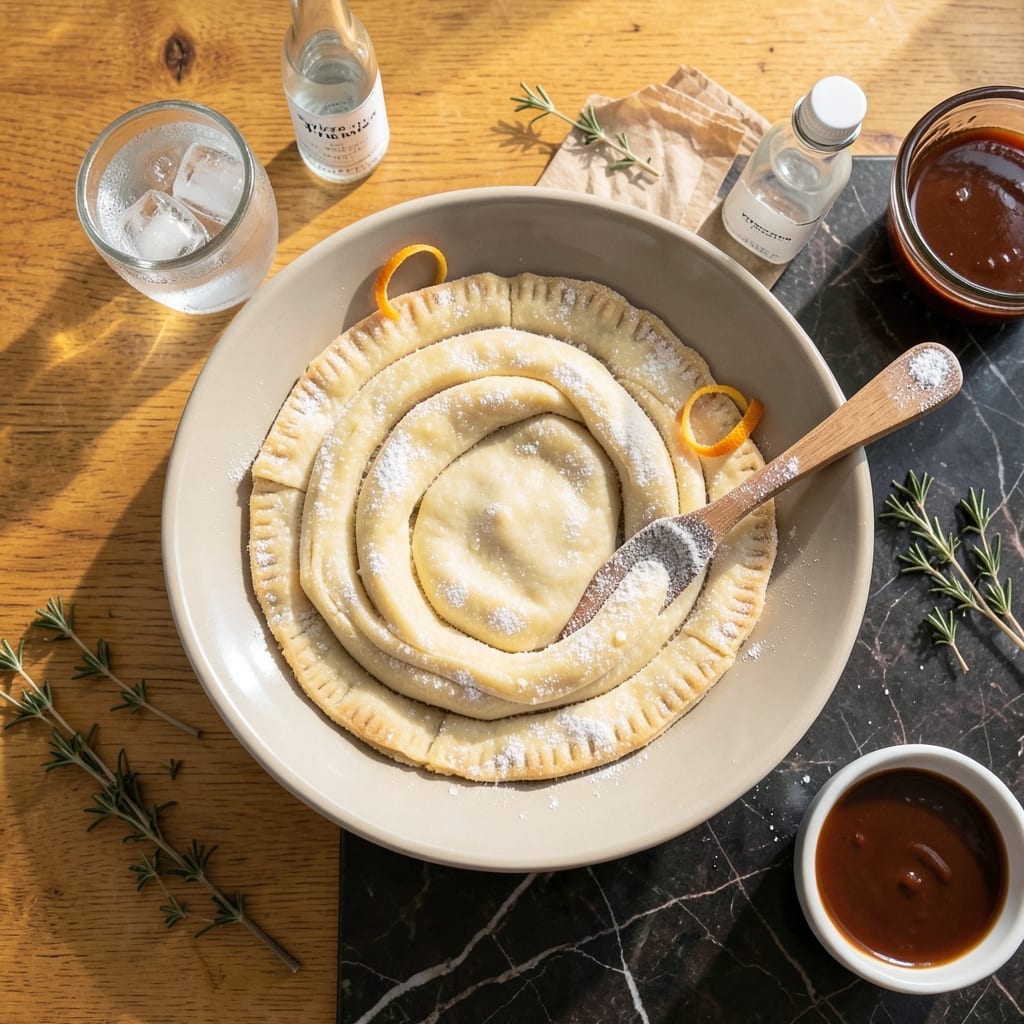
Achieving perfectly flaky pie crust without eggs is simpler than you might think. This method relies on cold butter and precise technique to create layers that shatter with every bite.
The key is handling the dough minimally and keeping all ingredients ice-cold. Vinegar in the water inhibits gluten development, ensuring a tender rather than tough crust.
With just a few basic ingredients and 10 minutes of active prep, you’ll have a golden, buttery crust that holds its shape beautifully. It’s ideal for both sweet and savory pies.
This recipe proves that eggs aren’t necessary for a superior pie crust. The result is consistently flaky, delicious, and foolproof.
Ingredients for Pie Crust Recipe No Egg
A handful of cold ingredients and precise technique yield flaky, egg-free pie crust every time.
| Ingredient | Amount | Notes |
|---|---|---|
| All-Purpose Flour 🌾 | 2 ½ cups | Sifted for even texture |
| Unsalted Vegan Butter 🧈 | 1 cup | Chilled, cut into cubes |
| Ice Water 💧 | ½ cup | Plus 1 tbsp vinegar |
| White Vinegar 🍶 | 1 tbsp | Inhibits gluten formation |
| Granulated Sugar 🍚 | 1 tsp | Optional, for sweet crusts |
| Fine Sea Salt 🧂 | 1 tsp | Diamond Crystal preferred |
| Neutral Vegetable Shortening 🧈 | ¼ cup | Optional, for extra flakiness |
The butter is critical here—use a high-fat vegan brand like Miyoko’s or Earth Balance. It must stay ice-cold throughout the process, so chill your mixing bowl and pastry cutter too. For the flour, King Arthur or Bob’s Red Mill produce consistent results. The vinegar isn’t just for flavor; it’s the key to tenderizing the dough without eggs. Keep everything cold, even your hands (run them under cold water first).
No vegan butter? Coconut oil (solid, unrefined) works in a pinch, though the flavor will be more pronounced. Swap the vinegar for lemon juice at the same ratio if preferred. For a whole wheat version, replace up to half the all-purpose flour with whole wheat pastry flour. The sugar can be omitted for savory crusts, or increased to 1 tbsp for sweeter applications.
The dough can rest in the fridge for up to 2 days or frozen for 3 months. Once baked, the crust keeps at room temperature for 24 hours or in the freezer for 1 month. For best results, blind-bake the same day you roll it out—this prevents the butter from warming too much before baking.
Why You’ll Love This Recipe
- No Fuss Mixing: I just stir flour, cold vegan butter, ice water, and a splash of vinegar—no eggs, no stress.
- Buttery Flake: The vinegar and vegan butter create layers so crisp and tender I swear I hear angels singing.
- Endless Uses: Sweet pies, savory tarts, even hand pies for lunchboxes—this crust does it all.
- Pennywise Perfection: All-purpose flour and store-brand butter keep it cheap, and I’ve yet to find a better crust for the price.
Step-by-Step Instructions for Pie Crust No Egg
Achieve perfect flakiness with this method that relies on technique rather than traditional binders.
Step 1: Combine Dry Ingredients and Cold Fat
In a large mixing bowl, whisk together the 2.5 cups All-Purpose Flour, 1 tsp Granulated Sugar, and 1 tsp Fine Sea Salt until evenly distributed. The sugar, though optional, adds a subtle sweetness that enhances both sweet and savory crusts.
Add the 1 cup Unsalted Vegan Butter (chilled and cut into cubes) and 0.25 cup Neutral Vegetable Shortening to the flour mixture. The combination of butter and shortening creates the ideal texture: butter for flavor, shortening for extra flakiness. Use a pastry cutter or your fingertips to work the fat into the flour until the mixture resembles coarse crumbs with pea-sized fat pieces visible.
Step 2: Incorporate Liquid Gradually
Create a well in the center of the flour-fat mixture. Add the 1 tbsp White Vinegar to the 0.5 cup Ice Water. The vinegar tenderizes the dough by inhibiting gluten formation, which is crucial for a flaky texture without eggs.
Pour about ¼ cup of the ice water mixture into the well. Using a fork, gently stir the mixture, gradually incorporating the flour from the edges. Continue adding the remaining water 1 tablespoon at a time, just until the dough begins to come together. The dough should be shaggy and slightly crumbly—overworking it will develop gluten and result in a tough crust.
Step 3: Form and Chill the Dough
Turn the dough out onto a lightly floured surface. Gently knead it just until it forms a cohesive ball, about 3-4 turns. Divide the dough into two equal portions for a double-crust pie or leave whole for a single crust. Flatten each portion into a disk about 1-inch thick to make rolling easier later.
Wrap the disks tightly in plastic wrap and refrigerate for at least 1 hour, or up to 2 days. Chilling relaxes the gluten and firms the fat, both essential for achieving flaky layers. The dough is ready to roll when it feels cold and firm but not rock-hard.
Step 4: Roll and Shape the Crust
On a lightly floured surface, roll one disk of dough into a circle about 12 inches in diameter for a 9-inch pie pan, turning the dough occasionally to prevent sticking. The edges should be slightly thicker than the center to prevent shrinking during baking.
Transfer the rolled dough to the pie pan by folding it in quarters, then unfolding it gently. Press the dough lightly into the pan without stretching it. Trim the edges, leaving a ½-inch overhang for crimping. For a pre-baked crust, dock the bottom with a fork to prevent puffing and chill for another 30 minutes before baking.
Pro Tips For Making Pie Crust Recipe No Egg
- Chill the Butter: Cut the vegan butter into small cubes and freeze for 10 minutes before mixing—I learned this the hard way after ending up with a tough crust from melted butter.
- Ice the Water: Use truly ice-cold water, not just cold tap water, to keep the fat solid while mixing. My grandmother swore by this, and she was right.
- Skip Overworking: Mix just until the dough comes together; overworking develops gluten and makes the crust tough. Sounds weird, but it works.
- Add Vinegar Last: Stir the white vinegar into the ice water before adding to the flour mixture—it helps tenderize the crust without altering the flavor. I was skeptical until I tried it.
Regional Styles of This Dish
Southern Style
Down South, we often use leaf lard instead of butter for an ultra-flaky texture. The trick is keeping it ice-cold and working quickly. I learned this from my grandmother, who swore by 2 parts lard to 1 part butter for the perfect balance of flavor and flake. 💛
Northern Tradition
In New England, many bakers add 1 tbsp vodka to the water for an even more tender crust. The alcohol evaporates during baking, leaving a lighter texture. I use Tito’s Handmade Vodka for this method—it’s neutral and affordable.
Midwestern Twist
Midwestern bakers often incorporate 1 tbsp sour cream into the dough for extra richness. This adds a subtle tang that works beautifully with fruit pies. I like to use Daisy brand for consistency.
French Influence
A French-inspired version uses 1 tbsp cold cognac in place of vinegar. This adds depth and complexity to the crust. I recommend Hennessy VS for its smooth, balanced flavor.
Texas Two-Step
In Texas, some bakers use half butter and half vegetable shortening for a crust that’s both flaky and sturdy. This works especially well for deep-dish pies. I’ve had great results with Crisco all-vegetable shortening.
West Coast Vegan
On the West Coast, many vegan bakers use coconut oil instead of butter. Use refined coconut oil to avoid a strong coconut flavor. I’ve found Nutiva Organic works best for this substitution.
Nutrition Facts
Frequently Asked Questions
Why use vinegar in the dough?
The 1 tbsp vinegar inhibits gluten formation, keeping the crust tender instead of tough. It also adds a subtle tang that complements both sweet and savory fillings.
Can I substitute coconut oil for butter?
Yes, use refined coconut oil (solid) in a 1:1 ratio for butter. Keep it ice-cold and work quickly to maintain flakiness. The flavor will be slightly more pronounced.
How long can I store the dough?
Wrapped tightly, the dough keeps in the fridge for up to 2 days or in the freezer for 3 months. Thaw frozen dough overnight in the refrigerator before rolling.
What if my crust shrinks while baking?
This usually means the dough wasn’t chilled enough or was stretched when placed in the pan. Always chill for at least 1 hour and avoid pulling the dough.

- Potato Candy Recipe 1933: Vintage Peanut Butter Roll Delight - October 30, 2026
- Potato Chip Cookie Recipe With Pecans: Buttery Crunch Meets Nutty Richness - October 30, 2026
- Potato Patty Recipe No Egg: Crispy Edges Without the Binder - October 30, 2026