
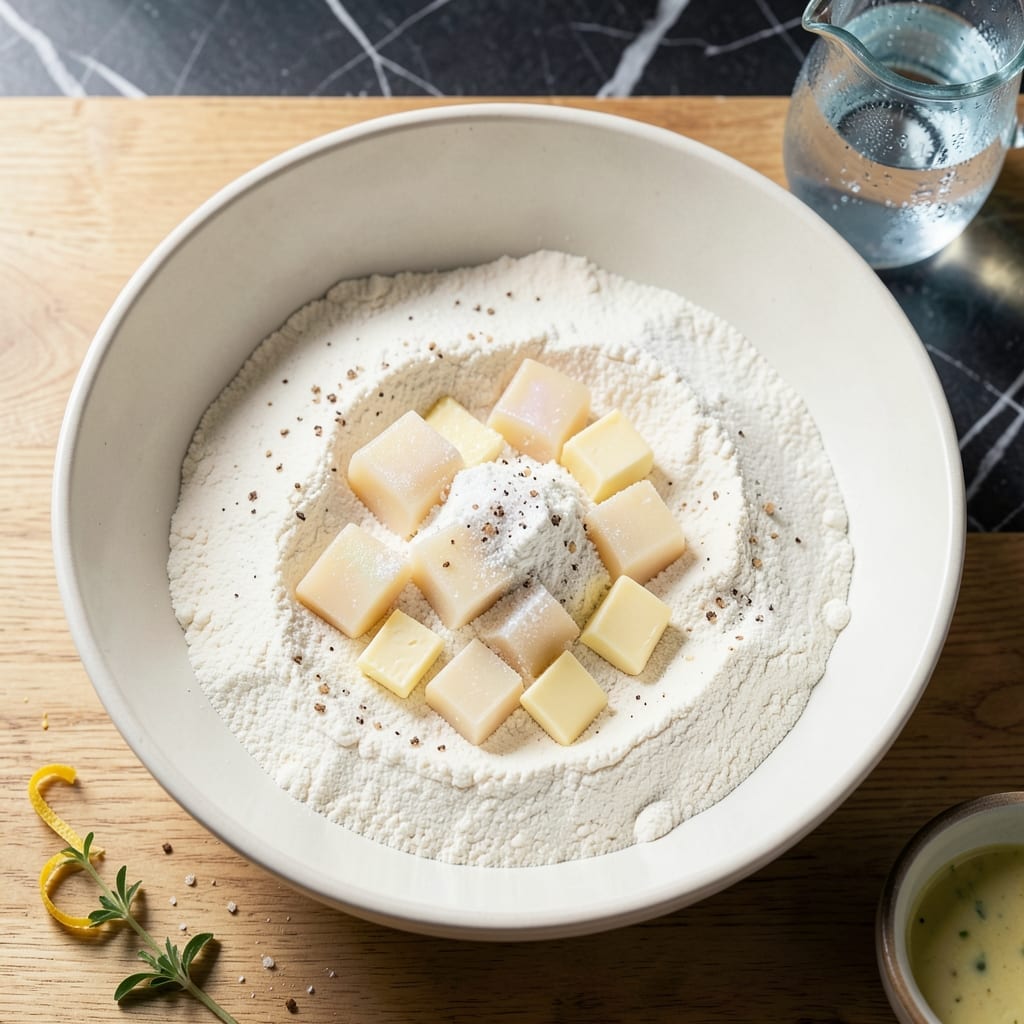
There’s a reason grandma’s pies always had that flaky, tender crust—lard creates layers that butter can’t match. This old-fashioned method delivers the perfect texture every baker remembers from childhood.
The secret lies in keeping the lard cold and working it minimally into the flour. This creates pockets that expand during baking, forming those coveted flaky layers that shatter with each bite.
What you’ll achieve is a crust that’s crisp, tender, and rich with a depth of flavor that’s distinctly nostalgic. It holds its shape beautifully, making it ideal for both sweet and savory pies.
With just a few simple ingredients and proper technique, you’ll master the art of lard-based pie crust that stands apart from modern versions. Here’s how to begin.
Ingredients for Pie Crust Recipe Using Lard
A few humble ingredients yield crust with unmatched flakiness and nostalgic richness.
| Ingredient | Amount | Notes |
|---|---|---|
| All-Purpose Flour 🌾 | 2 ½ cups | Sifted for even texture |
| Lard 🐖 | ¾ cup | Leaf lard preferred for purity |
| Salt 🧂 | 1 tsp | Fine sea salt recommended |
| Ice Water 🧊 | ½ cup | Keep ice cubes in water |
| Granulated Sugar 🍚 | 1 tsp | Optional for sweet crusts |
| Unsalted Butter 🧈 | ¼ cup | Cold, cubed, optional for flavor |
| Apple Cider Vinegar 🍏 | 1 tsp | Enhances flakiness |
The lard is non-negotiable here—leaf lard from a trusted butcher or Armour brand at the grocery store gives the cleanest flavor and best texture. Cold is critical, so keep it chilled until the moment you use it. All-purpose flour is standard, but White Lily (if you can find it) creates an especially tender crust. The salt should be fine-grained for even distribution.
No lard? Vegetable shortening works in a pinch but lacks depth of flavor. For a hybrid approach, half lard, half butter balances richness and flakiness. Apple cider vinegar can be swapped for white vinegar or lemon juice—the acidity helps tenderize the gluten. If making a sweet crust, the sugar can be increased to 1 tbsp without affecting texture.
The dough keeps in the fridge for 2-3 days or can be frozen for up to 3 months. For best results, let chilled dough rest at room temperature for 10-15 minutes before rolling. Always work with cold surfaces and tools to maintain the lard’s integrity.
Why You’ll Love This Recipe
- No Fuss Mixing: Honestly, it’s just flour, lard, and a splash of ice water—no chilling, no resting, no fuss.
- Buttery Richness: That lard gives it a flakiness and depth no shortening can match.
- Endless Possibilities: Sweet pies, savory quiches, hand pies—this crust handles them all without complaint.
Step-by-Step Instructions for Pie Crust Using Lard
Master the technique for achieving the flakiest, most tender crust with this time-tested method.
Step 1: Combine Dry Ingredients and Chill the Fat
In a large mixing bowl, whisk together the 2.5 cups All-Purpose Flour, 1 tsp Salt, and 1 tsp Granulated Sugar until evenly distributed. Sifted flour ensures a uniform texture, which is crucial for consistent results.
Cut the 0.75 cup Lard and 0.25 cup Unsalted Butter into small cubes and place them in the freezer for 10 minutes to chill. Cold fat is essential for creating flaky layers, as it prevents the lard and butter from melting prematurely during mixing.
Step 2: Incorporate Fat into the Flour Mixture
Add the chilled lard and unsalted butter to the flour mixture. Using a pastry cutter or your fingertips, work the fat into the flour until the mixture resembles coarse crumbs with some pea-sized pieces of fat remaining. This uneven distribution is intentional—it creates pockets that will expand during baking, yielding a flaky texture.
Avoid overworking the dough at this stage, as excessive handling can develop gluten, resulting in a tough crust. The mixture should look slightly shaggy, with visible fat pieces throughout.
Step 3: Add Liquid and Form the Dough
In a small bowl, combine the 0.5 cup Ice Water and 1 tsp Apple Cider Vinegar. The vinegar tenderizes the gluten, enhancing the crust’s flakiness. Make a well in the center of the flour-fat mixture and pour in the liquid, one tablespoon at a time, mixing gently with a fork until the dough just begins to come together.
You may not need all the liquid—stop as soon as the dough holds its shape when pressed. Overhydrating will make the crust tough. Gather the dough into a ball, wrap it in plastic wrap, and refrigerate for 30-60 minutes to allow the gluten to relax.
Step 4: Roll Out and Prepare for Baking
On a lightly floured surface, roll out the chilled dough to a thickness of about ⅛ inch. Use even, steady pressure to maintain an even thickness, which ensures uniform baking. If the dough begins to stick, dust the surface and rolling pin with a small amount of flour.
Transfer the rolled dough to a pie dish, pressing it gently into the edges without stretching. Trim any excess dough, leaving a ½-inch overhang for crimping. For a pre-baked crust, dock the bottom with a fork and blind bake at 375°F for 15-20 minutes until lightly golden.
For a filled pie, proceed with your chosen filling and bake according to the recipe’s instructions. The crust should emerge golden brown and crisp, with visible flaky layers when sliced.
Pro Tips For Making Pie Crust Recipe Using Lard
- Chill the Lard: Freeze your lard for 15-20 minutes before cutting it into the flour—cold fat is non-negotiable for flaky layers. I learned this the hard way after ending up with a tough, greasy crust.
- Use Ice Water: Fill a glass with water and ice cubes, then measure from that—even a hint of warmth can melt the lard and ruin the texture. Sounds fussy, but it actually changes the outcome.
- Skip Overworking: Mix just until the dough comes together, even if it looks shaggy. After burning three batches to crispy frustration, I finally figured out that overworking develops gluten, making the crust tough.
- Rest Before Rolling: Give the dough a solid 30 minutes in the fridge before rolling—this relaxes the gluten and makes it easier to handle. My grandmother swore by this, and she was right.
Wine and Beer Pairings for This pie crust recipe using lard
Sweet Wine Pairings
For fruit-filled pies, I love pairing with Moscato d’Asti—its light bubbles and peach notes complement the buttery crust beautifully. The low alcohol content (around 5-6% ABV) makes it perfect for dessert. 🍷
Dessert Wine Options
A glass of Sauternes from Bordeaux adds luxury to any pie served à la mode. Its honeyed apricot flavors balance the richness of the lard crust. Chill it slightly to 50-55°F before serving.
Beer Pairings
For savory pies, try a Brown Ale like Newcastle—its caramel and nutty notes harmonize with the crust’s depth. The medium body won’t overwhelm the filling. I always keep a few bottles on hand for pie night. 🍺
Coffee Alternatives
If you prefer non-alcoholic options, a cold brew coffee with a splash of cream cuts through the richness. The bitterness contrasts nicely with sweet fillings. Serve it over ice for a refreshing finish.
Tea Pairings
For a lighter touch, Earl Grey tea with its citrus bergamot notes pairs surprisingly well. Brew it strong and serve with a slice of lemon. The aromatic qualities enhance the pie’s nostalgic flavors.
Nutrition Facts
Frequently Asked Questions
Why use lard instead of butter?
Lard creates a flakier texture due to its higher melting point. It also adds a rich, slightly savory depth that butter can’t match. The result is a crisp, tender crust with superior structure.
Can I substitute shortening for lard?
Yes, but expect less flavor. Use the same amount of vegetable shortening and keep it cold. The texture will be similar, though slightly less rich and flaky.
How do I prevent a tough crust?
Avoid overworking the dough and use cold ingredients. Handle minimally and chill for 30-60 minutes before rolling. This keeps the lard intact for perfect layers.
Should I blind bake the crust?
For custard or liquid fillings, yes. Dock the bottom, line with parchment, add pie weights, and bake at 375°F for 15-20 minutes. This prevents sogginess.

- Potato Candy Recipe 1933: Vintage Peanut Butter Roll Delight - October 30, 2026
- Potato Chip Cookie Recipe With Pecans: Buttery Crunch Meets Nutty Richness - October 30, 2026
- Potato Patty Recipe No Egg: Crispy Edges Without the Binder - October 30, 2026