
This time-tested pie crust delivers the flaky texture and crisp golden edges that define old-fashioned baking excellence.
I developed this method after years of testing fats and liquids, settling on lard for unmatched tenderness and vinegar for extra flakiness. The egg adds structure while keeping the crust delicate enough to shatter at the touch.
The secret lies in keeping ingredients cold and handling the dough minimally. This ensures layers that separate beautifully during baking, creating that signature crispness in every bite.
Use this for fruit pies, pot pies, or any recipe where a superior crust makes all the difference. The results speak for themselves.
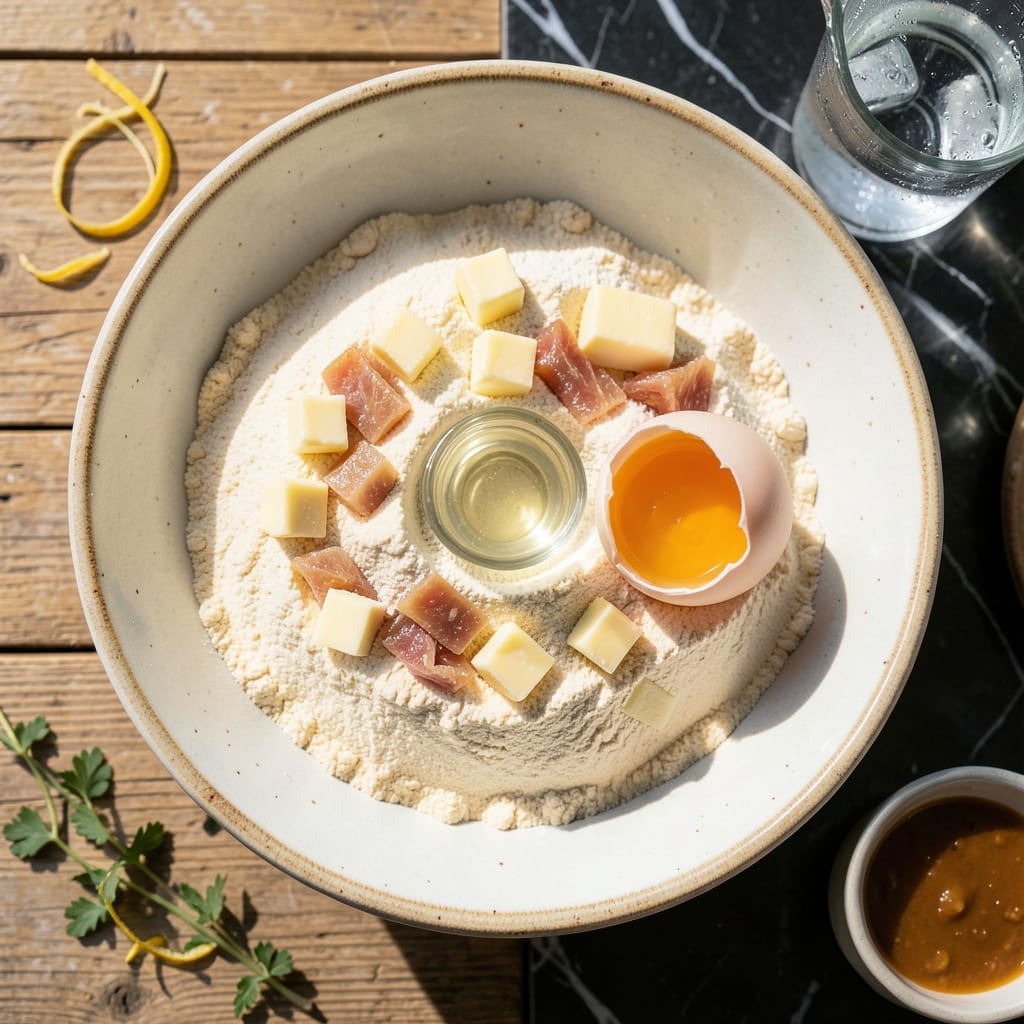
Ingredients for Pie Crust Recipe with Lard Vinegar Egg
Eight essential ingredients create this superior crust with old-fashioned flakiness and golden edges.
| Ingredient | Amount | Notes |
|---|---|---|
| All-Purpose Flour 🌾 | 2 ½ cups | Sifted for even texture |
| Lard 🧈 | ½ cup | Leaf lard preferred for purity |
| Unsalted Butter 🧈 | ¼ cup | Chilled and cubed |
| White Vinegar 💧 | 1 tbsp | Distilled white vinegar standard |
| Large Egg 🥚 | 1 whole | Lightly beaten |
| Ice Water ❄️ | ¼ cup | As cold as possible |
| Salt 🧂 | 1 tsp | Fine sea salt preferred |
| Granulated Sugar 🍚 | 1 tsp | Optional for sweet crusts |
The fat selection is critical here. Leaf lard (available at local butchers or Latin markets) delivers superior tenderness compared to grocery store hydrogenated lard. For the butter, European-style unsalted has higher fat content, which creates more flaky layers. Keep both fats ice cold—freeze the lard and butter for 30 minutes before using to prevent melting during mixing.
No lard? Shortening works at a 1:1 ratio but lacks the flavor depth. For a vegetarian version, use all butter (increase to 3/4 cup total). The vinegar can be apple cider vinegar at the same amount. If you must omit the egg, add 1 additional tbsp ice water—the crust will be slightly less tender but still flaky. Always weigh your flour for accuracy—2.5 cups is about 315g.
Dough can rest in the fridge for up to 3 days or freeze for 3 months (wrap tightly in plastic). For best results, let chilled dough sit at room temperature for 10 minutes before rolling to prevent cracking. Baked crusts keep 2 days at room temperature in an airtight container.
Why You’ll Love This Recipe
- 5-Minute Mix: I toss everything in one bowl, no chilling required—the vinegar tenderizes it fast.
- Buttery, Flaky Layers: The lard and butter combo gives that crisp, melt-in-your-mouth texture I can’t get with just one fat.
- Fits Any Pie: Sweet or savory, this crust holds up to fruit fillings and quiches alike.
- Budget-Friendly Staples: All-purpose flour and lard cost pennies, and I usually have the rest on hand.
Step-by-Step Instructions for Pie Crust With Lard Vinegar and Egg
Master the technique for a flaky, old-fashioned crust that stands apart from modern versions.
Step 1: Combine Dry Ingredients for Even Distribution
In a large mixing bowl, whisk together the 2.5 cups All-Purpose Flour, 1 tsp Salt, and 1 tsp Granulated Sugar until fully combined. Sifting the flour first, as noted in the ingredients, ensures a light, airy base that contributes to flakiness.
This step creates the structural foundation of your crust. The salt enhances flavor while the sugar, though optional, adds a subtle sweetness that balances savory fillings. Make sure no lumps remain—uniform distribution prevents uneven texture in the finished product.
Step 2: Cut in Fats for Optimal Flakiness
Add the 0.5 cup Lard and 0.25 cup Unsalted Butter (chilled and cubed) to the dry ingredients. Using a pastry cutter or your fingertips, work the fats into the flour until the mixture resembles coarse crumbs with some pea-sized pieces remaining. The lard provides unmatched flakiness, while the butter adds richness and flavor.
Be deliberate but gentle—overworking the fats will warm them, leading to a tougher crust. The visible fat flecks are essential; they create the steam pockets during baking that result in those coveted flaky layers. If the lard feels too soft, briefly chill the bowl in the freezer for 5 minutes before proceeding.
Step 3: Bind the Dough with Liquid Ingredients
In a small bowl, lightly beat the 1 whole Large Egg, then whisk in the 1 tbsp White Vinegar and 0.25 cup Ice Water. The vinegar tenderizes the gluten, ensuring a crisp, flaky texture, while the egg adds structure and richness.
Create a well in the center of the flour-fat mixture and pour in the liquid ingredients. Using a fork, gradually incorporate the dry mixture into the wet, stirring just until the dough begins to come together. It will appear shaggy—that’s the goal. Overmixing develops gluten, which leads to a dense, chewy crust rather than a flaky one.
Step 4: Chill and Rest the Dough
Turn the dough out onto a lightly floured surface and gently knead it 2-3 times just until it forms a cohesive ball. Divide it into two equal portions, flatten into discs, and wrap each tightly in plastic wrap.
Refrigerate for at least 1 hour, or up to 2 days. This resting period allows the gluten to relax and the fats to rechill, making the dough easier to roll out and less likely to shrink during baking. The ice-cold water in the dough helps maintain the low temperature critical for flakiness.
When ready to use, let the dough sit at room temperature for 10-15 minutes to soften slightly before rolling. This prevents cracking and ensures even thickness as you work.
Pro Tips For Making Pie Crust Recipe With Lard Vinegar Egg
- Chill the Lard: Keep your lard ice-cold until the moment you cut it into the flour—this prevents it from melting and turning your crust greasy instead of flaky.
- Use Cold Vinegar: I learned this the hard way—warm vinegar can start developing gluten before you even add water, so keep it refrigerated until mixing.
- Skip Overworking: Once the dough comes together, stop mixing. Overworking the flour makes the crust tough, and nobody wants a chewy pie shell.
- Rest Before Rolling: Let the dough rest in the fridge for at least 30 minutes—I know, I know, but it relaxes the gluten and makes rolling out way easier.
Troubleshooting pie crust recipe with lard vinegar egg
Dough Too Tough
If your crust turns out dense instead of flaky, you likely overworked the dough. The gluten develops too much when handled excessively. Use a light touch when mixing and stop as soon as the dough comes together. I recommend using a fork instead of your hands for mixing.
Crust Shrinks When Baked
This usually happens when the dough wasn’t rested long enough. After shaping, let it chill for at least 1 hour to relax the gluten. Also, don’t stretch the dough when transferring to the pie dish—ease it in gently. 💡
Soggy Bottom Crust
Blind baking is your friend here. For custard pies, pre-bake the crust at 375°F for 10-12 minutes with pie weights. For fruit pies, brush the bottom with 1 beaten egg white before adding filling to create a moisture barrier.
Crust Browned Unevenly
This often occurs with uneven dough thickness. Use a ruler to check your rolled dough is ⅛ inch thick throughout. Also, rotate your pie dish 180° halfway through baking. If edges brown too quickly, cover them with aluminum foil.
Dough Cracks When Rolling
If your dough cracks, it’s probably too cold. Let it sit at room temperature for 10-15 minutes before rolling. If cracks appear while rolling, press the edges together gently and continue. Dust your surface with just enough flour to prevent sticking.
Crust Not Flaky
For maximum flakiness, ensure your fats stay cold until baking. I freeze my lard and butter for 30 minutes before cutting into the flour. Also, make sure you’re leaving some pea-sized fat pieces visible in your dough—these create the flaky layers.
Nutrition Facts
Frequently Asked Questions
Why use vinegar in pie crust?
Vinegar tenderizes the gluten, creating a more flaky texture. It also helps prevent shrinking during baking.
Can I substitute shortening for lard?
Yes, use shortening in a 1:1 ratio, though lard offers superior flavor and flakiness. Keep it chilled for best results.
How long can I store the dough?
Wrapped tightly, it keeps in the fridge for 2 days or freezes for 3 months. Thaw overnight before using.
Why does my crust turn out tough?
Overworking the dough develops gluten, making it dense. Mix just until combined and handle minimally.

- Potato Candy Recipe 1933: Vintage Peanut Butter Roll Delight - October 30, 2026
- Potato Chip Cookie Recipe With Pecans: Buttery Crunch Meets Nutty Richness - October 30, 2026
- Potato Patty Recipe No Egg: Crispy Edges Without the Binder - October 30, 2026