
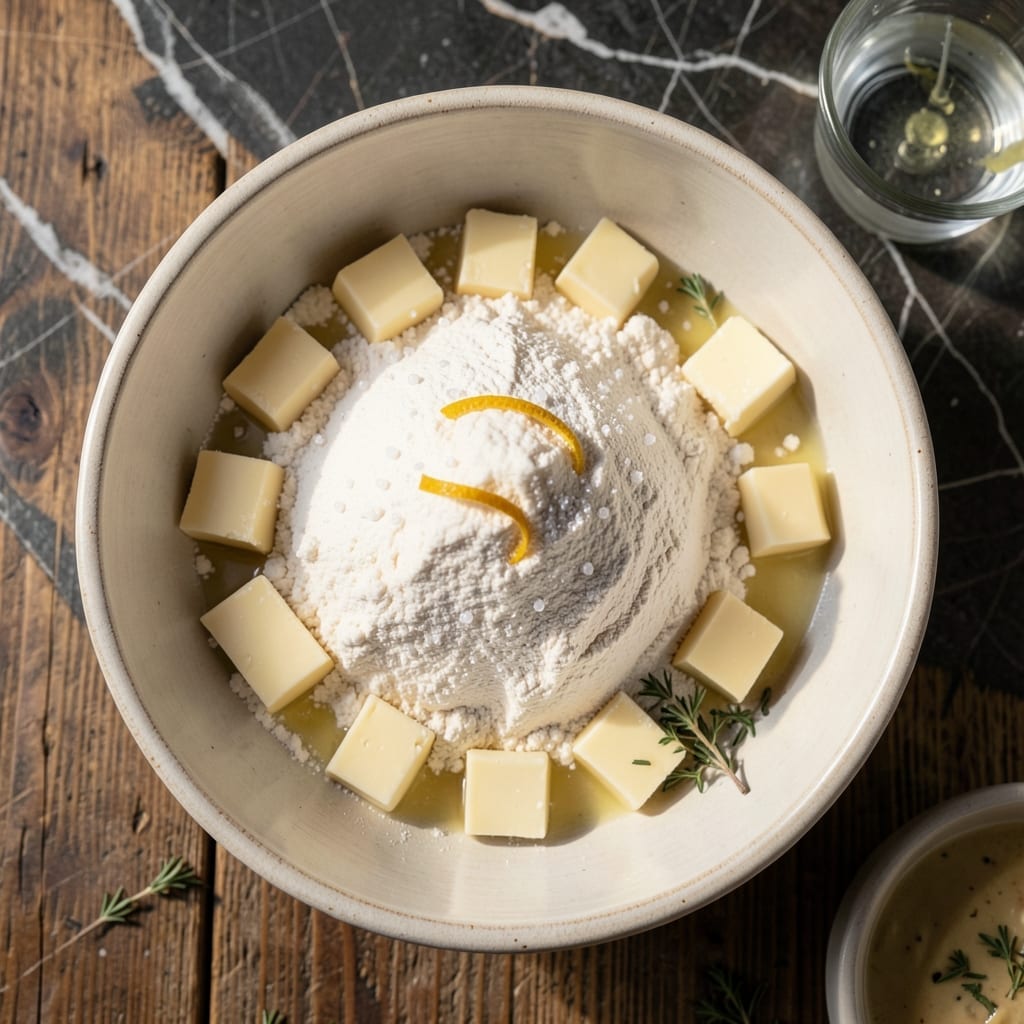
This pie crust recipe simplifies the process by using self-rising flour to eliminate the need for separate leavening agents. I developed this method after realizing how much easier it makes achieving that perfect flaky texture without extra steps.
The beauty of this approach is in its simplicity. Self-rising flour already contains the baking powder and salt, so you only need to focus on cutting in the cold butter properly. The result is a tender, flaky crust that bakes up golden and holds its shape beautifully.
What you get is a crust that’s just as reliable as traditional versions but with fewer ingredients to measure. The key is handling the dough gently and keeping everything cold until it hits the oven.
Perfect for both sweet and savory pies, this method delivers consistent results every time. Here’s how to make it work for your next baking project.
Ingredients for Pie Crust Recipe with Self Rising Flour
Six ingredients. One bowl. The flakiest crust you’ve ever made with self-rising flour.
| Ingredient | Amount | Notes |
|---|---|---|
| Self-Rising Flour 🌾 | 2 ½ cups | Do not substitute all-purpose |
| Unsalted Butter 🧈 | 1 cup | Cold, cut into small cubes |
| Ice Water 💧 | ½ cup | Plus more as needed |
| Granulated Sugar 🍚 | 1 tbsp | Optional, for sweet crusts |
| Table Salt 🧂 | ¼ tsp | Omit if using salted butter |
| White Vinegar 🍶 | 1 tsp | Helps tenderize crust |
Self-rising flour is non-negotiable here—it already contains the baking powder and salt needed for lift. White Lily is the gold standard for Southern bakers (low protein content = tender crust), but Gold Medal or Pillsbury work too. The butter must be ice-cold; I freeze mine for 15 minutes before cubing. European-style butter (like Plugrá) adds richness, but any unsalted will do.
No self-rising flour? Make your own: 2.5 cups all-purpose + 1.25 tbsp baking powder + 1 tsp salt. Short on butter? Vegan butter (like Miyoko’s) works, but chilled coconut oil is trickier—it solidifies faster. The vinegar tenderizes; apple cider or lemon juice can substitute. For sweet pies, increase sugar to 2 tbsp or add a pinch of cinnamon.
Dough keeps wrapped in plastic for 2 days in the fridge or 3 months frozen. Roll it out straight from the freezer—no thawing needed. Pre-baked crusts hold at room temp for 24 hours; fill and serve the same day for best texture.
Why You’ll Love This Recipe
- I’ll be real: I always have self-rising flour and butter on hand, so pie night never feels like a special grocery trip.
- No Fuss Mixing: I just dump the self-rising flour, cold butter, and a pinch of sugar in the bowl—no measuring leavening agents, no extra steps.
- Buttery Layers: That unsalted butter creates the flakiest crust I’ve ever made, with a hint of sweetness from the sugar.
- Holiday Ready: Between us, this crust works for pumpkin pie at Thanksgiving just as well as a quick jam tart on a lazy Sunday.
Step-by-Step Instructions for Pie Crust With Self Rising Flour
Here is the method. Straightforward, tested, works every time.
Step 1: Combine Dry Ingredients
In a large bowl, whisk together the 2.5 cups Self-Rising Flour, 1 tbsp Granulated Sugar, and 0.25 tsp Table Salt until evenly distributed. The sugar is optional but adds a subtle sweetness perfect for fruit pies.
Make sure there are no lumps in the flour mixture. This ensures even distribution of leavening agents and prevents pockets of salt or sugar in your finished crust. The self-rising flour already contains baking powder, so no additional leavening is needed.
Step 2: Cut in Cold Butter
Add the 1 cup Unsalted Butter, cold and cut into small cubes, to the dry ingredients. Using a pastry cutter or your fingers, work the butter into the flour until the mixture resembles coarse crumbs with some pea-sized butter pieces remaining.
Keep your hands light and work quickly to prevent the butter from melting. Visible butter flecks in the dough create the flaky layers we want. If the butter starts to soften, chill the mixture in the refrigerator for 10-15 minutes before proceeding.
Step 3: Add Liquid Ingredients
Create a well in the center of your flour-butter mixture. Pour in the 0.5 cup Ice Water and 1 tsp White Vinegar. The vinegar tenderizes the gluten, resulting in a more delicate crust.
Using a fork, gently mix the liquid into the dry ingredients just until the dough begins to come together. It will look shaggy—that’s normal. Overmixing develops gluten, which makes the crust tough instead of tender.
Step 4: Chill and Rest the Dough
Turn the dough out onto a lightly floured surface and gently shape it into a disk about 1 inch thick. Wrap it tightly in plastic wrap and refrigerate for at least 1 hour or up to 2 days.
This resting period allows the gluten to relax and the butter to firm up again, making the dough easier to roll out. It also prevents the crust from shrinking during baking. If the dough feels too dry, add ice water 1 tablespoon at a time until it holds together.
Step 5: Roll and Fit the Dough
On a floured surface, roll out the chilled dough to a 12-inch circle about ⅛ inch thick. Transfer it to a pie dish, pressing gently into the bottom and sides. Trim any excess dough, leaving a slight overhang for crimping.
For a pre-baked crust, prick the bottom with a fork and blind-bake at 375°F for 15-20 minutes until light golden brown. For a filled pie, proceed with your recipe—this dough works beautifully for both sweet and savory applications.
Pro Tips For Making Pie Crust Recipe With Self Rising Flour
- Chill the Butter: Cut your unsalted butter into small cubes and refrigerate for 20 minutes before mixing—I learned this the hard way after my crust turned out tough instead of flaky.
- Use Ice-Cold Water: Fill a glass with water, add ice cubes, and let it sit for 2 minutes before measuring. Sounds weird, but it works: cold water prevents the butter from melting too soon.
- Skip Overworking: Mix just until the dough comes together, even if it looks shaggy. After burning three batches, I finally figured out that overmixing develops gluten, making the crust dense.
- Rest the Dough: Give it a solid 30 minutes in the fridge before rolling out—my grandmother swore by this, and she was right: it relaxes the gluten and makes rolling easier.
Flavor Customization for This pie crust recipe with self rising flour
Sweet Enhancements
For fruit pies, increase the granulated sugar to 2 tbsp and add ½ tsp cinnamon or ¼ tsp nutmeg to the dry ingredients. This complements apple, peach, or berry fillings beautifully. I also love adding 1 tsp lemon zest for a bright, citrusy note. 💛
Savory Twists
Omit the sugar entirely for savory pies like quiche or pot pie. Instead, mix in 1 tsp dried herbs—thyme, rosemary, or oregano work well. For a cheesy crust, add ½ cup grated Parmesan to the flour before cutting in the butter.
Spiced Options
For a warm, aromatic crust, add ¼ tsp ground ginger and ⅛ tsp cloves to the flour mixture. This pairs wonderfully with pumpkin or sweet potato pies. A pinch of cardamom adds a unique, sophisticated touch.
Herb-Infused Butter
Replace ¼ cup of the cold butter with herb-infused butter. Mix ¼ cup softened butter with 1 tbsp chopped fresh herbs (like sage or tarragon), then rechill before using. This adds subtle herbal notes perfect for chicken or vegetable pot pies.
Citrus Zest Boost
Add 1 tbsp orange or lime zest to the dry ingredients for a vibrant, citrusy crust. This works especially well with key lime or lemon meringue pies. The zest brightens the flavor without overpowering the filling.
Cheese Crust
For a rich, cheesy variation, reduce the flour to 2 cups and add ½ cup shredded cheddar to the dry ingredients. This creates a delicious, savory crust that’s perfect for cheesecakes or savory tarts. I love using sharp cheddar for extra depth. ✨
Nutrition Facts
Frequently Asked Questions
Can I use all-purpose flour instead?
No, but you can make a substitute. Mix 2.5 cups all-purpose with 1.25 tbsp baking powder and 1 tsp salt. The self-rising version ensures consistent rise.
Why does the butter need to stay cold?
Cold butter creates flaky layers when it melts during baking. If it softens early, the crust becomes dense. Work quickly and chill the dough if it warms up.
How do I prevent a soggy bottom crust?
Blind-bake at 375°F for 15-20 minutes before adding wet fillings. Prick the base with a fork to allow steam to escape.
Can I freeze the dough for later use?
Yes! Wrap tightly and freeze for up to 3 months. Roll it straight from frozen—no thawing needed. Perfect for last-minute baking.

- Potato Candy Recipe 1933: Vintage Peanut Butter Roll Delight - October 30, 2026
- Potato Chip Cookie Recipe With Pecans: Buttery Crunch Meets Nutty Richness - October 30, 2026
- Potato Patty Recipe No Egg: Crispy Edges Without the Binder - October 30, 2026