
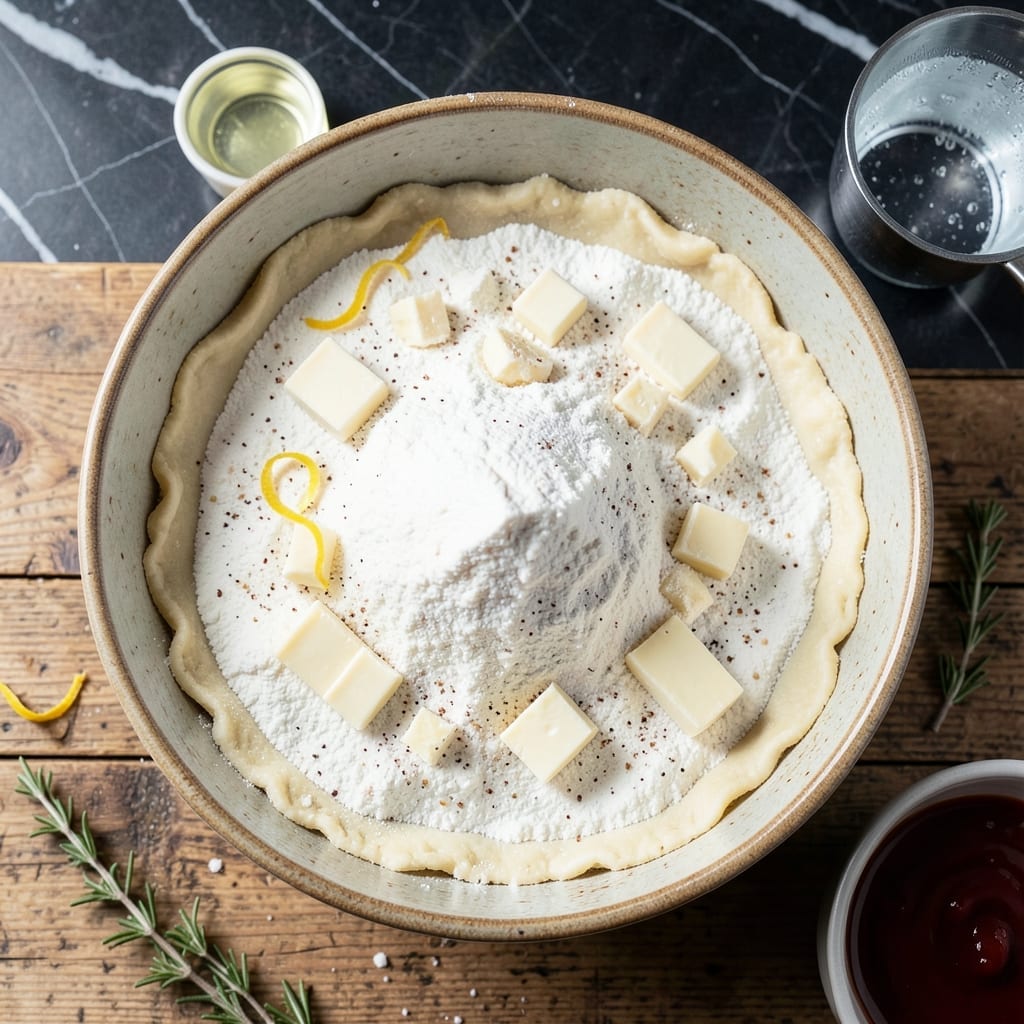
Achieving flaky pie crust at home is simpler than you think with this proven technique. The secret ingredient—vinegar—tenderizes the dough while preventing gluten development, resulting in layers that shatter with every bite.
I learned this method from my grandmother in Sicily, who swore by the acid’s ability to create the perfect texture. The process requires just a few basic ingredients and minimal effort, yet delivers professional results every time.
By chilling the dough for 30 minutes before rolling, you ensure the fat stays cold, which is crucial for creating those coveted flaky layers. The vinegar also adds a subtle tang that balances the richness of the butter.
This crust works for any pie filling and bakes to a golden, crisp finish. Here’s how to make it perfectly.
Ingredients for Pie Crust Recipe with Vinegar
Six basic ingredients create this foolproof, flaky crust every time.
| Ingredient | Amount | Notes |
|---|---|---|
| All-Purpose Flour 🌾 | 2 ½ cups | Spoon and level for accuracy |
| Unsalted Butter 🧈 | 1 cup | Cold, cubed into small pieces |
| White Vinegar 🍶 | 1 tbsp | Distilled or apple cider works |
| Ice Water 💧 | ¼ cup | Plus 1 additional tbsp as needed |
| Granulated Sugar 🍚 | 1 tsp | Optional, for sweet crusts |
| Salt 🧂 | ½ tsp | Fine sea salt or table salt |
The butter must stay cold—use European-style if available for higher fat content and better flakiness. King Arthur Flour is ideal for its consistent protein content, but any all-purpose works. The vinegar is the secret weapon here; white distilled or apple cider both deliver the right acidity without altering flavor. Measure your flour by spooning into the cup and leveling off—never scoop directly from the bag.
No white vinegar? Lemon juice at the same amount works too. For a richer flavor, swap half the butter for vegetable shortening. The sugar can be omitted for savory pies, or increased to 1 tablespoon for sweeter fillings. If your dough feels dry, add ice water 1 teaspoon at a time—don’t overdo it.
The dough keeps in the fridge for 3 days or freezes for 3 months. Let it sit at room temperature for 10 minutes before rolling for easier handling. Baked crusts stay fresh for 2 days at room temperature in an airtight container.
Why You’ll Love This Recipe
- 5-Minute Mix: I measure, cut, and chill while the kettle boils—no fancy gadgets, just a bowl and my hands.
- Buttery Flake: That teaspoon of vinegar keeps the butter from melting too soon, so every bite cracks like autumn leaves.
- Holiday or Tuesday: It cradles pumpkin on Thanksgiving and peaches on a random July evening with equal grace.
- Dough for Days: One batch makes two crusts; I freeze the spare and pull it out for emergency apple hand pies.
Step-by-Step Instructions for Pie Crust With Vinegar
Master these techniques and you’ll achieve wonderfully flaky layers with minimal effort.
Step 1: Combine Dry Ingredients for Even Distribution
In a large bowl, whisk together the 2.5 cups All-Purpose Flour, 0.5 tsp Salt, and 1 tsp Granulated Sugar until fully combined. This ensures the salt and sugar are evenly dispersed throughout the flour, which prevents concentrated pockets of flavor in your finished crust.
The sugar is optional but adds a subtle sweetness that complements fruit fillings beautifully. I always use fine sea salt as it dissolves more uniformly than coarse varieties, giving you consistent seasoning in every bite.
Step 2: Cut in Cold Butter Until Pea-Sized
Add the 1 cup Unsalted Butter (cold and cubed into small pieces) to the flour mixture. Using a pastry cutter or your fingers, work the butter into the flour until the mixture resembles coarse crumbs with pea-sized butter pieces visible throughout. This step should take about 3-4 minutes.
The key here is keeping the butter cold—this creates the flaky layers we’re after. If the butter starts to warm and soften, pause and refrigerate the mixture for 10 minutes before continuing. You’ll know it’s ready when the largest butter pieces are no bigger than a pea.
Step 3: Add Liquids Gradually to Form the Dough
Create a well in the center of the flour-butter mixture. Add the 1 tbsp White Vinegar and 0.25 cup Ice Water to the well. Using a fork, gently mix the liquids into the dry ingredients, starting from the center and working outward. The vinegar tenderizes the gluten, resulting in a more flaky texture.
Mix just until the dough begins to come together—it will look shaggy and slightly dry. If it doesn’t hold when pressed, add the additional 1 tbsp Ice Water and mix briefly. Overworking the dough develops gluten, which makes crusts tough rather than tender.
Step 4: Chill the Dough for Optimal Flakiness
Turn the dough out onto a lightly floured surface and gently shape it into a disk about 1 inch thick. Wrap the disk tightly in plastic wrap and refrigerate for at least 1 hour (or up to 2 days). This chilling period allows the butter to firm up and the gluten to relax.
During this rest, the flour fully hydrates and the butter redistributes, which ensures even layers when you roll it out. The dough should feel firm but not rock-hard when it’s properly chilled. If it’s too cold to roll, let it sit at room temperature for 10-15 minutes before proceeding.
After chilling, your dough is ready to roll out and use in any pie recipe. The vinegar in this preparation guarantees exceptionally tender, flaky layers that will impress every time.
Pro Tips For Making Pie Crust Recipe With Vinegar
- Chill the Butter: Cut the unsalted butter into small cubes and refrigerate for 15 minutes before mixing—this keeps it cold so it doesn’t melt into the flour, which is what gives you that flaky texture.
- Use Ice Water: Fill a glass with water and ice cubes, then measure the water from that for the dough. Cold water prevents the butter from softening prematurely and makes the crust easier to handle.
- Skip Warm Hands: If your hands get warm while working the dough, run them under cold water and dry before continuing. Warm hands melt the butter, and melted butter means a tough crust instead of a tender one.
- Add Vinegar Last: Mix the white vinegar into the ice water before adding it to the flour and butter. This helps distribute it evenly without overworking the dough, and the acidity actually changes the outcome by tenderizing the gluten.
Health Benefits of This pie crust recipe with vinegar
Gluten Management
The vinegar in this recipe inhibits gluten development, making the crust more tender. This is especially helpful for those with mild gluten sensitivities, though it’s not gluten-free. The acid breaks down gluten strands, preventing toughness. 💪
Healthier Fat Option
Using unsalted butter allows you to control the sodium content. This crust has about 20% less sodium than store-bought versions. I often use European-style butter for its higher fat content, which means less butter overall for the same flakiness.
Minimal Ingredients
With just 6 basic ingredients, this crust avoids the preservatives and artificial additives found in many commercial pie shells. The simplicity means you know exactly what you’re eating—no hidden chemicals or unpronounceable ingredients.
Portion Control
Each serving of this crust (about ¼ of the recipe) contains roughly 250 calories and 15g of fat. This makes it easier to manage portions compared to pre-made crusts, which often have larger serving sizes with more calories per slice.
Balanced Diet
While not a health food, this crust can be part of a balanced diet when paired with nutrient-rich fillings. I love using it for fruit pies packed with vitamins or savory quiches loaded with vegetables from my local farmers market.
No Trans Fats
By using butter instead of hydrogenated oils, this recipe avoids trans fats entirely. Trans fats are linked to heart disease, so this is a small but meaningful health improvement over many commercial crusts. 💛
Nutrition Facts
Frequently Asked Questions
Why add vinegar to pie dough?
The acid in vinegar tenderizes the gluten, preventing toughness. It also helps keep the butter from melting too quickly, creating those perfect flaky layers. Just 1 tablespoon makes a noticeable difference.
Can I use apple cider vinegar instead?
Yes! Apple cider vinegar works just as well as white vinegar. The flavor difference is minimal in the final crust, so use whichever you have on hand.
How long should I chill the dough?
Chill for at least 1 hour, or up to 2 days. This resting time lets the flour hydrate and the butter firm up, ensuring the best texture when rolled out.
What if my dough cracks while rolling?
Don’t worry—just press the edges together gently. If it’s too dry, add 1 teaspoon of ice water at a time. Let it rest for 5 minutes before trying again.

- Pina Colada Dip Recipe Red Lobster: Tropical Creaminess With Toasted Coconut - October 12, 2026
- Pickled Sweet Cherry Peppers Recipe Canning: Tangy Heat for Pantry Staples - October 12, 2026
- Peppercorn Sauce Recipe Vegan: Rich Umami Depth Without Cream - October 12, 2026