
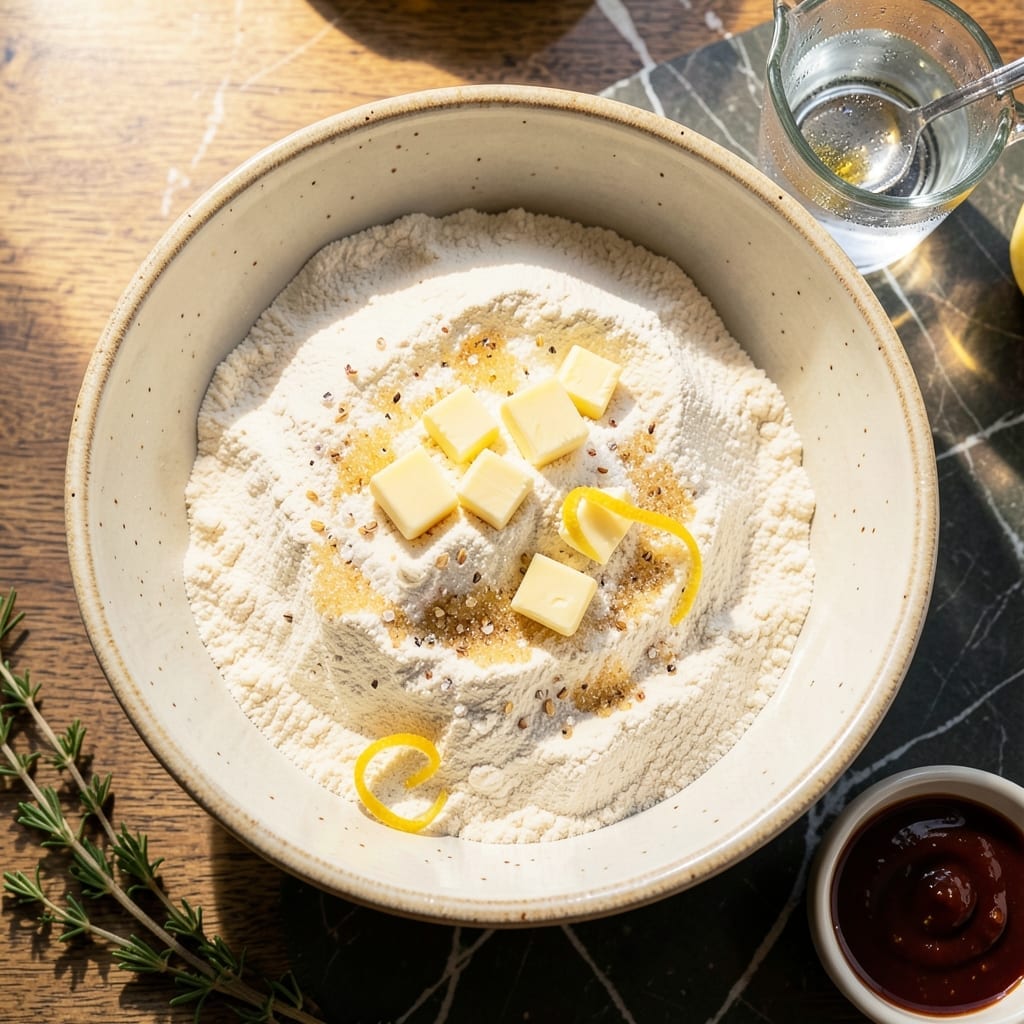
Mastering pie dough is simpler than you think—cold butter and proper technique create those flaky layers everyone craves. I developed this method after years of testing to ensure consistent success for home bakers.
The secret lies in keeping ingredients ice-cold and handling the dough as little as possible. This prevents the butter from melting prematurely, which is essential for achieving that perfect shatter when baked.
What you get is a tender, flaky crust that holds its shape and delivers that satisfying crunch with every bite. The butter creates pockets of steam as it bakes, lifting the dough into distinct layers.
With just a few ingredients and a little patience, you’ll have a pie crust that rivals any bakery. This foundation ensures your fillings shine while the crust steals the show.
Ingredients for Pie Dough Recipe with Butter
Cold butter, minimal handling, and precise measurements create that signature flaky texture everyone loves.
| Ingredient | Amount | Notes |
|---|---|---|
| All-Purpose Flour 🌾 | 2 ½ cups | Sifted, plus more for dusting |
| Unsalted Butter 🧈 | 1 cup | Ice-cold, cubed into 1/2-inch pieces |
| Granulated Sugar 🍚 | 1 tbsp | Fine grain preferred |
| Kosher Salt 🧂 | 1 tsp | Diamond Crystal preferred |
| Ice Water 💧 | ½ cup | Plus 1 tbsp as needed |
| Apple Cider Vinegar 🍏 | 1 tbsp | White vinegar works too |
| Heavy Cream 🥛 | 2 tbsp | Optional, for richer dough |
The butter is non-negotiable here—it must be ice-cold and cubed uniformly to create those steam pockets that lift into layers. European-style butter (like Plugrá or Kerrygold) has less water, which can make for a slightly crispier crust. For flour, King Arthur or Gold Medal all-purpose deliver consistent results. Weigh your flour if you have a scale—290g is the sweet spot for 2.5 cups.
No apple cider vinegar? White vinegar or lemon juice at the same amount works fine. The vinegar tenderizes the gluten—don’t skip it. For a richer dough, swap the ice water for vodka (yes, really) or add the optional heavy cream. If you’re out of kosher salt, use half the amount of table salt—it’s denser. The sugar is subtle but balances the salt; omit it if you’re making a savory pie.
This dough keeps in the fridge for 2-3 days or freezes beautifully for 3 months. Wrap it tightly in plastic, then foil to prevent freezer burn. Let it sit at room temperature for 10-15 minutes before rolling—cold dough cracks, but you don’t want it to warm up too much.
Why You’ll Love This Recipe
- Five Ingredients: I love that it’s just flour, cold butter, sugar, salt, and ice water—no weird stabilizers or shortcuts.
- Buttery Layers: The flaky, golden crust you get from real butter? Worth every minute of chilling.
- Endless Pies: Sweet or savory, this dough handles fruit pies, pot pies, even hand pies without complaint.
- Freezer Friendly: I always make a double batch—it keeps beautifully for up to three months, ready for impromptu baking.
Step-by-Step Instructions for Pie Dough With Butter
Master this method and produce consistently flaky, tender dough for any pie.
Step 1: Pulse Flour, Sugar, and Salt
In the bowl of a food processor, combine the 2.5 cups All-Purpose Flour, 1 tbsp Granulated Sugar, and 1 tsp Kosher Salt. Pulse 3-4 times until the mixture is evenly distributed and aerated. This initial step ensures the dry ingredients are well incorporated before adding the fat.
I always sift my flour first, as specified in the ingredients, to prevent dense pockets that could toughen the final dough. The sugar adds subtle sweetness and aids in browning, while the salt enhances all the flavors. Avoid over-pulsing at this stage—you want to maintain a light, airy base.
Step 2: Cut in the Cold Butter
Add the 1 cup Unsalted Butter, cubed into ½-inch pieces and kept ice-cold, to the flour mixture. Pulse in 1-second bursts for 10-15 seconds total until the butter is reduced to pea-sized crumbs with some larger, flat pieces remaining. This uneven texture is critical for creating those coveted flaky layers.
The key here is keeping the butter cold—it should never melt or form a paste. If the butter begins to soften, pause and chill the mixture for 5 minutes before continuing. The visible butter pieces will create steam during baking, which separates the dough into distinct, shatteringly crisp layers.
Step 3: Add Liquid Ingredients Gradually
Combine the 0.5 cup Ice Water, 1 tbsp Apple Cider Vinegar, and 2 tbsp Heavy Cream in a small bowl. With the food processor running, drizzle this liquid mixture through the feed tube in a slow, steady stream, processing just until the dough begins to clump together—about 5-8 seconds.
The vinegar tenderizes the gluten, ensuring a flakier texture, while the heavy cream adds richness and a bit of extra fat for a more forgiving dough. Stop as soon as the dough starts to hold together; overworking will develop gluten and make the crust tough. The mixture should look shaggy, not smooth.
Step 4: Form and Chill the Dough
Turn the dough out onto a lightly floured surface. It will be slightly crumbly but should hold together when pressed. Gently knead the dough 2-3 times just until it comes together into a cohesive mass. Divide it into two equal portions and shape each into a 1-inch-thick disk.
Wrap each disk tightly in plastic wrap and refrigerate for at least 1 hour, or up to 2 days. Chilling relaxes the gluten and allows the butter to firm up, making the dough easier to roll out and preventing shrinking during baking. This rest is non-negotiable for achieving the flakiest results.
Pro Tips For Making Pie Dough Recipe With Butter
- Chill Your Butter: Cube the butter and freeze it for 15-20 minutes before mixing—I learned this the hard way after ending up with flat, tough crusts from warm butter.
- Use Ice-Cold Water: Fill a glass with ice cubes and water, then measure from that—this keeps the dough cold throughout mixing, which is non-negotiable for flaky layers.
- Stop Overworking It: Mix just until the dough comes together, even if it looks shaggy. After ruining two pies by over-kneading, I finally accepted that less handling means better texture.
- Rest Before Rolling: Wrap the dough and refrigerate for at least 1 hour—sounds tedious, but it relaxes the gluten and makes rolling out way easier (yes, even if you’re impatient like me).
Best Sauces and Condiments for This pie dough recipe with butter
Sweet Pairings
For fruit pies, I love serving warm slices with a scoop of vanilla bean ice cream—the cold contrast against hot filling is irresistible. Whipped cream with a touch of cinnamon adds another layer of warmth to apple or peach pies.
Savory Enhancements
For savory pies like quiche, try a dollop of crème fraîche or sour cream to complement the richness. A drizzle of hot honey over buttery crust adds a sweet-spicy kick that’s surprisingly addictive. 💫
Saucy Accompaniments
A berry compote with 1 cup mixed berries and 2 tbsp sugar simmered for 10 minutes makes an elegant topping. For chocolate pies, a salted caramel sauce elevates the dessert to restaurant quality.
Herbal Infusions
Infuse your whipped cream with 1 tsp vanilla extract or fresh herbs like thyme for fruit tarts. A sprinkle of flaky sea salt on caramel or chocolate pies enhances all the flavors beautifully.
Nutrition Facts
Frequently Asked Questions
Why must the butter stay ice-cold?
Cold butter creates steam pockets during baking, which lift the dough into flaky layers. If it warms up, it melts prematurely and the crust becomes dense instead of light and crisp.
Can I make this dough without a food processor?
Yes! Use a pastry cutter or two forks to work the cold butter into the flour until pea-sized crumbs form. The texture may vary slightly, but the result will still be delicious.
What if my dough cracks while rolling?
Let it rest at room temperature for 5-10 minutes to soften slightly. If cracks persist, press the edges together with your fingers and continue rolling. Chilled dough cracks when too cold.
How do I prevent a soggy bottom crust?
Pre-bake the crust for 10-12 minutes before adding wet fillings. Also, brush the crust with a thin layer of beaten egg white to create a moisture barrier.

- Potato Candy Recipe 1933: Vintage Peanut Butter Roll Delight - October 30, 2026
- Potato Chip Cookie Recipe With Pecans: Buttery Crunch Meets Nutty Richness - October 30, 2026
- Potato Patty Recipe No Egg: Crispy Edges Without the Binder - October 30, 2026