
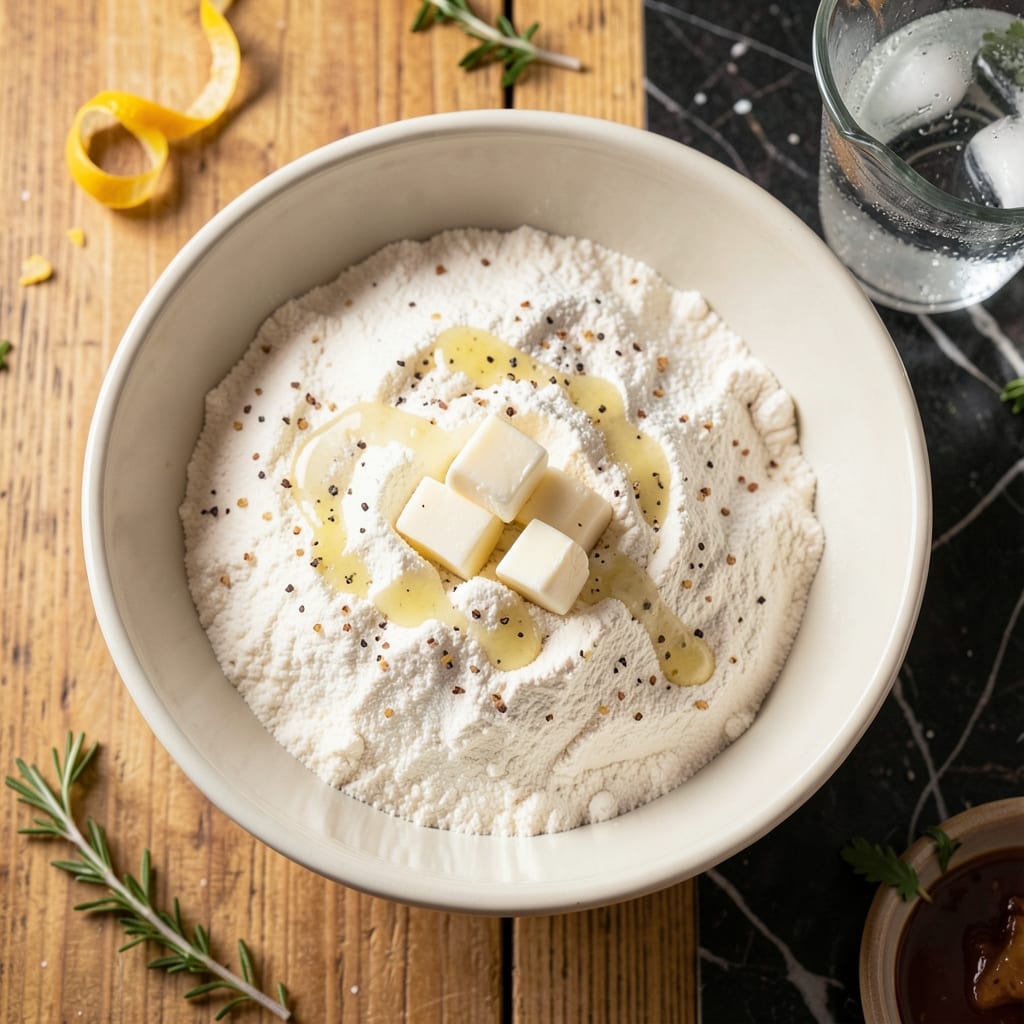
This pie dough delivers flaky, tender results without a trace of butter. I developed this method after realizing shortening creates a more stable crust that holds its shape beautifully in the oven.
The process is straightforward: cut cold shortening into flour until pea-sized crumbs form, then add just enough ice water to bring it together. Chilling the dough for 30 minutes ensures it rolls out smoothly without shrinking.
What emerges is a crust that bakes up golden and crisp, with a texture that’s both sturdy and delicate. It’s perfect for fruit pies, pot pies, or any dish where you want that classic flaky finish.
Best of all, it keeps its shape and structure better than butter-based doughs. Here’s how to make it.
Ingredients for Pie Dough Recipe with Shortening
Simple ingredients create that perfect flaky crust every time with no fuss.
| Ingredient | Amount | Notes |
|---|---|---|
| All-Purpose Flour 🌾 | 2 ½ cups | Plus extra for dusting surface |
| Vegetable Shortening 🧈 | ¾ cup | Cold, cut into small cubes |
| Ice Water 💧 | ½ cup | Plus 1 tbsp as needed |
| Salt 🧂 | 1 tsp | Fine table or kosher salt |
| Granulated Sugar 🍚 | 1 tbsp | Optional for sweet pies |
| White Vinegar 💧 | 1 tbsp | Helps tenderize the crust |
| Unsalted Butter 🧈 | 2 tbsp | Optional for flavor boost |
The shortening is key here—Crisco is the classic choice, but any vegetable-based shortening works. Make sure it’s cold straight from the fridge (or freezer for 15 minutes if it’s been sitting out). The flour should be all-purpose; King Arthur or Gold Medal are reliable. I always keep an extra bag in the freezer to ensure it’s ice-cold when I start. The vinegar might seem odd, but it’s doing important work behind the scenes.
No shortening? Cold lard works in a pinch (though not vegetarian). Swap the vinegar for lemon juice if that’s what you’ve got. The sugar is optional—skip it for savory pies, keep it for fruit. If your kitchen is warm, chill the flour for 30 minutes before starting. The water needs to be ice-cold (I keep a glass of water with ice cubes in the freezer for this exact purpose).
The dough keeps 2-3 days wrapped tight in the fridge, or freeze for 3 months. Let it warm slightly before rolling—cold dough cracks. Baked crusts hold 1 week at room temp in an airtight container.
Why You’ll Love This Recipe
- No Fuss Mixing: I just cut the shortening into the flour with a fork—no pastry cutter, no stress.
- Flaky Every Time: The shortening gives that perfect tender, layered texture I crave in a pie crust.
- Freezer Friendly: I roll out extra dough, freeze it, and have pie crust ready for impromptu baking.
- Penny Wise: A cup of shortening costs less than butter but still turns out a rich, golden crust.
Step-by-Step Instructions for Pie Dough With Shortening
This method delivers flaky layers every time with minimal effort.
Step 1: Combine Dry Ingredients
In a large bowl, whisk together the 2.5 cups all-purpose flour, 1 tsp salt, and 1 tbsp granulated sugar until evenly distributed. I always sift my flour first to break up any lumps—this ensures a uniform texture in the finished dough.
The sugar is optional but I recommend it for pies that need a hint of sweetness. It also helps with browning. Make sure your salt is fine table or kosher as specified; coarse salt won’t dissolve properly and can leave unpleasant crunchy bits in your crust.
Step 2: Cut in the Shortening and Butter
Add the cold 0.75 cup vegetable shortening (cut into small cubes) and 2 tbsp unsalted butter to the flour mixture. Using a pastry cutter or two forks, work the fats into the flour until the mixture resembles coarse crumbs with some pea-sized pieces remaining.
Here’s the thing—don’t overmix. Those visible fat pieces are what create flaky layers in your crust. I like to use cold butter in addition to shortening for that extra flavor boost. The mixture should look uneven, not smooth.
Step 3: Add Liquid Ingredients
Create a well in the center of your flour mixture. Pour in the 0.5 cup ice water and 1 tbsp white vinegar. The vinegar might seem weird, but it tenderizes the gluten for a more delicate crust.
Using a fork, gently stir the mixture from the center outward until it just begins to come together. The dough will look shaggy—that’s perfect. If it seems too dry, add the reserved 1 tbsp ice water as needed, but don’t make it wet.
Step 4: Form and Chill the Dough
Turn the dough out onto a lightly floured surface (use extra all-purpose flour from your stash). Gently knead it just until it comes together into a smooth ball—about 4-5 turns. Overworking develops gluten, which makes tough crust.
Divide the dough in half and flatten each portion into a disc about 1 inch thick. Wrap in plastic wrap and refrigerate for at least 1 hour (or up to 2 days). Chilling relaxes the gluten and makes the dough easier to roll out.
Pro Tips For Making Pie Dough Recipe With Shortening
- Chill the Shortening: I learned this the hard way—warm shortening ruins flakiness. Pop it in the freezer for 10 minutes before mixing, and keep it cold until the dough comes together.
- Use Ice-Cold Water: After my first few soggy crusts, I finally figured out that even slightly warm water melts the shortening too fast. Keep a bowl of ice water next to you and measure from that.
- Don’t Overwork It: Sounds weird, but it works: stop mixing as soon as the dough holds together. Overworking develops gluten, and your crust will turn out tough instead of tender.
- Rest Before Rolling: Give the dough a solid 30 minutes in the fridge before rolling—I was skeptical until I tried it, but it prevents shrinking and makes handling way easier.
Creative Variations of pie dough recipe with shortening
Sweet Potato Hand Pies
Swap the sugar for 2 tbsp brown sugar and add 1 tsp cinnamon to the flour. Fill with 1 cup mashed sweet potato, ¼ cup maple syrup, and ½ tsp nutmeg. These portable treats are perfect for breakfast or snacks. 🌟
Savory Galette
Omit the sugar entirely and add ½ tsp black pepper to the dough. Fill with 2 cups sautéed vegetables (zucchini, bell peppers) and 1 cup shredded cheese. Fold edges over the filling for a rustic, free-form tart.
Chocolate Crust
Replace ¼ cup flour with ¼ cup cocoa powder for a rich chocolate version. This pairs beautifully with fruit fillings like cherry or raspberry. I love the deep color it adds to the finished pie.
Gluten-Free Adaptation
Use 1:1 gluten-free flour blend (like King Arthur’s) and add 1 tsp xanthan gum for structure. The texture will be slightly different but still flaky. Chill the dough 20 minutes longer before rolling.
Herb-Infused Crust
Add 1 tbsp fresh rosemary or thyme leaves to the flour mixture for a savory twist. This works wonderfully for chicken pot pie or quiches. The herbs should be finely chopped to distribute evenly.
Lard Substitution
Replace shortening with ¾ cup cold lard for an old-fashioned flavor. Lard creates an especially tender crust. Just ensure it’s fresh and odor-free for the best results. 💡
Nutrition Facts
Frequently Asked Questions
Why use shortening instead of butter?
Shortening has a higher melting point, creating a flakier crust that holds its shape better. It also has no water content, which means less steam and more reliable layers. Perfect for intricate pie designs.
Can I make this dough in advance?
Wrap it tightly in plastic and refrigerate for up to 2 days. For longer storage, freeze for 3 months. Thaw in the fridge overnight before rolling.
My dough cracks when rolling. What went wrong?
This usually means it’s too cold or dry. Let it sit at room temperature for 10-15 minutes before rolling. If it’s dry, sprinkle 1 tsp ice water and knead lightly.
How thin should I roll the dough?
For a standard pie, aim for ⅛ inch thickness. Use a ruler or the width of two quarters as a guide. Too thin and it may tear; too thick and it won’t bake crisp.

- Potato Candy Recipe 1933: Vintage Peanut Butter Roll Delight - October 30, 2026
- Potato Chip Cookie Recipe With Pecans: Buttery Crunch Meets Nutty Richness - October 30, 2026
- Potato Patty Recipe No Egg: Crispy Edges Without the Binder - October 30, 2026