
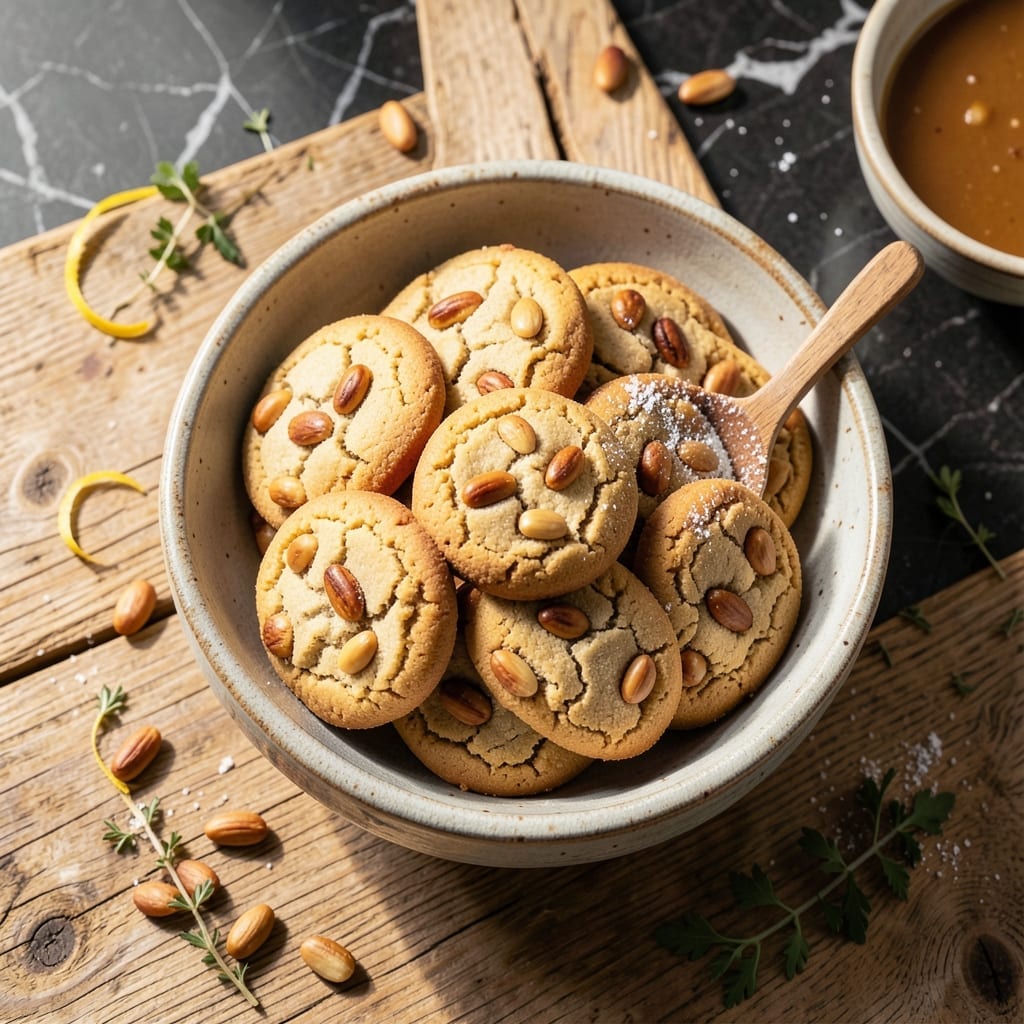
These Italian almond cookies prove you don’t need fancy equipment for restaurant-quality results. I’ve perfected a method using just a bowl and wooden spoon to create tender, nutty treats with that signature pine nut topping.
The dough comes together quickly with simple ingredients, and the key is proper chilling before shaping. This ensures the cookies hold their form while baking, developing a golden exterior with a soft, chewy center.
Each bite delivers buttery almond flavor with the satisfying crunch of toasted pine nuts. The texture is delicate yet substantial, making them perfect for holiday platters or afternoon coffee pairings.
This foolproof approach eliminates the need for specialized tools while maintaining authentic taste. The process is straightforward, and the results are consistently impressive.
Ingredients for Pignoli Cookies Recipe Without Food Processor
Simple ingredients transform into these tender, nutty Italian cookies with ease.
| Ingredient | Amount | Notes |
|---|---|---|
| Almond Flour 🌰 | 2 cups | Finely ground, blanched preferred |
| Granulated Sugar 🍚 | ¾ cup | Fine grain for even distribution |
| Unsalted Butter 🧈 | ½ cup | Softened to room temperature |
| Large Egg 🥚 | 1 whole | Room temperature for smooth mixing |
| Vanilla Extract 🌿 | 1 tsp | Pure extract for best flavor |
| Almond Extract 🌰 | ½ tsp | Enhances nutty almond flavor |
| Baking Powder 🧂 | ½ tsp | Ensures proper rise and texture |
| Salt 🧂 | ¼ tsp | Fine sea salt preferred |
| Pine Nuts 🌲 | ½ cup | Toasted for extra crunch |
| Confectioners' Sugar 🍚 | ¼ cup | For light dusting before baking |
The almond flour is non-negotiable here—Bob’s Red Mill offers a consistent, fine grind. For pine nuts, Trader Joe’s or Costco provide the best value, but avoid stale stock (check for freshness by smell). Butter quality matters; Plugrá or Kerrygold yield superior texture. The extracts must be pure—imitation vanilla will yield a flat, artificial taste that undermines the authenticity.
No almond flour? Grind blanched almonds in a blender until fine, but avoid over-processing into paste. Pine nuts can be swapped with chopped almonds or hazelnuts (toast first for depth). For a gluten-free version, ensure baking powder is labeled as such. The sugar can be reduced slightly (by 2 tbsp), but texture may suffer. Egg substitution isn’t recommended—it’s critical for binding.
Dough must chill at least 2 hours (overnight is ideal) to firm up for shaping. Store pine nuts in the freezer to prevent rancidity, and keep almond flour in an airtight container for up to 3 months. Baked cookies stay fresh in a sealed container for 5 days.
Why You’ll Love This Recipe
- No Fuss Mixing: I just stir everything together by hand—no dragging out the food processor, and the almond flour blends perfectly smooth.
- Buttery Almond Bliss: That rich, nutty almond flour paired with vanilla and butter gives these cookies a melt-in-your-mouth flavor that’s irresistibly good.
- Holiday Ready: I make these for cookie swaps and last-minute gifts because they look fancy but take almost no effort.
- Budget Friendly: Almond flour is the only specialty ingredient, and a bag goes a long way—honestly, these cost less than most store-bought cookies.
Step-by-Step Instructions for Pignoli Cookies Without Food Processor
This method ensures authentic texture and flavor using only a bowl and wooden spoon.
Step 1: Cream Butter and Sugars by Hand
In a large mixing bowl, combine the 0.5 cup Unsalted Butter with the 0.75 cup Granulated Sugar. Use a sturdy wooden spoon to work the mixture vigorously for 3-4 minutes until it lightens in color and becomes fluffy.
This manual creaming incorporates air into the fat, which creates the proper structure for tender cookies. The mixture is ready when it appears pale and slightly increased in volume. The softened butter should offer minimal resistance as you work it against the bowl’s sides.
Step 2: Incorporate Egg and Extracts
Add the 1 whole Large Egg, 1 tsp Vanilla Extract, and 0.5 tsp Almond Extract to the butter-sugar mixture. Beat with the wooden spoon for 2-3 minutes until fully emulsified and smooth.
The egg should completely disappear into the mixture, leaving no visible streaks. The almond extract provides the signature pignoli flavor—ensure it’s evenly distributed. The mixture will appear slightly glossy when properly combined.
Step 3: Combine Dry Ingredients and Form Dough
Sprinkle the 2 cups Almond Flour, 0.5 tsp Baking Powder, and 0.25 tsp Salt over the wet mixture. Use the wooden spoon to gently fold everything together until just combined—overmixing develops excess density.
The dough will be soft but manageable. If it feels too sticky, refrigerate for 15 minutes to firm it slightly. The almond flour’s natural oils will make the dough more pliable than traditional flour-based doughs.
Step 4: Shape and Coat with Pine Nuts
Roll the dough into 1-inch balls (about 1 tablespoon each). Place the 0.5 cup Pine Nuts in a shallow dish. Roll each dough ball in the pine nuts, pressing gently to adhere them to all surfaces.
Arrange the coated balls on a parchment-lined baking sheet, spacing them 2 inches apart. The pine nuts should create a complete, even coating that will toast beautifully during baking.
Step 5: Bake and Finish with Confectioners’ Sugar
Preheat oven to 350°F. Bake the cookies for 12-15 minutes until the edges are light golden brown and the pine nuts are fragrant. The centers may appear slightly soft but will firm as they cool.
Transfer to a wire rack and immediately dust with 0.25 cup Confectioners’ Sugar while still warm. The residual heat will help the sugar adhere. Allow to cool completely before serving—the texture improves significantly as they set.
Pro Tips For Making Pignoli Cookies Recipe Without Food Processor
- Chill the Dough: After mixing, refrigerate the dough for at least 30 minutes—this prevents the butter from spreading too quickly in the oven, so your cookies keep their shape.
- Toast the Almond Flour: Sounds weird, but it works: spread your almond flour on a baking sheet and toast at 350°F for 5-7 minutes to deepen the nutty flavor before mixing.
- Skip Overmixing: I learned this the hard way—stir just until the ingredients come together, or your cookies will turn out dense instead of tender.
- Roll in Pine Nuts Last: Press the dough balls into the pine nuts right before baking, not earlier, so they stick better and don’t fall off while you work.
Health Benefits of This pignoli cookies recipe without food processor
Gluten-Free Goodness
These cookies are naturally gluten-free thanks to the 2 cups almond flour base, making them perfect for anyone with celiac disease or gluten sensitivity. Almond flour provides protein and healthy fats that wheat flour lacks, giving you more nutritional bang for your bite. 💪
Heart-Healthy Fats
The 0.5 cup pine nuts and almond flour bring heart-healthy monounsaturated fats to the table. These good fats help lower bad cholesterol levels while providing sustained energy. Plus, pine nuts contain pinolenic acid, which may help curb appetite.
Protein Power
Each cookie packs a protein punch from the almond flour and egg. You’re looking at about 6 grams of protein per serving (2 cookies), which helps keep you full and supports muscle maintenance. This makes them a more satisfying treat than typical sugar-only cookies.
Rich in Vitamin E
Almond flour and pine nuts are excellent sources of vitamin E, a powerful antioxidant that protects your cells from damage. Just one serving provides about 50% of your daily vitamin E needs, supporting immune function and skin health.
Low Glycemic Impact
The combination of healthy fats, protein, and fiber in these cookies helps slow sugar absorption. This means a more stable blood sugar response compared to traditional flour-based cookies. The 0.75 cup granulated sugar is balanced by the nut ingredients. 🌟
Mineral Boost
You’ll get a good dose of magnesium and calcium from the almond flour. These minerals are crucial for bone health, nerve function, and muscle contraction. Pine nuts also add iron and zinc to the nutritional profile of these delicious treats.
Nutrition Facts
Frequently Asked Questions
Can I use a hand mixer instead of a wooden spoon?
A hand mixer works perfectly for creaming butter and sugar. Use the lowest speed to avoid overmixing the dough.
Why does the dough need to chill?
Chilling firms the dough, making it easier to shape into balls. It also prevents excessive spreading during baking, ensuring a perfect texture.
Can I substitute another nut for pine nuts?
Yes, try chopped almonds, hazelnuts, or pecans. Toast them first for the best flavor and texture.
How do I know when they’re done baking?
The edges should be light golden brown and the pine nuts fragrant. The centers will firm up as they cool.

- Potato Candy Recipe 1933: Vintage Peanut Butter Roll Delight - October 30, 2026
- Potato Chip Cookie Recipe With Pecans: Buttery Crunch Meets Nutty Richness - October 30, 2026
- Potato Patty Recipe No Egg: Crispy Edges Without the Binder - October 30, 2026