
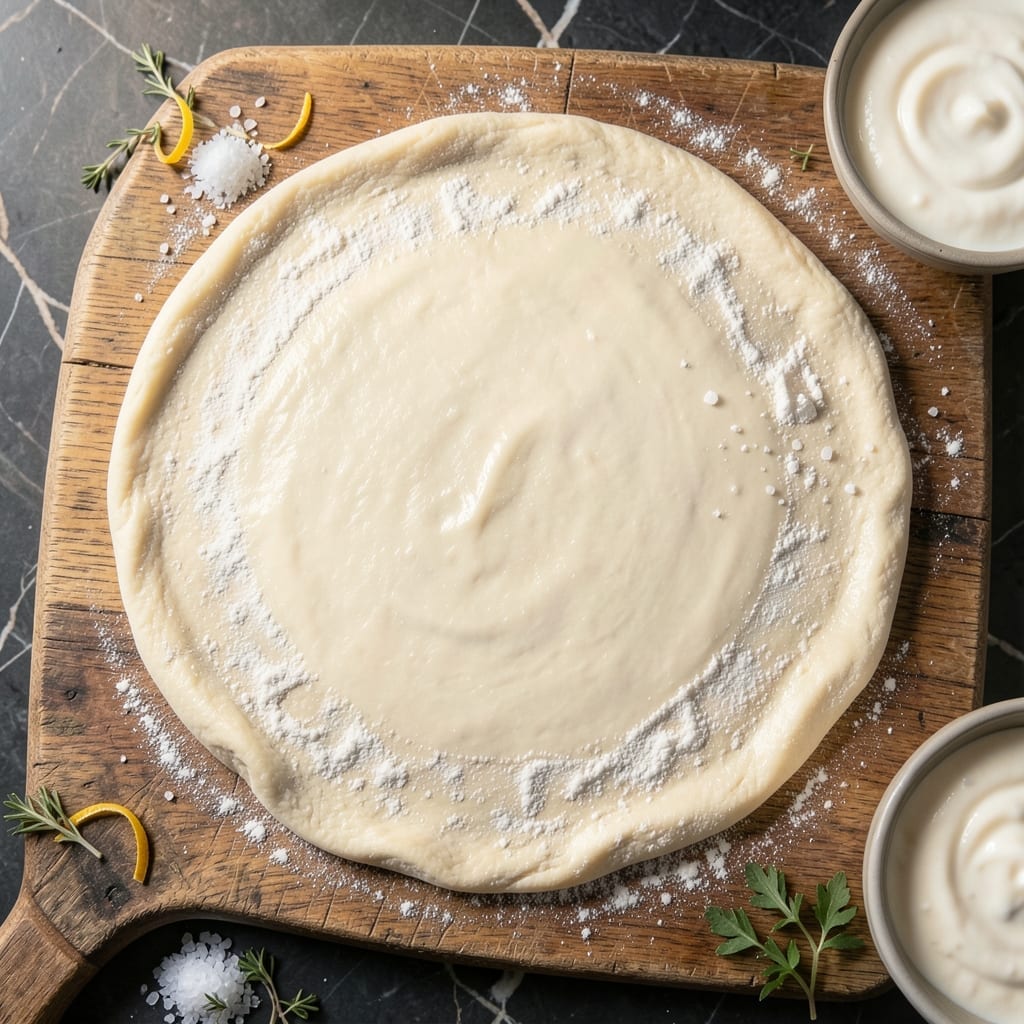
This quick no-rise pizza dough delivers a flatbread-style base without yeast or olive oil, perfect for last-minute meals. The secret lies in a simple chemical reaction between baking powder and liquid, creating lift without traditional proofing.
With just 5 basic ingredients and 10 minutes of prep time, you’ll have a versatile dough ready for any topping. The texture is slightly denser than classic pizza dough but still soft and pliable, making it ideal for thin-crust creations.
Bake at high heat for a crispy exterior while maintaining a tender interior. This method eliminates the need for rising time, making it the ultimate solution for spontaneous pizza nights.
Use it for personal pizzas, flatbreads, or even as a base for quick focaccia. The possibilities are endless with this streamlined approach.
Ingredients for Pizza Dough Recipe Without Yeast and Olive Oil
Five simple ingredients create this yeast-free, oil-free flatbread-style dough.
| Ingredient | Amount | Notes |
|---|---|---|
| All-Purpose Flour 🌾 | 2 cups | Plus extra for dusting |
| Baking Powder 🧂 | 2 tsp | Aluminum-free preferred |
| Salt 🧂 | 1 tsp | Fine sea salt or table salt |
| Water 💧 | ¾ cup | Warm, not hot |
| Plain Non-Dairy Yogurt 🥛 | ¼ cup | Unsweetened, any plant-based |
The flour is the foundation here—King Arthur or Bob’s Red Mill all-purpose deliver consistent results. For baking powder, Clabber Girl is widely available and reliable. The key is ensuring it’s fresh (test by dropping a bit in hot water—if it fizzes, it’s active). Non-dairy yogurt adds tenderness without oil; Silk or Kite Hill plain versions work well (avoid flavored or sweetened).
No non-dairy yogurt? Unsweetened almond milk with 1 tsp vinegar mimics the acidity. Out of all-purpose flour? Bread flour works but yields a slightly chewier texture. For a whole-grain twist, substitute up to half with white whole wheat. The water temperature matters—warm (about 110°F) activates the baking powder without scorching it.
The dough is best used immediately but can rest covered at room temperature for 1 hour. For longer storage, wrap tightly and refrigerate for up to 24 hours—bring to room temp before shaping. Freezing isn’t recommended as it alters the texture.
Why You’ll Love This Recipe
- No Yeast Needed: I love that I can skip the waiting around for dough to rise—just mix and go.
- Tangy Kick: The non-dairy yogurt adds a subtle richness that makes the crust crave-worthy.
- Ready in 20: Honestly, I can roll this out and bake it faster than delivery arrives.
- Budget Stretcher: Flour, baking powder, and yogurt cost pennies compared to takeout.
Step-by-Step Instructions for Pizza Dough Without Yeast and Olive Oil
This method delivers a quick, no-rise flatbread base with minimal effort and maximum flavor.
Step 1: Combine Dry Ingredients for Consistent Texture
In a large mixing bowl, whisk together the 2 cups All-Purpose Flour, 2 tsp Baking Powder, and 1 tsp Salt until fully incorporated and no streaks remain. I use aluminum-free baking powder for a cleaner flavor, as it avoids any metallic aftertaste that can sometimes occur with standard varieties.
The whisking process aerates the dry ingredients, which helps create a lighter texture in the final dough. Make sure to break up any lumps in the flour for even distribution. This step ensures that the leavening agent is evenly dispersed, so your flatbread rises uniformly without any dense spots.
Step 2: Incorporate Wet Ingredients Gradually
Create a well in the center of the dry ingredients. Pour in the 0.75 cup Water (warm, not hot) and 0.25 cup Plain Non-Dairy Yogurt directly into the well. Using a wooden spoon or silicone spatula, gradually incorporate the dry ingredients into the wet, stirring from the center outward until a shaggy dough begins to form.
The yogurt adds a subtle tang while contributing to the dough’s tenderness, and its acidity helps activate the baking powder. Be careful not to overmix at this stage—just combine until no dry pockets remain. The dough will be slightly sticky, which is ideal for this type of flatbread.
Step 3: Knead Briefly for Smooth Elasticity
Lightly dust a clean work surface with some of the extra all-purpose flour. Turn the dough out onto the floured surface and knead gently for 2-3 minutes until smooth and slightly elastic. You’re not aiming for the same development as yeast dough—just enough to bring it together.
If the dough sticks to your hands or the surface, add a little more flour, 1 tablespoon at a time, but use a light hand. Over-flouring can make the final flatbread dense. The dough is ready when it holds its shape and has a soft, pliable consistency, like Play-Doh.
Step 4: Rest the Dough for Optimal Handling
Shape the dough into a ball and place it back in the mixing bowl. Cover the bowl with a clean kitchen towel or plastic wrap and let it rest at room temperature for 10 minutes. This brief rest allows the flour to fully hydrate and the gluten to relax, making the dough easier to roll out.
Unlike yeast dough, this version won’t rise significantly, but the rest period improves the texture and workability. After resting, the dough should feel smoother and more cooperative. If it springs back when you try to roll it, let it rest for another 5 minutes.
Step 5: Roll and Shape for Baking
Divide the dough into 4 equal portions for individual flatbreads. On a lightly floured surface, roll each portion into a ¼-inch thick round or rectangle, depending on your preference. Use a rolling pin for even thickness, which ensures uniform baking.
If the dough resists rolling, let it rest for another minute or two—this prevents it from shrinking back. For a rustic look, you can also press the dough out with your hands. Transfer the shaped dough to a parchment-lined baking sheet and proceed with your chosen toppings and baking method.
Pro Tips For Making Pizza Dough Recipe Without Yeast And Olive Oil
- Knead Just Enough: Work the dough until it’s smooth but stop before it gets tough—over-kneading baking powder dough makes it dense instead of light.
- Use Thick Yogurt: Drain your non-dairy yogurt in a sieve for 10 minutes if it’s runny, or the dough will be sticky and hard to roll.
- Rest Before Rolling: Let the dough sit covered for 15 minutes after mixing—this relaxes the gluten and prevents it from snapping back when you shape it.
- Roll It Thin: Aim for ¼-inch thickness or less; without yeast, a thicker crust stays gummy instead of crisping up in the oven.
Storing and Reheating pizza dough recipe without yeast and olive oil
Room Temperature Resting
After shaping, this dough can rest covered at room temperature for up to 1 hour before baking. I use a clean kitchen towel to prevent drying while allowing it to breathe. This short rest period maintains the dough’s workability without compromising texture. 💡
Refrigerator Storage
For longer storage, wrap the dough tightly in plastic wrap and refrigerate for up to 24 hours. The cold slows the baking powder’s reaction, preserving freshness. Bring it to room temperature for 30 minutes before rolling to restore pliability.
Pre-Shaped Freezing
Roll out individual portions to ¼-inch thickness and stack with parchment between layers. Freeze in a sealed bag for up to 1 month. Thaw overnight in the fridge, then bring to room temp before baking. ❄️
Reheating Baked Flatbreads
Wrap cooled flatbreads in foil and warm in a 350°F oven for 5-7 minutes. For crispier results, place directly on the oven rack for 2-3 minutes. Avoid microwaving, as it makes the texture gummy.
Storage Tips
Store baked flatbreads in an airtight container at room temperature for up to 2 days. For longer freshness, refrigerate for up to 5 days. Reheat only what you plan to eat immediately for best quality.
Nutrition Facts
Frequently Asked Questions
Can I use regular yogurt instead of non-dairy?
Yes, plain dairy yogurt works perfectly as a substitute. The acidity helps activate the baking powder just like the non-dairy version. Just ensure it’s unsweetened to avoid altering the flavor.
Why does the dough need to rest?
The 10-minute rest allows flour to fully hydrate and gluten to relax, making the dough easier to roll out. Skipping this step may result in a tougher, less pliable texture.
Can I make this dough ahead of time?
Wrap the dough tightly and refrigerate for up to 24 hours. Let it sit at room temperature for 30 minutes before rolling for best results.
What if my dough is too sticky?
Add flour 1 tablespoon at a time while kneading, but use a light hand. Over-flouring can make the flatbread dense instead of light and tender.

- Potato Candy Recipe 1933: Vintage Peanut Butter Roll Delight - October 30, 2026
- Potato Chip Cookie Recipe With Pecans: Buttery Crunch Meets Nutty Richness - October 30, 2026
- Potato Patty Recipe No Egg: Crispy Edges Without the Binder - October 30, 2026