
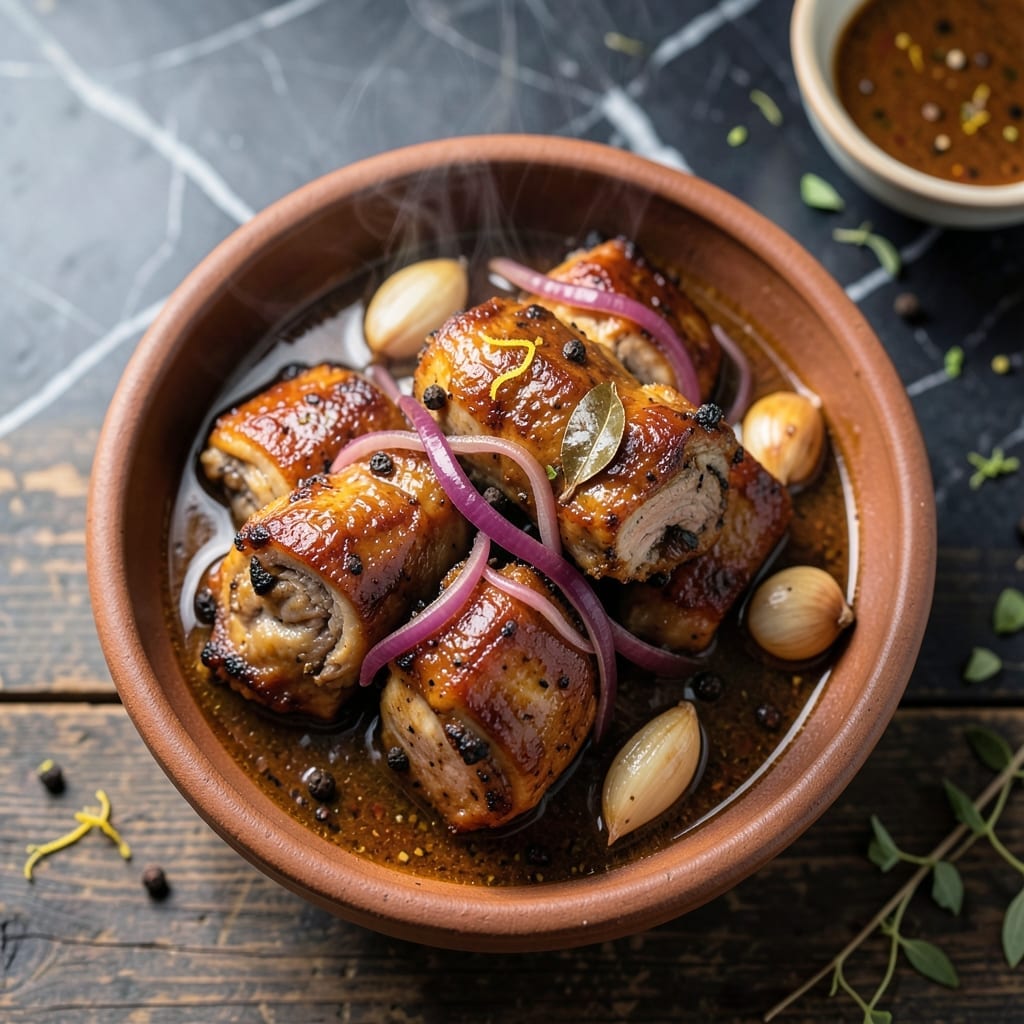
Filipino pork dishes bring bold flavors that transform any meal into a celebration. This collection captures the essence of Pinoy cooking with tender, savory results every time.
Each recipe uses traditional techniques like slow simmering and marination to develop deep, complex tastes. The methods are straightforward but deliver authentic results that impress at gatherings.
You’ll find dishes that balance sweet, sour, and salty notes perfectly. These are the kind of meals that create lasting memories around the dinner table.
From everyday comfort to special occasion feasts, these ideas showcase the best of Filipino culinary tradition.
Ingredients for Pinoy Pork Recipe Ideas
These authentic ingredients create a rich, savory Filipino pork dish perfect for any gathering.
| Ingredient | Amount | Notes |
|---|---|---|
| Pork Shoulder 🥩 | 2 lb | Cut into 2-inch chunks |
| Soy Sauce 🫒 | ½ cup | Use Filipino brand if available |
| White Vinegar 💧 | ½ cup | Cane vinegar preferred |
| Garlic Cloves 🧄 | 8 cloves | Minced finely for marinade |
| Red Onion 🧅 | 1 whole | Thinly sliced for depth |
| Black Peppercorns 🌶️ | 1 tbsp | Freshly cracked for aroma |
| Bay Leaves 🍃 | 3 pieces | Dried or fresh for aroma |
| Brown Sugar 🍚 | ¼ cup | For balancing acidity |
| Pineapple Juice 🍍 | 1 cup | Canned or fresh for sweetness |
| Tomato Sauce 🍅 | 1 cup | Thick variety for richness |
| Potatoes 🥔 | 1 lb | Peeled and quartered |
| Carrots 🥕 | 2 whole | Cut into 1-inch pieces |
| Green Bell Pepper 🌶️ | 1 whole | Sliced for color and crunch |
| Fish Sauce 🐟 | 2 tbsp | Patis or Thai fish sauce |
| Cooking Oil 🫒 | 2 tbsp | Neutral oil for sautéing |
The pork shoulder is essential—look for well-marbled cuts at your local Asian market or Costco for best results. Filipino soy sauce (toyo) has a distinct sweet-salty balance that standard soy can’t replicate. Datu Puti or Silver Swan are trusted brands. For vinegar, cane vinegar (suka) adds the authentic tang that defines Pinoy adobo. Freshly cracked black peppercorns elevate the dish significantly over pre-ground.
No pork shoulder? Pork belly works well (cut into chunks) but cooks faster—adjust timing accordingly. For a quicker version, pork tenderloin stays moist if not overcooked. Vinegar substitutes are limited; rice vinegar is closest. Skip the brown sugar if you prefer a more traditional adobo. Pineapple juice can be replaced with 1/2 cup sugar dissolved in water, though the fruitiness will be missing.
Marinate the pork overnight for maximum flavor development. The dish keeps well in the fridge for 4-5 days and actually improves as flavors meld. For freezing, portion into airtight containers—it maintains quality for 3 months. Reheat gently to preserve the tender texture of the meat.
Why You’ll Love This Recipe
- One Pan Wonder: I toss everything—pork, soy sauce, vinegar, garlic—in one pot and let it work its magic. No fuss, no multiple pans to wash.
- Crave-Worthy Tang: The soy-vinegar combo with caramelized garlic and onion hits that perfect sweet-savory-tangy balance I can’t resist.
- Feeds a Crowd: I double the batch for family gatherings, and it’s always the first dish to disappear. Leftovers? Even better the next day.
- Budget Stretcher: Pork shoulder is affordable, and this recipe turns it into something so flavorful it feels like a splurge. Honestly, my wallet thanks me.
Step-by-Step Instructions for Savory Filipino Pork Stew
This method ensures tender pork and a rich, balanced sauce with authentic Filipino flavors.
Step 1: Marinate the Pork Shoulder
In a large bowl, combine the 2 lb Pork Shoulder chunks with the 0.5 cup Soy Sauce, 0.5 cup White Vinegar, minced 8 cloves Garlic Cloves, thinly sliced 1 whole Red Onion, 1 tbsp Black Peppercorns, and 3 pieces Bay Leaves.
Add the 0.25 cup Brown Sugar, 1 cup Pineapple Juice, and 2 tbsp Fish Sauce to the bowl. Stir until the sugar dissolves completely. Cover and refrigerate for at least 2 hours, or ideally overnight. This marinating time allows the flavors to penetrate deeply into the pork.
Step 2: Sear and Brown the Pork
Heat the 2 tbsp Cooking Oil in a large, heavy pot over medium-high heat. Remove the pork from the marinade (reserve the marinade) and pat it dry with paper towels. Working in batches, sear the pork chunks until all sides are deep brown and caramelized, about 5-7 minutes per batch.
Transfer the seared pork to a plate and set aside. The fond (browned bits) left in the pot will add depth to the stew. Avoid crowding the pot—this ensures proper browning rather than steaming.
Step 3: Build the Stew Base
In the same pot, add the reserved marinade along with the 1 cup Tomato Sauce. Bring to a simmer over medium heat, scraping up the fond from the bottom of the pot. This step deglazes the pot and incorporates all the concentrated flavors into the sauce.
Return the seared pork to the pot along with any accumulated juices. Stir to coat the pork evenly with the sauce. The liquid should just cover the pork—if it doesn’t, add a splash of water.
Step 4: Add Vegetables and Simmer
Add the 1 lb Potatoes (peeled and quartered), 2 whole Carrots (cut into 1-inch pieces), and sliced 1 whole Green Bell Pepper to the pot. Stir to combine, ensuring the vegetables are submerged in the liquid.
Bring the stew to a boil, then reduce the heat to low. Cover and let it simmer gently for 1.5 to 2 hours, stirring occasionally, until the pork is fork-tender and the potatoes are soft and creamy.
Step 5: Adjust and Serve
Once the pork and vegetables are tender, taste the stew and adjust the seasoning if needed. The sauce should be rich, slightly sweet, and tangy with a deep umami flavor from the soy sauce and fish sauce.
Remove the bay leaves and discard. Serve the stew hot, ladled over steamed rice, with the sauce generously spooned over the top. The pork should be fall-apart tender, and the vegetables should have absorbed all the vibrant flavors of the dish.
Pro Tips For Making Pinoy Pork Recipe Ideas
- Marinate Overnight: I learned this the hard way—pork shoulder needs at least 4 hours in the soy-vinegar-garlic mix to absorb the flavors, but overnight makes a real difference in tenderness.
- Boil Then Fry: Parboil the pork shoulder first to remove impurities and guarantee a cleaner, more flavorful base before braising or frying.
- Balance The Vinegar: Sounds weird, but it works: use a 1:1 ratio of soy sauce to white vinegar to avoid that harsh, unbalanced sourness that can overpower the dish.
- Crush The Garlic: My grandmother swore by this, and she was right: lightly crushing garlic cloves releases more flavor than mincing, especially for adobo-style dishes.
Make-Ahead Tips for This Recipe
Overnight Marinating
For the deepest flavor, I always marinate the pork overnight. Combine the 2 lb Pork Shoulder with 0.5 cup Soy Sauce, 0.5 cup White Vinegar, and all aromatics in a large bowl. Cover and refrigerate for at least 8 hours. This lets the vinegar tenderize the meat while the soy sauce infuses it with rich umami. 💡
Prep Vegetables Ahead
Peel and chop the 1 lb Potatoes and 2 whole Carrots the night before. Store them submerged in cold water to prevent browning. Slice the 1 whole Green Bell Pepper and 1 whole Red Onion and keep them in separate containers. This saves 20 minutes on cooking day.
Pre-Mix the Sauce
Combine the 0.25 cup Brown Sugar, 1 cup Pineapple Juice, and 2 tbsp Fish Sauce in a jar. Shake well and refrigerate. When ready to cook, just pour it into the pot with the reserved marinade. This ensures even distribution of flavors without last-minute measuring.
Partial Cooking Method
After searing the pork, you can partially cook the stew for 30 minutes, then cool and refrigerate it. The next day, bring it to a simmer and add the vegetables. This approach shortens the final cooking time to just 1 hour while maintaining rich flavors.
Freezing for Later
This dish freezes beautifully. Cool the stew completely, then portion it into airtight containers. It keeps well for up to 3 months. To reheat, thaw overnight in the fridge, then warm on the stove over low heat for 15-20 minutes. ❄️
Reheating Tips
When reheating, add a splash of water or pineapple juice to restore the sauce’s consistency. Stir occasionally to prevent sticking. The flavors actually deepen after a day or two, making leftovers taste even better than fresh.
Nutrition Facts
Frequently Asked Questions
What’s the best cut for Filipino pork stew?
Pork shoulder works best for its rich marbling and tenderness after long simmering. Pork belly is a flavorful alternative but cooks faster. Avoid lean cuts like tenderloin as they can dry out during the 1.5-2 hour cooking time.
Can I make this dish without pineapple juice?
Yes, substitute with 1/2 cup sugar dissolved in water, though the fruitiness will be missing. Coconut water adds a subtle sweetness too. The acidity from vinegar remains essential for authentic adobo flavor.
How do I fix a stew that’s too sour?
Balance the acidity by adding 1-2 tbsp brown sugar or honey. Stir well and simmer for 5-10 minutes to meld flavors. Taste before adjusting further to avoid oversweetening.
What’s the secret to extra tender pork?
Marinate overnight and sear the meat first to lock in juices. Simmer on low heat and avoid boiling, which can toughen the pork. The vinegar in the marinade naturally tenderizes the meat.

- Potato Candy Recipe 1933: Vintage Peanut Butter Roll Delight - October 30, 2026
- Potato Chip Cookie Recipe With Pecans: Buttery Crunch Meets Nutty Richness - October 30, 2026
- Potato Patty Recipe No Egg: Crispy Edges Without the Binder - October 30, 2026