
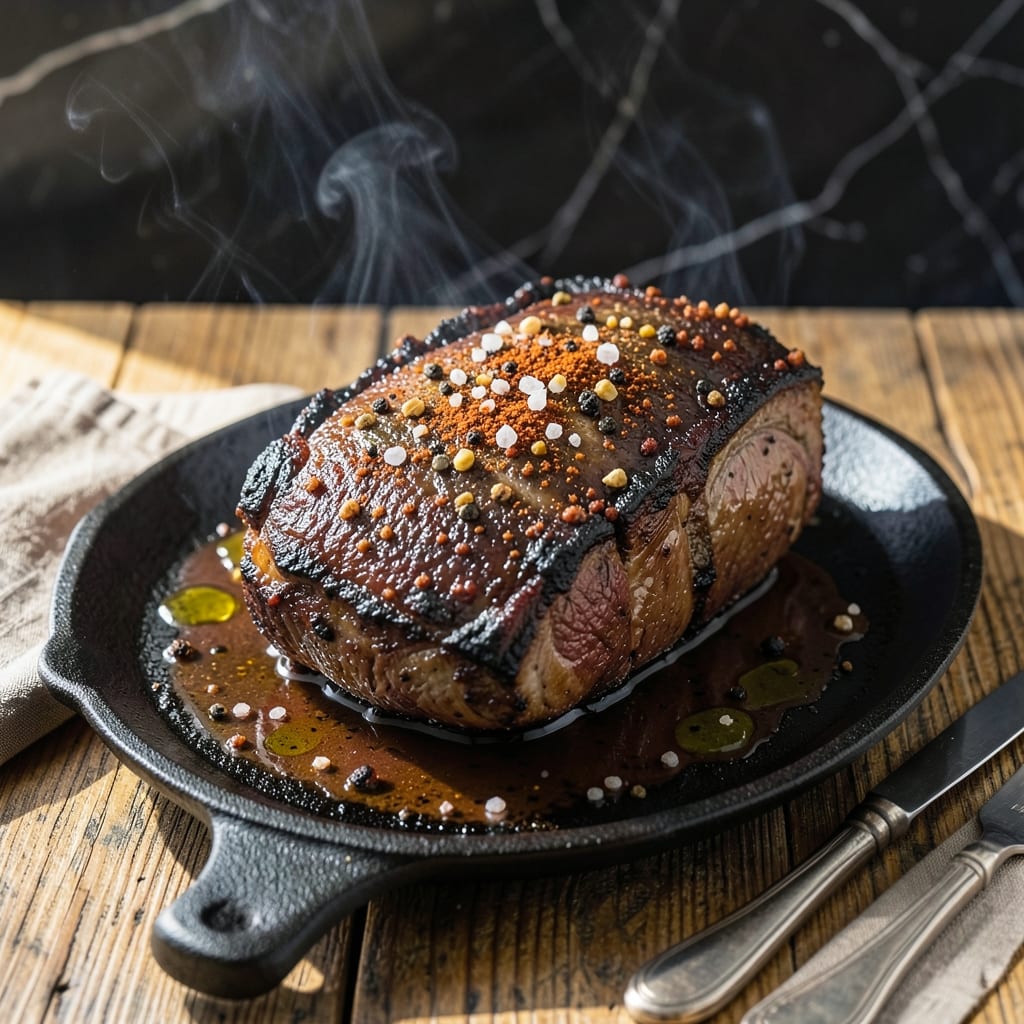
Transform your chuck roast into a masterpiece with this proven smoker method. Oak wood creates a deep, aromatic bark while keeping the interior juicy and tender.
This technique uses low and slow heat to break down tough fibers, resulting in meat that falls apart with minimal effort. The Pit Boss smoker maintains consistent temperatures for perfect results every time.
You’ll achieve a dark, flavorful crust that locks in moisture, with a smoke ring that impresses at any gathering. The process is straightforward but delivers competition-level quality.
Pair with simple sides to let the beef shine. Here’s how to execute this method precisely.
Ingredients for Pit Boss Chuck Roast Recipe Smoker
These carefully selected ingredients transform chuck roast into smoky, competition-level beef with minimal effort.
| Ingredient | Amount | Notes |
|---|---|---|
| Chuck Roast 🥩 | 4 lb | Well-marbled, trimmed of excess fat |
| Coarse Kosher Salt 🧂 | 2 tbsp | Diamond Crystal preferred for consistency |
| Freshly Ground Black Pepper 🌶️ | 2 tbsp | Coarse grind for bark texture |
| Garlic Powder 🧄 | 1 tbsp | Not garlic salt, for rub |
| Onion Powder 🧅 | 1 tbsp | Balances the rub profile |
| Smoked Paprika 🌶️ | 1 tbsp | Adds depth to bark color |
| Oak Wood Pellets 🪵 | 2 lb | For Pit Boss smoker, primary smoke source |
| Beef Tallow 🧈 | ½ cup | For binding rub, optional |
| Apple Cider Vinegar 🍏 | ½ cup | For spritzing during smoke |
| Yellow Mustard 🟡 | ¼ cup | Binder for dry rub adhesion |
| Beef Broth 🥣 | 2 cups | For wrapping or braising phase |
| Unsalted Butter 🧈 | 4 tbsp | For finishing bark glaze |
The chuck roast is non-negotiable here—look for heavy marbling (those white fat streaks) which renders down during the low-and-slow cook, basting the meat from within. Costco or local butchers often carry the best cuts. For the oak pellets, Pit Boss brand is formulated for their smokers, but Lumberjack or Bear Mountain work equally well. Avoid mesquite—it can overpower the beef’s natural flavor.
No oak pellets? Hickory offers a similar bold profile, while cherry or apple wood adds fruitier notes. Out of beef tallow? Olive oil works in a pinch for the rub binder. Mustard haters can swap in olive oil or mayo for adhesion. The beef broth can be homemade or high-quality store-bought—just avoid low-sodium versions which lack depth.
Store the chuck roast in its original packaging until ready to season—use within 3-4 days for peak freshness. Oak pellets keep indefinitely if stored in a sealed container away from moisture. Leftovers (if any) reheat beautifully and freeze for up to 3 months.
Why You’ll Love This Recipe
- Set and Forget: I toss the chuck roast with salt, pepper, garlic and onion powder, then let the smoker do all the work for hours.
- Feeds the Crew: One 4-pound chuck roast in the Pit Boss smoker gives me enough for tacos, sandwiches, and a couple of meals for the week.
- Budget Hero: Honestly, chuck roast is cheap, and with just those four seasonings, I turn it into something that tastes like a fancy barbecue joint special.
Step-by-Step Instructions for Pit Boss Smoked Chuck Roast
Master the low-and-slow technique for a perfectly tender chuck roast with robust oak flavor.
Step 1: Prepare and Season the Chuck Roast
Begin by patting the 4 lb Chuck Roast completely dry with paper towels. This ensures the rub adheres properly and promotes bark formation. Trim any large pieces of excess fat, leaving a thin layer for flavor and moisture.
In a small bowl, combine the 2 tbsp Coarse Kosher Salt, 2 tbsp Freshly Ground Black Pepper, 1 tbsp Garlic Powder, 1 tbsp Onion Powder, and 1 tbsp Smoked Paprika. Rub this mixture evenly over all surfaces of the chuck roast, pressing firmly to ensure it sticks. For extra adhesion, first coat the roast with the 0.25 cup Yellow Mustard and 0.5 cup Beef Tallow.
Step 2: Set Up the Smoker and Begin Cooking
Load your Pit Boss smoker with the 2 lb Oak Wood Pellets and preheat to 225°F. The oak will infuse the chuck roast with a balanced, smoky depth that complements the beef without overpowering it.
Once the smoker reaches temperature and produces a steady stream of thin blue smoke, place the chuck roast directly on the grates, fat-side up. Insert a meat probe into the thickest part of the roast and close the lid. Smoke undisturbed for 3-4 hours, spritzing with the 0.5 cup Apple Cider Vinegar every hour to keep the surface moist and enhance bark development.
Step 3: Wrap and Continue Cooking
When the internal temperature reaches 165-170°F, the chuck roast will hit the stall. At this point, remove it from the smoker and wrap tightly in butcher paper or aluminum foil. Add the 2 cups Beef Broth to the wrap for additional moisture and flavor.
Return the wrapped chuck roast to the smoker and continue cooking until the internal temperature reaches 200-205°F and the meat is probe-tender, which typically takes an additional 4-5 hours. This step ensures the connective tissue breaks down fully, resulting in a juicy, pull-apart texture.
Step 4: Rest and Finish
Remove the chuck roast from the smoker and let it rest, still wrapped, for at least 1 hour (up to 2 hours for optimal tenderness). This allows the juices to redistribute throughout the meat.
Unwrap the chuck roast and transfer it to a serving platter. For an extra layer of flavor, brush the bark with the melted 4 tbsp Unsalted Butter. Slice or pull the meat and serve immediately, ensuring every bite is infused with smoky, oak-kissed richness and a juicy interior.
Pro Tips For Making Pit Boss Chuck Roast Recipe Smoker
- Dry the Roast: Pat the chuck roast completely dry with paper towels before seasoning—this guarantees the rub sticks and forms a better bark in the smoker.
- Low and Slow: Keep your Pit Boss at 225°F and plan for 1.5-2 hours per pound; rushing the cook with higher heat turns the roast tough and chewy.
- Season Overnight: I learned this the hard way—salt the roast and apply the garlic and onion powder the night before for deeper flavor penetration.
- Skip the Water Pan: Sounds weird, but it works: Don’t use a water pan in the smoker for this cut—it steams the meat instead of letting that coarse salt and pepper crust form.
Storing and Reheating Leftovers
Refrigerator Storage
Let your smoked chuck roast cool to room temperature before storing. Transfer to an airtight container or wrap tightly in foil, then refrigerate. It stays fresh for 4-5 days at 40°F or below. I always portion mine for easy grab-and-go meals. ❄️
Freezer Storage
For longer storage, wrap slices or whole portions in heavy-duty freezer bags with all air removed. Label with the date—it maintains quality for 3 months. Thaw overnight in the fridge before reheating. I use Ziploc freezer bags for reliability.
Oven Reheating
Preheat oven to 325°F. Place meat in a baking dish with ¼ cup beef broth, cover with foil, and heat for 20-25 minutes. This restores moisture beautifully. Uncover the last 5 minutes to crisp the bark slightly.
Slow Cooker Method
Add leftover chuck roast to your slow cooker with ½ cup beef broth. Cook on low for 2 hours—this gently revives tenderness. I love this hands-off approach for busy days. The flavors meld like it’s fresh off the smoker.
Slicing Tip
Always slice against the grain when reheating whole portions. This shortens muscle fibers for maximum tenderness. For pulled chuck roast, shred just before serving to retain juices. 💡
Nutrition Facts
Frequently Asked Questions
How long does it take to smoke a chuck roast on a Pit Boss?
Plan for 7-9 hours total at 225°F. The first 3-4 hours build the bark, then 4-5 hours wrapped until probe-tender at 200-205°F.
Should I wrap my chuck roast in foil or butcher paper?
Butcher paper preserves more bark texture, while foil creates a braising effect. Both work—use 2 cups beef broth inside either for moisture.
Why did my chuck roast turn out dry?
Likely pulled too early. Wait until it reaches 200-205°F internally and is probe-tender. Resting 1-2 hours wrapped is crucial for juiciness.
Can I use other wood pellets besides oak?
Yes! Hickory offers bold flavor, while cherry or apple add sweeter notes. Avoid mesquite—it can overpower the beef.

- Potato Candy Recipe 1933: Vintage Peanut Butter Roll Delight - October 30, 2026
- Potato Chip Cookie Recipe With Pecans: Buttery Crunch Meets Nutty Richness - October 30, 2026
- Potato Patty Recipe No Egg: Crispy Edges Without the Binder - October 30, 2026