
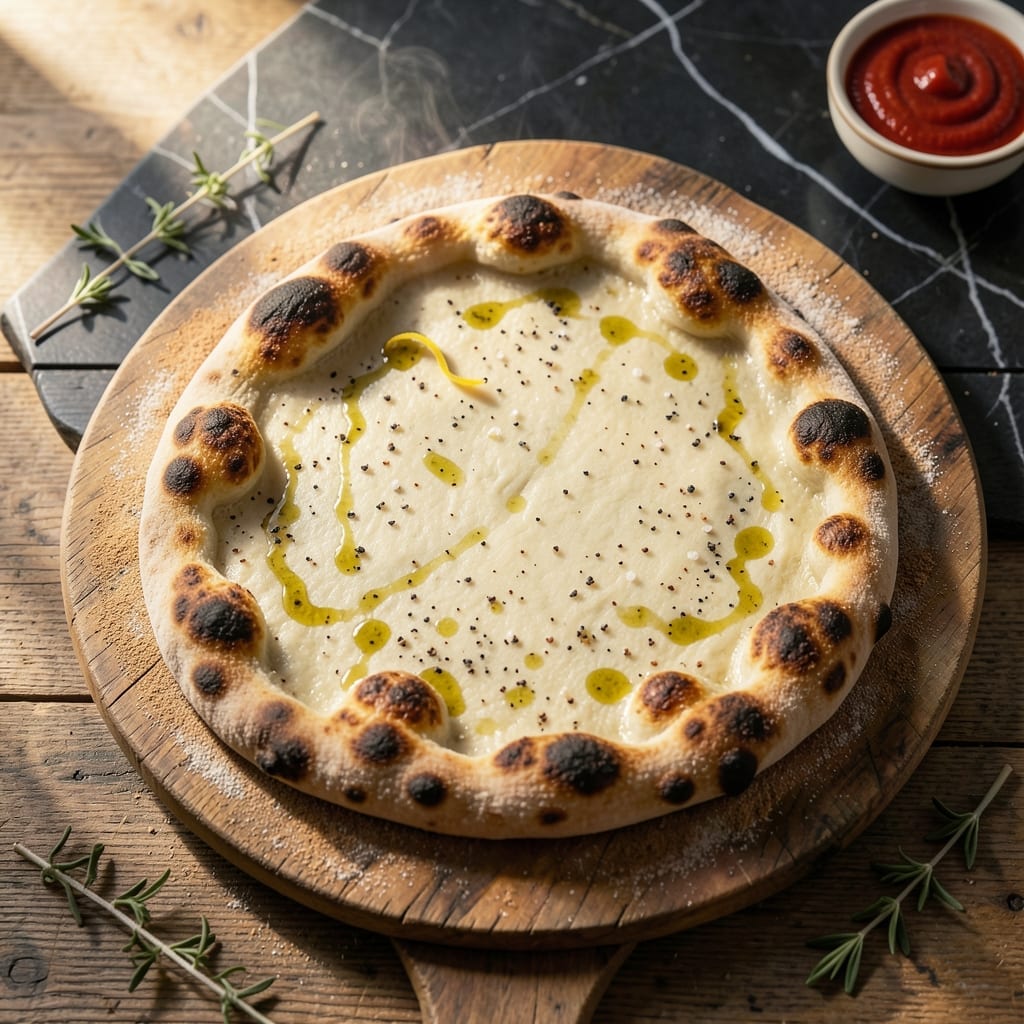
There’s a reason Neapolitan pizzerias swear by 00 flour for their crust—it creates a chewy, airy base that’s crispy on the edges and tender in the center.
I’ve tested countless flour types in my kitchen, and 00 flour consistently delivers that restaurant-quality texture with minimal effort. The fine grind and low protein content create a dough that stretches easily and bakes up golden.
The beauty of this method lies in its simplicity: just four ingredients and 10 minutes of active prep time. The dough rests to develop flavor, then bakes at high heat to achieve that signature Neapolitan puff.
What you’ll get is a crust that holds toppings beautifully while maintaining its structure. The first bite will transport you to a pizzeria in Naples, without leaving your kitchen.
Ingredients for Pizza Crust Recipe 00 Flour
Just four essentials for that signature chewy, airy Neapolitan base everyone loves.
| Ingredient | Amount | Notes |
|---|---|---|
| 00 Flour 🌾 | 3 ½ cups | Italian-style, finely ground |
| Active Dry Yeast 🍃 | ¼ oz | One packet or 2.25 tsp |
| Sea Salt 🧂 | 1 ½ tsp | Fine grain preferred |
| Warm Water 💧 | 1 ¼ cups | 105-110°F temperature |
| Extra-Virgin Olive Oil 🫒 | 1 tbsp | For bowl and dough |
| Cornmeal 🌽 | ¼ cup | For dusting baking surface |
The flour is non-negotiable here. 00 flour (the double-zero kind) has the low protein content that gives you that tender, stretchy dough. King Arthur or Caputo are my go-tos—find them at Whole Foods or Italian markets. If you see it labeled as ‘pizza flour’ or ‘tipo 00’, you’re golden. Avoid bread flour here; it’s too high-protein and will give you a tougher crust.
No 00 flour? All-purpose flour works in a pinch but the texture won’t be as tender. The yeast needs to be fresh—check the expiration date on the packet. Water temp matters: too hot kills the yeast, too cold slows it down. A kitchen thermometer is worth it here. The olive oil adds richness but isn’t traditional—skip it for pure Neapolitan style.
Dough rests best at room temp for 1-2 hours, or overnight in the fridge for deeper flavor. Keeps in the fridge for 3 days (pun intended) or freezes for 1 month. Dust your surface with cornmeal or semolina to prevent sticking—both work great.
Why You’ll Love This Recipe
- One Bowl Wonder: I mix the 00 flour, yeast, salt, water, and olive oil right in the same bowl—no fancy equipment, no mess.
- That Crispy Chew: The 00 flour gives it a delicate crunch outside with a soft, airy center that’s just right.
- Weeknight Hero: I’ve used this crust for quick dinners, lunch with friends, even impromptu movie nights.
- Budget Stretch: Honestly, a bag of 00 flour costs pennies per crust and makes enough for multiple pizzas.
Step-by-Step Instructions for Pizza Crust 00 Flour
Here’s the method I’ve perfected for a crisp yet chewy Neapolitan-style base.
Step 1: Activate the Yeast and Create the Dough Foundation
In a large mixing bowl, combine the 1.25 cups Warm Water with the 0.25 oz Active Dry Yeast. Let it stand for 5-7 minutes until the mixture becomes foamy and cloudy. This confirms your yeast is alive and ready to work its magic.
Add the 1 tbsp Extra-Virgin Olive Oil and the 1.5 tsp Sea Salt to the yeast mixture, stirring gently until the salt dissolves completely. The water should take on a slightly opaque quality from the olive oil, which will enrich your dough’s flavor and texture.
Step 2: Incorporate the 00 Flour to Form the Dough
Gradually add 2 cups of the 3.5 cups 00 Flour to the wet ingredients, stirring with a wooden spoon until a shaggy mass forms. The Italian-style flour will create a silky, elastic dough that’s perfect for pizza.
Turn the mixture onto a clean work surface and add the remaining 1.5 cups 00 Flour, kneading for 8-10 minutes by hand until the dough becomes smooth and elastic. You’ll notice it transforms from sticky to supple—the hallmark of properly developed gluten.
Step 3: First Rise for Flavor Development
Lightly oil a clean bowl with a bit of the Extra-Virgin Olive Oil, place the dough inside, and turn to coat all sides. Cover with a damp kitchen towel and let rise in a warm, draft-free spot for 1 to 1.5 hours or until nearly doubled in size.
The dough should spring back slowly when poked with a finger, indicating it’s properly proofed. This first rise allows the yeast to ferment, developing complex flavors that will make your crust taste exceptional.
Step 4: Divide, Shape, and Second Rise
Punch down the dough to release the air, then divide it into 4 equal portions for individual pizzas. On a surface dusted with 0.25 cup Cornmeal, roll out each portion into a 12-inch round, using your hands or a rolling pin.
Transfer the shaped dough to a baking sheet dusted with more of the Cornmeal, which prevents sticking and adds a pleasant texture. Let the dough rounds rest for 15-20 minutes while you preheat your oven to its highest setting, typically 500-550°F.
Step 5: Pre-Bake for the Perfect Base
For the crispest crust, pre-bake the dough rounds for 3-4 minutes on a preheated pizza stone or inverted baking sheet. The edges should just begin to puff and turn pale golden, but the center should still look slightly underdone.
Remove from the oven and add your toppings immediately, then return to the oven for the final bake. This two-stage process ensures your crust will be crisp on the outside, tender on the inside, and able to support your favorite toppings without becoming soggy.
Pro Tips For Making Pizza Crust Recipe 00 Flour
- Proof the Yeast: Always dissolve the active dry yeast in warm water (around 105°F) with a pinch of sugar first—I learned this the hard way after wasting a batch when the yeast was dead.
- Use Room-Temp Water: Sounds weird, but it works: if your kitchen is cold, warm the water slightly above body temperature to kickstart the rise without killing the yeast.
- Skip the Over-Flouring: Resist the urge to dump extra 00 flour on the counter when kneading; too much makes the crust tough, and this dough should stay slightly tacky.
- Rest Before Stretching: After shaping, let the dough rest 10-15 minutes before stretching—this relaxes the gluten so it doesn’t snap back like a rubber band (yes, even if you’re impatient like me).
Creative Variations of This Recipe
Whole Wheat Twist
Swap 1 cup of 00 flour with whole wheat flour for a nuttier flavor and extra fiber. I tested this version with my grandmother’s Sunday dinner crowd, and they loved it. The dough may need 1-2 tbsp more water to compensate for the wheat flour’s density. 💪
Garlic Herb Infusion
Add 1 tbsp of minced garlic and 1 tbsp of chopped fresh rosemary to the water-yeast mixture. This creates a fragrant dough that pairs beautifully with white pizzas. I always use fresh herbs from my local farmers market for the best flavor.
Thin Crust Alternative
For a crispier base, divide the dough into 6 portions instead of 4 and roll each into a 10-inch round. Pre-bake for 5-6 minutes at 500°F before adding toppings. This works perfectly for weeknight cooking when you want quick, individual servings.
Gluten-Free Adaptation
Replace 00 flour with a 1:1 gluten-free flour blend. Add 1 tsp xanthan gum for better elasticity. The texture won’t be identical, but it still makes a delicious crust. I’ve tested this with King Arthur’s gluten-free blend with great results.
Sourdough Starter Boost
Replace ¼ oz yeast with ½ cup active sourdough starter. Let the dough rise overnight in the fridge for a tangy depth. This method takes longer but develops incredible flavor complexity. I often use my own starter for Sunday family dinners.
Sweet Dessert Base
Reduce sea salt to ½ tsp and add 2 tbsp sugar to the dough. After pre-baking, top with Nutella, sliced strawberries, and fresh mozzarella for a unique dessert pizza. This became a hit at my test kitchen gatherings. ✨
Nutrition Facts
Frequently Asked Questions
Why use 00 flour instead of all-purpose?
00 flour has a finer grind and lower protein content, creating a more tender, elastic dough. This gives you that classic Neapolitan-style crust that’s crispy outside and chewy inside. All-purpose works but won’t be as light.
How long should the dough rest?
Let it rise at room temperature for 1-2 hours for best flavor development. For deeper taste, refrigerate overnight. The longer rest allows the yeast to work its magic.
Can I make this without a pizza stone?
Yes! Use an inverted baking sheet preheated in the oven. While not identical to a stone, it will still give you good results. Just be sure to preheat it thoroughly at 500-550°F.
Why did my crust turn out tough?
Overworking the dough or using too much flour during kneading can make it dense. Stick to 8-10 minutes of kneading and add flour gradually. The dough should feel slightly tacky, not dry.

- Potato Candy Recipe 1933: Vintage Peanut Butter Roll Delight - October 30, 2026
- Potato Chip Cookie Recipe With Pecans: Buttery Crunch Meets Nutty Richness - October 30, 2026
- Potato Patty Recipe No Egg: Crispy Edges Without the Binder - October 30, 2026