
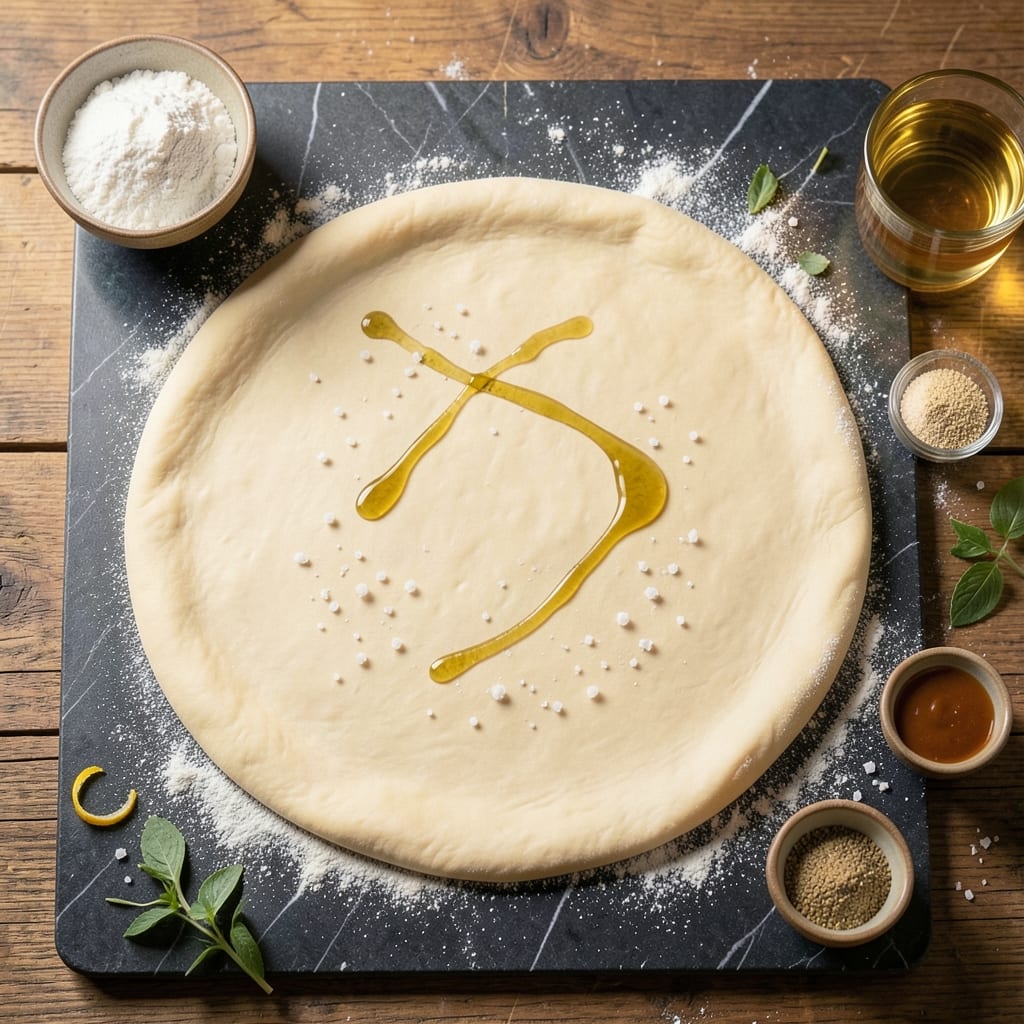
This no-fail pizza dough delivers artisan-quality results with a simple, proven method. The key is a slow fermentation process that develops complex flavors and creates that signature airy, chewy texture.
With just a handful of basic ingredients and minimal kneading, you’ll achieve a crust that bakes up golden and crisp on the outside, soft and airy inside. The long rise time ensures maximum flavor development.
The dough comes together in minutes but requires patience—overnight resting is non-negotiable for the best texture. It’s versatile enough for thin crust, deep dish, or even focaccia-style creations.
Use it as the foundation for your favorite toppings, from classic margherita to loaded veggie. This recipe sets the stage for perfect homemade pizza every time.
Ingredients for Pizza Dough Recipe by Food Fusion
Artisan crust starts with just nine simple ingredients and time for fermentation.
| Ingredient | Amount | Notes |
|---|---|---|
| Bread Flour 🌾 | 3 ½ cups | High-protein for chewy texture |
| Active Dry Yeast 🍞 | 2 ¼ tsp | One packet, proofed in warm water |
| Warm Water 💧 | 1 ½ cups | 110-115°F for yeast activation |
| Extra-Virgin Olive Oil 🫒 | 2 tbsp | For dough elasticity and flavor |
| Fine Sea Salt 🧂 | 2 tsp | Dissolved in yeast water |
| Granulated Sugar 🍚 | 1 tsp | Feeds the yeast for fermentation |
| Semolina Flour 🌾 | ½ cup | For dusting and crisp texture |
| All-Purpose Flour 🌾 | ½ cup | Optional for dusting work surface |
| Cornmeal 🌽 | 2 tbsp | For pizza peel dusting |
The bread flour is non-negotiable—King Arthur or Caputo Tipo 00 for authentic texture. Yeast must be fresh (check expiration) and proofed properly. Warm water temperature is critical: too hot kills the yeast, too cold slows fermentation. 110-115°F is the sweet spot. I get my semolina from Italian markets or the bulk section at Whole Foods.
No bread flour? All-purpose works at a 1:1 ratio, but the texture won’t be as chewy. Out of semolina? Fine cornmeal gives similar crispness. The olive oil can be any good quality—California Olive Ranch is my go-to. Sugar isn’t just for sweetness; it’s yeast food. Honey works too at the same amount, but stick with granulated for consistency.
Dough keeps in the fridge for 3 days (flavor improves daily) or freezes for 1 month. Portion before freezing for easy use. Bring to room temp before shaping—cold dough tears. Always dust your peel with cornmeal to prevent sticking during transfer to the oven.
Why You’ll Love This Recipe
- No-Fuss Rising: I love that this dough only needs one rise—just mix, let it sit, and it’s ready to roll.
- Rich Olive Oil Flavor: The extra-virgin olive oil gives it that subtle richness you just can’t get from store-bought.
- Endless Topping Fun: Honestly, this is my blank canvas for everything from classic margherita to breakfast pizza.
- Budget-Friendly Staple: Five simple ingredients, most of which I already have in my pantry, and it makes enough for two pizzas.
Step-by-Step Instructions for Pizza Dough
Here is the proven method for achieving a perfectly chewy, airy crust with artisan rise.
Step 1: Activate the Yeast Mixture
In a large mixing bowl, combine the 1.5 cups warm water, 2.25 tsp active dry yeast, 1 tsp granulated sugar, and 2 tsp fine sea salt. Stir gently and let sit for 5-7 minutes until the mixture becomes foamy and bubbly.
This visual confirmation means the yeast is active and ready to work. The sugar feeds the yeast, while the salt balances the fermentation. If the mixture doesn’t foam, your yeast may be expired—start over with fresh yeast.
Once foamy, add the 2 tbsp extra-virgin olive oil and stir to incorporate. The oil enriches the dough, enhancing elasticity and flavor development during the rise.
Step 2: Incorporate the Flour and Knead
Gradually add the 3.5 cups bread flour to the yeast mixture, about 1 cup at a time, stirring with a wooden spoon until a shaggy dough forms. The high-protein bread flour ensures a chewy texture with proper gluten development.
Turn the dough onto a surface dusted with 0.5 cup all-purpose flour. Knead for 8-10 minutes until the dough is smooth and elastic. You’ll know it’s ready when it springs back slowly when poked with a finger.
If the dough feels sticky, add a small amount of the remaining all-purpose flour, but avoid over-flouring—this can make the crust dense. The dough should be slightly tacky but not wet.
Step 3: First Rise for Optimal Fermentation
Lightly oil a clean bowl with a bit of the extra-virgin olive oil, then place the dough inside. Cover with a damp towel or plastic wrap and let it rise in a warm, draft-free area for 1.5 to 2 hours, or until doubled in size.
This first rise allows the yeast to ferment the sugars, creating air pockets that give the crust its airy structure. For best results, aim for a consistent 75-80°F environment—too cold slows fermentation, while too hot can kill the yeast.
Step 4: Shape and Second Rise
Punch down the dough to release excess air, then divide it into 4 equal portions for individual pizzas. On a surface dusted with 0.5 cup semolina flour, roll and stretch each portion into a 12-inch round.
The semolina flour adds a subtle crunch and prevents sticking. If the dough resists stretching, let it rest for 5 minutes to relax the gluten, then try again.
Transfer each round to a surface dusted with 2 tbsp cornmeal to prevent sticking during baking. Cover and let rise for an additional 30 minutes while you preheat your oven to 500°F.
Pro Tips For Making Pizza Dough Recipe By Food Fusion
- Activate Yeast First: Bloom the active dry yeast in warm water (105-110°F) with a pinch of sugar for 5-10 minutes until foamy—I learned this the hard way after killing a batch with water that was too hot.
- Use Bread Flour: Skip all-purpose flour here; bread flour’s higher protein content (12-14%) gives the dough that chewy, elastic texture Food Fusion’s recipe is known for.
- Don’t Over-Flour: Resist the urge to dump extra flour on the counter while kneading; the dough should be slightly tacky, or your crust will turn out dense and dry.
- Cold Ferment Overnight: After kneading, let the dough rise in the fridge for at least 12 hours—sounds weird, but it develops way more flavor than a quick room-temp rise.
Dietary Considerations for This Dish
Gluten-Free Adaptation
For a gluten-free version, replace bread flour with a 1:1 gluten-free flour blend that includes xanthan gum. I recommend King Arthur’s Measure for Measure for best results. Add 1 extra tbsp of flour blend to compensate for the lack of gluten structure. 💪
Vegan Modifications
This recipe is already vegan, but ensure your toppings align. Skip the honey option mentioned earlier and stick with granulated sugar for yeast activation. For extra richness, replace olive oil with melted coconut oil—it adds a subtle sweetness.
Low-Carb Option
For a keto-friendly crust, use 1.5 cups almond flour and 1 cup mozzarella cheese (melted and mixed with 1 egg). This creates a dense, chewy base. Bake at 400°F for 12-15 minutes before adding toppings.
Dairy-Free Notes
The dough itself is dairy-free, but check toppings carefully. Use dairy-free cheese or skip it entirely. Brands like Miyoko’s or Violife melt well for pizza. A drizzle of olive oil before baking adds flavor without dairy.
Allergen Awareness
This recipe contains gluten (wheat flour) and may have traces of nuts if using cross-contaminated flours. For nut allergies, ensure your semolina and cornmeal are processed in nut-free facilities. Always verify ingredient labels. 💡
Sugar Substitutes
If avoiding refined sugar, replace granulated sugar with 1 tsp honey or maple syrup. These activate yeast just as effectively. For strict keto, use 1 tsp erythritol, though fermentation may be slightly slower.
Nutrition Facts
Frequently Asked Questions
Can I use all-purpose flour instead of bread flour?
Yes, but the texture will be less chewy. Use a 1:1 ratio and expect a slightly softer crust. Bread flour’s higher protein creates better gluten structure for that artisan quality.
Why does the dough need to rise overnight?
Slow fermentation develops deep, complex flavors and creates airy pockets. It also improves digestibility. The minimum rise is 1.5 hours, but overnight yields the best results.
What if my yeast doesn’t foam?
Your yeast may be expired or the water was too hot. Always check the expiration date and use 110-115°F water. Start over with fresh yeast if there’s no foam after 7 minutes.
Can I make this ahead and freeze?
Portion the dough, wrap tightly, and freeze for up to 1 month. Thaw in the fridge overnight, then bring to room temperature before shaping.

- Potato Candy Recipe 1933: Vintage Peanut Butter Roll Delight - October 30, 2026
- Potato Chip Cookie Recipe With Pecans: Buttery Crunch Meets Nutty Richness - October 30, 2026
- Potato Patty Recipe No Egg: Crispy Edges Without the Binder - October 30, 2026