
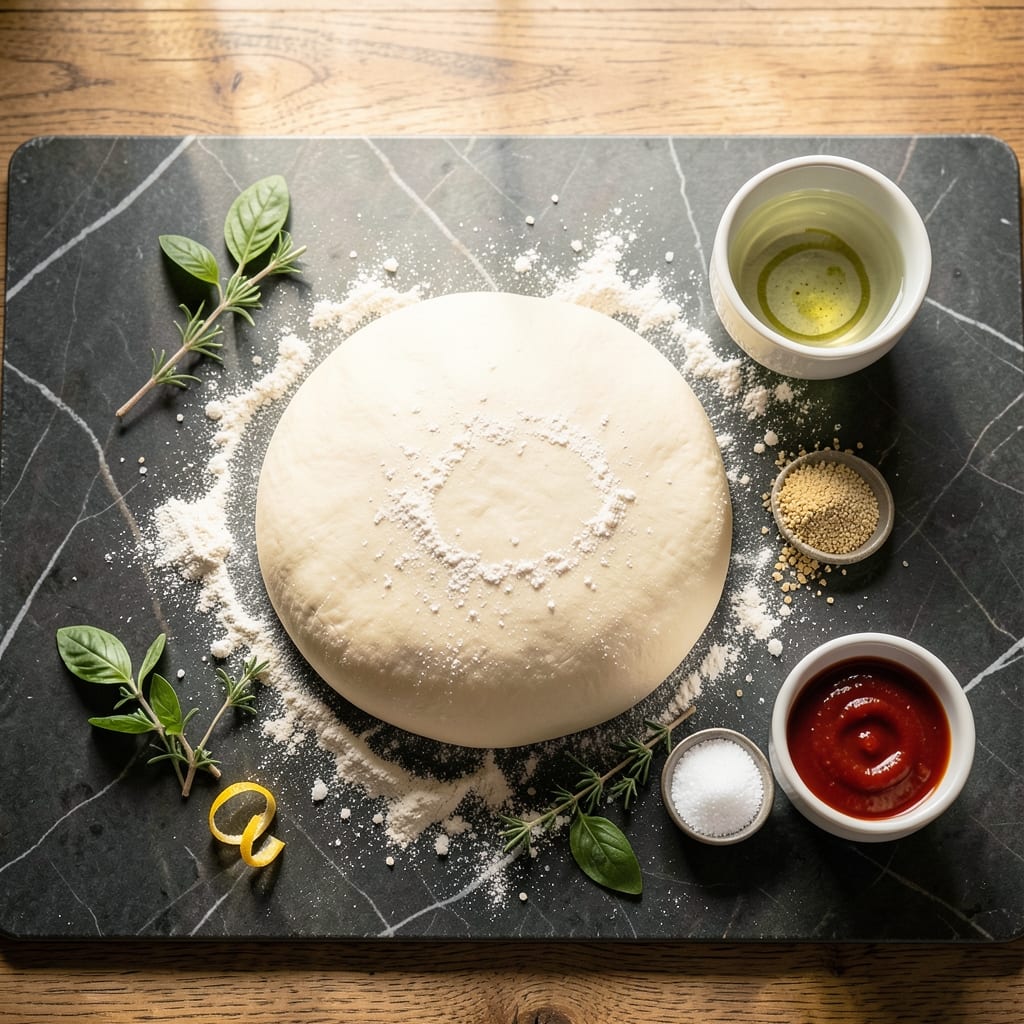
Standing in my grandmother’s Sicilian kitchen, I learned that authentic pizza begins with patience. This overnight fermented dough develops the complex flavors that define traditional Italian crust.
The long, slow rise transforms simple ingredients—flour, water, yeast, salt—into a dough with remarkable depth. The extended fermentation creates air pockets that yield a light, airy texture impossible to achieve with quick-rise methods.
This method delivers a crust with a crisp exterior and chewy interior, the hallmark of genuine Neapolitan-style pizza. The flavor is noticeably more developed than same-day doughs.
Use this as your foundation for both classic Margherita and creative modern toppings. The overnight process fits perfectly into busy schedules.
Ingredients for Pizza Dough Recipe Nyt
Simple ingredients transform into authentic Neapolitan-style dough with patience and time.
| Ingredient | Amount | Notes |
|---|---|---|
| Bread Flour 🌾 | 3 ½ cups | High-protein for chewy texture |
| Active Dry Yeast 🍃 | ¼ tsp | Or 1 packet instant yeast |
| Fine Sea Salt 🧂 | 2 tsp | Diamond Crystal preferred |
| Lukewarm Water 💧 | 1 ½ cups | 110°F, not hot |
| Extra-Virgin Olive Oil 🫒 | 2 tbsp | For bowl and dough |
| Sugar 🍚 | 1 tsp | Optional, feeds yeast |
| Semolina Flour 🌾 | ¼ cup | For dusting work surface |
| All-Purpose Flour 🌾 | ½ cup | For dusting if needed |
The flour is critical here. King Arthur Bread Flour has the right protein content (12-13%) for that chewy texture we’re after. I grab mine from Whole Foods or order online in bulk. Yeast freshness matters—check the expiration date and store unopened packets in the freezer. Sicilian sea salt if you want to go full traditional, but Diamond Crystal works perfectly fine.
No bread flour? All-purpose in a pinch, but add 1 extra tablespoon per cup to boost protein. Out of yeast? Sourdough starter can substitute (use 1 cup active starter, skip sugar). The olive oil can be any good quality—California Olive Ranch is a solid Costco find. Sugar is optional but helps the yeast wake up faster.
Dough ferments best overnight on the counter (65-75°F) or in the fridge for 24-48 hours. Cover with a damp towel or plastic wrap. Unused dough balls freeze beautifully for up to 3 months—just thaw in the fridge overnight before using.
Why You’ll Love This Recipe
- No-Fuss Mixing: I just dump flour, yeast, salt, water, and olive oil in a bowl—no fancy steps, no stand mixer required.
- Crisp Yet Tender: The bread flour gives that perfect chewy center with a crackly crust, and the olive oil adds a subtle richness.
- Endless Topping Canvas: Honestly, I’ve used this dough for everything from classic margherita to dessert pizzas with Nutella.
- Budget Stretch: A batch costs pennies compared to delivery, and leftovers freeze beautifully for lazy nights.
Step-by-Step Instructions for Pizza Dough
This method delivers authentic flavor through overnight fermentation and careful technique.
Step 1: Activate the Yeast and Mix the Dough
In a small bowl, whisk together the 1.5 cups lukewarm water, 0.25 tsp active dry yeast, and 1 tsp sugar. Let it sit for 5-10 minutes until the surface becomes frothy—this confirms your yeast is active and ready to work. The water should be just warm to the touch, about 110°F.
In a large mixing bowl, combine 3.5 cups bread flour and 2 tsp fine sea salt. Create a well in the center and pour in the yeast mixture and 2 tbsp extra-virgin olive oil. Using a wooden spoon, stir until a shaggy dough forms. The dough will look rough at this stage—that’s normal.
Step 2: Knead to Develop Gluten
Turn the dough out onto a surface lightly dusted with 0.25 cup semolina flour. Knead for 8-10 minutes until smooth and elastic. I use the heel of my hand to push the dough away, then fold it back over itself repeatedly. The dough should spring back when pressed with a finger.
If it feels too sticky, sprinkle up to 0.5 cup all-purpose flour as needed, but add it sparingly—too much flour will make your crust tough. You’ll notice the texture change from shaggy to silky as the gluten develops. This is the foundation of that perfect chewy texture.
Step 3: First Rise at Room Temperature
Lightly coat a clean bowl with some of the extra-virgin olive oil and place the dough inside, turning to coat all sides. Cover with a damp towel and let rise at room temperature for 1-2 hours, or until doubled in size. The exact time depends on your kitchen’s temperature—warmer rooms will speed up the process.
You’ll know it’s ready when the dough has visibly expanded and a finger pressed into the surface leaves a slight indentation that slowly springs back. This initial rise develops flavor and structure, but we’re not done yet.
Step 4: Cold Fermentation for Maximum Flavor
After the first rise, punch down the dough to release the air. Cover the bowl tightly with plastic wrap and refrigerate for 12-24 hours. This overnight ferment is what gives the dough that authentic, complex flavor that separates good pizza from great pizza.
The cold slows the fermentation process, allowing the yeast to work gradually and develop deeper flavor notes. The dough will continue to rise slightly in the fridge, but don’t worry if it doesn’t double—this is normal for cold fermentation.
Step 5: Shape and Prepare for Baking
Remove the dough from the refrigerator and let it come to room temperature for 30-60 minutes. Divide the dough into 4 equal portions for individual pizzas. On a surface dusted with semolina flour, gently stretch each portion into a round, being careful not to tear the dough.
Don’t use a rolling pin—this compresses the air bubbles we worked so hard to create. Instead, use your hands to stretch the dough from the center outward, leaving a slightly thicker rim for the crust. The dough is now ready for your favorite toppings and a hot oven.
Pro Tips For Making Pizza Dough Recipe Nyt
- Proof the Yeast: Always dissolve the active dry yeast in lukewarm water (around 110°F) with a pinch of sugar first—I learned this the hard way after killing a batch with water that was too hot.
- Use Bread Flour: Skip all-purpose flour if you want that chewy, airy crust; bread flour’s higher protein content actually changes the outcome.
- Don’t Rush the Rise: Give the dough at least 1-2 hours to double in size at room temperature—resist the urge to speed it up with heat, or you’ll get a dense, flat crust.
- Oil the Bowl: Coat the rising bowl with about 1 teaspoon of extra-virgin olive oil to prevent sticking and make the dough easier to handle—sounds small, but it saves a mess every time.
Health Benefits of This Recipe
Better Digestive Health
Long fermentation breaks down gluten and phytic acid, making this dough easier to digest than quick-rise versions. The 12-24 hour process allows beneficial bacteria to develop, which can improve gut health. I notice less bloating when I use this method. 💪
Lower Glycemic Impact
The slow fermentation reduces the glycemic index of the flour, creating a more stable blood sugar response. This means you’ll experience a more gradual energy release compared to doughs made with quick yeast methods. It’s a small but meaningful difference for a comfort food.
Nutrient Enhancement
Overnight fermentation increases the availability of B vitamins and minerals like magnesium and zinc in the flour. The bread flour we use provides more protein and nutrients than all-purpose. This traditional method unlocks more of the grain’s natural goodness.
Natural Probiotics
The extended rise creates natural probiotics that support a healthy gut microbiome. These beneficial bacteria form during the slow fermentation at cool temperatures. It’s why sourdough and long-fermented doughs often sit better with sensitive stomachs.
Reduced Additives
By making this at home, you control exactly what goes in—no preservatives or dough conditioners found in many store-bought versions. The simple ingredients—flour, water, yeast, salt—are all you need. I love knowing exactly what’s in my food. ✨
Balanced Macros
This dough provides a good balance of complex carbohydrates and a small amount of healthy fats from the olive oil. Each serving offers sustained energy without the spikes and crashes associated with processed doughs. It’s fuel that keeps you going.
Nutrition Facts
Frequently Asked Questions
Can I use all-purpose flour instead of bread flour?
Yes, but add 1 extra tbsp per cup to boost protein. The texture won’t be as chewy, but it’ll still work. Bread flour’s higher protein creates that perfect elastic structure.
Why does the dough need to ferment overnight?
The slow, cold rise develops complex flavors and improves digestibility. It also creates air pockets for a lighter, airier crust. Quick-rise methods can’t match this depth.
Can I freeze the dough after the first rise?
Wrap dough balls tightly in plastic and freeze for up to 3 months. Thaw overnight in the fridge before shaping. This is great for meal prep.
What if my dough doesn’t double in size?
Check your yeast expiration date and water temperature. Yeast needs 110°F water to activate. If it’s too cold or old, it won’t rise properly.

- Potato Candy Recipe 1933: Vintage Peanut Butter Roll Delight - October 30, 2026
- Potato Chip Cookie Recipe With Pecans: Buttery Crunch Meets Nutty Richness - October 30, 2026
- Potato Patty Recipe No Egg: Crispy Edges Without the Binder - October 30, 2026