
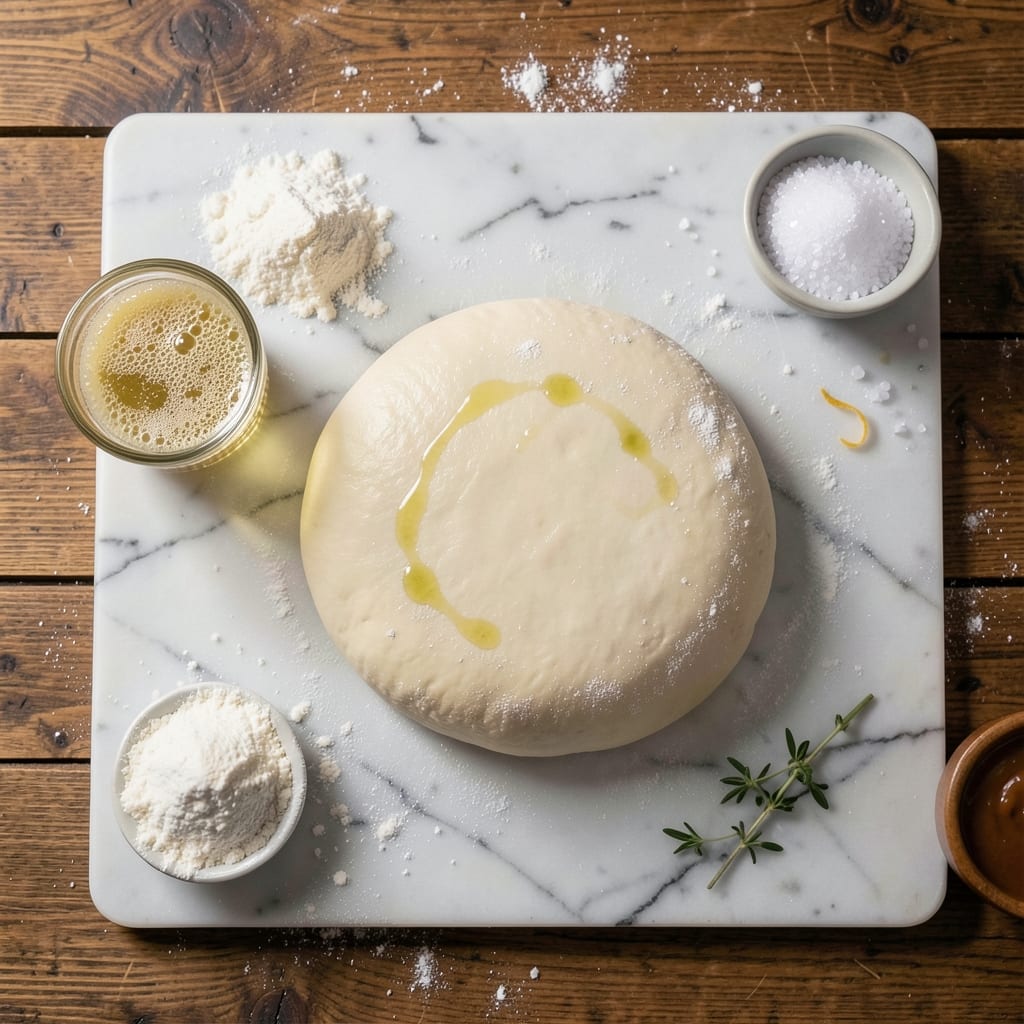
Making perfect pizza dough at home is simpler than you think with this proven method. Standing at my grandmother’s side in Sicily, I learned that great dough requires patience and precision, not fancy equipment.
This technique delivers a crust that’s crispy outside and chewy inside, with just the right amount of air pockets. The two-hour rise time develops flavor without requiring an overnight commitment.
You’ll work with basic ingredients—flour, water, yeast, salt—transformed through careful kneading and resting. The process is straightforward, but timing and temperature are everything for that authentic texture.
Whether you’re making a classic Margherita or loading up with toppings, this foundation ensures restaurant-quality results every time.
Ingredients for Pizza Dough Recipe Preppy Kitchen
Basic ingredients transform into a crust that’s crispy outside, chewy inside with perfect air pockets.
| Ingredient | Amount | Notes |
|---|---|---|
| Bread Flour 🌾 | 3 ½ cups | High protein for chewy texture |
| Active Dry Yeast 🍞 | 1 tbsp | Or 1 packet, proofed in warm water |
| Fine Sea Salt 🧂 | 2 tsp | Diamond Crystal preferred |
| Extra-Virgin Olive Oil 🫒 | 2 tbsp | For richness and elasticity |
| Warm Water 💧 | 1 ¼ cups | 110°F to activate yeast |
| Granulated Sugar 🍚 | 1 tsp | Feeds the yeast for rising |
| Cornmeal 🌽 | ¼ cup | For dusting and crispness |
| Semolina Flour 🌾 | ¼ cup | Optional for extra texture |
The flour is non-negotiable here. King Arthur Bread Flour is my go-to—high protein content gives that chewy bite you’re after. Yeast needs to be fresh; check the expiration date on the packet. I grab mine from Whole Foods bulk section for guaranteed activity. Warm water should feel like bathwater (not hot) to avoid killing the yeast. And the olive oil? Spring for California Olive Ranch—it’s worth the splurge for authentic flavor.
Out of bread flour? All-purpose in a pinch, but expect a slightly softer crust. No yeast? This isn’t a quick bread, so don’t bother with baking powder. Sugar can be swapped for honey at equal amounts, but stick to granulated for consistency. Skip the cornmeal? Semolina adds a nice grit, but either works for dusting. The salt must be fine sea salt—kosher won’t dissolve evenly.
Dough rises best in a warm, draft-free spot (I use my oven with the light on). Refrigerate for up to 3 days if you want to slow-ferment for deeper flavor, or freeze the shaped dough for 1 month. Bring to room temp before rolling. Always dust your surface well—this stuff sticks.
Why You’ll Love This Recipe
- No-Fuss Mixing: I just stir bread flour, yeast, salt, olive oil, and warm water together—no fancy tools, no stress.
- Crisps Perfectly: The olive oil in the dough gives it that golden, crackly crust I crave every time.
- Endless Topping Fun: Honestly, I use this dough for everything—thin crust, thick, even calzones when I’m feeling fancy.
- Budget Stretch: Five simple pantry staples make enough for two pizzas, so my wallet stays happy.
Step-by-Step Instructions for Pizza Dough
Here’s the method that delivers a perfectly chewy crust with a crispy exterior every time.
Step 1: Activate the Yeast
In a small bowl, combine the 1.25 cups Warm Water with the 1 tsp Granulated Sugar and 1 tbsp Active Dry Yeast. Stir gently and let it sit for 5-7 minutes until the mixture becomes foamy and frothy.
This step is crucial—you want to see a lively, bubbly surface that confirms the yeast is active and ready to work. If it doesn’t foam, your yeast may be expired, and your dough won’t rise properly.
Step 2: Mix and Knead the Dough
In a large mixing bowl, combine the 3.5 cups Bread Flour and 2 tsp Fine Sea Salt. Make a well in the center and pour in the activated yeast mixture along with the 2 tbsp Extra-Virgin Olive Oil. Stir with a wooden spoon until a shaggy dough forms.
Turn the dough out onto a lightly floured surface and knead for 8-10 minutes until it’s smooth and elastic. The dough should spring back when pressed lightly with your finger. Bread flour’s high protein content gives it that perfect chewy texture.
Step 3: Let the Dough Rise
Lightly oil a large bowl, place the dough inside, and cover it with a damp kitchen towel or plastic wrap. Let it rise in a warm, draft-free place for 1-2 hours or until doubled in size.
For best results, I like to place it near a slightly preheated oven or in a spot with consistent warmth. The dough is ready when it’s puffy and an indent made with your finger remains visible.
Step 4: Shape and Prepare for Baking
Punch down the risen dough to release the air and divide it into 4 equal portions for individual pizzas. Roll each portion into a ball, then flatten and stretch it into a 12-inch round on a surface dusted with 0.25 cup Cornmeal and 0.25 cup Semolina Flour.
The cornmeal and semolina add a subtle crunch and prevent sticking, giving your crust that professional pizzeria texture. If the dough resists stretching, let it rest for 5 minutes before trying again.
Now it’s ready for your favorite toppings and a hot oven!
Pro Tips For Making Pizza Dough Recipe Preppy Kitchen
- Check Water Temp: Use a thermometer for your warm water—110°F is ideal. I learned this the hard way after killing yeast with water that was just a little too hot.
- Use Bread Flour: Skip all-purpose flour if you can. Bread flour’s higher protein content gives that chewy, stretchy texture you want in pizza dough.
- Don’t Rush the Rise: Give it the full 1-2 hours for the first rise, even if it looks ready sooner. Rushing this step leaves your crust dense instead of airy.
- Coat the Bowl: Before the first rise, swirl about 1 tablespoon of olive oil in your bowl to coat it—this keeps the dough from sticking and makes it easier to handle later.
Dietary Considerations for This Dish
Gluten-Free Option
For a gluten-free version, I recommend using Caputo Fioreglut blend, which is specifically formulated for pizza dough. It behaves similarly to traditional flour and creates a crispy, chewy crust. Replace the bread flour with 3.5 cups of this blend and follow the same steps. 💪
Vegan Adaptation
This dough is naturally vegan as written, but ensure your sugar is processed without bone char. I use Domino Organic Sugar for guaranteed vegan status. The olive oil already provides the necessary richness, so no substitutions are needed.
Low-Sodium Version
To reduce sodium, cut the salt to 1 tsp or switch to a low-sodium sea salt. Be aware that salt affects yeast activity, so your rise time might increase by 15-20 minutes. I often use Himalayan pink salt for a milder flavor.
Nut-Free Assurance
This recipe is naturally nut-free, making it safe for those with nut allergies. However, always check your yeast and flour labels for cross-contamination warnings. I source my ingredients from Whole Foods for their strict allergy protocols.
Dairy-Free Notes
No dairy is used in this dough, so it’s perfect for lactose-intolerant cooks. The olive oil provides all the fat needed for elasticity. If you’re making a dairy-free pizza, just ensure your toppings align with your dietary needs.
Egg-Free Confirmation
Traditional pizza dough contains no eggs, and this recipe stays true to that. The structure comes entirely from the gluten network developed during kneading. This makes it ideal for vegans and those with egg allergies. 🌱
Nutrition Facts
Frequently Asked Questions
Can I use all-purpose flour instead of bread flour?
Yes, but expect a slightly softer crust. Bread flour’s higher protein creates better chew. For best results, add 1 tbsp vital wheat gluten per 3.5 cups all-purpose flour.
Why didn’t my dough rise?
Likely expired yeast or water that was too hot. Always proof yeast first and ensure water is 110°F. A cold kitchen can also slow rising—try placing the bowl in a turned-off oven with the light on.
How long can I refrigerate the dough?
Up to 3 days in an airtight container. The cold slows fermentation, developing more flavor. Bring to room temperature before shaping for easier handling.
Can I make this without a stand mixer?
Knead by hand for 8-10 minutes on a floured surface. The dough is ready when smooth and elastic. It’s a great workout for your arms!

- Potato Candy Recipe 1933: Vintage Peanut Butter Roll Delight - October 30, 2026
- Potato Chip Cookie Recipe With Pecans: Buttery Crunch Meets Nutty Richness - October 30, 2026
- Potato Patty Recipe No Egg: Crispy Edges Without the Binder - October 30, 2026