
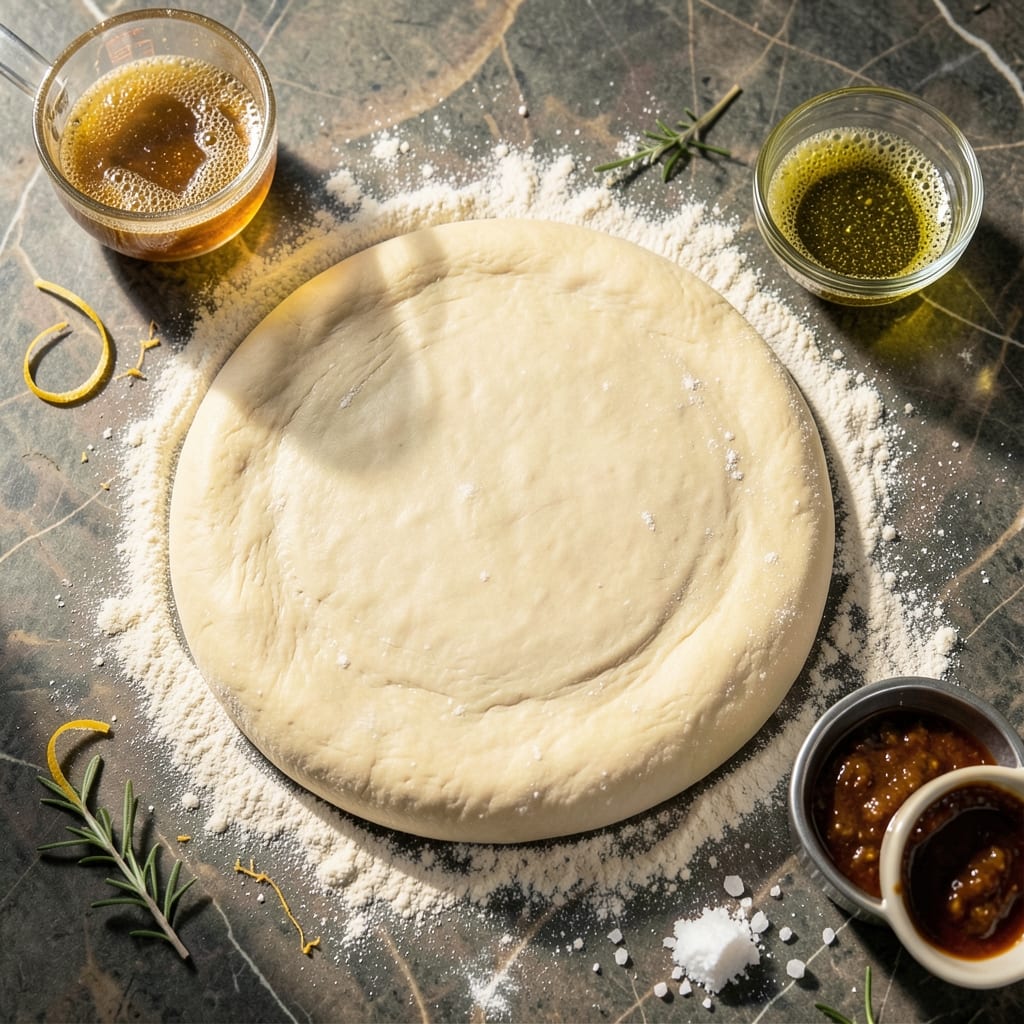
Making pizza dough for one person doesn’t mean sacrificing quality or flavor. This single-serve recipe delivers a crust with artisan taste and texture, perfect for a personal pizza night.
With just a few basic ingredients and minimal effort, you can create a dough that rises beautifully and bakes into a golden, crispy base. The process is straightforward but precise, ensuring professional results every time.
The dough comes together quickly and rests in under an hour. It stretches easily and holds toppings without tearing, making it ideal for customizing with your favorite flavors.
Whether you prefer classic margherita or loaded with toppings, this dough provides the perfect foundation for a restaurant-quality pizza at home.
Ingredients for Pizza Dough Recipe for One
Just seven ingredients stand between you and perfect single-serve pizza dough tonight.
| Ingredient | Amount | Notes |
|---|---|---|
| Bread Flour 🌾 | 1 cup | All-purpose works in a pinch |
| Active Dry Yeast 🍞 | ¼ tsp | Instant yeast works too |
| Granulated Sugar 🍚 | ½ tsp | Feeds the yeast for activation |
| Kosher Salt 🧂 | ½ tsp | Diamond Crystal preferred |
| Warm Water 💧 | ⅓ cup | 110°F to 115°F ideal |
| Extra-Virgin Olive Oil 🫒 | 1 tbsp | For dough elasticity and flavor |
| Semolina Flour 🌾 | 2 tbsps | For dusting work surface |
The flour is everything here. Bread flour gives that chewy, restaurant-style crust (the higher protein content makes all the difference). King Arthur is my go-to, but any quality brand works. If you only have all-purpose, it’ll still taste great—just won’t stretch quite as thin. The yeast? Fleischmann’s or Red Star are reliable. Check the expiration date—old yeast is the number one reason dough doesn’t rise.
No bread flour? Use all-purpose and add 1 tsp vital wheat gluten to boost protein. Out of semolina? Cornmeal or extra all-purpose works for dusting. Sugar is just to wake up the yeast—honey or maple syrup can swap in. The olive oil adds richness, but any neutral oil works (though I wouldn’t recommend it). Water temp matters—too hot kills yeast, too cold slows it down.
Dough keeps in the fridge for 2-3 days (it’ll actually develop more flavor) or freezes for 1 month. Let it come to room temp before shaping. If freezing, portion it first—no need to thaw before using.
Why You’ll Love This Recipe
- Minimal Effort: I mix five ingredients, let it rise, and boom—dough ready for my personal pie.
- Crispy Chewy Magic: That bread flour gives it the perfect snap on the outside with a soft bite inside.
- Solo Night Saver: No more waste or compromises—just enough for my midnight craving or quick lunch.
Step-by-Step Instructions for Pizza Dough for One
This straightforward method delivers a perfect single-serve crust with minimal effort and maximum flavor.
Step 1: Activate the Yeast for Optimal Rise
In a small bowl, combine the 0.33 cup Warm Water (it should feel like warm bath water, not hot), 0.5 tsp Granulated Sugar, and 0.25 tsp Active Dry Yeast. Stir gently and let it sit for 5-7 minutes.
You’ll know the yeast is active when the mixture becomes frothy and bubbles form on the surface. This step is crucial—if the yeast doesn’t activate, your dough won’t rise properly. The sugar feeds the yeast, kickstarting the fermentation process that gives your crust its airy texture.
Step 2: Mix and Knead the Dough
In a medium bowl, combine the 1 cup Bread Flour and 0.5 tsp Kosher Salt. Make a well in the center and pour in the activated yeast mixture and 1 tbsp Extra-Virgin Olive Oil. Use a fork to stir until the dough starts to come together.
Turn the dough out onto a surface dusted with 2 tbsps Semolina Flour and knead for 8-10 minutes until smooth and elastic. The semolina prevents sticking while adding a subtle texture to your crust. You’ll notice the dough transforms from shaggy to silky as the gluten develops—this is what creates that perfect chewy bite.
Step 3: Let the Dough Rise to Double in Size
Lightly oil the bowl, place the dough back in, and cover with a damp towel or plastic wrap. Let it rise in a warm, draft-free spot for 1-1.5 hours, or until it has doubled in volume.
I like to place my bowl near the oven (turned off) with the light on for consistent warmth. The dough should spring back slowly when poked with a finger, indicating it’s ready. This fermentation step is where the magic happens—the yeast produces gas, creating air pockets that make your crust light and airy.
Step 4: Shape and Prepare for Baking
Punch down the risen dough to release the air, then turn it out onto a surface dusted again with a bit more semolina. Shape it into a ball, then use your hands or a rolling pin to stretch it into your desired thickness for a single-serving pizza.
Transfer the shaped dough to a piece of parchment paper. This makes it easier to slide onto a baking sheet or pizza stone later. Let it rest for 10 minutes while you preheat your oven to 475°F—this relaxes the gluten, preventing the dough from shrinking as it bakes.
Step 5: Pre-Bake the Crust for Perfect Texture
Pre-bake the shaped dough in your preheated oven for 5-7 minutes until it just begins to puff and set but isn’t fully cooked. This par-baking step ensures your crust stays crisp and doesn’t become soggy when you add toppings.
Remove from the oven and add your favorite sauce, cheese, and toppings. Return to the oven for another 8-10 minutes or until the crust is golden brown and the cheese is bubbly. The pre-bake gives you that professional pizzeria-style texture at home.
Pro Tips For Making Pizza Dough Recipe For One
- Check Water Temp: Use a thermometer to hit 105-110°F for the warm water—too hot kills the yeast, too cold leaves your dough lifeless. I learned this the hard way after multiple flat, sad pizzas.
- Weigh the Flour: Scooping flour with a cup packs it down, so weigh out 150g of bread flour instead. That’s the difference between a chewy crust and a dense hockey puck.
- Let It Double: Resist the urge to rush the first rise—give it a full hour or until it’s puffed to twice its size. Skipping this makes for a tough, underdeveloped dough.
- Dust with Flour: Lightly flour your work surface and hands before shaping to prevent sticking. Sounds simple, but it’s the thing that matters most when stretching out a single-serving dough.
Health Benefits of These Flavors
Nutrient-Rich Foundation
This dough provides a solid base of complex carbohydrates from bread flour, offering sustained energy that keeps you full longer. The 1 cup of flour contains about 44 grams of carbs, ideal for fueling your day or evening. I remember Nonna saying good bread always starts with quality flour. 💪
Heart-Healthy Fats
The 1 tbsp extra-virgin olive oil adds heart-healthy monounsaturated fats, which support cardiovascular health. These good fats also help your body absorb fat-soluble vitamins from toppings like tomatoes or spinach. It’s a small amount that makes a big difference.
Protein for Structure
Bread flour’s higher protein content (about 12-14%) not only creates that perfect chewy texture but also provides 12 grams of protein per cup. This helps build and repair tissues, making your pizza night more nutritious than you might expect.
Yeast Benefits
The active yeast in your dough contains B vitamins, including folate and B12, which support metabolism and energy production. The fermentation process also makes some nutrients more bioavailable. It’s like getting a little health boost with every bite.
Low in Sugar
With only 0.5 tsp of sugar used to activate the yeast, this dough is naturally low in added sugars. Most of the sugar gets consumed during fermentation, leaving just a trace amount in the final product. Perfect for those watching their sugar intake.
Minimal Sodium
Using 0.5 tsp kosher salt keeps sodium levels modest at about 140mg per serving. This is significantly less than store-bought pizza doughs, which often contain 300-500mg per serving. Your heart will thank you for the difference. 💛
Nutrition Facts
Frequently Asked Questions
Can I make this dough without a stand mixer?
The recipe works perfectly with hand-kneading. Just dust your surface with semolina and knead for 8-10 minutes until smooth and elastic.
Why does my dough not rise properly?
Check your yeast expiration and water temperature. Yeast needs 110-115°F water to activate. If it’s too hot or cold, it won’t work. Also ensure your rising spot is warm and draft-free.
Can I use all-purpose flour instead?
Yes, though bread flour gives better texture. For all-purpose, add 1 tsp vital wheat gluten to boost protein. The crust will still taste great but may not stretch as thin.
How long can I store the dough?
Store in the fridge for 2-3 days or freeze for 1 month. Let it come to room temperature before shaping. Frozen dough works best when used directly from the freezer.

- Potato Candy Recipe 1933: Vintage Peanut Butter Roll Delight - October 30, 2026
- Potato Chip Cookie Recipe With Pecans: Buttery Crunch Meets Nutty Richness - October 30, 2026
- Potato Patty Recipe No Egg: Crispy Edges Without the Binder - October 30, 2026