
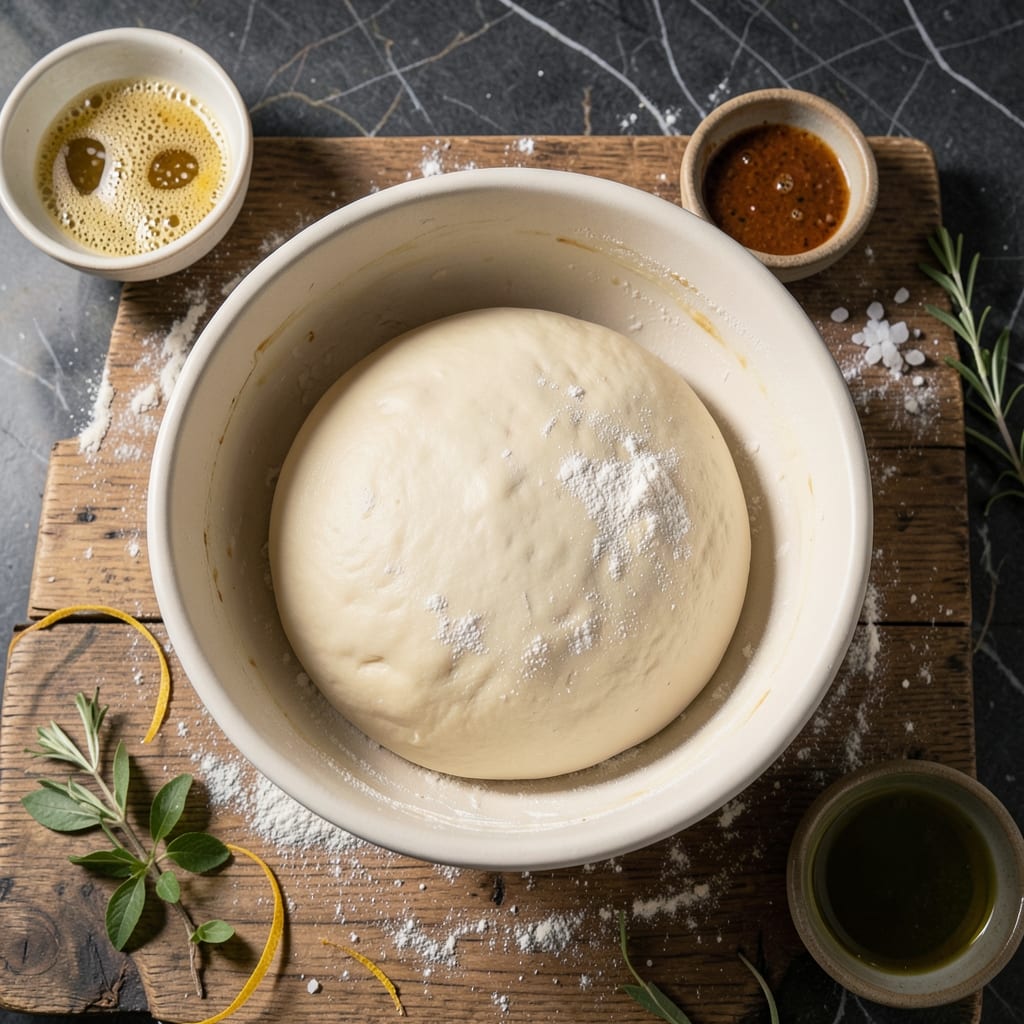
This pizza dough recipe delivers artisan-quality results with minimal effort, thanks to the dough maker doing the heavy lifting. The machine handles kneading and proofing while you focus on perfecting your toppings.
I developed this method after testing different equipment in my kitchen. David, my official taste-tester, confirmed this produces the best crust we’ve had at home—light, airy, and full of flavor.
The process is straightforward: combine ingredients, set the timer, and let the machine work its magic. The result is a smooth, elastic dough ready for your favorite toppings.
Whether you prefer classic margherita or loaded veggie, this dough provides the perfect foundation for any pizza night.
Ingredients for Pizza Dough Recipe for Dough Maker
Pantry staples plus a dough maker. Artisan crust with zero effort.
| Ingredient | Amount | Notes |
|---|---|---|
| Bread Flour 🌾 | 3 ½ cups | High protein for structure |
| Active Dry Yeast 🍞 | 2 ¼ tsp | One packet, proofed in warm water |
| Kosher Salt 🧂 | 1 ½ tsp | Diamond Crystal preferred |
| Granulated Sugar 🍚 | 1 tsp | Feeds the yeast |
| Extra-Virgin Olive Oil 🫒 | 2 tbsp | For richness and elasticity |
| Warm Water 💧 | 1 ¼ cups | 110°F to activate yeast |
| Semolina Flour 🌾 | ¼ cup | For dusting work surface |
| All-Purpose Flour 🌾 | ½ cup | Optional for softer dough |
| Garlic Powder 🧄 | 1 tsp | Optional for flavor boost |
| Dried Oregano 🍃 | 1 tsp | Optional for herby notes |
The flour is non-negotiable here. King Arthur Bread Flour is my go-to—high protein content gives that perfect chewy bite. Yeast needs to be fresh (check the expiration date), and warm water at 110°F is critical for activation. I grab my yeast and semolina from Whole Foods bulk bins when I can. The olive oil should be something you’d actually drizzle on bread—no cheap stuff here.
No bread flour on hand? All-purpose in a pinch but expect a slightly softer crust. Swap sugar for honey if that’s what you’ve got (vegetarians, this is fine). Out of semolina? Regular flour works for dusting. For extra flavor, add a pinch of garlic powder or dried oregano—both keep forever in the pantry.
Dough balls keep in the fridge for up to 3 days in an oiled bowl. For longer storage, wrap tightly and freeze for 1 month. Let frozen dough thaw overnight before using. Always dust your surface well—sticky dough is a pain.
Why You’ll Love This Recipe
- Hands-Off Mixing: The dough maker does all the kneading while I pour a glass of wine—no sticky counters, no sore arms.
- That Olive Oil Magic: The extra-virgin olive oil gives the crust a golden, crisp edge with a tender bite that beats delivery every time.
- Freezer Best Friend: I double the batch, freeze half, and pull it out for impromptu pizza nights. (Yes, even on a Tuesday night)
- Budget Buster: Bread flour and yeast cost pennies compared to takeout, and honestly, this tastes richer than most pizzeria doughs.
Step-by-Step Instructions for Pizza Dough
Your dough maker handles the mixing—just follow these steps for perfect results every time.
Step 1: Activate the Yeast Properly
In a small bowl, combine the 1.25 cups warm water with 1 tsp granulated sugar and 2.25 tsp active dry yeast. Let it sit for 5-7 minutes until the mixture becomes frothy and cloudy—this visual confirmation means your yeast is active and ready to work its magic.
If the water isn’t at 110°F, you risk killing the yeast or preventing activation. I always use a thermometer for precision here. The sugar gives the yeast a quick food source to get started, creating that essential foundation for your dough’s rise.
Step 2: Load the Dough Maker with Precision
Add the frothy yeast mixture to your dough maker pan along with 2 tbsp extra-virgin olive oil, 1.5 tsp kosher salt, 3.5 cups bread flour, 0.5 cup all-purpose flour, 1 tsp garlic powder, and 1 tsp dried oregano. The bread flour’s high protein content develops the gluten structure that gives pizza dough its characteristic chew.
The all-purpose flour softens the texture slightly, while the olive oil adds elasticity. I’ve found that adding the liquid ingredients first helps prevent dry pockets in the dough. Secure the pan in your machine and select the dough setting—typically a 10-15 minute cycle for pizza dough.
Step 3: Monitor the Mixing Process
As the dough maker works, watch through the window during the first 2-3 minutes. The dough should come together into a shaggy ball that cleans the sides of the pan. If it appears too dry, add 1 tsp of warm water; if too wet, sprinkle in 1 tsp of bread flour.
This is your only chance to adjust the hydration. The machine’s kneading paddle will work the dough into a smooth, elastic ball. You’ll hear the motor strain slightly as it develops the gluten—this is normal. The dough should be tacky but not sticky when finished.
Step 4: Complete the First Rise
Once the dough cycle completes, remove the pan from the machine. The dough should have nearly doubled in size and spring back slowly when poked. If it doesn’t, let it rest in the pan for an additional 10-15 minutes in a warm spot.
Turn the dough out onto a surface dusted with 0.25 cup semolina flour. The semolina prevents sticking while adding a subtle texture to your finished crust. Gently shape it into a ball, being careful not to overwork it at this stage.
Step 5: Portion and Rest for Final Preparation
Divide the dough into 4 equal portions for individual pizzas. Shape each into a smooth ball by pulling the edges toward the center and pinching them together. Place the balls on a lightly floured surface, cover with a damp towel, and let rest for 30 minutes at room temperature.
This final rest allows the gluten to relax, making the dough easier to stretch. You’ll notice the balls puff up slightly during this time. The dough is now ready to be shaped, topped, and baked into perfect pizzas with that artisan texture you’re after.
Pro Tips For Making Pizza Dough Recipe For Dough Maker
- Proof the Yeast: Always bloom your active dry yeast in warm water (105–110°F) with the sugar for 5–10 minutes until foamy—I learned this the hard way after a few flat, sad doughs.
- Use Bread Flour: Skip all-purpose flour; the higher protein in bread flour (12–14%) gives that chewy, stretchy texture you want in pizza dough.
- Don’t Over-Oil: About 2 tablespoons of extra-virgin olive oil is plenty—too much makes the dough greasy and hard to handle in the dough maker.
- Let It Rest: After kneading, give the dough a solid 1–2 hour rise at room temperature, or overnight in the fridge for deeper flavor—your future self will thank you.
Serving Suggestions for This Dish
Classic Margherita Style
Stretch each dough ball into a 12-inch round and top with ½ cup San Marzano tomato sauce, 8 oz fresh mozzarella, and fresh basil leaves. Bake at 475°F for 12-15 minutes until golden. David swears by this simple combo. 🌟
Loaded Veggie Feast
Spread a thin layer of pesto instead of tomato sauce, then add bell peppers, mushrooms, red onions, and olives. Sprinkle with shredded Parmesan before baking. I love using seasonal veggies from Austin farmers markets.
Breakfast Pizza Twist
Top your dough with scrambled eggs, crispy bacon, and shredded cheddar. Bake as usual, then finish with fresh chives. This became a weekend staple in our house after testing different variations.
White Pizza Elegance
Skip the sauce and brush the crust with olive oil. Top with ricotta, sliced garlic, and spinach. Finish with a drizzle of balsamic glaze after baking. The kids, Emma and Jack, request this version often.
Dessert Pizza Fun
Roll out the dough, brush with melted butter, and sprinkle with cinnamon sugar. Bake for 8-10 minutes at 400°F, then top with sliced apples and a dusting of powdered sugar. A sweet treat that uses the same dough base.
Nutrition Facts
Frequently Asked Questions
What’s the ideal water temperature for activating yeast?
110°F is perfect for yeast activation. Use a thermometer for accuracy. Too hot kills the yeast, too cold prevents activation.
Can I use all-purpose flour instead of bread flour?
Yes, but expect a softer crust. Bread flour’s higher protein develops better gluten structure. For best results, stick with bread flour if available.
How long should I let the dough rest after mixing?
Let it rest for 30 minutes at room temperature after shaping into balls. This relaxes the gluten, making it easier to stretch.
How do I store leftover dough?
Refrigerate in an oiled bowl for up to 3 days. For longer storage, freeze tightly wrapped for 1 month. Thaw overnight before using.

- Potato Candy Recipe 1933: Vintage Peanut Butter Roll Delight - October 30, 2026
- Potato Chip Cookie Recipe With Pecans: Buttery Crunch Meets Nutty Richness - October 30, 2026
- Potato Patty Recipe No Egg: Crispy Edges Without the Binder - October 30, 2026