
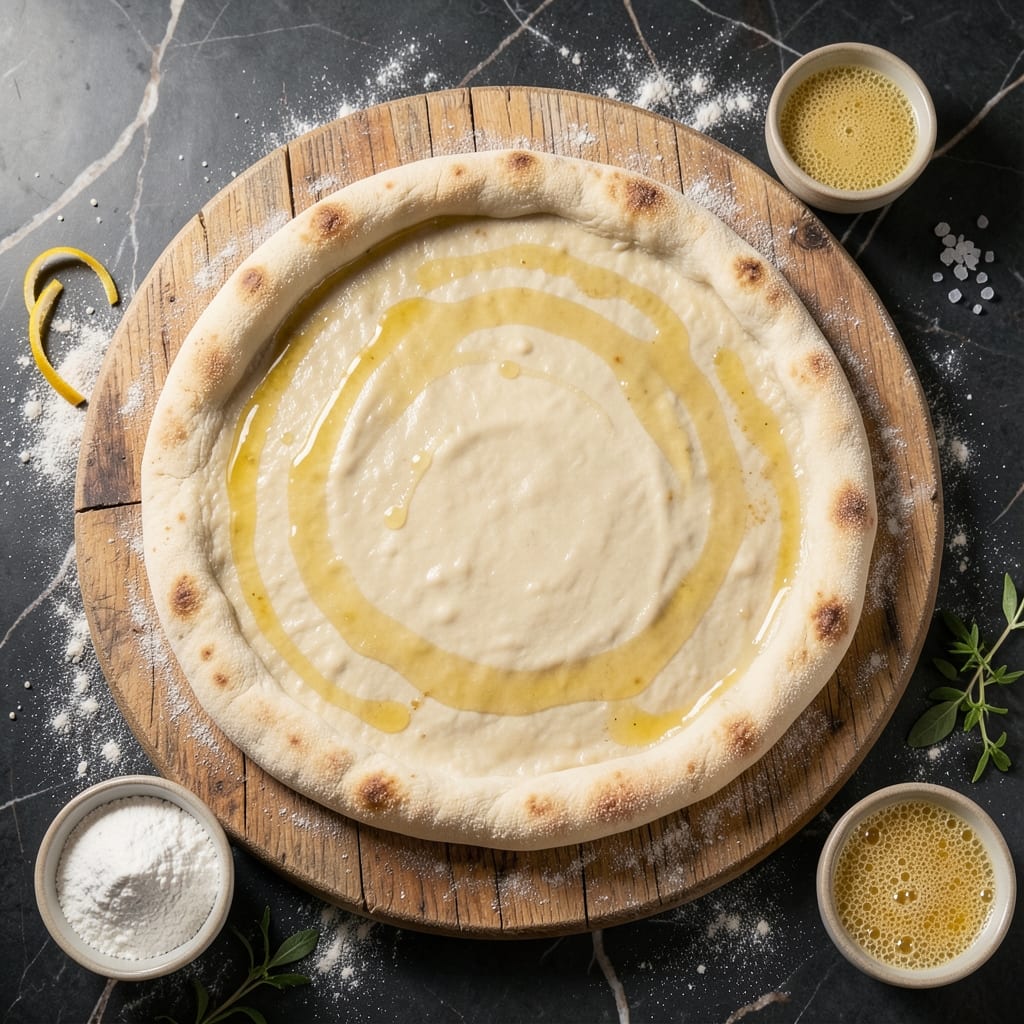
This recipe delivers the authentic Neapolitan crust you’ve been chasing for your wood-burning oven. The key lies in a high-hydration dough and precise fermentation to achieve that signature chewy yet airy texture.
Wood-fired ovens demand dough that can withstand intense heat while developing a leopard-spotted, blistered crust. This method ensures professional results with minimal effort, using simple ingredients and traditional techniques.
With a fermentation time of just 2 hours, the dough develops complex flavors without the wait of overnight proofs. The result is a base that crisps in seconds while staying tender inside.
Perfect for classic Margherita or creative toppings, this dough transforms home pizza night into a true Italian experience.
Ingredients for Pizza Dough Recipe for Wood Burning Oven
These essential ingredients create authentic wood-fired pizza dough with minimal effort and maximum flavor.
| Ingredient | Amount | Notes |
|---|---|---|
| Type 00 Flour 🌾 | 3 ½ cups | Finely milled Italian flour preferred |
| Active Dry Yeast 🍞 | ¼ oz | One packet, proofed in warm water |
| Sea Salt 🧂 | 2 tsp | Fine grain for even distribution |
| Filtered Water 💧 | 1 ½ cups | Room temperature, 70-75°F |
| Extra-Virgin Olive Oil 🫒 | 2 tbsp | For dough elasticity and flavor |
| Semolina Flour 🌾 | ½ cup | For dusting work surface |
| Honey 🍯 | 1 tsp | Optional, enhances yeast activity |
| All-Purpose Flour 🌾 | ½ cup | Substitute if Type 00 unavailable |
The flour is non-negotiable for authenticity. Type 00 flour from Antimo Caputo or Eataly delivers the fine, silky texture Neapolitan dough requires. Look for the blue bag—it’s the gold standard. Sea salt should be fine-grained to dissolve completely; Diamond Crystal won’t work here. Yeast must be fresh; check the expiration date carefully (old yeast kills fermentation).
No Type 00? All-purpose flour works in a pinch but reduces chewiness. Skip honey if vegan—sugar activates yeast too. Room-temperature water is critical; too hot kills yeast, too cold slows proofing. Semolina prevents sticking and adds texture, but cornmeal works as a substitute. Olive oil can be omitted but reduces extensibility.
Dough rests best at 70-75°F. Use within 24 hours or freeze for 1 month. Portion into balls, coat with oil, and store in airtight containers. Bring to room temperature before stretching—cold dough tears easily.
Why You’ll Love This Recipe
- Five Ingredients Only: I love that this dough comes together with just Type 00 flour, yeast, salt, water, and a glug of olive oil—no fancy additions or last-minute grocery runs.
- Wood-Fired Crisp: The high heat of my wood oven turns this simple dough into something magical, with a blistered crust and that perfect chewy interior.
- Endless Topping Playground: I’ve used this base for everything from classic margherita to breakfast pizzas with eggs—it handles anything I throw at it.
- Stretches My Budget: A big batch of dough costs pennies compared to takeout, and I’ll be real: it tastes way better too.
Step-by-Step Instructions for Pizza Dough for Wood Burning Oven
Master the technique for achieving that perfect Neapolitan-style crust with a chewy interior and crisp exterior.
Step 1: Activate the Yeast and Prepare the Dough Base
In a small bowl, combine the 0.25 oz Active Dry Yeast, 1.5 cups Filtered Water, and 1 tsp Honey. Stir gently and let it sit for 5-7 minutes until the mixture becomes frothy and bubbly—this confirms the yeast is active and ready to work.
In a large mixing bowl, add the 3.5 cups Type 00 Flour and 2 tsp Sea Salt. Create a well in the center and pour in the yeast mixture along with 2 tbsp Extra-Virgin Olive Oil. The Type 00 Flour ensures a fine, elastic texture ideal for high-heat cooking.
Step 2: Knead the Dough to Develop Gluten
Using a wooden spoon or your hands, gradually incorporate the flour into the wet ingredients until a shaggy dough forms. Turn the dough out onto a surface lightly dusted with 0.5 cup Semolina Flour—this coarse flour prevents sticking while adding a subtle texture to the crust.
Knead the dough for 8-10 minutes by hand, or 5-6 minutes in a stand mixer with a dough hook attachment, until it’s smooth, elastic, and slightly tacky but not sticky. Proper gluten development ensures the dough stretches without tearing when shaped.
Step 3: First Rise for Flavor Development
Place the dough in a lightly oiled bowl, cover it with a damp kitchen towel, and let it rise in a warm, draft-free spot for 1.5 to 2 hours, or until it has doubled in size. The ideal rise environment is around 75°F—too cold slows fermentation, while too hot can overproof the dough.
This first rise allows the yeast to ferment the sugars, developing complex flavors and a light, airy structure. If your kitchen is cool, extend the rise time slightly; the dough should spring back slowly when poked.
Step 4: Shape and Second Rise for Optimal Texture
Divide the dough into 4 equal portions (about 7-8 oz each) for individual pizzas. Gently shape each portion into a ball by folding the edges toward the center, creating surface tension. Place the balls on a floured surface, cover, and let them rest for 30-60 minutes.
This second rise relaxes the gluten, making the dough easier to stretch thinly without snapping back. The dough balls should puff up slightly but retain their shape, indicating they’re ready for shaping and topping.
Step 5: Stretch and Prepare for the Wood-Burning Oven
On a surface dusted with 0.5 cup All-Purpose Flour or Semolina Flour, gently stretch one dough ball from the center outward, using your fingertips to create a thin, even round with a slightly thicker rim. Avoid using a rolling pin, as it compresses the air pockets needed for a light crust.
Transfer the stretched dough to a floured pizza peel. Add toppings sparingly to prevent sogginess, then slide it directly onto the hot stone or floor of your wood-burning oven preheated to 700-900°F. Bake for 60-90 seconds until the crust is charred in spots and the toppings are bubbling.
Pro Tips For Making Pizza Dough Recipe For Wood Burning Oven
- Preheat the Stone: Get your wood oven blazing hot—at least 700°F—and let the stone heat for 30 minutes. I learned this the hard way after pulling out doughy, undercooked bases.
- Use Ice-Cold Water: Swap warm water for ice-cold in your dough—it slows fermentation, giving you a stretchier, more manageable base that holds up to the intense heat.
- Skip the Over-Kneading: Mix just until the dough comes together, then stop. Overworking Type 00 flour makes it tough—your pizza should be tender, not chewy.
- Oil the Bowl Lightly: About 1 teaspoon of extra-virgin olive oil in the rising bowl is enough to prevent sticking without making the dough greasy. Sounds small, but it actually changes the outcome.
Wine and Beer Pairings for This pizza dough recipe for wood burning oven
Italian Wine Pairings
For a classic Neapolitan experience, I love pairing this crust with a crisp Lacryma Christi del Vesuvio white wine from Campania. Its mineral notes and citrus acidity cut through the richness of melted cheese beautifully. A 5-ounce pour complements each pizza perfectly. 🍷
Bold Italian Reds
A light, fruity Chianti Classico works wonderfully with tomato-based pizzas. The bright acidity balances the sweetness of San Marzano tomatoes, while subtle tannins cleanse your palate. I recommend Ruffino for consistent quality at a reasonable price.
Craft Beer Options
An Italian-style pilsner like Birra del Borgo ReAle offers the perfect crisp, clean finish. For American craft lovers, a West Coast IPA with citrusy hops mirrors the bright tomato flavors. Avoid heavy stouts that can overwhelm the dough’s delicate notes. 🍺
Sparkling Choices
Prosecco from Veneto provides refreshing bubbles that cleanse your palate between bites. The light apple and pear notes complement the charred crust’s smokiness. I serve it chilled at 45-50°F for optimal crispness.
Non-Alcoholic Pairings
For alcohol-free options, try San Pellegrino Aranciata—its citrusy brightness enhances the pizza’s flavors. Or go for a sparkling blood orange soda from Jarritos. Both offer the carbonation needed to cut through the richness.
Nutrition Facts
Frequently Asked Questions
What’s the best flour for wood-fired pizza?
Use Type 00 flour for authentic texture and crispiness. Antimo Caputo blue bag is ideal. All-purpose works but reduces chewiness.
How long should I proof the dough?
Let it rise for 1.5-2 hours at 75°F. A second 30-60 minute rest after shaping ensures easy stretching.
Can I make dough ahead of time?
Yes! Prepare dough up to 24 hours ahead. Store in airtight containers in the fridge. Bring to room temperature before stretching.
Why is my crust tough instead of chewy?
Over-kneading or cold dough causes toughness. Knead just until smooth and let it rest properly. 70-75°F water helps yeast activate correctly.

- Potato Candy Recipe 1933: Vintage Peanut Butter Roll Delight - October 30, 2026
- Potato Chip Cookie Recipe With Pecans: Buttery Crunch Meets Nutty Richness - October 30, 2026
- Potato Patty Recipe No Egg: Crispy Edges Without the Binder - October 30, 2026