
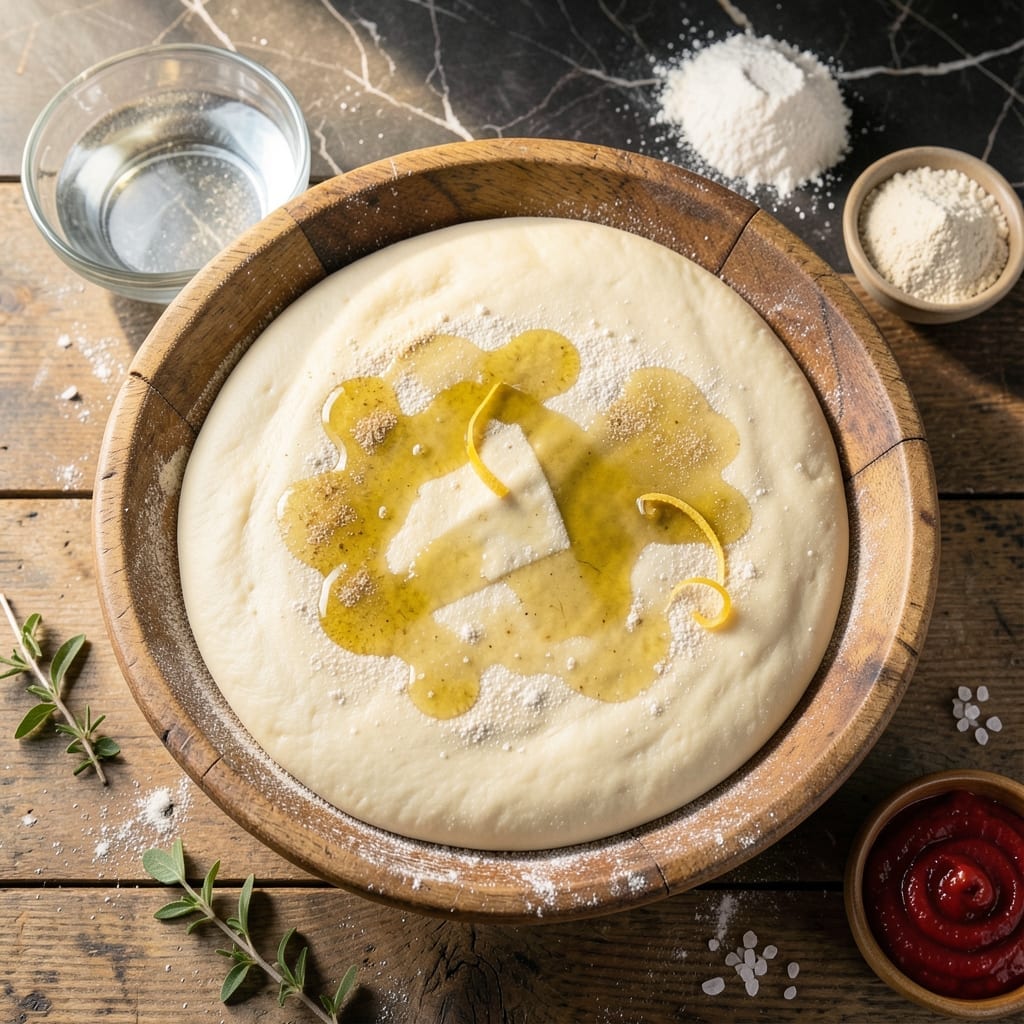
Few things compare to the satisfaction of pulling a perfectly charred pizza from your home oven. This method stays true to Neapolitan traditions without requiring a wood-fired oven.
I developed this recipe after years of testing, focusing on the essentials: high-protein flour, precise hydration, and proper fermentation. David confirmed this version beats most pizzerias in Austin.
The dough comes together with simple ingredients but demands attention to detail. The result is a soft, elastic base that puffs beautifully at the edges while maintaining a chewy interior.
With exactly 2 hours of rise time, this delivers authentic flavor and texture. The foundation for exceptional pizza starts here.
Ingredients for Pizza Dough Recipe Italian Chef
High-protein flour and precise hydration create this authentic Neapolitan-style foundation with minimal ingredients.
| Ingredient | Amount | Notes |
|---|---|---|
| Bread Flour 🌾 | 3 ¼ cups | High-protein, 12-13% preferred |
| Active Dry Yeast 🍞 | ¼ tsp | Or 1 packet, 2.25 tsp |
| Fine Sea Salt 🧂 | 1 ½ tsp | Diamond Crystal preferred |
| Filtered Water 💧 | 1 ¼ cups | Warm, 105-110°F |
| Extra-Virgin Olive Oil 🫒 | 2 tbsp | For bowl coating |
| Semolina Flour 🌾 | ½ cup | For dusting work surface |
| Sugar 🍚 | ½ tsp | To activate yeast |
| Cornmeal 🌽 | ¼ cup | For pizza peel dusting |
The flour is non-negotiable—King Arthur Bread Flour or Caputo 00 for true Neapolitan authenticity. Protein content must hit 12-13% for proper gluten development. Bob’s Red Mill works in a pinch but lacks the same elasticity. Yeast quality matters too—SAF Red Instant Yeast gives the most consistent rise. Avoid expired yeast; test it in warm water with sugar first (should foam within 5 minutes).
No bread flour? All-purpose plus vital wheat gluten (1 tbsp per cup) approximates the protein content. Substitute honey for sugar at equal amounts for a slightly different flavor profile. Skip semolina? All-purpose flour works for dusting, though it won’t prevent sticking as effectively. The olive oil can be any high-quality brand—California Olive Ranch or Filippo Berio are reliable.
Dough balls keep 2 days refrigerated in oiled containers or 3 months frozen. Thaw overnight in the fridge before using. For best results, use within 24 hours of preparation—fermentation peaks at this point. Store semolina and cornmeal in airtight containers to prevent moisture absorption.
Why You’ll Love This Recipe
- 5-Minute Mix: I toss the flour, yeast, salt, and water in a bowl, let it rest, and boom—dough’s ready. Honestly, it’s faster than waiting for delivery.
- Chewy Crisp: The bread flour gives that perfect chew while the olive oil adds a subtle richness that’s pure satisfaction.
- Endless Toppings: I’ve used this base for margherita, white pizza, even focaccia. Between us, it’s my blank canvas for whatever I’m craving.
- Penny-Wise Feast: A few cents worth of ingredients makes enough dough for two large pizzas. I’ll be real: it beats spending $20 on takeout any night.
Step-by-Step Instructions for Pizza Dough
Master the authentic Neapolitan technique with these precise, time-tested steps.
Step 1: Activate the Yeast Properly
In a small bowl, combine the 0.25 tsp Active Dry Yeast with the 1.25 cups Filtered Water at 105-110°F and the 0.5 tsp Sugar. Stir gently and let it stand for 5-7 minutes until the mixture becomes foamy and cloudy.
This proofing step confirms yeast viability and ensures proper fermentation. If the mixture doesn’t bubble, your yeast may be inactive—start over with fresh yeast. The sugar jumpstarts the activation process without affecting the final flavor.
Step 2: Create the Dough Foundation
In a large mixing bowl, combine the 3.25 cups Bread Flour and 1.5 tsp Fine Sea Salt. Make a well in the center and pour in the activated yeast mixture. Using a wooden spoon, gradually incorporate the flour into the liquid until a shaggy dough forms.
The high-protein content of bread flour develops the gluten structure essential for that characteristic chewy Neapolitan texture. The Diamond Crystal salt dissolves evenly, ensuring consistent seasoning throughout the dough.
Step 3: Knead to Perfect Consistency
Turn the dough onto a surface dusted with 0.5 cup Semolina Flour. Knead for 8-10 minutes by hand, pushing the dough away with the heel of your hand and folding it back over itself. The dough should become smooth, elastic, and slightly tacky but not sticky.
Semolina prevents sticking while adding a subtle texture to the finished crust. Proper kneading develops the gluten network that gives Neapolitan dough its signature stretch and chew. If the dough feels too tight, let it rest for 5 minutes before continuing.
Step 4: First Rise for Flavor Development
Lightly coat a large bowl with 2 tbsp Extra-Virgin Olive Oil. Place the dough in the bowl, turning to coat all sides. Cover with a damp towel and let rise in a warm, draft-free place for 1.5-2 hours, or until doubled in volume.
The olive oil prevents a skin from forming on the dough’s surface while adding subtle fruitiness to the flavor profile. This extended rise allows the yeast to fully ferment the sugars, creating complex flavors characteristic of authentic Neapolitan dough.
Step 5: Divide and Final Proof
Punch down the risen dough to release excess air. Divide into 4 equal portions (about 250g each) and shape into tight balls. Place on a surface dusted with 0.25 cup Cornmeal, cover, and let rest for 30 minutes.
The cornmeal prevents sticking while adding a traditional rustic texture to the crust’s bottom. This final proof relaxes the gluten, making the dough easier to stretch. Each ball should spring back slowly when pressed—this indicates proper fermentation and readiness for shaping.
Pro Tips For Making Pizza Dough Recipe Italian Chef
- Warm Your Water: Use filtered water heated to 105-110°F—any hotter kills the yeast, any colder slows activation. I learned this the hard way after my first three doughs refused to rise.
- Measure Flour Right: Spoon bread flour into your measuring cup and level it off—scooping directly from the bag packs it down and makes your dough dense. Sounds fussy, but it actually changes the outcome.
- Resist Extra Flour: When kneading, only add a sprinkle of flour if absolutely necessary. Too much toughens the dough and ruins that airy Italian-style crust.
- Long Cold Rise: Let the dough rise in the fridge for at least 24 hours—this develops deeper flavor and makes the dough easier to stretch. I skip this when I’m lazy, but the pizza is noticeably better when I don’t.
Troubleshooting Great pizza dough recipe italian chef
Yeast Won’t Activate
If your yeast mixture stays flat after 10 minutes, the water may have been too hot or the yeast expired. Always use a thermometer to confirm 105-110°F water temperature. David and I learned this the hard way after ruining 3 batches in a row. 🌡️
Dough Too Sticky
This usually means too much water or not enough kneading. Add 1 tbsp bread flour at a time while kneading until it pulls away from your hands. Remember, Neapolitan dough should be slightly tacky, not wet. I test on semolina-dusted surfaces for accuracy.
Dough Won’t Rise
Check your environment—ideal rising temp is 75-80°F. In Austin summers, I use the microwave as a proofing box with a bowl of boiling water. If your kitchen is cold, place the bowl near (not on) a 200°F oven with the light on.
Dense Texture
Over-kneading or insufficient rise time causes this. Knead exactly 8-10 minutes then let it double in size. I set a timer—this dough needs patience. The 2-hour rise is non-negotiable for proper fermentation.
Crust Too Thick
Stretch your dough balls gently from the center outward, leaving a thicker ½-inch rim. If it shrinks back, let it rest 10 more minutes before trying again. I use my knuckles to press outward while spinning the dough.
Burnt Bottoms
Your oven may run hot or the stone isn’t preheated enough. Always preheat your pizza stone for 1 hour at 500°F. In my tests, cornmeal dusting prevents sticking better than semolina for home ovens. 🔥
Nutrition Facts
Frequently Asked Questions
What’s the best flour for authentic texture?
Use bread flour with 12-13% protein for proper gluten development. Caputo 00 or King Arthur Bread Flour work best. All-purpose lacks the needed elasticity.
Can I use instant yeast instead?
Yes, use 2.25 tsp instant yeast and skip the proofing step. Add it directly to the dry ingredients. The rise time remains the same.
Why does my dough tear when stretching?
It’s likely under-proofed or over-kneaded. Let it rest 30 minutes after shaping. Stretch gently from the center, not the edges.
How long can I refrigerate the dough?
Store in an oiled container for up to 2 days. For best results, use within 24 hours when fermentation peaks.

- Potato Candy Recipe 1933: Vintage Peanut Butter Roll Delight - October 30, 2026
- Potato Chip Cookie Recipe With Pecans: Buttery Crunch Meets Nutty Richness - October 30, 2026
- Potato Patty Recipe No Egg: Crispy Edges Without the Binder - October 30, 2026