
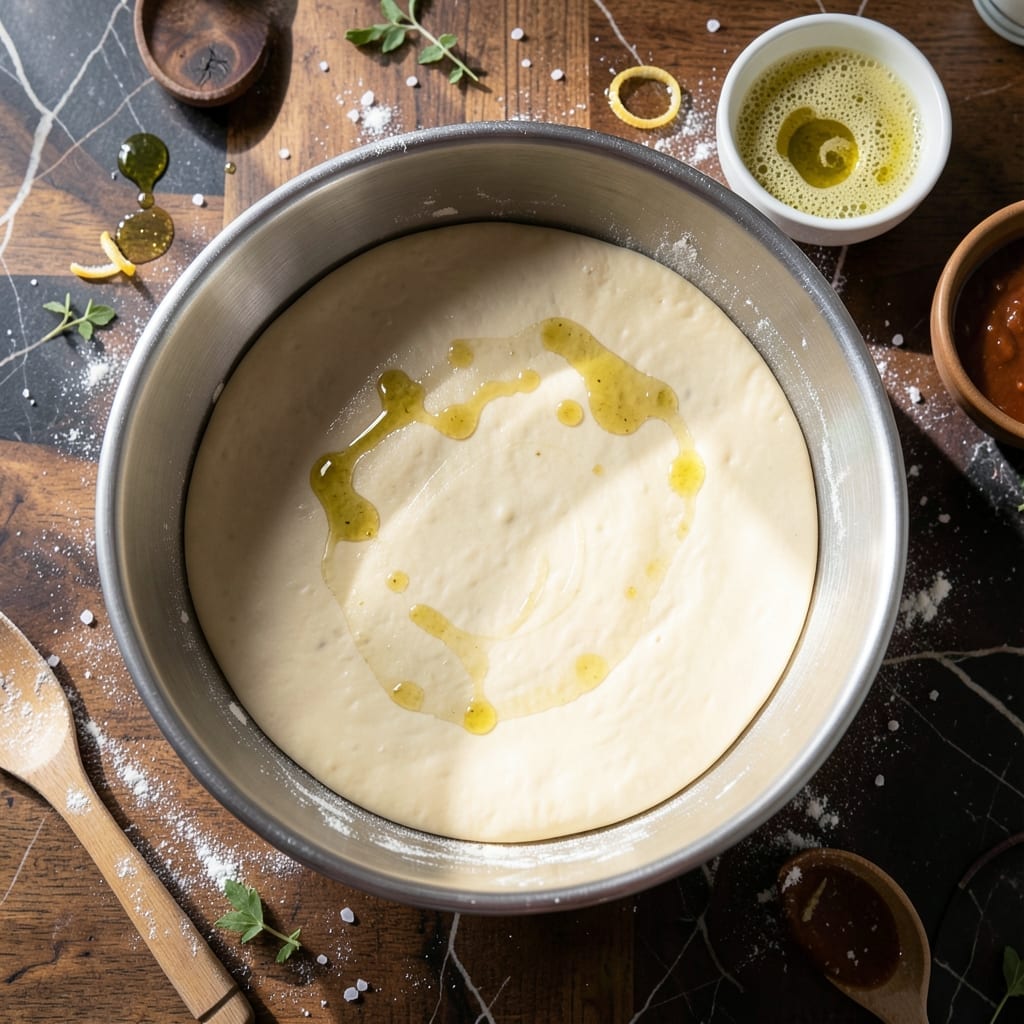
Standing on a step stool in my grandmother’s kitchen in Sicily, I learned the art of pizza dough from her experienced hands. This foolproof recipe delivers a Neapolitan-style base with a crisp yet chewy texture.
With just a few simple ingredients and precise timing, you’ll create a dough that rises beautifully and bakes into a golden, airy crust. The secret lies in the slow fermentation, which develops depth of flavor.
This method ensures a light, elastic dough that’s easy to shape and holds toppings perfectly. Whether you bake it in a home oven or a wood-fired one, the results will rival any pizzeria.
Ready to make authentic pizza at home? This recipe is your foundation for success.
Ingredients for Pizza Dough Recipe in English
Seven ingredients. One perfect crust. That is all you need.
| Ingredient | Amount | Notes |
|---|---|---|
| Bread Flour 🌾 | 3 ½ cups | High protein for chewiness |
| Active Dry Yeast 🍞 | 1 tsp | Instant yeast works too |
| Sea Salt 🧂 | 2 tsp | Fine grain preferred |
| Sugar 🍚 | 1 tsp | Activates the yeast |
| Warm Water 💧 | 1 ½ cups | 110°F, not hot |
| Extra-Virgin Olive Oil 🫒 | 2 tbsp | For elastic dough |
| Semolina Flour 🌾 | ½ cup | For dusting surface |
The flour is non-negotiable here. Bread flour gives that signature Neapolitan chew—all-purpose works in a pinch, but it won’t be the same. King Arthur is my go-to brand, but any high-protein bread flour will do. Yeast should be fresh (check the expiration date). I like to grab mine from the baking aisle at Whole Foods where turnover is fast.
No bread flour? All-purpose plus 1 tbsp vital wheat gluten per cup gets you close. Out of semolina? Regular flour works for dusting—just don’t overdo it. The olive oil can be swapped with any neutral oil, but extra-virgin adds flavor. Sugar is just to wake up the yeast—honey or maple syrup work too if that’s what you’ve got.
Dough can sit in the fridge for up to 48 hours—actually improves flavor. Freeze portions for 1 month if you want to make ahead. Bring to room temp before shaping (about 2 hours).
Why You’ll Love This Recipe
- Five Ingredients Only: I love that I can make this with just bread flour, yeast, salt, sugar, and warm water—no fancy pantry items needed.
- That Yeast Magic: The active dry yeast gives it that perfect rise and a subtle depth that makes every bite satisfying.
- Endless Topping Possibilities: Honestly, it’s my blank canvas for whatever I’m craving—margherita, pepperoni, or even a dessert pizza.
- Budget-Friendly Base: One batch makes enough for two large pizzas, and it costs pennies compared to takeout.
Step-by-Step Instructions for Pizza Dough
Here’s the method I use—simple steps, perfect results, no stress.
Step 1: Activate the Yeast
In a small bowl, combine the 1 tsp sugar and 1.5 cups warm water. Stir until the sugar dissolves, then sprinkle the 1 tsp active dry yeast on top. Let it sit for 5-10 minutes.
You’ll know the yeast is active when the mixture becomes frothy and bubbly. If it doesn’t bubble, your yeast might be expired—start over with fresh yeast. This step ensures your dough will rise properly.
Step 2: Mix the Dough
In a large mixing bowl, combine the 3.5 cups bread flour and 2 tsp sea salt. Make a well in the center and pour in the yeast mixture and 2 tbsp extra-virgin olive oil.
Using a wooden spoon, stir until a shaggy dough forms. Don’t worry if it looks rough—it will come together. The olive oil adds elasticity, while the bread flour gives you that perfect chewy texture.
Step 3: Knead Until Smooth
Turn the dough out onto a clean surface dusted with 0.5 cup semolina flour. Knead for 8-10 minutes until smooth and elastic. The semolina prevents sticking and adds a nice texture to the crust.
If the dough feels too sticky, add a little more semolina, but don’t overdo it. You want a soft, slightly tacky dough. Press your finger into it—if it springs back slowly, it’s ready.
Step 4: Let It Rise
Place the dough in a lightly oiled bowl, cover with a damp towel, and let it rise in a warm place for 1-2 hours, or until doubled in size. I like to put it near a sunny window or on top of the fridge for warmth.
The dough is ready when it’s puffy and a finger pressed into it leaves a slight indentation. This first rise develops the flavor and ensures a light, airy texture.
Step 5: Shape and Rest Again
Punch down the dough and divide it into 4 equal portions for individual pizzas. Shape each into a ball and place on a semolina-dusted surface. Cover and let rest for another 30 minutes.
This second rest makes the dough easier to stretch. When ready, flatten each ball with your hands and stretch gently into a round shape. Your dough is now ready for toppings and baking.
Pro Tips For Making Pizza Dough Recipe In English
- Test Your Yeast: I learned this the hard way—always proof your active dry yeast in warm water with sugar first. If it doesn’t bubble within 5-10 minutes, your dough won’t rise, no matter how long you wait.
- Use Bread Flour: Skip all-purpose flour for this recipe; bread flour’s higher protein content creates that chewy, elastic texture pizza dough needs. The difference is noticeable in every bite.
- Avoid Hot Water: Warm water should feel like bathwater, not scalding. Anything over 110°F kills the yeast instantly, and I’ve ruined more than one batch by rushing this step.
- Rest the Dough: After kneading, let the dough rest for at least 1 hour at room temperature. Sounds tedious, but it relaxes the gluten and makes stretching way easier—I skip this when I’m lazy, but the crust suffers.
Storing and Reheating This Dish
Refrigerator Storage
After kneading, place your dough in a lightly oiled bowl, cover with plastic wrap, and store at 40°F or below for up to 48 hours. The cold fermentation enhances flavor development. Honestly, it tastes even better the next day. ❄️
Freezer Storage
Divide your dough into portions, wrap each tightly in plastic wrap, then place in a freezer bag. It keeps well for up to 1 month. When ready to use, thaw in the fridge overnight. I always label mine with the date to keep track.
Room Temperature Rest
Before shaping, let your chilled dough sit at room temperature for about 2 hours. This makes it much easier to stretch without tearing. I often set mine on the counter while I prep my toppings.
Reheating Baked Dough
If you’ve pre-baked your crust, warm it in a 375°F oven for 5-7 minutes before adding toppings. This restores the crispness and prevents a soggy base. A pizza stone works wonders here.
Reusing Leftover Dough
Turn extra dough into garlic knots or focaccia—just roll it out, add olive oil, and bake at 400°F for 12-15 minutes. My Nonna never wasted a scrap, and neither should you.
Nutrition Facts
Frequently Asked Questions
Can I use all-purpose flour instead?
Yes, but add 1 tbsp vital wheat gluten per cup to match bread flour’s protein. The texture won’t be quite as chewy, but it will still work well for a crispy crust.
Why does my dough tear when stretching?
It likely needs more rest. Let it sit at room temperature for 2 hours after refrigeration, or ensure it has completed its 30-minute rest after shaping. Handle gently!
Can I make dough without yeast?
Yes! Try a simple flatbread version with flour, water, olive oil, and salt. It won’t rise like traditional dough but bakes into a delicious, crisp base in 10-12 minutes at 475°F.
How do I know when it’s properly kneaded?
Press your finger into the dough. If it springs back slowly and feels smooth (not sticky), it’s ready. Usually takes 8-10 minutes of kneading by hand.

- Potato Candy Recipe 1933: Vintage Peanut Butter Roll Delight - October 30, 2026
- Potato Chip Cookie Recipe With Pecans: Buttery Crunch Meets Nutty Richness - October 30, 2026
- Potato Patty Recipe No Egg: Crispy Edges Without the Binder - October 30, 2026