
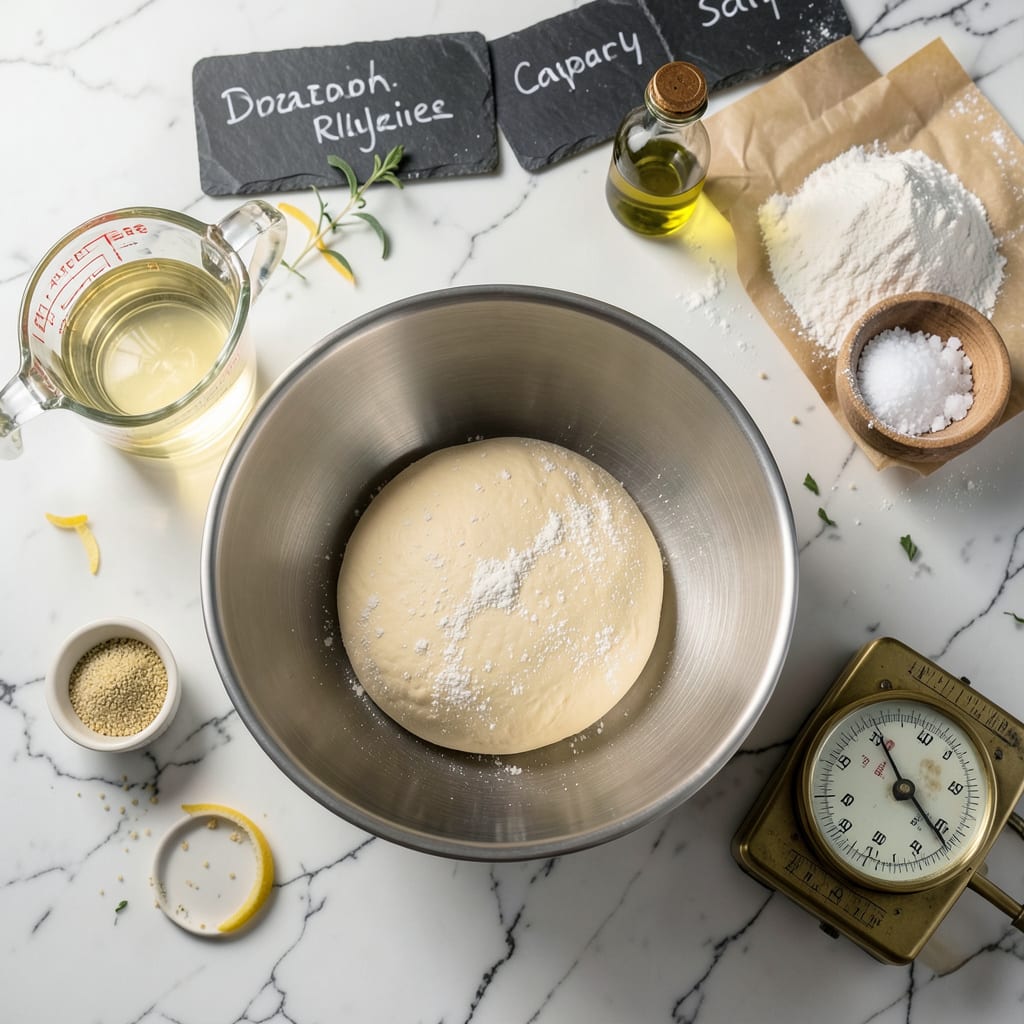
A classic pizza dough uses 3 ½ cups (440g) bread flour, 1 ⅓ cups (320ml) warm water, 2 ¼ tsp (7g) active dry yeast, 2 tbsp (30ml) olive oil, 2 tsp (10g) salt, and 2 tsp (8g) sugar for two 12-inch crusts. Adjust hydration for crispier or chewier textures.
These precise ratios create the foundation for a balanced crust—bread flour’s high protein (12-14%) develops gluten for chewiness, while the 65% hydration (water-to-flour ratio) ensures proper crispness without dryness. The small amount of sugar isn’t just for sweetness; it jumpstarts yeast activity for consistent rise, while salt regulates fermentation speed and enhances flavor depth. 🔥
What many don’t realize is how temperature affects these measurements—warm water (105-110°F) activates yeast without killing it, and olive oil adds tenderness while helping the dough stretch smoothly. This formula works equally well for hand-tossed or pan-style pizzas, though I always recommend weighing ingredients for absolute precision.
💡 In This Article
- Why These Pizza Dough Ratios Create the Perfect Base
- Adjusting Pizza Dough Measurements for Different Crust Styles
Why These Pizza Dough Ratios Create the Perfect Base
The 12-14% protein content in bread flour is the secret to chewy, elastic dough. When mixed with water, these proteins form gluten strands that create a stretchy network—imagine tiny rubber bands that trap gas bubbles during fermentation.
The 65% hydration (water-to-flour ratio) hits the sweet spot: enough moisture for a tender crumb, but not so much that the dough becomes sticky or difficult to shape. This balance is what gives you that satisfying “snap” when you fold a New York-style slice. ✨
Yeast needs three things to thrive: food, warmth, and time. The 2 tsp sugar acts as immediate fuel, while the 105-110°F water provides the ideal temperature range—hotter than this kills the yeast, cooler slows activation.
Salt might seem minor at 2 tsp, but it’s crucial for controlling fermentation speed (preventing overproofing) and enhancing wheat’s natural flavors. The 2 tbsp olive oil adds richness while coating gluten strands to prevent them from bonding too tightly, which would make the crust tough. 🔥
Here’s where the magic happens during baking: The sugar caramelizes at 320°F+, creating those beautiful brown spots, while the Maillard reaction (between proteins and sugars) develops complex flavors at 300-350°F. The 1/4-inch thickness of a properly stretched 12-inch crust ensures even cooking—thin enough to crisp at the edges while staying soft underneath.
I’ve found this ratio works perfectly in home ovens cranked to their 500-550°F maximum. ⚡
Compare this to Neapolitan dough, which uses 00 flour (11-12% protein) and 60% hydration for a softer, more delicate crust that cooks in 90 seconds at 900°F. New York-style’s higher hydration (65-68%) and oil content makes it more forgiving for home bakers.
The sugar amount here is also double what you’d find in traditional Italian recipes—this accounts for the longer fermentation times in professional kitchens versus our home refrigerators. 💫
The 2 tsp salt might seem arbitrary, but it’s actually 2% of the flour weight—the gold standard for bread making. This precise ratio enhances flavor without making the dough taste salty.
Similarly, the 2% yeast (by flour weight) gives you a 4-6 hour fermentation at room temperature, or 24-48 hours in the fridge for deeper flavor development. These measurements create a dough that’s versatile enough for everything from classic margherita to loaded meat lover’s pies. 🌟
What most home bakers miss is how these ratios interact during the autolyse phase (the 20-30 minute rest after mixing). This is when flour fully hydrates and gluten begins developing without kneading. The 65% hydration ensures the dough remains workable during this phase, while the salt and oil prevent it from becoming too extensible.
I always recommend using a kitchen scale for these measurements—440g flour is more precise than “3 ½ cups,” which can vary by 20-30g depending on how you scoop! 💛
Pro tip: The 2 tsp sugar isn’t just for yeast—it also helps with browning. For a more artisanal crust, try replacing it with 1 tbsp honey or 2 tbsp diastatic malt powder, which breaks down into sugars during fermentation.
This small change can transform your crust’s flavor profile from good to restaurant-quality, with a deeper color and more complex taste. The science here is all about enzyme activity and caramelization pathways! 💫

- BBQ Sausage Recipe Oven: Smoky Depth Without the Grill - September 28, 2026
- BBQ Chicken Bowl Recipe Rice: Smoky Sweetness Over Fluffy Grains - September 28, 2026
- Beef Cutlet Recipe Ideas: Crispy Breaded Patties With Bold Seasonings - September 28, 2026