
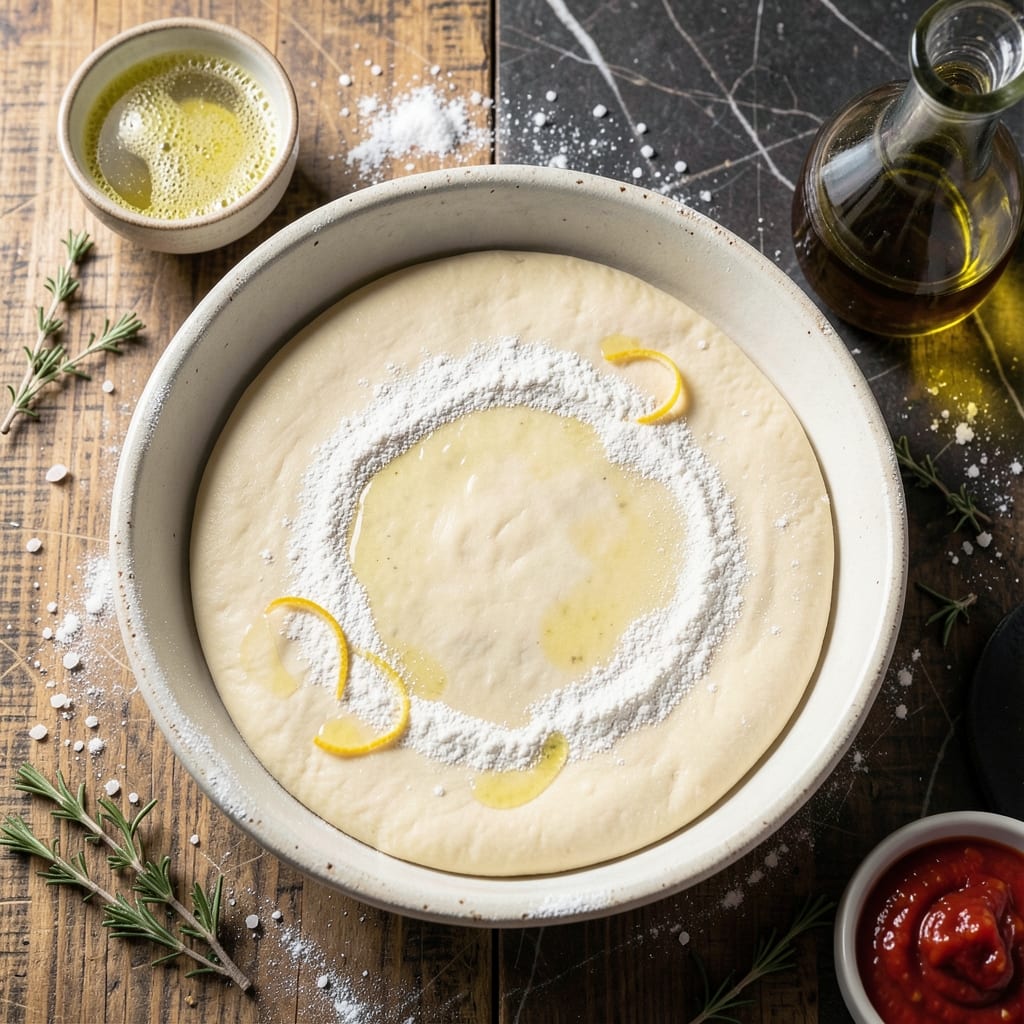
There’s no need for specialty flour to make excellent pizza dough at home. This proven method delivers a chewy, flavorful crust using basic pantry staples.
Standing on a step stool in my grandmother’s kitchen in Sicily, I learned that simple ingredients can create extraordinary results. All-purpose flour, when handled correctly, produces a dough that rises beautifully and bakes to golden perfection.
The process is straightforward: mix, knead briefly, then let time work its magic. You’ll achieve a texture that’s soft inside with a satisfying crispness at the edges.
This approach requires minimal effort but yields professional-quality dough every time. The aroma of baking pizza will transport you to Sunday family dinners.
Ingredients for Pizza Dough Recipe Using All Purpose Flour
Basic pantry staples transform into chewy, golden pizza crust with minimal effort.
| Ingredient | Amount | Notes |
|---|---|---|
| All-Purpose Flour 🌾 | 3 ½ cups | Plus extra for dusting surface |
| Active Dry Yeast 🍞 | ¼ oz | 1 packet, about 2.25 tsp |
| Granulated Sugar 🍚 | 1 tsp | Helps activate yeast |
| Kosher Salt 🧂 | 1 ½ tsp | Diamond Crystal preferred |
| Extra-Virgin Olive Oil 🫒 | 2 tbsp | High quality for flavor |
| Warm Water 💧 | 1 ¼ cups | 110-115°F for yeast activation |
| Semolina Flour 🌾 | ½ cup | For dusting peel, optional |
| Cornmeal 🌽 | ¼ cup | For baking surface, optional |
| Garlic Powder 🧄 | ½ tsp | Optional flavor enhancement |
| Dried Oregano 🌿 | ½ tsp | Optional for Italian flavor |
The flour is the foundation here—King Arthur or Gold Medal all-purpose give the best results. Yeast freshness is critical; check the expiration date and store it in the freezer to extend shelf life. I always keep a 5-pound bag of flour on hand since it keeps indefinitely in a cool, dark place. For the olive oil, California Olive Ranch or any high-quality extra-virgin works beautifully (the fruity, peppery kinds add depth).
No semolina or cornmeal for dusting? All-purpose flour works fine, though it won’t give quite the same crisp texture. Short on yeast? Instant yeast at the same quantity saves a step—no need to activate it in water first. The sugar can be swapped for honey at equal amounts, which also helps with browning. Water temperature is key: too hot kills the yeast, too cold slows activation (use a thermometer if you’re unsure).
Dough balls can be wrapped tightly and refrigerated for up to 48 hours—the slow rise develops more flavor. Freeze portions for up to 3 months in airtight bags. Bring to room temperature before shaping. Leftovers? Wrap the baked crust in foil and keep at room temp for 2 days.
Why You’ll Love This Recipe
- No Fuss Mixing: I just dump, stir, and let the yeast do its magic—no fancy flour required.
- Buttery Crisp: The olive oil gives it that golden, crackly crust I crave every time.
- Endless Toppings: Honestly, it’s my blank canvas for whatever’s in the fridge.
- Pocketbook Friendly: Five pantry staples, one amazing dough—saves me a trip to the store.
Step-by-Step Instructions for Pizza Dough Using All Purpose Flour
This method delivers a perfectly chewy crust with minimal hands-on time.
Step 1: Activate the Yeast and Proof
In a large mixing bowl, combine the 1.25 cups Warm Water, 1 tsp Granulated Sugar, and 0.25 oz Active Dry Yeast. Stir gently until the yeast dissolves. Let it sit for 5-10 minutes until the mixture becomes frothy and cloudy—this confirms your yeast is alive and active.
If the mixture doesn’t bubble after 10 minutes, your yeast may be expired. Start over with fresh yeast. The sugar feeds the yeast, creating the gas that will make your dough rise beautifully.
Step 2: Mix and Knead the Dough
Add the 2 tbsp Extra-Virgin Olive Oil, 1.5 tsp Kosher Salt, 0.5 tsp Garlic Powder, and 0.5 tsp Dried Oregano to the yeast mixture. Stir to combine. Gradually add 3.5 cups All-Purpose Flour, mixing until a shaggy dough forms.
Turn the dough onto a lightly floured surface and knead for 8-10 minutes until smooth and elastic. The dough should spring back when you press it with your finger. This develops the gluten strands that give pizza dough its chewy texture.
Step 3: First Rise Until Doubled
Place the dough in a lightly oiled bowl, turning to coat all sides. Cover with a damp towel or plastic wrap and let it rise in a warm, draft-free place for 1-2 hours or until doubled in size.
I like to place it in an oven that’s been preheated to 100°F then turned off. The ideal rise is when the dough has puffed up significantly and a finger pressed into it leaves a slight indentation that slowly springs back.
Step 4: Shape and Second Rise
Punch down the risen dough to release the air. Divide it into 4 equal portions for individual pizzas. On a surface dusted with All-Purpose Flour, roll each portion into a ¼-inch thick circle. For extra crispiness, you can use 0.5 cup Semolina Flour or 0.25 cup Cornmeal on your work surface instead.
Transfer the shaped dough to a baking sheet dusted with cornmeal and let it rise for another 15-20 minutes. This second rise gives the dough additional airiness. You’ll notice the edges start to look puffier—that’s your signal it’s ready for toppings.
Step 5: Pre-Bake for Perfect Crust
Preheat your oven to its highest setting, usually 500-550°F. Place your pizza stone or inverted baking sheet in the oven to heat. When ready to bake, transfer your topped pizza to the hot stone and bake for 10-12 minutes until the crust is golden brown.
The cornmeal on the baking surface prevents sticking and adds a nice texture to the bottom crust. Rotate the pizza halfway through baking for even browning. The crust should be crisp on the outside with a chewy interior when done perfectly.
Pro Tips For Making Pizza Dough Recipe Using All Purpose Flour
- Warm Your Bowl: Always mix your yeast with warm water (about 110°F) in a pre-warmed bowl—I learned this the hard way after killing yeast in cold ceramic.
- Skip the Rush: Let the dough rise for at least 1-2 hours, or until doubled. Sounds obvious, but I used to cut it short and ended up with dense, sad crusts.
- Use Good Olive Oil: Spring for decent extra-virgin olive oil here—about 2 tablespoons—not the cheap stuff. It actually changes the outcome of the dough’s texture and flavor.
- Flour Lightly: Dust just enough flour on your surface to prevent sticking when kneading. Too much and your dough turns tough and dry—yes, even if you’re impatient like me.
Regional Styles of This pizza dough recipe using all purpose flour
New York Style
This East Coast favorite uses a thin, foldable crust that’s crisp yet chewy. I stretch the dough to 12-inch rounds and bake at 550°F for 8-10 minutes on a preheated stone. The high heat mimics classic coal-fired ovens. 🗺️
Sicilian Thick Crust
My grandmother’s version bakes in a greased 9×13-inch pan. Press the dough to the edges, dimple with fingers, and let rise for 30 minutes before baking. The result is a fluffy, airy crust perfect for topping with tomato sauce and anchovies.
Neapolitan Adaptation
While traditional Neapolitan uses 00 flour, I’ve had great success with all-purpose by adding 1 tsp vital wheat gluten. Bake at the highest temperature possible for just 60-90 seconds for a soft, slightly charred crust.
Chicago Deep Dish
Press the dough into a well-greased 9-inch cake pan, building it up the sides. After the first rise, layer cheese directly on the crust before adding sauce. Bake at 425°F for 25-30 minutes for that iconic buttery crust.
Detroit Style
Use a 9×13-inch steel pan (I love LloydPans) and press the dough to the edges. The high sides create crispy, caramelized cheese edges. Bake at 550°F for 12-15 minutes, then finish with sauce on top.
Grilled Flatbread
Roll the dough thin and grill over medium-high heat for 2-3 minutes per side. The smoky flavor pairs perfectly with fresh toppings. I brush the grilled side with olive oil before adding toppings. 🔥
Nutrition Facts
Frequently Asked Questions
Can I use bread flour instead?
Yes, but it will make the crust slightly chewier. Bread flour has more protein, which creates a denser texture. Stick to all-purpose for a softer, more traditional result.
Why did my dough not rise?
Check your yeast first—it may be expired. Also, ensure the water was 110-115°F. Too hot kills the yeast, while cold water slows activation. The room should be warm and draft-free.
How long can I refrigerate the dough?
Up to 48 hours in an airtight container. The slow rise in the fridge enhances flavor. Bring it to room temperature before shaping for best results.
Can I freeze the dough?
Portion the dough, wrap tightly in plastic, and freeze for up to 3 months. Thaw overnight in the fridge before using.

- Potato Candy Recipe 1933: Vintage Peanut Butter Roll Delight - October 30, 2026
- Potato Chip Cookie Recipe With Pecans: Buttery Crunch Meets Nutty Richness - October 30, 2026
- Potato Patty Recipe No Egg: Crispy Edges Without the Binder - October 30, 2026