
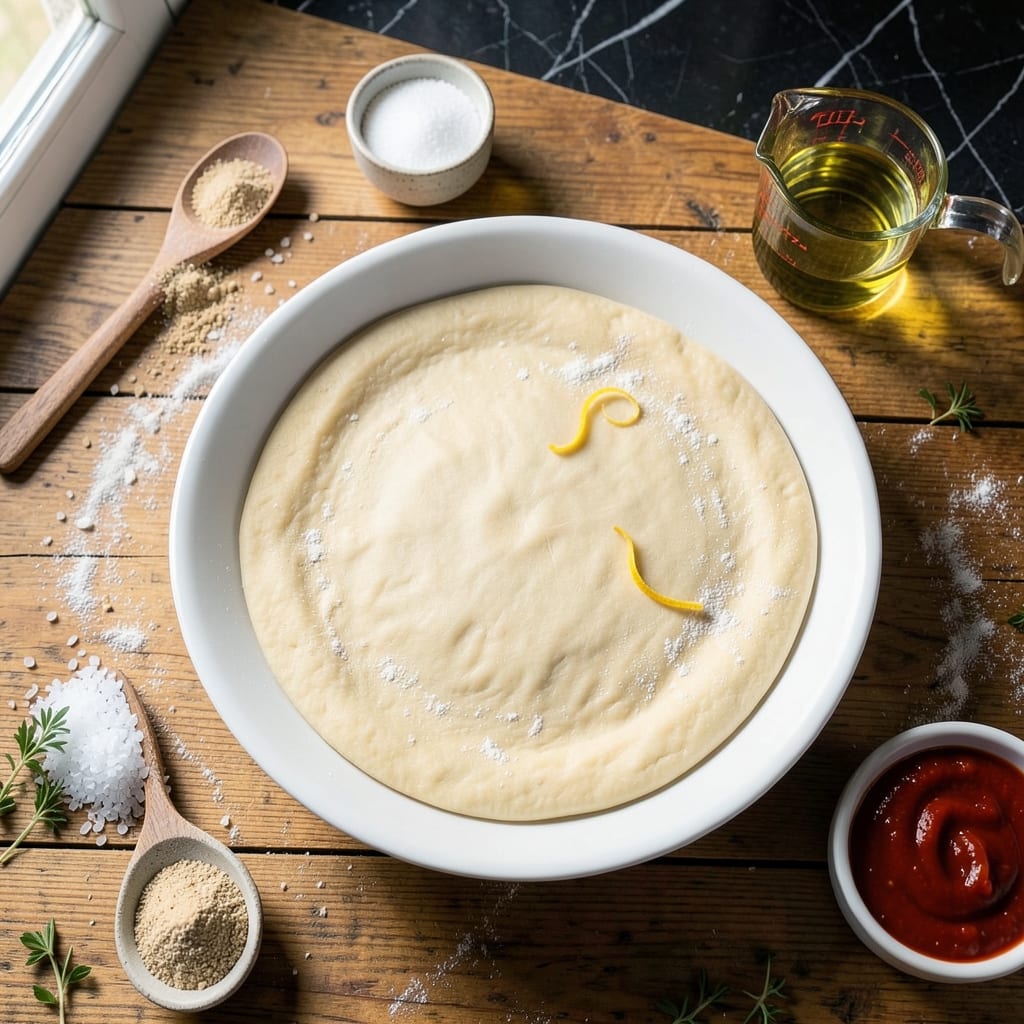
This no-knead pizza dough delivers restaurant-quality results with minimal effort. I developed this method after years of experimenting, and it never fails to produce a perfectly chewy, airy crust.
The secret is instant yeast, which activates quickly and eliminates the need for lengthy rising times. With just 90 minutes of total time—including proofing—you can have fresh, homemade dough ready for your favorite toppings.
What sets this dough apart is its versatility. It bakes up crispy on the bottom with a tender, chewy interior, making it the ideal base for vegetarian pizzas or classic Margherita.
No special equipment required—just a bowl, a spoon, and a little patience. Here’s how to make it.
Ingredients for Pizza Dough Recipe Using Instant Yeast
Eight simple ingredients for restaurant-quality pizza dough at home in 90 minutes.
| Ingredient | Amount | Notes |
|---|---|---|
| Bread Flour 🌾 | 3 ½ cups | High protein content preferred |
| Instant Yeast 🍞 | 2 ¼ tsp | One packet or from jar |
| Fine Sea Salt 🧂 | 1 ½ tsp | Diamond Crystal preferred |
| Granulated Sugar 🍚 | 1 tsp | Feeds the yeast |
| Lukewarm Water 💧 | 1 ½ cups | 105-110°F temperature |
| Extra-Virgin Olive Oil 🫒 | 2 tbsp | For dough elasticity |
| Semolina Flour 🌾 | ¼ cup | For dusting work surface |
| All-Purpose Flour 🌾 | ½ cup | Optional for dusting |
The flour is everything here. King Arthur Bread Flour is my go-to—its 12.7% protein content gives that perfect chewy bite. Instant yeast needs to be fresh (check the expiration date), and SAF Red is a solid brand. Water temp matters: too hot kills the yeast, too cold slows activation. I use a kitchen thermometer for precision (worth the $10).
No bread flour? All-purpose works in a pinch but add 1 extra tbsp per cup to boost protein. Out of instant yeast? Active dry works too—just proof it in the water first. Sugar can be swapped for honey (same amount). Olive oil adds richness, but any neutral oil (vegetable, canola) will do. Semolina prevents sticking when stretching.
Dough balls freeze beautifully for up to 3 months. Thaw overnight in the fridge, then bring to room temp before shaping. Fresh dough keeps 2-3 days in the fridge (it’ll develop more flavor). Always store in an oiled bowl to prevent drying out.
Why You’ll Love This Recipe
- No Waiting Around: I love that instant yeast means no proofing step—just mix, knead, and go.
- Crisp Yet Chewy: The bread flour gives that perfect texture, with just a hint of sweetness from the sugar.
- Endless Topping Fun: Honestly, this dough handles anything from margherita to loaded veggie without falling apart.
- Budget Pizza Night: Five simple pantry staples and I’ve got homemade pizza for less than delivery.
Step-by-Step Instructions for Pizza Dough Using Instant Yeast
This no-knead method delivers a professional-quality crust with minimal effort and time.
Step 1: Activate the Yeast and Mix the Dough
In a large mixing bowl, combine the 1.5 cups lukewarm water, 2.25 tsp instant yeast, 1 tsp granulated sugar, and 2 tbsp extra-virgin olive oil. Stir gently and let sit for 5 minutes until the mixture becomes slightly frothy—this confirms the yeast is alive and active.
Add all 3.5 cups bread flour and 1.5 tsp fine sea salt to the bowl. Using a wooden spoon or dough whisk, mix until a shaggy dough forms and no dry flour remains. The dough will be sticky and rough at this stage, but that’s exactly what you want for this no-knead approach.
Step 2: Perform the First Rise
Cover the bowl tightly with plastic wrap or a damp kitchen towel. Place it in a warm, draft-free spot (like the back of your kitchen counter) and let it rise for 60-75 minutes, or until the dough has doubled in size. You’ll notice it becomes puffy with visible air bubbles.
This initial rise allows the yeast to ferment the sugars, developing flavor and structure. If your kitchen is cool, the rise might take closer to 90 minutes, but don’t rush it—patience here ensures a light, airy texture in your final crust.
Step 3: Shape and Prep for Final Proof
Lightly dust your work surface with 0.25 cup semolina flour to prevent sticking. Turn the dough out onto the floured surface and gently press it into a rough rectangle. Fold the edges toward the center to create surface tension, then flip it seam-side down. This step strengthens the gluten without overworking the dough.
Divide the dough into 4 equal portions (about 8-9 oz each) for individual pizzas. Shape each into a smooth ball by rolling it gently on the counter with cupped hands. Place the balls on a floured tray, cover with a towel, and let them rest for 15-20 minutes while you preheat your oven.
Step 4: Roll and Final Proof
Preheat your oven to 500°F with a pizza stone or inverted baking sheet inside. On a lightly floured surface (use the remaining 0.5 cup all-purpose flour if needed), roll out one dough ball into a 12-inch round or your desired shape. Stretch it gently with your hands for an artisanal look, or use a rolling pin for uniformity.
Transfer the shaped dough to a piece of parchment paper and let it proof for 10-15 minutes while the oven finishes heating. The dough should look slightly puffy and hold its shape. If it springs back too much, let it rest a few more minutes—the gluten will relax, making it easier to stretch.
Step 5: Pre-Bake and Add Toppings
Slide the dough (still on the parchment) onto the preheated stone or baking sheet. Bake for 3-4 minutes until the surface looks slightly dry but not browned. This pre-bake prevents a soggy crust when you add toppings.
Remove from the oven, add your sauce and toppings, then return to the oven to finish baking until the crust is golden brown and the cheese is bubbly, about 8-10 minutes. The pre-baked base ensures a crisp, sturdy crust that holds up to all your favorite toppings.
Pro Tips For Making Pizza Dough Recipe Using Instant Yeast
- Use Warm Water: Lukewarm water—for me, that’s about 105-110°F—wakes up the instant yeast without shocking it. Any hotter and you risk killing it, any cooler and the dough won’t rise properly.
- Weigh Your Flour: I learned this the hard way—scooping flour can pack it down, leading to dense dough. Use a scale for 100% accuracy; 1 cup of bread flour should be about 120-125 grams.
- Skip the Rush: After mixing, let the dough rest 10 minutes before kneading—this short autolyse makes the gluten develop faster and the dough easier to handle.
- Add Sugar Last: Mix the yeast with the water first, then add sugar. This prevents the sugar from directly contacting the yeast, which can slow down activation.
Wine and Beer Pairings for This Dish
Italian Wine Pairings
For classic Margherita on this dough, I love Lacrima Christi del Vesuvio white from Campania—its crisp acidity and citrus notes complement tomato sauce beautifully. A Chianti Classico works too, with its bright cherry flavors cutting through the cheese. 🍷
Sparkling Options
Prosecco from Veneto is my go-to for celebratory pizza nights. The light bubbles cleanse your palate between bites. For a drier option, try Franciacorta from Lombardy—it has the complexity to match richer toppings like mushrooms or truffle oil.
Serve chilled at 45-50°F for optimal flavor and effervescence.
Beer Selections
A crisp Italian pilsner like Peroni or Birra Moretti pairs perfectly with this dough’s chewy texture. The carbonation lifts the richness of melted cheese while the subtle bitterness balances tomato acidity. 🍺
Craft Beer Alternatives
For American craft options, try a Belgian-style witbier with citrus and coriander notes. The Allagash White is a favorite—its orange peel and spice flavors complement vegetable toppings beautifully. Avoid heavy stouts or IPAs that overpower the dough.
Non-Alcoholic Pairings
Sparkling water with a squeeze of lemon works surprisingly well. For something special, try San Pellegrino Aranciata—its orange citrus notes enhance tomato flavors. Serve over ice for a refreshing contrast to the warm pizza.
Nutrition Facts
Frequently Asked Questions
Can I use active dry yeast instead of instant?
Yes, but dissolve it in the lukewarm water with sugar first and let it sit for 5-10 minutes until frothy before mixing. Instant yeast activates faster, but both work well for this recipe.
Why does my dough not rise properly?
Check your yeast freshness and water temperature. Water should be 105-110°F—too hot kills yeast, too cold slows activation. Also ensure your kitchen isn’t too chilly for proofing.
How thin should I roll the dough?
For a classic crust, aim for 1/4-inch thickness when stretched to 12 inches. Go thinner for crispier results or thicker for a softer, bread-like base.
Can I make this dough ahead?
Prepare the dough, let it rise once, then refrigerate for up to 3 days. The cold slows fermentation, developing more flavor. Bring to room temp before shaping.

- Potato Candy Recipe 1933: Vintage Peanut Butter Roll Delight - October 30, 2026
- Potato Chip Cookie Recipe With Pecans: Buttery Crunch Meets Nutty Richness - October 30, 2026
- Potato Patty Recipe No Egg: Crispy Edges Without the Binder - October 30, 2026