
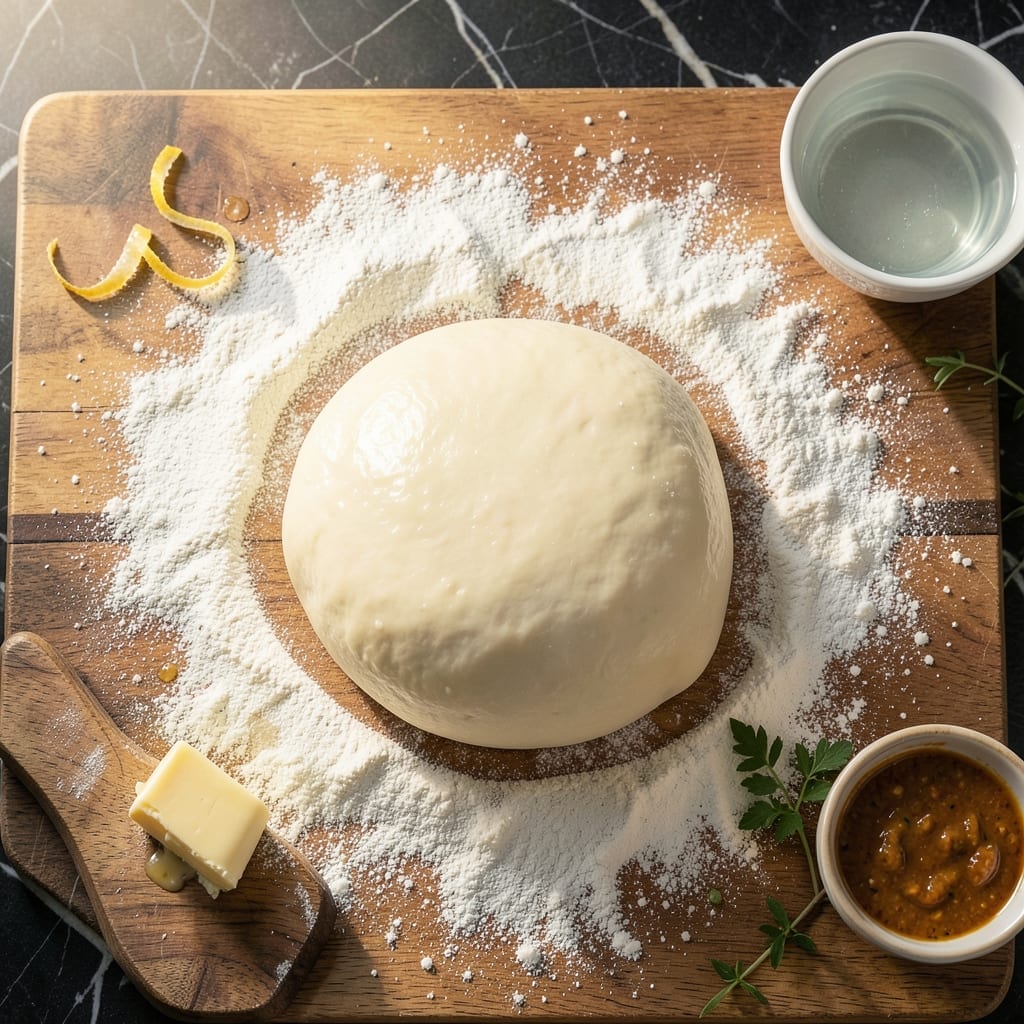
This butter-based pizza dough delivers a flaky, golden crust without traditional yeast. The layered texture comes from cold butter creating steam pockets during baking, just like pie crust.
I developed this method for those who want pizza night without waiting for dough to rise. The buttery richness adds depth while keeping the process simple and approachable.
The result is a crisp, tender crust that holds toppings beautifully. Unlike yeast doughs, this version comes together quickly and bakes in 20 minutes.
Perfect for last-minute meals or when you crave homemade pizza without the usual prep time. Here’s the technique.
Ingredients for Pizza Dough Recipe with Butter
A handful of pantry staples create this uniquely flaky, quick-rising crust without yeast.
| Ingredient | Amount | Notes |
|---|---|---|
| All-Purpose Flour 🌾 | 3 cups | Plus extra for dusting |
| Unsalted Butter 🧈 | ¾ cup | Cold, cubed for flakiness |
| Cold Water 💧 | ¾ cup | Ice cold for best texture |
| Baking Powder 🧂 | 2 tsp | Ensures proper rise |
| Salt 🧂 | 1 tsp | Fine sea salt preferred |
| Granulated Sugar 🍚 | 1 tsp | Balances the flavors |
| Olive Oil 🫒 | 1 tbsp | For brushing the crust |
| Cornmeal 🌽 | 2 tbsp | For dusting the pan |
The butter is the star here. Use a high-quality brand like Plugrá or European-style for superior flavor and texture. It must be ice cold and cubed to create those coveted steam pockets. The flour should be all-purpose—no need for specialty types. Baking powder provides the lift, so ensure it’s fresh (check expiration date). Most supermarkets carry these items in the baking aisle.
No all-purpose flour? Bread flour works at a 1:1 ratio but yields a slightly chewier crust. For a richer flavor, replace up to 25% of the flour with whole wheat. If you’re out of baking powder, baking soda plus cream of tartar can substitute, but the rise may be less consistent. The olive oil can be omitted, but it adds a subtle depth to the finished crust.
The dough can be made 1 day ahead and refrigerated, or frozen for up to 3 months. Bring to room temperature before rolling. Baked crusts keep 2-3 days in an airtight container, though they’re best fresh. Cornmeal prevents sticking—fine or medium grind both work.
Why You’ll Love This Recipe
- No-Knead Magic: I just mix, roll, and bake—no fancy techniques or resting time required.
- Buttery Crisp: The unsalted butter gives it that golden, flaky crust I crave.
- Endless Toppings: Honestly, it’s my blank canvas for everything from classic margherita to breakfast pizza.
- Pantry Staples: All-purpose flour and baking powder mean I can make this whenever the craving hits.
Step-by-Step Instructions for Pizza Dough With Butter
This method delivers a flaky, yeast-free crust with minimal effort and maximum flavor.
Step 1: Combine Dry Ingredients for the Base
In a large mixing bowl, whisk together the 3 cups All-Purpose Flour, 2 tsp Baking Powder, 1 tsp Salt, and 1 tsp Granulated Sugar until fully incorporated. I use a fine-mesh sieve for the baking powder to ensure even distribution, which prevents bitter pockets in the finished crust.
The sugar here does more than sweeten—it promotes browning and balances the Savory notes of the butter. Make sure your baking powder is fresh; old leaveners lose potency and won’t give you the proper rise for that flaky texture.
Step 2: Cut in the Cold Butter for Flakiness
Add the 0.75 cup Unsalted Butter (cold and cubed) to the dry ingredients. Using a pastry cutter or your fingertips, work the butter into the flour mixture until it resembles coarse crumbs with pea-sized butter pieces visible. This technique creates layers in the dough that will puff and separate during baking.
Keep the butter as cold as possible—if it starts to melt or soften, chill the mixture for 10 minutes before proceeding. The cold fat is what creates those desirable flaky pockets in your crust, so don’t rush this step.
Step 3: Incorporate the Liquid Ingredients
Create a well in the center of the butter-flour mixture and pour in the 0.75 cup Cold Water. Using a fork, gradually incorporate the dry ingredients into the water until a shaggy dough begins to form. The water should be ice-cold to maintain the integrity of the butter layers.
Once most of the flour is hydrated, turn the dough out onto a lightly floured surface. The dough will be slightly sticky at this stage, but resist the urge to add more flour—that extra moisture is what gives this crust its tender quality.
Step 4: Knead Briefly and Rest the Dough
Knead the dough gently for just 30-45 seconds until it comes together into a smooth ball. Overworking the dough will develop too much gluten, resulting in a tough crust rather than a flaky one. You want to handle it just enough to bring it together.
Divide the dough into 4 equal portions (for individual pizzas) and shape each into a ball. Brush each ball lightly with 1 tbsp Olive Oil to prevent drying, then cover with a clean kitchen towel. Let the dough rest at room temperature for 20-30 minutes—this relaxes the gluten and makes rolling easier.
Step 5: Roll and Prepare for Baking
On a surface dusted with 2 tbsp Cornmeal, roll each dough ball into a ¼-inch thick circle. The cornmeal adds texture and prevents sticking, giving your crust that professional pizzeria-style bottom. Use a rolling pin for even thickness, but don’t press too hard—you want to maintain those butter layers.
Transfer the rolled dough to a parchment-lined baking sheet. If the edges crack slightly during rolling, simply press them together—the butter will seal any gaps during baking. The dough is now ready for your favorite toppings and a turn in a hot oven for a golden, flaky finish.
Pro Tips For Making Pizza Dough Recipe With Butter
- Chill the Butter: Keep your unsalted butter ice cold until you cut it into the flour—warm butter makes the dough tough instead of flaky. I learned this the hard way after my first three batches came out dense.
- Use Ice Water: Swap plain cold water for ice water to prevent the butter from melting as you mix. The colder the dough stays, the better the texture.
- Skip Overmixing: Stop kneading as soon as the dough comes together—overworking it develops gluten, and you’ll lose that tender, buttery crumb.
- Rest Before Rolling: Let the dough rest for 10 minutes after mixing—it relaxes the gluten and makes rolling out way easier, even with butter in the mix.
Perfect Pairings for This Recipe
Wine Pairings
A crisp Italian Pinot Grigio from Alto Adige cuts through the buttery richness beautifully. Its bright acidity and citrus notes cleanse your palate between bites. I love how the wine’s minerality complements the flaky crust texture. 🍷
Beer Options
A light Italian lager like Peroni or Moretti offers refreshing contrast without overpowering the dish. For craft beer fans, try a Belgian-style witbier with its subtle spice and citrus notes that enhance the buttery flavors.
Salad Pairings
A simple arugula salad with lemon vinaigrette provides the perfect peppery bite against the rich crust. I toss 4 cups baby arugula with 2 tbsp olive oil and 1 tbsp lemon juice. The acidity balances the dough’s richness wonderfully. 🥗
Dipping Sauces
Offer marinara sauce for dipping—its acidity cuts through the buttery layers. I also love a creamy garlic-herb dip made with ½ cup Greek yogurt, 1 minced garlic clove, and fresh dill. Both complement the crust without overwhelming it.
Dessert Follow-Up
End with lemon biscotti for a light, citrusy finish that cleanses your palate. Alternatively, a small scoop of vanilla gelato with a drizzle of honey provides a sweet contrast to the savory meal. Both keep the Italian theme cohesive.
Nutrition Facts
Frequently Asked Questions
Can I use salted butter instead?
It’s best to stick with unsalted to control the seasoning. If you only have salted, reduce the added salt by ½ tsp. The dough’s flavor balance is delicate, so this adjustment keeps it perfect.
Why does the butter need to stay cold?
Cold butter creates steam pockets during baking, which makes the crust flaky. If it melts before baking, you’ll lose that layered texture and end up with a denser result.
Can I make this dough ahead?
Yes! Prepare the dough, wrap it tightly, and refrigerate for up to 24 hours. For longer storage, freeze for 3 months. Thaw in the fridge before rolling.
What if my dough cracks while rolling?
No worries—just press the edges together. The butter will seal any gaps as it bakes. Roll gently and avoid overworking the dough for best results.

- Potato Candy Recipe 1933: Vintage Peanut Butter Roll Delight - October 30, 2026
- Potato Chip Cookie Recipe With Pecans: Buttery Crunch Meets Nutty Richness - October 30, 2026
- Potato Patty Recipe No Egg: Crispy Edges Without the Binder - October 30, 2026