
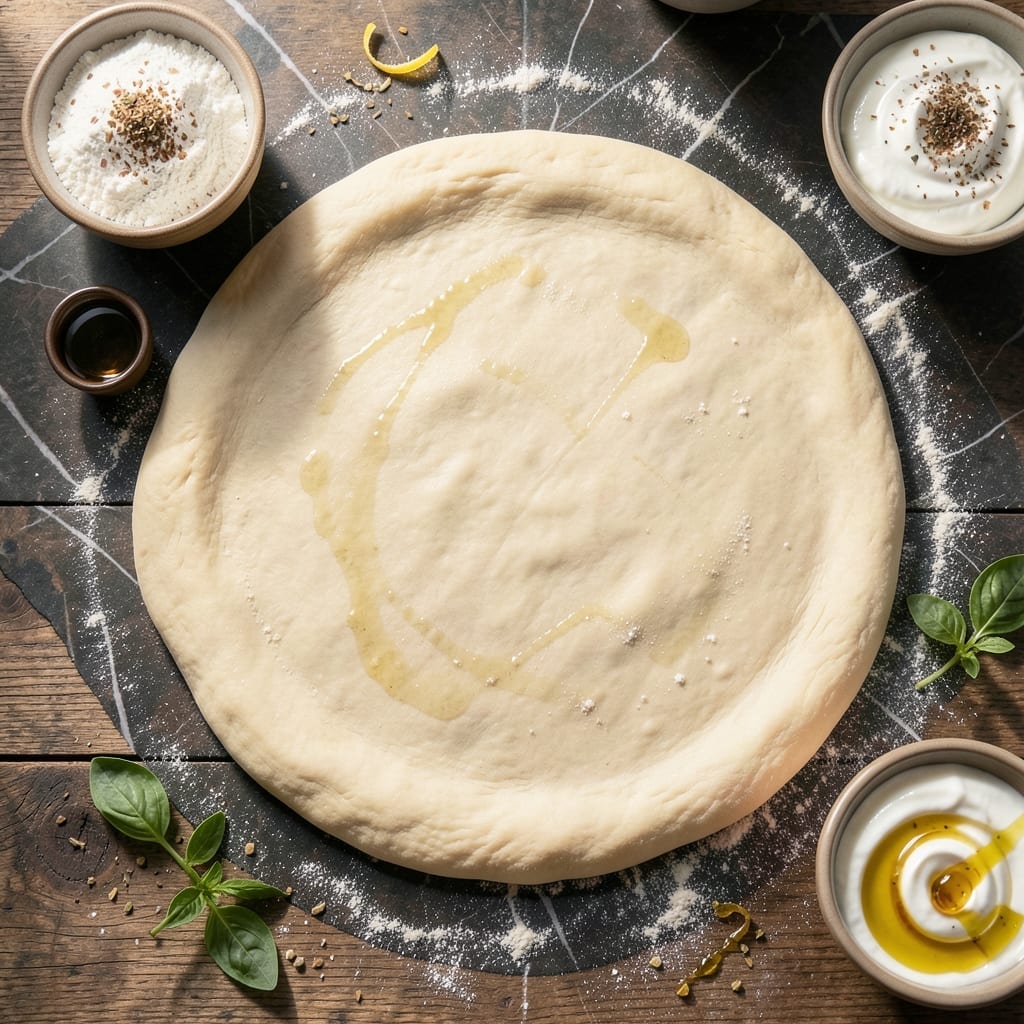
This pizza dough recipe simplifies homemade crust using self-rising flour for a chewy texture without yeast.
I developed this method after years of experimenting with traditional recipes, adapting my grandmother’s techniques to modern kitchens. The self-rising flour eliminates waiting for dough to rise while still delivering a soft, elastic base.
You’ll achieve a tender crust with a slight crispness at the edges, perfect for your favorite toppings. No special equipment or lengthy prep required—just mix, shape, and bake.
This approach makes pizza night effortless yet authentic, bringing Italian tradition into your home with minimal effort.
Ingredients for Pizza Dough Recipe Using Self Rising Flour
Self-rising flour plus a few pantry staples creates this no-yeast dough with chewy texture.
| Ingredient | Amount | Notes |
|---|---|---|
| Self-Rising Flour 🌾 | 3 cups | All-purpose self-rising, sifted first |
| Greek Yogurt 🥛 | 1 cup | Plain, full-fat for elasticity |
| Olive Oil 🫒 | 2 tbsp | Extra-virgin for richness |
| Honey 🍯 | 1 tbsp | Helps with browning color |
| Salt 🧂 | 1 tsp | Fine sea salt preferred |
| Garlic Powder 🧄 | 1 tsp | Optional for flavor depth |
| Dried Oregano 🍃 | 1 tsp | Mediterranean variety preferred |
| Dried Basil 🌿 | 1 tsp | Crushed between fingers to release oils |
| Water 💧 | ¼ cup | Lukewarm, as needed for consistency |
| Cornmeal 🌽 | 2 tbsp | For dusting baking surface |
Self-rising flour is non-negotiable here—King Arthur or White Lily are my go-tos for consistent rise and texture. The Greek yogurt adds that elastic chew without yeast; Fage full-fat is my pick (the 2% works too, but texture suffers slightly). Cornmeal for dusting gives that authentic pizzeria crunch to the bottom crust. Grab it from the baking aisle or bulk bins at Whole Foods.
No yogurt? Sour cream at the same amount works in a pinch. Out of honey? Sugar dissolved in warm water mimics the sweetness and browning. Self-rising flour can’t be substituted—regular flour plus baking powder won’t cut it. The olive oil can be any neutral oil (vegetable, avocado), but extra-virgin adds flavor that’s worth it.
Dough keeps 2-3 days wrapped tight in the fridge. Freeze dough balls for up to 1 month—thaw overnight before shaping. Pre-baked crusts freeze well too (just 10 minutes at 400°F to crisp back up).
Why You’ll Love This Recipe
- No-Knead Magic: I just stir together self-rising flour, Greek yogurt, and a drizzle of olive oil—no mixer, no mess.
- Sweet-Savory Balance: The honey adds a subtle sweetness that makes the crust taste like it came from my favorite pizzeria.
- Weeknight Lifesaver: Between us, I keep a batch in the fridge for those “I need pizza NOW” moments.
- Budget-Friendly Staples: Honestly, these are all pantry basics I already have, so it costs pennies compared to takeout.
Step-by-Step Instructions for Pizza Dough Using Self Rising Flour
This method delivers a chewy, flavorful crust without yeast. Simple, fast, and foolproof.
Step 1: Combine Dry Ingredients and Seasonings
In a large mixing bowl, whisk together the 3 cups Self-Rising Flour, 1 tsp Salt, 1 tsp Garlic Powder, 1 tsp Dried Oregano, and 1 tsp Dried Basil. I always crush the dried herbs between my fingers as I add them to release their aromatic oils.
This step ensures even distribution of flavors throughout the dough. The self-rising flour already contains baking powder and salt, but the additional salt here enhances the overall taste. The spices will infuse the crust with a subtle Mediterranean character that pairs perfectly with any topping.
Step 2: Mix Wet Ingredients for Elastic Dough
In a separate bowl, combine the 1 cup Greek Yogurt, 2 tbsp Olive Oil, and 1 tbsp Honey. Stir until the mixture is smooth and the honey is fully incorporated. The full-fat Greek yogurt provides the necessary elasticity and structure that yeast would typically offer.
The olive oil adds richness and helps create a tender crumb, while the honey contributes a touch of sweetness and aids in browning. This wet mixture will bind with the dry ingredients to form a soft, pliable dough.
Step 3: Form and Knead the Dough
Create a well in the center of the dry ingredients and pour in the wet mixture. Using a wooden spoon or your hands, mix until the dough starts to come together. If it feels too dry, add the 0.25 cup Water, 1 tbsp at a time, until the dough is soft but not sticky.
Turn the dough out onto a lightly floured surface and knead gently for 3-4 minutes until smooth and elastic. You’ll notice it becomes less tacky and more cohesive as you work it. Don’t over-knead—just until it holds together well.
Step 4: Rest and Shape the Dough
Place the dough in a lightly oiled bowl, cover with a damp towel, and let it rest at room temperature for 15-20 minutes. This short rest allows the gluten to relax, making the dough easier to roll out.
After resting, divide the dough into 4 equal portions for individual pizzas. On a surface dusted with 2 tbsp Cornmeal, roll or stretch each portion into a thin round, about ¼-inch thick. The cornmeal prevents sticking and adds a nice texture to the crust.
Step 5: Pre-Bake for Optimal Texture
Preheat your oven to 425°F. Place the shaped dough on a baking sheet or pizza stone dusted with a bit more cornmeal. For the best texture, pre-bake the crusts for 5-7 minutes until they just start to puff and turn lightly golden.
This pre-baking step ensures the crust is fully cooked and crispy by the time you add your toppings. Remove from the oven, add your favorite toppings, and return to the oven for another 8-10 minutes or until the cheese is bubbly and golden brown.
Pro Tips For Making Pizza Dough Recipe Using Self Rising Flour
- Knead Just Enough: Work the dough until it just comes together—overmixing makes it tough. I learned this the hard way after my first few pizzas came out dense as hockey pucks.
- Use Full-Fat Yogurt: Skip the low-fat Greek yogurt; the full-fat version adds richness and makes the dough more pliable. Sounds weird, but it works.
- Let It Rest: After mixing, let the dough sit for 10-15 minutes under a damp towel. This relaxes the gluten and makes rolling it out way easier—yes, even if you’re impatient like me.
- Warm the Honey: Microwave the honey for 5-10 seconds before mixing it in. It blends smoothly into the dough instead of clumping, and you won’t waste half of it stuck to the measuring spoon.
Serving Suggestions for pizza dough recipe using self rising flour
Classic Margherita Style
Keep it simple with ½ cup San Marzano tomato sauce, 8 oz fresh mozzarella, and fresh basil leaves. The self-rising flour crust pairs beautifully with these traditional toppings, just like Nonna taught me in Sicily. 🌟
White Pizza Variation
Skip the tomato sauce and use ricotta cheese mixed with garlic powder as your base. Top with shredded mozzarella and grated Parmesan for a creamy, rich alternative. I love this for Sunday family dinners.
Gourmet Veggie Delight
Spread a thin layer of pesto sauce (from my local Italian deli) and top with sliced bell peppers, red onions, and olives. The cornmeal in the dough adds a nice crunch that complements the veggies perfectly.
Meat Lover’s Feast
Use marinara sauce and load it up with pepperoni, Italian sausage (from my family butcher), and bacon bits. The chewy texture of this crust holds up well to all those hearty toppings.
Breakfast Pizza Twist
Top your pre-baked crust with scrambled eggs, crispy bacon, and shredded cheddar. This East Coast Italian-American favorite is perfect for brunch. I always add a sprinkle of dried oregano for that extra flavor.
Dessert Pizza Option
Dust with cinnamon sugar and top with sliced apples and caramel drizzle. Bake until golden and serve with a scoop of vanilla ice cream. The honey in the dough adds a subtle sweetness that makes this dessert pizza special.
Nutrition Facts
Frequently Asked Questions
Can I use regular flour instead of self-rising?
No, self-rising flour is essential here. It contains baking powder and salt, which create the rise and texture. Regular flour won’t produce the same chewy crust without additional leavening agents.
Why does the recipe call for Greek yogurt?
Greek yogurt adds elasticity and structure, replacing yeast. Its acidity also helps activate the baking powder in self-rising flour for a tender, chewy texture. Full-fat works best for richness.
How thin should I roll the dough?
Aim for ¼-inch thickness for a crispy yet chewy crust. If it’s too thin, it may burn during pre-baking. Too thick, and it won’t cook through properly.
Can I make this dough ahead of time?
Yes! Wrap the dough tightly and refrigerate for up to 2-3 days. Or freeze dough balls for 1 month—thaw overnight before using.

- Potato Candy Recipe 1933: Vintage Peanut Butter Roll Delight - October 30, 2026
- Potato Chip Cookie Recipe With Pecans: Buttery Crunch Meets Nutty Richness - October 30, 2026
- Potato Patty Recipe No Egg: Crispy Edges Without the Binder - October 30, 2026