
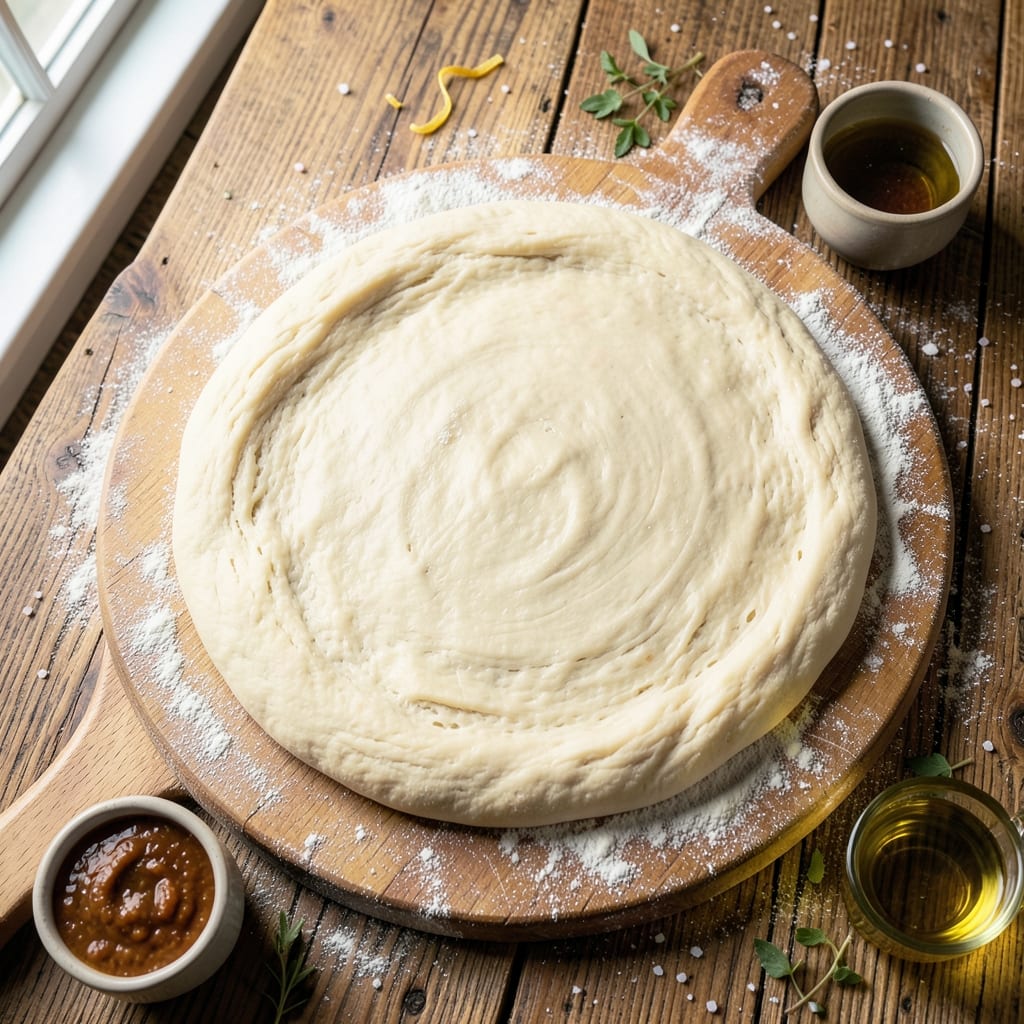
Standing in my grandmother’s Sicilian kitchen, I learned that the best pizza dough often comes from unexpected sources. This recipe transforms your sourdough discard into a no-waste artisan crust with minimal effort.
With just 90 minutes from start to finish, you’ll create a dough that delivers that perfect balance of chewy interior and crispy exterior. The sourdough adds depth of flavor that commercial yeast simply can’t match.
The hydration ratio and fermentation time are carefully calibrated to work with discard’s unique properties. No special equipment needed—just your hands, a bowl, and a little patience.
This method proves that great pizza begins with smart use of ingredients. The result is a crust that tastes like it came from a wood-fired oven in Sicily.
Ingredients for Pizza Dough Recipe Using Sourdough Discard
Nine ingredients. One cup of discard. Artisan pizza dough ready in under two hours.
| Ingredient | Amount | Notes |
|---|---|---|
| Sourdough Starter Discard 🍞 | 1 cup | Unfed, at room temperature |
| Bread Flour 🌾 | 3 ½ cups | High protein for chewiness |
| Lukewarm Water 💧 | 1 ¼ cups | About 105-110°F |
| Extra-Virgin Olive Oil 🫒 | 2 tbsp | For richness and elasticity |
| Fine Sea Salt 🧂 | 2 tsp | Diamond Crystal preferred |
| Active Dry Yeast 🍃 | ½ tsp | Instant yeast works too |
| Granulated Sugar 🍚 | 1 tsp | Feeds the yeast |
| Semolina Flour 🌾 | ½ cup | For dusting, prevents sticking |
| All-Purpose Flour 🌾 | ¼ cup | For work surface dusting |
| Cornmeal 🌽 | ¼ cup | Optional, for crispier crust |
The sourdough discard is the soul of this dough—use it unfed and at room temperature for best results. King Arthur Bread Flour is my go-to for high protein content (12-14%), which gives that perfect chew. Find it at Whole Foods or order online if your local store doesn’t carry it. Lukewarm water should feel like a baby’s bath (not hot enough to kill the yeast). The olive oil adds elasticity, so don’t skip it.
No bread flour? All-purpose works at a 1:1 ratio but the crust won’t be as chewy. Out of sourdough discard? Plain yogurt at the same volume adds similar tang. For a faster rise, use instant yeast—just mix it directly with the dry ingredients. The salt is non-negotiable though; Diamond Crystal dissolves evenly and won’t overpower the flavor.
This dough can rest in the fridge for up to 48 hours—just punch it down if it doubles early. Freeze shaped dough balls for up to 3 months (thaw overnight in the fridge). Always dust your surface with semolina or cornmeal to prevent sticking (trust me on this).
Why You’ll Love This Recipe
- No Waste Win: I use up that sourdough discard I’d normally toss, and it gives the dough a tangy depth.
- Five-Ingredient Magic: Bread flour, discard, water, olive oil, salt—that’s it. Honestly, it’s the simplest dough I’ve ever mixed.
- Weeknight Hero: I stretch it thin for crispy flatbread or thick for chewy pan pizza, and it’s ready in hours.
- Pocketbook Pleaser: No yeast to buy, and it costs pennies. Between us, my best pizza yet came from what I almost threw away.
Step-by-Step Instructions for Pizza Dough Using Sourdough Discard
Here’s my tested method for transforming discard into perfect artisan crust with minimal effort.
Step 1: Activate the Yeast and Combine Wet Ingredients
In a small bowl, dissolve the 1 tsp Granulated Sugar in the 1.25 cups Lukewarm Water. Sprinkle the 0.5 tsp Active Dry Yeast over the surface and let it sit for 5-7 minutes until foamy. This is your insurance policy—if the yeast doesn’t bubble, your dough won’t rise.
In a large mixing bowl, combine the 1 cup Sourdough Starter Discard with the 2 tbsp Extra-Virgin Olive Oil. Pour in the yeast mixture once it’s active. The starter should float in the water—this confirms it’s ready to work its magic.
Step 2: Form the Dough Base
Add the 3.5 cups Bread Flour and 2 tsp Fine Sea Salt to the wet ingredients. Using a wooden spoon, mix until a shaggy dough forms. The salt strengthens the gluten network while controlling yeast activity, so don’t skip it.
The dough will be sticky at this stage—that’s normal. Let it rest for 10 minutes to allow the flour to fully hydrate. This autolyse period kickstarts gluten development without kneading, saving you effort and time.
Step 3: Knead and Develop Gluten
After the rest, turn the dough onto a surface dusted with 0.25 cup All-Purpose Flour. Knead for 8-10 minutes until smooth and elastic. You’ll feel the transformation—initial resistance gives way to a supple, springy dough that bounces back when poked.
Resist the urge to add more flour as you knead. The dough should remain slightly tacky; too much flour makes for a dense, dry crust. If it sticks, use a bench scraper to release it from the surface.
Step 4: Bulk Ferment for Flavor Development
Place the dough in a lightly oiled bowl, cover with a damp towel, and let it rise in a warm spot for 45-60 minutes. The sourdough discard adds a head start to fermentation, so you’ll see noticeable puffiness and small bubbles forming on the surface.
This shorter fermentation time is what makes this recipe so efficient. The discard provides enough microbial activity to develop flavor quickly without the long wait traditional sourdough requires.
Step 5: Shape and Prepare for Baking
Turn the risen dough onto a surface dusted with 0.5 cup Semolina Flour. Divide into 4 equal portions for individual pizzas. Shape each into a ball, then roll or stretch to your desired thickness.
For extra crispiness, dust your peel or baking sheet with 0.25 cup Cornmeal before transferring the shaped dough. This creates a barrier that prevents sticking while adding a delightful crunch to the bottom crust. The dough is now ready for your favorite toppings and a hot oven.
Pro Tips For Making Pizza Dough Recipe Using Sourdough Discard
- Warm Your Water: Use water around 105–110°F—any hotter and you’ll kill the wild yeast in the discard, any colder and the dough will take forever to rise. I learned this the hard way after a few dense, sad pizzas.
- Use High-Protein Flour: Bread flour’s extra gluten gives the dough structure to handle the discard’s acidity, so skip all-purpose if you can. Sounds weird, but it actually changes the outcome from floppy to chewy.
- Don’t Overwork the Dough: Knead just until smooth, about 5–7 minutes by hand—overdo it and the dough gets tough. My grandmother swore by this, and she was right.
- Cold Ferment Overnight: After mixing, let the dough rise in the fridge for 12–24 hours for deeper flavor and easier shaping. I skip this when I’m lazy, but the crust is noticeably better when I don’t.
Storing and Reheating This Dish
Refrigerator Storage
After shaping your dough balls, place them in airtight containers or resealable bags with a light dusting of Semolina Flour to prevent sticking. They’ll keep beautifully in the fridge for up to 48 hours, developing even more flavor as they cold-ferment. I always use my grandmother’s wooden bowl for this—it feels like Sicily all over again. ❄️
Freezer Storage
For longer storage, wrap each dough ball tightly in plastic wrap, then place in a freezer bag. They’ll stay fresh for up to 3 months. When ready to use, thaw overnight in the fridge. This method saves me every time I have extra discard but no immediate plans for pizza night.
Room Temperature Rise
If you need to store shaped dough at room temperature, keep it lightly covered in a warm spot for no more than 2 hours. Beyond that, the yeast can overproof, leading to a flat, dense crust. I learned this lesson the hard way during one of my first Sunday family dinners.
Reheating Baked Dough
For pre-baked crusts, reheat in a 400°F oven for 5-7 minutes to restore crispness. Avoid the microwave—it’ll turn your beautiful crust into a sad, chewy mess. Trust me, the oven is the only way to bring back that wood-fired texture. 🔥
Reviving Cold Dough
When using refrigerated dough, let it sit at room temperature for 30-60 minutes before shaping. This relaxes the gluten and makes stretching much easier. I often use this time to prep my toppings—efficiency is key in my kitchen.
Nutrition Facts
Frequently Asked Questions
Can I use unfed discard for this?
Unfed discard at room temperature works perfectly. It adds that signature sourdough tang without requiring extra feeding time.
Why add yeast if using sourdough?
The yeast gives a reliable rise in just 90 minutes. Sourdough discard alone may take too long or produce inconsistent results for pizza dough.
How thin should I roll the dough?
For a crispy crust, aim for 1/4-inch thickness. Use Semolina Flour to prevent sticking while rolling. Too thick and it won’t cook through properly.
What if my dough doesn’t rise?
Check your yeast freshness first. If it’s old, the dough won’t puff. Also ensure your water is 105-110°F—too hot kills the yeast, too cold slows activation.

- Potato Candy Recipe 1933: Vintage Peanut Butter Roll Delight - October 30, 2026
- Potato Chip Cookie Recipe With Pecans: Buttery Crunch Meets Nutty Richness - October 30, 2026
- Potato Patty Recipe No Egg: Crispy Edges Without the Binder - October 30, 2026