
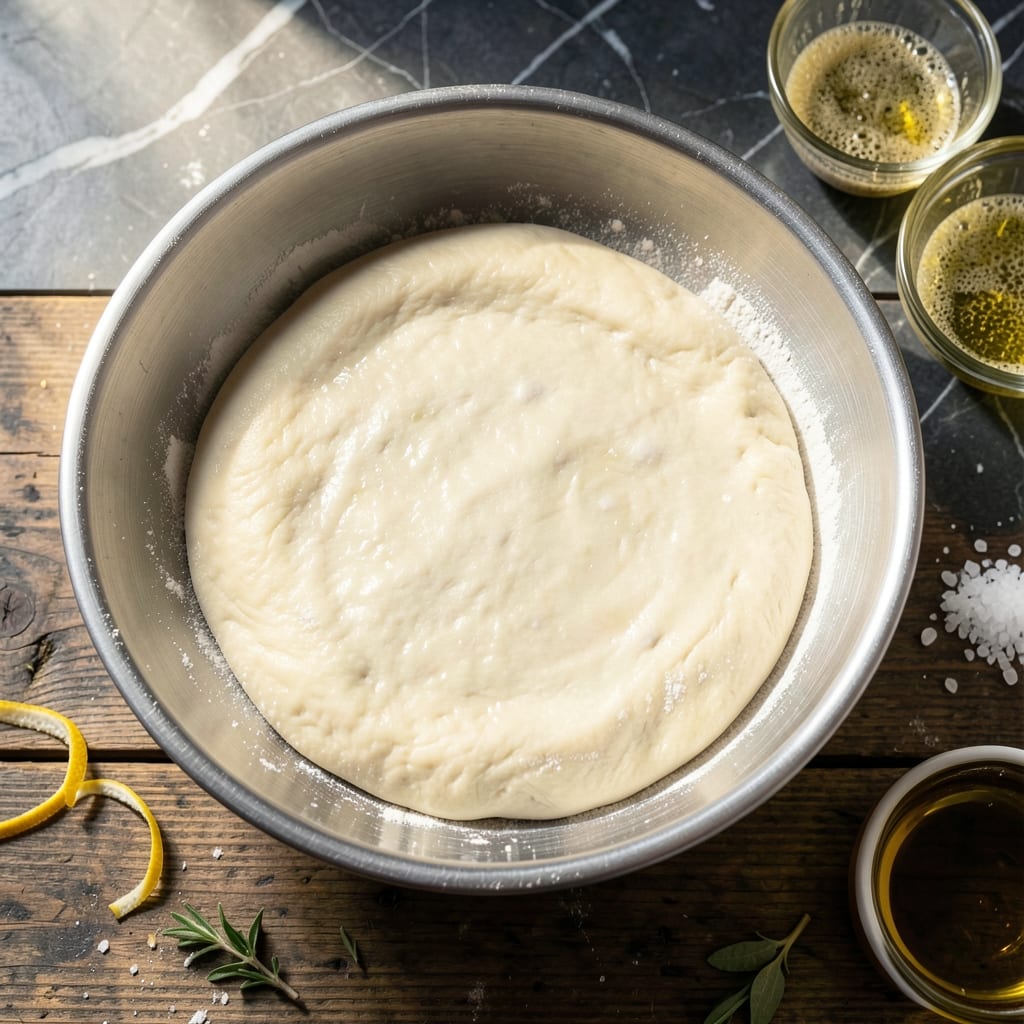
Mastering classic pizza dough begins with understanding the foundation of authentic Neapolitan-style bases. My grandmother taught me that simplicity is key—just flour, water, yeast, and salt can create something extraordinary.
This recipe delivers a soft, elastic dough that bakes to a perfect golden crust with just the right amount of chew. The slow fermentation process develops complex flavors that set this apart from quick-rise versions.
I’ve perfected this method over years of professional cooking, blending my Sicilian heritage with precise technique. The result is a dough that handles beautifully and bakes evenly in any home oven.
Whether you’re making your first pizza or your hundredth, this classic approach will give you professional-quality results every time.
Ingredients for Pizza Dough Recipe White Flour
Seven simple ingredients yield a crust with authentic Neapolitan character and professional texture.
| Ingredient | Amount | Notes |
|---|---|---|
| Bread Flour 🌾 | 3 ½ cups | High-protein for chewiness |
| Active Dry Yeast 🍞 | 2 ¼ tsp | Or one 0.25-oz packet |
| Warm Water 💧 | 1 ½ cups | 110-115°F for activation |
| Fine Sea Salt 🧂 | 2 tsp | Diamond Crystal preferred |
| Extra-Virgin Olive Oil 🫒 | 2 tbsp | For elasticity and flavor |
| Granulated Sugar 🍚 | 1 tsp | Feeds the yeast |
| All-Purpose Flour 🌾 | ½ cup | For dusting work surface |
The flour is everything here. King Arthur Bread Flour is my go-to for its consistent protein content (12.7%), which gives that perfect chew. You can find it at Whole Foods or any well-stocked grocery store. Don’t skip the warm water temperature check—too hot kills the yeast, too cold slows activation (a kitchen thermometer is worth the $5 investment
No bread flour? All-purpose works in a pinch—just add 1 tbsp vital wheat gluten per cup for similar protein. Out of yeast? Instant yeast at the same amount (no proofing needed). The olive oil can be any good quality—California Olive Ranch is my supermarket pick. For sugar, honey works too (though it adds a slight flavor). Dough balls keep in the fridge for 3 days (flavor improves daily) or freeze for 1 month. Bring to room temp before shaping. The salt and yeast must stay separate until mixed—contact kills the yeast (don’t learn this the hard way).
Why You’ll Love This Recipe
- One Bowl Wonder: I just dump the bread flour, yeast, and warm water together—no fancy tools, no fuss.
- Crisp Yet Chewy: That olive oil in the dough gives it this irresistible texture, soft inside with a golden crust.
- Endless Toppings: Honestly, it’s my blank canvas for whatever’s in the fridge or the mood I’m in.
- Budget Stretch: Five basic ingredients, and it makes enough for two pizzas or a freezer stash for later.
Step-by-Step Instructions for Pizza Dough Recipe White Flour
This classic method delivers a chewy, flavorful crust with a perfect golden brown finish.
Step 1: Activate the Yeast Properly
In a small bowl, combine the 2.25 tsp Active Dry Yeast, 1 tsp Granulated Sugar, and 1.5 cups Warm Water (it should feel just barely warm to the touch, about 110-115°F). Let this mixture sit for 5-7 minutes until it becomes foamy and cloudy.
This foaming indicates the yeast is active and ready to work. If it doesn’t foam, your water might have been too hot or too cold, or the yeast might be expired. Don’t proceed without this visual confirmation—your dough won’t rise properly.
Step 2: Mix the Dough to Optimal Consistency
In a large mixing bowl, combine the 3.5 cups Bread Flour and 2 tsp Fine Sea Salt. Make a well in the center and pour in the yeast mixture and 2 tbsp Extra-Virgin Olive Oil. Using a wooden spoon or your hands, mix until a shaggy dough forms.
The dough will be slightly sticky at this stage—that’s normal. Bread flour’s high protein content gives it that perfect chewy texture for Neapolitan-style pizza. Work it just until it comes together; overmixing at this stage can develop too much gluten, making the dough tough.
Step 3: Knead Until Smooth and Elastic
Turn the dough out onto a surface lightly dusted with 0.5 cup All-Purpose Flour. Knead for 8-10 minutes by hand, pushing the dough away with the heel of your hand, then folding it back over itself repeatedly.
You’ll know it’s ready when the dough becomes smooth, elastic, and slightly tacky but not sticky. Press your finger into it—if the indentation springs back slowly, the gluten has developed properly. This process creates the structure that will give your crust its signature chew.
Step 4: First Rise for Maximum Flavor Development
Place the dough in a lightly oiled bowl, turning once to coat all sides. Cover with a damp kitchen towel and let rise in a warm, draft-free spot for 1-2 hours, or until doubled in volume.
For best results, I like to let it rise in the oven with the light on, which provides a consistent 75-80°F environment. The longer rise time allows the yeast to develop more complex flavors in your dough. Don’t rush this step—patience here pays off in taste.
Step 5: Shape and Second Rise for Perfect Texture
Punch down the risen dough to release the air. Divide it into 4 equal portions for individual pizzas. Shape each into a ball and place on a floured surface, covering with the towel again.
Let these rest for 30-45 minutes for a second rise. This final rest makes the dough easier to stretch and shape without tearing. When ready, you’ll have smooth, elastic dough balls that will stretch into perfect pizza rounds with that classic Neapolitan-style thin crust.
Pro Tips For Making Pizza Dough Recipe White Flour
- Check Yeast First: I learned this the hard way—always proof your active dry yeast in warm water with a pinch of sugar for 5-10 minutes before mixing. If it doesn’t foam, your dough won’t rise, no matter how long you wait.
- Use Bread Flour: Skip all-purpose flour; bread flour’s higher protein content gives that chewy, elastic texture pizza dough needs. My grandmother swore by this, and she was right.
- Don’t Rush the Rise: Give the dough at least 1-2 hours to double in size at room temperature—rushing this step with heat leaves a dense, flat crust. I was skeptical until I tried it.
- Oil the Bowl: Coat the mixing bowl with about 1 tablespoon of extra-virgin olive oil before the first rise. Sounds simple, but it prevents sticking and makes handling the dough a breeze.
Pro Cooking Tips for Great pizza dough recipe white flour
Yeast Activation Perfection
Always check your water temperature with a thermometer—110-115°F is the sweet spot. I use a Taylor Classic Instant-Read from my local kitchen store. Too hot kills the yeast, too cold slows it down. The foam should look like a beer head after 5-7 minutes. 🌡️
Flour Selection Matters
Stick with King Arthur Bread Flour for consistent 12.7% protein. I buy mine at the Italian deli in our East Coast neighborhood. The high protein gives that signature Neapolitan chew. For dusting, all-purpose flour works perfectly on your work surface.
Kneading Technique
Use the heel of your hand to push the dough away, then fold it back. This takes 8-10 minutes by hand. The dough is ready when it springs back slowly from a finger press. I learned this technique standing on a stool in my grandmother’s Sicilian kitchen.
Ideal Rising Conditions
Create a warm environment (75-80°F) for the first rise. I use my oven with the light on. Let it double in size—this takes 1-2 hours. The longer rise develops those complex flavors that make this dough special.
Shaping Tips
Divide into 4 equal portions for individual pizzas. Let them rest 30-45 minutes after shaping. This final rest makes stretching easier. I always use the wooden spoon Nonna gave me to divide the dough evenly.
Flavor Development
Don’t rush the fermentation. The slow process creates the authentic taste we all love. I notice the flavor improves daily if stored in the fridge for up to 3 days. This is where patience really pays off.
Nutrition Facts
Frequently Asked Questions
Can I use all-purpose flour instead of bread flour?
Yes, but add 1 tbsp vital wheat gluten per cup to match bread flour’s 12.7% protein. This ensures proper chewiness. The texture will be slightly different but still delicious.
How long can I store the dough in the fridge?
Up to 3 days in an airtight container. The flavor improves each day as it ferments slowly. Bring to room temperature before shaping for best results.
Why didn’t my dough rise?
Most likely the yeast was inactive. Check your water was 110-115°F and the yeast wasn’t expired. Also ensure salt and yeast didn’t touch directly before mixing.
Can I freeze the dough?
Wrap individual balls tightly in plastic, then place in a freezer bag. It keeps for 1 month. Thaw in the fridge overnight before using.

- Potato Candy Recipe 1933: Vintage Peanut Butter Roll Delight - October 30, 2026
- Potato Chip Cookie Recipe With Pecans: Buttery Crunch Meets Nutty Richness - October 30, 2026
- Potato Patty Recipe No Egg: Crispy Edges Without the Binder - October 30, 2026