
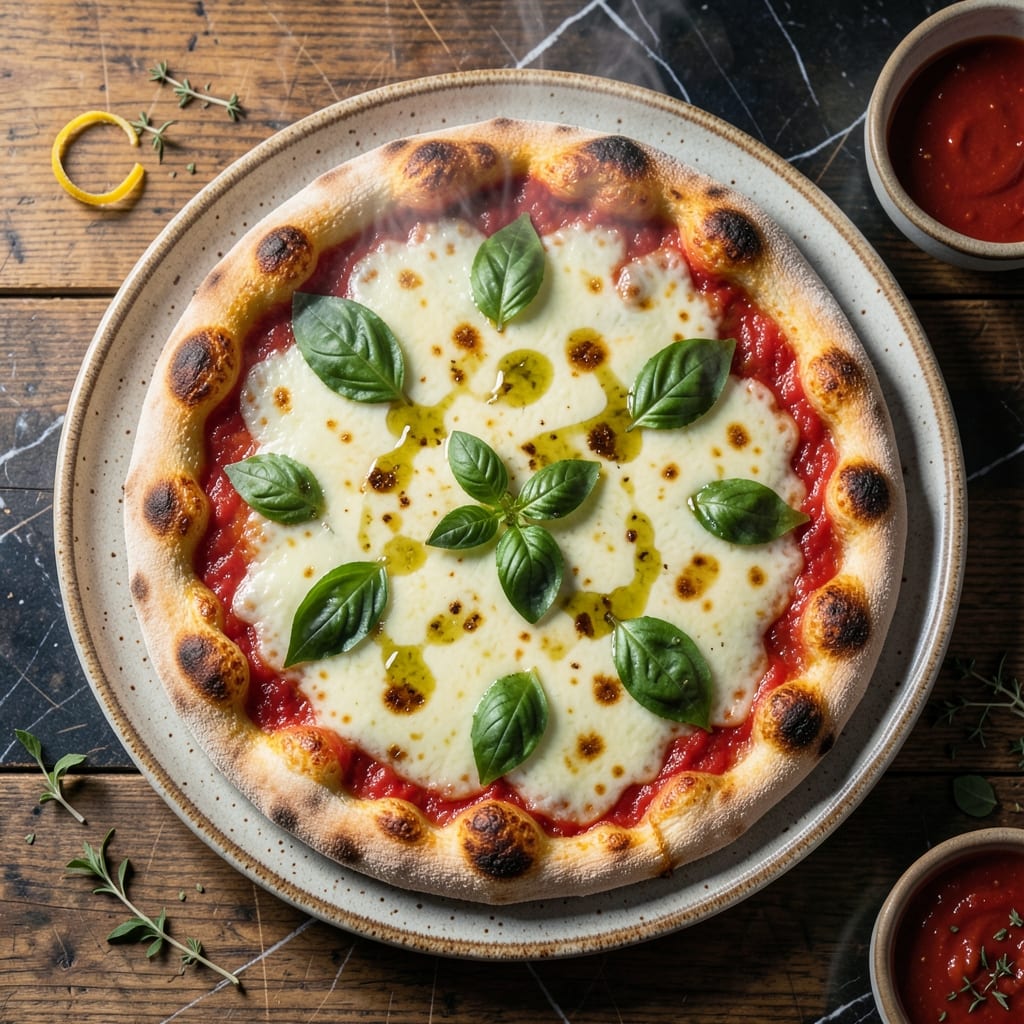
There’s nothing quite like homemade pizza made from scratch. This method delivers a foolproof crust with a crispy exterior and chewy center, every time.
I developed this recipe after years of testing different dough techniques. The key is allowing the dough to rise slowly, which builds flavor and creates that perfect texture.
With just a handful of pantry staples and simple steps, you’ll create a base that’s ready for your favorite toppings. The sauce comes together in minutes, and the assembly is straightforward.
Bake until the crust is golden and the cheese is bubbling. This is the kind of pizza that makes weeknight dinners feel special.
Ingredients for Pizza Recipe Basic
Simple pantry staples create this foolproof pizza with crispy, chewy crust.
| Ingredient | Amount | Notes |
|---|---|---|
| All-Purpose Flour 🌾 | 3 ½ cups | Plus extra for dusting |
| Active Dry Yeast 🍞 | 2 ¼ tsp | One packet, proofed in warm water |
| Warm Water 💧 | 1 ¼ cups | 110°F for proofing yeast |
| Olive Oil 🫒 | 2 tbsp | Extra-virgin for richness |
| Salt 🧂 | 1 tsp | Kosher or sea salt |
| Sugar 🍚 | 1 tsp | Granulated, feeds the yeast |
| Canned Crushed Tomatoes 🍅 | 1 can | 28 oz can, San Marzano preferred |
| Garlic Cloves 🧄 | 3 cloves | Minced for sauce |
| Dried Oregano 🌿 | 1 tsp | Mediterranean variety |
| Dried Basil 🍃 | 1 tsp | Crushed for best flavor |
| Shredded Mozzarella Cheese 🧀 | 8 oz | Low-moisture for best melt |
| Parmesan Cheese 🧀 | ½ cup | Freshly grated from block |
| Pepperoni Slices 🍕 | 3 oz | Thinly sliced preferred |
| Fresh Basil Leaves 🌿 | ¼ cup | For garnish, torn |
| Red Pepper Flakes 🌶️ | ½ tsp | Adjust to spice preference |
The flour is the foundation here—King Arthur or Gold Medal all-purpose are my go-tos. Yeast should be fresh (check the expiration date). If you’re unsure, proof it first in the warm water with sugar—if it doesn’t bubble within 5 minutes, toss it. Costco and Sam’s Club sell yeast in bulk, which is great if you bake often. The olive oil adds richness, so use something you’d actually drizzle on a salad.
No yeast? You can make a flatbread version with baking powder, but it won’t have that classic chew. Out of crushed tomatoes? Tomato sauce plus a spoonful of paste works in a pinch. Don’t have fresh basil? Dried basil at half the amount is fine. The pepperoni can be swapped for sliced sausage or veggies (bell peppers hold up well). Low-moisture mozzarella is key—regular shreds release too much water.
Dough can rise in the fridge for up to 2 days (flavor develops more). Sauce keeps 5 days in the fridge, freezes for 3 months. Shredded cheese freezes well too—just thaw before using. Assemble pizzas just before baking for best texture.
Why You’ll Love This Recipe
- One Bowl Wonder: I mix the flour, yeast, water, and olive oil right in a single bowl—no fancy equipment, just my hands and 10 minutes of effort.
- That Yeast Magic: The warm water activates the yeast so quickly I can almost smell the dough rising, giving it that light, airy texture I crave.
- Endless Topping Playground: I’ve done margherita for date night and loaded veggie for the kids—same simple base, infinite possibilities.
- Pocket-Friendly Feast: All-purpose flour and a packet of yeast cost pennies, yet I get a restaurant-worthy pie that feeds my whole family.
Step-by-Step Instructions for Pizza
Here’s the method. Straightforward, tested, works every time.
Step 1: Proof the Yeast and Mix the Dough
In a small bowl, combine the 2.25 tsp active dry yeast with the 1.25 cups warm water and 1 tsp sugar. Let it sit for 5-10 minutes until the mixture becomes foamy and bubbly—this tells you the yeast is alive and active.
In a large mixing bowl, add the 3.5 cups all-purpose flour and 1 tsp salt. Pour in the yeast mixture and 2 tbsp olive oil. Stir with a wooden spoon until a shaggy dough forms. It’ll look rough at first, but that’s normal.
Step 2: Knead and Let the Dough Rise
Turn the dough out onto a lightly floured surface and knead for 8-10 minutes until smooth and elastic. If it’s sticky, add a little more flour, but don’t overdo it—you want a slightly tacky dough. I like to press my finger into it; if it bounces back slowly, it’s ready.
Place the dough in a lightly oiled bowl, cover with a damp towel, and let it rise in a warm place for 1-2 hours or until doubled in size. You’ll know it’s ready when it springs back when poked lightly with a finger.
Step 3: Prepare the Sauce While Dough Rises
In a small saucepan, combine the 1 can canned crushed tomatoes, minced 3 cloves garlic cloves, 1 tsp dried oregano, 1 tsp dried basil, and 0.5 tsp red pepper flakes. Simmer over low heat for 15-20 minutes until thickened.
The sauce should reduce slightly and develop a deeper color. Taste and adjust seasoning if needed, though the cheese and pepperoni will add saltiness later.
Step 4: Shape, Top, and Bake the Pizza
Preheat your oven to 475°F. Punch down the risen dough and divide it into 2 equal portions for two pizzas. Roll each portion out on a floured surface to about ¼-inch thickness. Transfer to a baking sheet or pizza stone.
Spread a thin layer of sauce over each crust, leaving a small border for the crust. Sprinkle evenly with 8 oz shredded mozzarella cheese, then add the 3 oz pepperoni slices. Top with 0.5 cup parmesan cheese.
Step 5: Bake to Perfection and Garnish
Bake in the preheated oven for 12-15 minutes or until the crust is golden brown and the cheese is bubbly and slightly browned in spots. Keep an eye on it after 10 minutes—ovens vary, and you don’t want the crust to burn.
Remove from the oven and let cool for 2-3 minutes. Garnish with torn 0.25 cup fresh basil leaves for a pop of color and freshness. Slice and serve immediately for the best texture and flavor.
Pro Tips For Making Pizza Recipe Basic
- Proof the Yeast: Always activate your yeast in warm (not hot) water with a pinch of sugar first—I learned this the hard way after wasting flour on dough that never rose.
- Use High Heat: Crank your oven to 475°F or higher. Sounds extreme, but it’s the only way to get that crispy-yet-chewy crust at home.
- Skip Cold Ingredients: Make sure your water and olive oil are room temp, or the yeast will sulk and your dough won’t rise properly.
- Rest the Dough: Give it at least 1 hour to double in size—yes, even if you’re hungry now. Rushing this step means a dense, tough crust.
Troubleshooting Great pizza recipe basic
Dough Won’t Rise
If your dough isn’t rising, check your yeast first. I always proof mine in 110°F water with sugar—if it doesn’t bubble within 5 minutes, it’s dead. Also, ensure your kitchen is warm enough; I sometimes turn on my oven to 200°F then turn it off before placing dough inside to rise. 💡
Soggy Crust
Prevent this by using low-moisture mozzarella and not overloading toppings. David and I learned this the hard way—too much sauce or fresh veggies releases water. Bake on a preheated pizza stone or inverted baking sheet for crispier results.
Cheese Not Melting
Shred your own cheese from a block—pre-shredded contains anti-caking agents that prevent smooth melting. I use whole-milk mozzarella for best results. Also, ensure your oven is fully preheated to 475°F before baking.
Burnt Bottoms
Move your pizza to a higher rack if the bottoms brown too quickly. I also recommend using parchment paper on your baking sheet for even heat distribution. Check at 10 minutes and adjust position if needed.
Dough Too Sticky
Add flour 1 tbsp at a time while kneading until it reaches the right consistency. Remember, slightly tacky dough is okay—it’ll become smoother as you knead. I often use King Arthur flour for its consistent protein content. 🔥
Sauce Too Watery
Simmer your sauce longer to reduce it—aim for 15-20 minutes on low heat. I sometimes add 1 tbsp tomato paste to thicken it. San Marzano tomatoes work best as they’re naturally thicker and sweeter.
Nutrition Facts
Frequently Asked Questions
Can I make the dough ahead of time?
Prepare the dough up to 2 days in advance. Store it in the fridge in an airtight container to slow the rise. Bring to room temperature before shaping.
What’s the best way to roll the dough?
Use a floured surface and roll from the center outward. For even thickness, rotate the dough 90° after each roll. Avoid overworking it to keep the texture light and airy.
Why did my crust turn out tough?
Over-kneading or using too much flour can make the crust dense. Knead just until smooth, about 8-10 minutes, and add flour sparingly. Let the dough rest to relax the gluten.
Can I use a different cheese?
Yes! Try provolone for a sharper flavor or fontina for extra creaminess. For a lighter option, part-skim mozzarella works well but may be less rich.

- Potato Candy Recipe 1933: Vintage Peanut Butter Roll Delight - October 30, 2026
- Potato Chip Cookie Recipe With Pecans: Buttery Crunch Meets Nutty Richness - October 30, 2026
- Potato Patty Recipe No Egg: Crispy Edges Without the Binder - October 30, 2026