
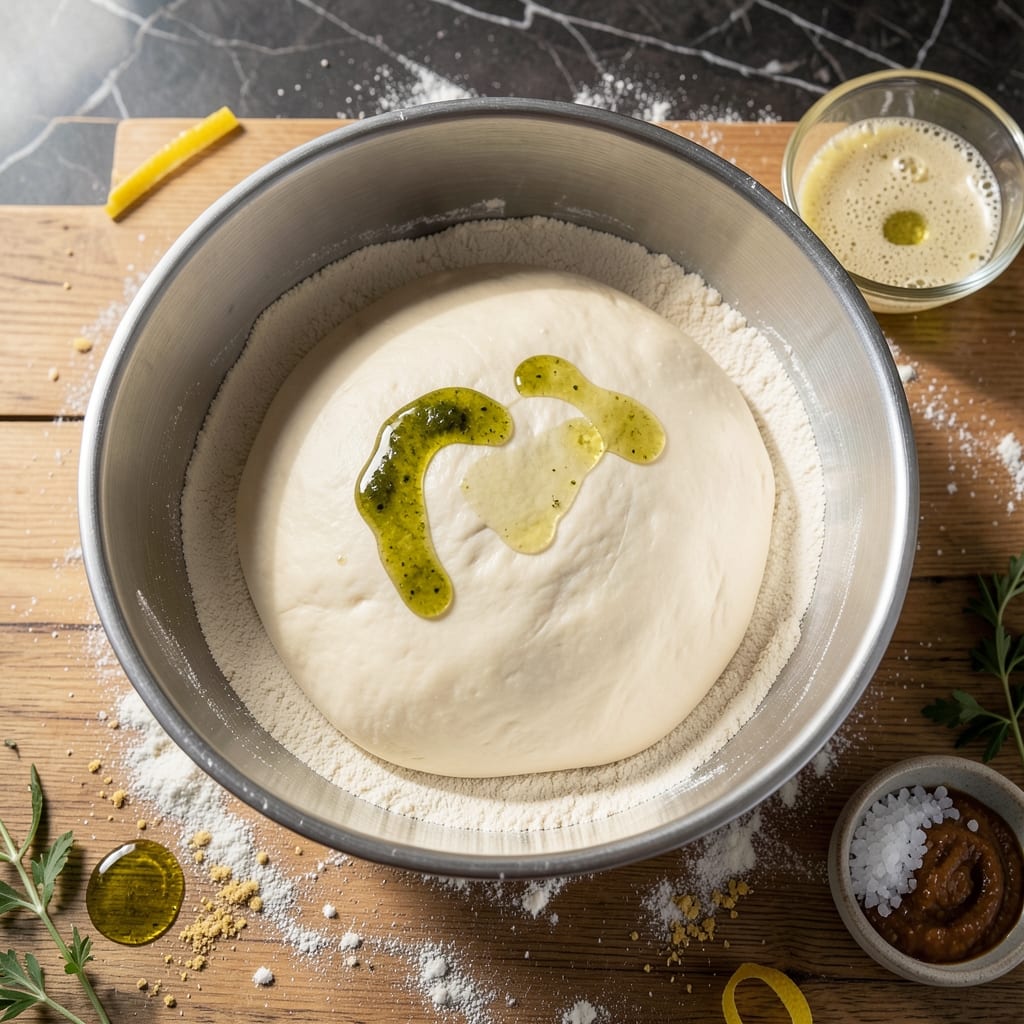
There’s nothing quite like the taste of authentic Neapolitan-style pizza made from scratch. This recipe delivers that restaurant-quality base you’ve been craving at home.
Using type 00 pizza flour creates a soft, elastic dough that’s perfect for achieving the thin, chewy crust characteristic of traditional Italian pizzerias. The key is patience—allowing the dough to rise slowly for maximum flavor development.
With just a few simple ingredients and proper kneading technique, you’ll create a base that’s crisp on the outside yet tender inside. The result is a canvas ready for your favorite toppings.
Master this foundation and you’ll never settle for delivery again. Here’s everything you need to begin.
Ingredients for Pizza Dough Recipe with Pizza Flour
Just seven ingredients stand between you and restaurant-quality pizza dough at home.
| Ingredient | Amount | Notes |
|---|---|---|
| Type 00 Pizza Flour 🌾 | 3 ½ cups | Caputo brand recommended for authenticity |
| Active Dry Yeast 🍞 | 1 tsp | One packet or instant yeast works too |
| Fine Sea Salt 🧂 | 2 tsp | Diamond Crystal preferred for consistency |
| Warm Water 💧 | 1 ½ cups | 105-110°F for optimal activation |
| Extra-Virgin Olive Oil 🫒 | 2 tbsp | High-quality for flavor depth |
| Semolina Flour 🌾 | ½ cup | For dusting work surface |
| Granulated Sugar 🍚 | 1 tsp | Optional for yeast activation boost |
The flour is non-negotiable here. Type 00 pizza flour—look for Caputo or Antimo brands at Eataly or Italian specialty stores. Regular all-purpose works in a pinch, but you’ll lose that signature chew. The yeast needs to be fresh—check the expiration date. I buy mine in bulk from King Arthur Baking and store it in the freezer for longevity.
No type 00? Bread flour gets you closest to that high-protein content. Skip the sugar if you’re strict about Neapolitan authenticity—traditional recipes don’t use it. The olive oil can be any high-quality extra-virgin; I keep a bottle of California Olive Ranch on hand. Semolina flour prevents sticking better than regular flour when shaping.
Dough balls can rest in the fridge for up to 48 hours—the flavor actually improves. Freeze shaped balls for up to 3 months (thaw overnight in the fridge). Always bring dough to room temperature before stretching for best results.
Why You’ll Love This Recipe
- One Bowl Wonder: I mix everything in a single bowl—no fancy equipment, just Type 00 flour, yeast, and a little olive oil.
- Crisp Yet Chewy: That Type 00 flour gives it a thin, crackly crust with a soft, airy center. Honestly, it’s the closest I’ve gotten to my favorite pizzeria.
- Freezer Friendly: I double the batch, bake one now, and stash the rest in the freezer for last-minute dinners.
- Budget Stretcher: Five basic ingredients, and it feeds my whole family for less than takeout. I’ll be real: that’s a win in my book.
Step-by-Step Instructions for Pizza Dough With Pizza Flour
Here’s the method I use to achieve that perfect Neapolitan-style base with crisp, airy crust.
Step 1: Activate the Yeast Properly
In a small bowl, combine the 1.5 cups Warm Water with the 1 tsp Active Dry Yeast and 1 tsp Granulated Sugar. Let this sit for 5-10 minutes until you see a foamy layer forming on top.
This foaming is your visual confirmation that the yeast is active and ready to work. If you don’t see bubbles after 10 minutes, your water might have been too hot or the yeast too old—start over with fresh ingredients.
Step 2: Create the Dough Foundation
In a large mixing bowl, combine the 3.5 cups Type 00 Pizza Flour and 2 tsp Fine Sea Salt. Make a well in the center and pour in the activated yeast mixture along with the 2 tbsp Extra-Virgin Olive Oil.
Using a wooden spoon, gradually incorporate the flour into the wet ingredients until a shaggy dough forms. The mixture will look rough at first, but resist the urge to add more flour—this hydration level is crucial for that authentic Neapolitan texture.
Step 3: Knead to Develop Gluten
Turn the dough out onto a surface lightly dusted with 0.5 cup Semolina Flour. Knead for 8-10 minutes until smooth and elastic. The dough should pass the windowpane test—stretch a small piece between your fingers until it’s thin enough to see light through without tearing.
If the dough feels too sticky during kneading, add a bit more Type 00 Pizza Flour, but do so sparingly. Remember, this is a high-hydration dough by design, and too much additional flour will make your crust dense rather than light and airy.
Step 4: First Rise for Flavor Development
Place the kneaded dough in a lightly oiled bowl, cover with a damp towel, and let it rise in a warm, draft-free place for 1.5-2 hours or until doubled in size. I like to place mine near a warm oven (turned off) for consistent temperature.
This first rise allows the yeast to ferment the sugars in the flour, developing complex flavors that are characteristic of authentic Neapolitan pizza dough. The dough should look puffy and jiggle slightly when gently shaken.
Step 5: Shape and Final Proof
Punch down the risen dough to release the air, then divide it into 4 equal portions for individual pizzas. Shape each portion into a ball and place on a surface dusted with Semolina Flour.
Cover with a towel and let rest for another 30-60 minutes. This final proof allows the gluten to relax, making the dough easier to stretch. Your dough balls should spring back slowly when poked gently with a finger, indicating they’re ready for shaping and topping.
Pro Tips For Making Pizza Dough Recipe With Pizza Flour
- Proof in Warmth: Let the dough rise in a slightly warm spot—around 75°F (24°C)—or it’ll take forever. I learned this the hard way after leaving it in a cold kitchen and waiting twice as long.
- Hydrate the Flour: Type 00 flour drinks up water differently, so start with 60% hydration (about 3/4 cup water per 2 cups flour) and adjust—too dry and it’ll crack, too wet and it’s a sticky mess.
- Skip Cold Water: Warm water (105-110°F) wakes up the yeast fast, but go hotter and you’ll kill it. After burning a batch with boiling water, I now use a thermometer—no more guesswork.
- Oil the Bowl: Coat the rising bowl with a tablespoon of olive oil before adding the dough—it prevents sticking and makes punching down way easier. Sounds simple, but it actually changes the outcome.
Pro Cooking Tips for pizza dough recipe with pizza flour
Flour Temperature Matters
I always take my Type 00 Pizza Flour out of the pantry 1 hour before mixing. Cold flour slows yeast activation and can lead to uneven rising. Room temperature ingredients blend more uniformly for consistent texture. 🌡️
Hydration Precision
Measure your 1.5 cups Warm Water carefully—this dough has a 63% hydration rate. Too much water makes it sticky and hard to handle, while too little creates a dense crust. I use a kitchen scale for 390g of water to be exact.
Yeast Proofing Pro Tip
When activating your 1 tsp Active Dry Yeast, use water at exactly 105-110°F. Any hotter kills the yeast, any cooler slows activation. I test with a thermometer—my Taylor Classic never lets me down.
Kneading Technique
During the 8-10 minutes of kneading, focus on stretching the dough rather than pressing. This builds gluten strands for that perfect chewy texture. I use the heel of my hand and push forward, then fold the dough over itself.
Rising Environment
For the 1.5-2 hour first rise, I place my dough in the oven with the light on. This creates a consistent 80-85°F environment. Avoid drafty spots—cold air can shock the yeast and stall rising. ✨
Final Proof Test
The dough is ready after its 30-60 minute final proof when it springs back slowly after a gentle poke. If it springs back quickly, it needs more time. I test each ball—this ensures even stretching when shaping your pizzas.
Nutrition Facts
Frequently Asked Questions
What can I use if I don’t have type 00 flour?
Bread flour is the best substitute for that high-protein content. All-purpose works but may yield a slightly denser crust.
Why does my dough tear when stretching?
It needs more resting time. Let it rest for 30-60 minutes after shaping to relax the gluten. Stretch gently from the center outward.
How do I store leftover dough?
Wrap shaped dough balls in plastic and refrigerate for up to 48 hours. For longer storage, freeze for up to 3 months and thaw overnight in the fridge.

- Potato Candy Recipe 1933: Vintage Peanut Butter Roll Delight - October 30, 2026
- Potato Chip Cookie Recipe With Pecans: Buttery Crunch Meets Nutty Richness - October 30, 2026
- Potato Patty Recipe No Egg: Crispy Edges Without the Binder - October 30, 2026