
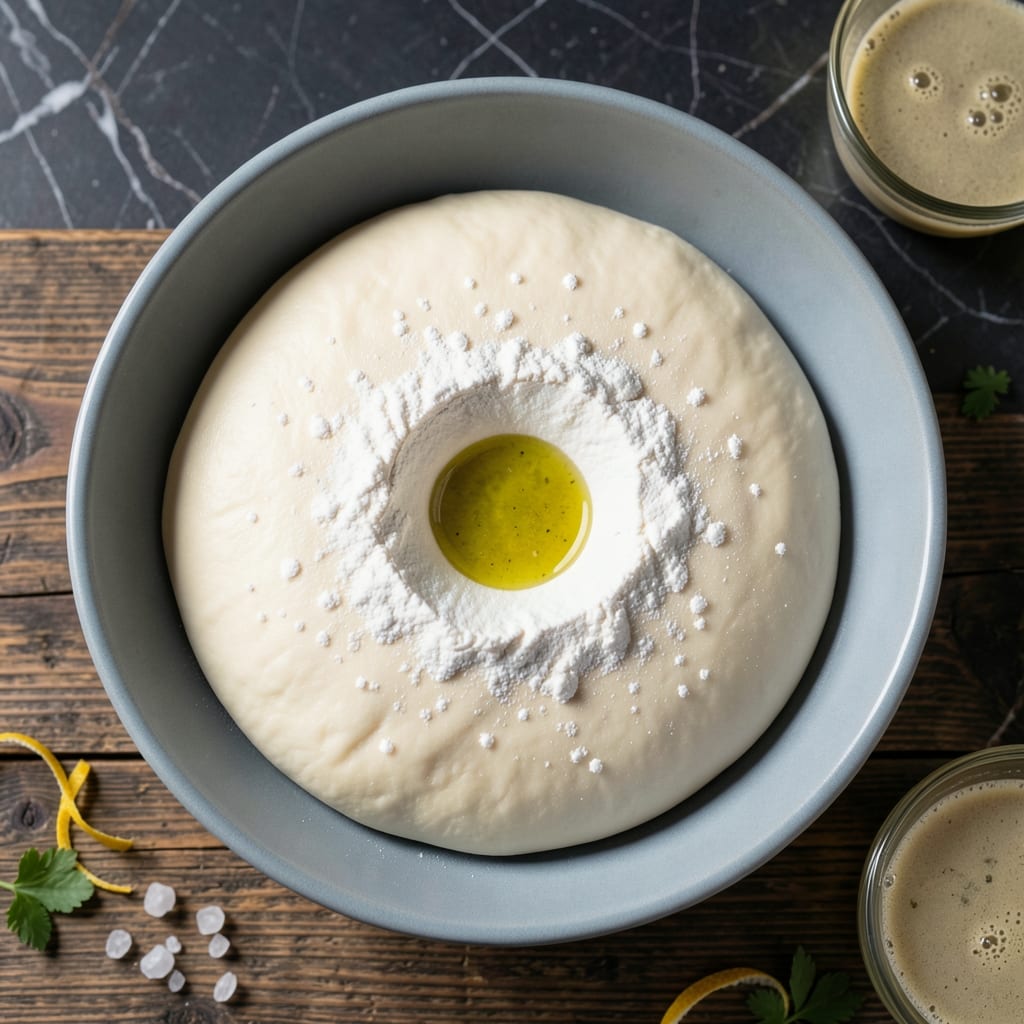
There’s something magical about achieving that signature Neapolitan chew with just four ingredients. Standing on a step stool in my grandmother’s kitchen in Sicily, I learned that patience transforms simple dough into something extraordinary.
This recipe relies on 00 flour and active dry yeast to create a tender yet elastic base. The slow fermentation process develops complex flavors that store-bought versions simply can’t match.
The 24-hour rise allows the gluten to relax naturally, resulting in a crust that’s crisp on the outside and perfectly chewy inside. No special equipment needed—just time and quality ingredients.
You’ll taste the difference in every bite, from the airy edges to the sturdy center that holds up to your favorite toppings. This is authentic Italian pizza dough at its finest.
Ingredients for Pizza Dough Recipe with 00 Flour and Active Dry Yeast
Four ingredients, endless flavor. Craft authentic Neapolitan-style dough with ease.
| Ingredient | Amount | Notes |
|---|---|---|
| 00 Flour 🌾 | 3 ½ cups | Italian-style, finely milled |
| Active Dry Yeast 🍞 | ¼ oz | One packet, proofed in warm water |
| Water 💧 | 1 ½ cups | Warm, about 110°F |
| Sea Salt 🧂 | 1 ½ tsp | Fine grain for even distribution |
| Extra-Virgin Olive Oil 🫒 | 1 tbsp | For bowl coating, optional |
The 00 flour is non-negotiable here—it’s what gives that signature Neapolitan chew. Look for Antimo Caputo or De Cecco brands at specialty grocers or Amazon. Active dry yeast works perfectly, but instant yeast skips the proofing step if you’re short on time. The water temperature matters (think warm bathwater), so use a thermometer if you’re unsure.
No 00 flour? All-purpose flour works in a pinch, but the texture won’t be quite as tender. Swap active dry yeast for instant at a 1:1 ratio, but reduce rising time by half. The olive oil is optional—some purists skip it entirely. For a richer flavor, infuse the oil with garlic or herbs before coating the bowl.
The dough can rest in the fridge for up to 48 hours if life gets busy. Bring it to room temperature before shaping. Baked crusts freeze well for 1 month, but fresh is always best. Store flour in an airtight container to keep it fresh.
Why You’ll Love This Recipe
- No-Fuss Mixing: I just dump the 00 flour, yeast, water, and salt in a bowl—no fancy tools, no fuss.
- Authentic Crust: That 00 flour gives it the chewy, crisp edge I’ve only found in Italian pizzerias.
- Endless Toppings: Honestly, it’s my blank canvas—margherita tonight, loaded veggie tomorrow, or even a dessert pizza.
- Budget Stretch: One batch makes four pizzas, and the ingredients cost less than a single takeout pie.
Step-by-Step Instructions for Pizza Dough With 00 Flour and Active Dry Yeast
Here’s my proven method for creating perfectly chewy Neapolitan-style dough at home.
Step 1: Proof the Active Dry Yeast
Begin by dissolving the 0.25 oz active dry yeast in the 1.5 cups water that’s been warmed to about 110°F. I use an instant-read thermometer for precision—the water should feel warm to the touch but not hot enough to scald.
Let the mixture stand for 5-10 minutes until it becomes frothy and cloudy. This visual confirmation tells you the yeast is alive and active. If it doesn’t bubble, your yeast may be expired, and you should start over with fresh yeast.
Step 2: Combine Flour and Salt
In a large mixing bowl, whisk together the 3.5 cups 00 flour and 1.5 tsp sea salt until evenly distributed. The fine grain of the sea salt ensures it dissolves completely during mixing, preventing any salty pockets in your final dough.
Create a well in the center of the flour mixture. This traditional technique helps contain the wet ingredients as you begin to combine them, making the initial mixing process cleaner and more controlled.
Step 3: Mix and Knead the Dough
Pour the yeast mixture into the well and use a wooden spoon to gradually incorporate the flour from the sides. Once the dough starts to come together, turn it out onto a clean work surface.
Knead for 8-10 minutes by hand until the dough becomes smooth and elastic. You’ll know it’s ready when it springs back when gently pressed with your finger and the surface feels slightly tacky but not sticky. This development of gluten gives the dough its characteristic chew.
Step 4: First Rise at Room Temperature
Lightly coat a clean bowl with the 1 tbsp extra-virgin olive oil—this prevents the dough from sticking as it rises. Place the dough in the bowl, turning to coat all sides with oil.
Cover with a damp kitchen towel and let rise at room temperature for 1-2 hours or until doubled in volume. The dough should look puffy and jiggle slightly when you gently shake the bowl. This initial rise develops flavor and improves texture.
Step 5: Cold Fermentation for Maximum Flavor
After the first rise, punch down the dough to release air bubbles. Divide it into 4 equal portions (about 250g each) for individual pizzas.
Shape each portion into a ball, place them on a lightly floured surface, cover with plastic wrap, and refrigerate for 24 hours. This cold fermentation develops complex flavors and creates that signature Neapolitan-style chew. The dough balls will continue to rise slowly in the fridge, so leave space between them.
Pro Tips For Making Pizza Dough Recipe With 00 Flour And Active Dry Yeast
- Activate the Yeast: Bloom your active dry yeast in warm (110°F) water with a pinch of sugar for 5-10 minutes until foamy—I learned this the hard way after killing yeast with hot tap water.
- Use Room-Temp Water: Cold water slows fermentation, so use room-temperature water (about 70°F) to help the dough rise properly in the first hour.
- Don’t Over-Flour: 00 flour is fine and absorbs liquid differently, so resist the urge to add extra flour when kneading or the crust will turn tough.
- Rest Overnight: After shaping, let the dough rest in the fridge for 24 hours—sounds weird, but it works: the gluten relaxes and the flavor deepens.
Essential Equipment for This Dish
Mixing Bowls
A large, wide stainless steel mixing bowl is my go-to—it handles the sticky dough beautifully and won’t absorb odors. I love my Cuisinox bowl from the Italian specialty deli; it’s lasted me over a decade. The wide base gives your arms plenty of room to knead without making a mess. 💛
Digital Scale
Precision matters with 00 flour, so I always use my OXO Good Grips 11lb scale. Measuring by weight (500g for this recipe) ensures consistent results every time. The taper function is perfect for adding flour gradually while mixing.
Instant-Read Thermometer
For perfect 110°F water, I rely on my ThermoWorks ThermoPop. It gives accurate readings in 3-4 seconds and has a thin probe that fits easily into measuring cups. This little tool prevents killing your yeast with water that’s too hot.
Dough Scraper
A bench scraper is invaluable for dividing and handling sticky dough. I use a stainless steel Ateco model that doubles as a measuring guide for portioning. The straight edge helps create clean cuts when dividing into 250g balls.
Plastic Wrap Alternative
Instead of plastic wrap, I use reusable silicone lids for the cold fermentation. They create an airtight seal without waste. Look for Stasher bags or silicone stretch lids at your local farmers market—they work beautifully for this 24-hour rise.
Pizza Peel
A wooden pizza peel is essential for transferring your stretched dough to the oven. I prefer bamboo for its lightweight feel and natural non-stick properties. Dust it generously with 00 flour to prevent sticking when sliding your pizza onto the stone. 🔥
Nutrition Facts
Frequently Asked Questions
Can I use all-purpose flour instead?
While possible, the texture won’t be the same. 00 flour has a finer grind that creates a more authentic Neapolitan chew. All-purpose will yield a slightly denser crust.
Why the 24-hour fermentation?
This slow cold rise develops complex flavors and improves the dough’s elasticity. The gluten relaxes naturally, creating that signature airy, chewy texture. 24 hours is ideal, but 48 hours works if needed.
How do I know when the dough is ready to shape?
After cold fermentation, the dough should be puffy and spring back slowly when pressed. Let it sit at room temperature for 30-60 minutes before shaping for best results.

- Potato Candy Recipe 1933: Vintage Peanut Butter Roll Delight - October 30, 2026
- Potato Chip Cookie Recipe With Pecans: Buttery Crunch Meets Nutty Richness - October 30, 2026
- Potato Patty Recipe No Egg: Crispy Edges Without the Binder - October 30, 2026