
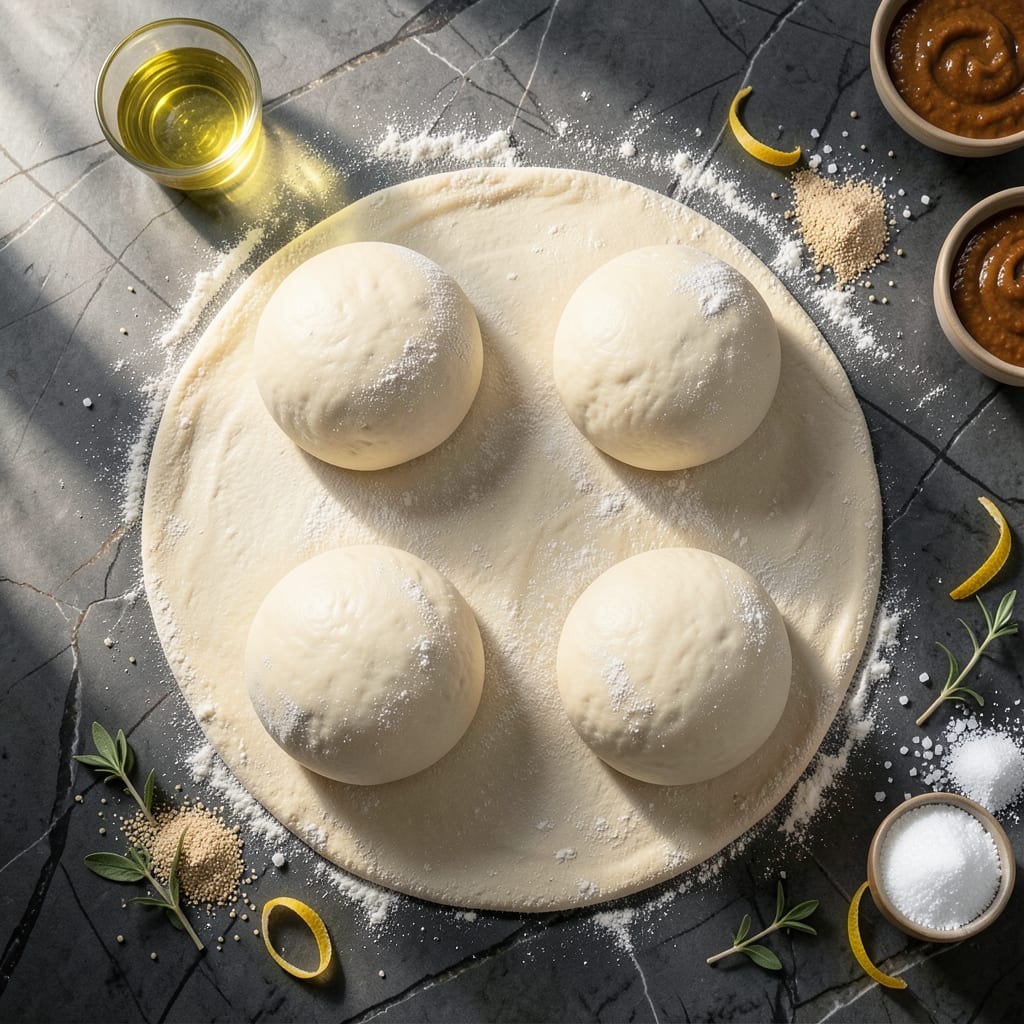
Homemade pizza dough that freezes beautifully means you’re always 30 minutes away from fresh-baked pizza. This proven method delivers a crispy, chewy crust that rivals any pizzeria, with the added benefit of make-ahead convenience.
The dough comes together quickly with basic pantry staples, then freezes for up to 3 months without losing texture or flavor. A slow rise in the fridge develops depth, while a simple freezing technique preserves its structure.
After thawing, the dough rolls out easily and bakes into a golden, airy crust with the perfect balance of crispness and chew. No special equipment is required—just reliable results every time.
Ideal for busy weeknights or spontaneous gatherings when you want restaurant-quality pizza without the wait.
Ingredients for Pizza Dough Recipe to Freeze
Basic pantry staples transform into restaurant-quality crust with make-ahead convenience for busy nights.
| Ingredient | Amount | Notes |
|---|---|---|
| Bread Flour 🌾 | 4 cups | High-protein for chewy texture |
| Active Dry Yeast 🍞 | 2 ¼ tsp | One packet, proofed in warm water |
| Granulated Sugar 🍚 | 2 tsp | Feeds the yeast activation |
| Kosher Salt 🧂 | 2 tsp | Fine grain for even distribution |
| Olive Oil 🫒 | 2 tbsp | Extra-virgin for richness |
| Warm Water 💧 | 1 ½ cups | 110°F for yeast activation |
| Semolina Flour 🌾 | ¼ cup | For dusting work surface |
| Cornmeal 🌽 | ¼ cup | For pizza peel dusting |
| All-Purpose Flour 🌾 | ½ cup | For adjusting dough consistency |
| Honey 🍯 | 1 tbsp | Optional for slight sweetness |
Bread flour is non-negotiable here—King Arthur or Bob’s Red Mill deliver consistent protein content for that chewy texture. Yeast freshness matters; check the expiration date and store unopened packets in the freezer. The olive oil should be high-quality extra-virgin—it adds subtle depth. Warm water temperature is critical: too hot kills the yeast, too cold slows activation. A kitchen thermometer ensures precision.
No bread flour? All-purpose works in a pinch (add an extra 1-2 tbsp for structure). Short on semolina? Fine cornmeal does the same job for dusting. Honey can be swapped for sugar at a 1:1 ratio. For same-day use, reduce the yeast to 1.75 tsp—the slow fridge rise is what builds flavor. Active dry and instant yeast are interchangeable here.
Dough freezes for up to 3 months in airtight containers or heavy-duty bags. Thaw overnight in the fridge, then let it sit at room temperature for 2 hours before shaping. Pre-portion into balls for easy single-use—each makes one 12-inch crust. Label with the date; it loses potency after 3 months.
Why You’ll Love This Recipe
- Set It & Forget: I mix this dough in 10 minutes, let it rise, then pop it in the freezer—no last-minute prep on pizza night.
- Rich, Buttery Crust: The olive oil and bread flour give it that crispy-chewy texture I crave.
- Endless Pizza Nights: I pull a ball from the freezer for quick weeknight dinners or unexpected guests.
- Budget Stretch: A batch costs pennies compared to delivery, and I always have dough ready.
Step-by-Step Instructions for Pizza Dough to Freeze
This method ensures optimal texture and flavor whether you use the dough fresh or frozen for later.
Step 1: Activate the Yeast Mixture
In a large mixing bowl, combine the 1.5 cups Warm Water, 2.25 tsp Active Dry Yeast, 2 tsp Granulated Sugar, and 1 tbsp Honey. Stir gently and let sit for 5-7 minutes until the mixture becomes frothy and cloudy.
This visual confirmation tells you the yeast is alive and active. If there’s no foam, your water may have been too hot or the yeast expired. The sugar and honey provide immediate food for the yeast to begin fermentation, which is crucial for proper rise.
Once activated, the mixture will have a slightly domed surface with visible bubbles—this is your signal to proceed to the next step.
Step 2: Combine Dry Ingredients and Form the Dough
In a separate large bowl, whisk together the 4 cups Bread Flour, 2 tsp Kosher Salt, and 0.5 cup All-Purpose Flour. The bread flour provides the high protein content needed for that chewy pizza crust texture, while the all-purpose flour helps adjust the consistency.
Create a well in the center and pour in the yeast mixture and 2 tbsp Olive Oil. Using a wooden spoon, mix until a shaggy dough forms. The dough will be sticky at this stage—that’s normal and indicates proper hydration.
Turn the dough out onto a surface dusted with 0.25 cup Semolina Flour. The semolina’s coarse texture prevents sticking while adding a subtle nuttiness to the final product.
Step 3: Knead to Develop Gluten Structure
Knead the dough for 8-10 minutes by hand until it becomes smooth and elastic. You’ll notice the texture transform from rough and sticky to silky and slightly tacky. This development of gluten is what gives your pizza dough its characteristic chew.
If the dough feels too sticky during kneading, add a small amount of the 0.25 cup Cornmeal to your work surface—this absorbs excess moisture without altering the dough’s composition. The cornmeal also adds a pleasant gritty texture to the crust’s exterior.
The dough is ready when it springs back slowly when poked with a finger, leaving a slight indentation. This elasticity test confirms proper gluten development.
Step 4: First Rise and Portion for Freezing
Lightly oil a clean bowl with some of the 2 tbsp Olive Oil, place the dough inside, and turn to coat. Cover with a damp towel and let rise in a warm place for 1-2 hours or until doubled in volume.
Once risen, punch down the dough to deflate it and divide into 4 equal portions (about 8 ounces each). This portioning makes it easy to pull out exactly what you need for future pizzas.
Shape each portion into a ball, then flatten slightly into a disc. This shape makes the dough easier to roll out later and ensures even freezing.
Step 5: Freeze for Future Use
Wrap each dough disc tightly in plastic wrap, then place in a freezer bag, squeezing out as much air as possible. Label with the date—this dough will keep well for up to 3 months in the freezer.
When ready to use, transfer a dough ball to the refrigerator and let it thaw overnight. The slow thaw in the fridge prevents condensation from forming on the dough, which could make it soggy.
Before using, let the dough sit at room temperature for 30 minutes, then dust your work surface with the remaining 0.25 cup Cornmeal before rolling out. This final rest makes the dough more pliable and easier to shape.
Pro Tips For Making Pizza Dough Recipe To Freeze
- Proof Before Freezing: Let the dough rise fully at room temperature first—I learned this the hard way after pulling out frozen, dense blobs that never puffed up.
- Use High-Protein Flour: Bread flour’s extra gluten gives frozen dough the structure it needs to avoid turning brittle or gummy when thawed.
- Skip the Warm Water: Cold water slows the yeast just enough for freezing, so resist the urge to activate it in warm water first or it’ll overproof in the freezer.
- Oil the Dough Ball: Rub about 1 tablespoon of olive oil over the dough before freezing to prevent it from drying out or sticking to the bag.
Common Mistakes When Making pizza dough recipe to freeze
Yeast Activation Errors
Using water that’s too hot (above 115°F) will kill the yeast instantly. I always check with a thermometer to hit that 110°F sweet spot. Expired yeast is another common culprit—always verify the date on the packet before starting. 🌡️
Over-Flouring Dough
Adding too much flour during kneading creates dense, tough dough. Stick to the recipe’s 4 cups bread flour baseline. If it feels sticky, use semolina or cornmeal on your work surface instead of adding more flour to the dough itself.
Insufficient Kneading
Stopping at 5 minutes won’t develop enough gluten. I knead for the full 8-10 minutes until the dough passes the windowpane test—stretch a small piece thin enough to see light through it without tearing.
Skipping First Rise
Rushing straight to freezing misses the flavor development. Let the dough double in volume during that 1-2 hour rise. This step builds the complex flavors that make homemade pizza dough superior to store-bought.
Freezer Burn
Improper wrapping leads to freezer burn. I double-wrap each disc in plastic wrap then place in a heavy-duty freezer bag, squeezing out all air before sealing. This keeps the dough fresh for the full 3 months. ❄️
Improper Thawing
Thawing at room temperature causes condensation. Always transfer from freezer to fridge for an overnight thaw, then let it sit at room temperature for 30 minutes before shaping. This prevents a soggy, sticky mess.
Nutrition Facts
Frequently Asked Questions
How long can I store frozen pizza dough?
Properly wrapped dough stays fresh for up to 3 months in the freezer. After that, it may lose some rise and flavor. Always label with the date to track freshness.
Can I freeze pizza dough after it has risen?
Yes! After the first 1-2 hour rise, portion and freeze. This preserves the developed flavor from the initial proofing stage.
Why does my dough feel tough after thawing?
Over-kneading or adding too much flour during prep can cause this. Stick to the 8-10 minute knead and use semolina on your surface instead of extra flour.
Can I freeze dough without portioning it first?
It’s possible, but portioning into 4 equal balls makes it much easier to use later. Large frozen dough blocks are harder to divide and may thaw unevenly.

- Potato Candy Recipe 1933: Vintage Peanut Butter Roll Delight - October 30, 2026
- Potato Chip Cookie Recipe With Pecans: Buttery Crunch Meets Nutty Richness - October 30, 2026
- Potato Patty Recipe No Egg: Crispy Edges Without the Binder - October 30, 2026