
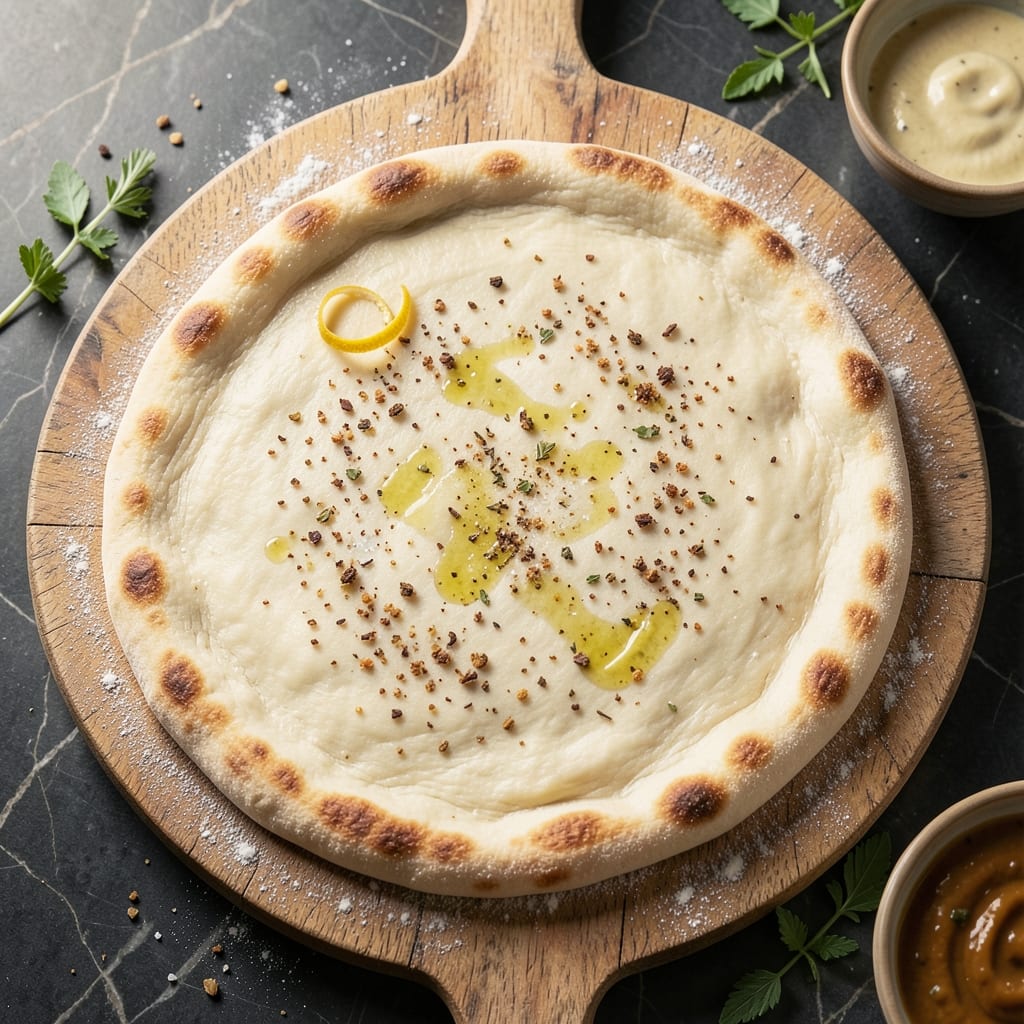
I developed this recipe after years of testing alternatives to traditional dough. It delivers a fluffy crust without yeast or milk, using simple pantry staples.
Baking powder and vinegar create the lift, while olive oil ensures tenderness. The dough comes together in minutes and requires no special equipment.
What emerges from the oven is a golden crust with just the right chew. It holds toppings beautifully and bakes up crisp at the edges.
Perfect for quick weeknight pizzas or when you need a dairy-free option. This method never fails.
Ingredients for Pizza Dough Recipe Without Yeast or Milk
Simple pantry staples create this fluffy, dairy-free pizza dough with no yeast required.
| Ingredient | Amount | Notes |
|---|---|---|
| All-Purpose Flour 🌾 | 3 cups | Plus extra for dusting |
| Baking Powder 🧂 | 2 tbsp | Ensures proper rise |
| White Vinegar 💧 | 2 tbsp | Activates baking powder |
| Extra-Virgin Olive Oil 🫒 | 3 tbsp | For tenderness in crust |
| Salt 🧂 | 1 tsp | Fine sea salt preferred |
| Granulated Sugar 🍚 | 1 tsp | Balances acidity |
| Water 💧 | 1 cup | Lukewarm, about 110°F |
| Cornmeal 🌽 | ¼ cup | For dusting pan |
| Garlic Powder 🧄 | 1 tsp | Optional, for flavor |
| Dried Oregano 🍃 | 1 tsp | Optional, for flavor |
The baking powder is non-negotiable here—it’s what replaces yeast for lift. Look for aluminum-free at Whole Foods or natural grocers for the cleanest rise. The white vinegar activates it, so don’t skip or substitute apple cider vinegar (the flavor’s too strong). King Arthur Flour is my go-to for consistent texture, but any all-purpose works as long as it’s fresh.
No vinegar? Lemon juice at the same amount works in a pinch. Want a richer crust? Swap half the water for unsweetened almond milk. The olive oil can be any neutral oil, but extra-virgin adds depth. For gluten-free, replace flour with a 1:1 GF blend—just add 1 extra tbsp water.
Dough keeps 2 days wrapped in the fridge, but it’s best used fresh. Baked crusts freeze beautifully for up to 3 months—stack with parchment between layers. Always bring dough to room temp before rolling for easier handling.
Why You’ll Love This Recipe
- No Yeast Needed: I love that I can make this dough without waiting for yeast to rise—just mix and roll.
- Crispy & Flaky: The olive oil and baking powder give it a light, crisp texture that’s honestly addictive.
- Weeknight Hero: Perfect for impromptu pizza nights when I forgot to plan ahead. (Yes, even on a Tuesday night)
- Pantry Staples: All-purpose flour, baking powder, and vinegar—ingredients I always have on hand, so no extra grocery runs.
Step-by-Step Instructions for Pizza Dough Without Yeast or Milk
This method delivers a quick-rise dough with a tender, fluffy crust using pantry staples.
Step 1: Activate the Leavening Agents
In a large mixing bowl, combine the 3 cups All-Purpose Flour, 2 tbsp Baking Powder, 1 tsp Salt, 1 tsp Granulated Sugar, 1 tsp Garlic Powder, and 1 tsp Dried Oregano. Whisk until uniformly distributed—the baking powder needs even dispersion to work effectively.
Create a well in the center and add the 2 tbsp White Vinegar and 3 tbsp Extra-Virgin Olive Oil. The vinegar reacts with the baking powder immediately, so work efficiently. Stir the wet ingredients into the dry with a wooden spoon until a shaggy dough begins to form.
Step 2: Hydrate and Form the Dough
Gradually pour in the 1 cup Water while continuing to stir. The dough will be sticky but should pull away from the sides of the bowl. If it feels too wet, add a sprinkle of flour; if too dry, add water 1 tsp at a time.
Turn the dough onto a lightly floured surface and knead for 3-4 minutes until smooth and elastic. The texture should resemble traditional pizza dough, with a slight tackiness that indicates proper hydration. Avoid over-kneading, as this can develop too much gluten and make the crust tough.
Step 3: Rest and Prepare the Pan
Lightly oil a clean bowl, place the dough inside, and cover with a damp towel. Let it rest at room temperature for 15-20 minutes—this allows the baking powder to fully activate and the gluten to relax, making the dough easier to shape.
Meanwhile, prepare your pizza pan or baking sheet by dusting it with the 0.25 cup Cornmeal. This prevents sticking and adds a subtle crunch to the crust’s bottom. The cornmeal also absorbs excess moisture, which helps achieve a crispier base.
Step 4: Shape and Pre-Bake the Crust
After resting, transfer the dough to the cornmeal-dusted pan. Press it out gently with your fingertips, starting from the center and working outward to the edges. Aim for an even thickness of about ¼ inch for a consistent bake. If the dough resists stretching, let it rest for 5 more minutes to relax the gluten.
Pre-bake the crust in a preheated 400°F oven for 8-10 minutes until the edges just begin to set and the surface looks matte. This step ensures the crust holds up to toppings without becoming soggy.
Step 5: Add Toppings and Finish Baking
Remove the pre-baked crust from the oven and add your desired toppings. Return it to the 400°F oven and bake for an additional 10-12 minutes, or until the crust is golden brown and the toppings are heated through.
The finished crust should be light and airy inside with a crisp exterior. The cornmeal base will have toasted slightly, adding a nutty flavor that complements the garlic and oregano notes in the dough. Serve immediately for the best texture.
Pro Tips For Making Pizza Dough Recipe Without Yeast Or Milk
- Chill the Dough: After mixing, let the dough rest in the fridge for at least 30 minutes—this relaxes the gluten and makes rolling much easier, especially with baking powder as the leavening agent.
- Measure Vinegar Precisely: Too much white vinegar can make the dough sour and dense; stick to 1 tablespoon per cup of flour for the right balance of acidity and lift.
- Don’t Overwork It: I learned this the hard way—kneading too much toughens the dough since there’s no yeast to develop elasticity. Just mix until it comes together.
- Use Warm Water: If your recipe calls for liquid, warm water (about 110°F) helps activate the baking powder faster, giving the dough a better rise without yeast.
Pro Cooking Tips for This Dish
Baking Powder Activation
For maximum rise, ensure your baking powder is fresh—test by stirring 1 tsp into ½ cup hot water. If it bubbles vigorously, it’s active. I always check mine from Central Market before starting. The white vinegar must be added immediately after to trigger the chemical reaction. 💡
Dough Consistency
If your dough feels too sticky, add flour 1 tbsp at a time. Too dry? Add water 1 tsp at a time. David, my taste-tester, prefers it slightly tacky for a tender crust. Knead just until smooth—overworking develops gluten, making it tough.
Resting Time
Don’t skip the 15-20 minute rest. This allows the baking powder to fully activate and the gluten to relax. I set a timer—rushing this step results in a dense crust. Cover with a damp towel to prevent drying.
Pre-Baking Trick
Pre-bake the crust at 400°F for 8-10 minutes to create a barrier against soggy toppings. This mimics the effect of a pizza stone. I use a dark metal pan for even heat distribution. 🔥
Cornmeal Secret
Use fine-ground cornmeal for dusting—it toasts better than coarse. Sprinkle generously on the pan to prevent sticking and add crunch. I buy mine at Austin farmers markets for the freshest flavor.
Topping Timing
Add toppings only after pre-baking. Too early, and the crust won’t crisp. For extra flavor, brush the pre-baked crust with 1 tbsp olive oil before topping. This is a trick I learned in Asheville farm-to-table kitchens.
Nutrition Facts
Frequently Asked Questions
Can I use baking soda instead of baking powder?
No, they’re not interchangeable here. Baking powder contains both acid and base, while baking soda needs an acid like vinegar to activate. Using only baking soda would leave a metallic taste.
Why does the dough need to rest before shaping?
The 15-20 minute rest lets the baking powder fully activate and the gluten relax. Skipping this makes the dough harder to stretch and can result in a dense crust.
Can I make this dough ahead of time?
Yes, but it’s best used fresh. Store wrapped in the fridge for up to 2 days. Bring to room temperature before rolling for easier handling.

- Potato Candy Recipe 1933: Vintage Peanut Butter Roll Delight - October 30, 2026
- Potato Chip Cookie Recipe With Pecans: Buttery Crunch Meets Nutty Richness - October 30, 2026
- Potato Patty Recipe No Egg: Crispy Edges Without the Binder - October 30, 2026