
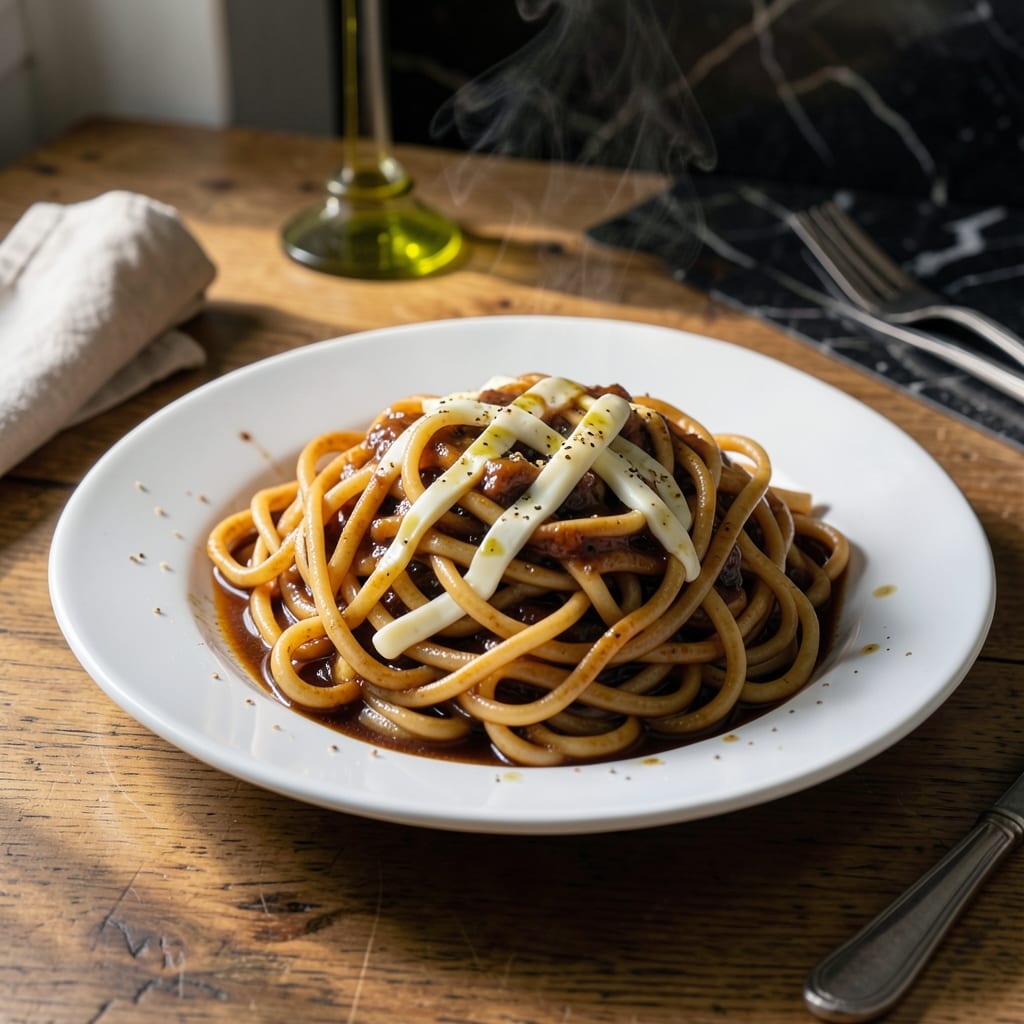
Sometimes the simplest dishes deliver the most satisfying results, and this plain lo mein proves exactly that. No vegetables, no distractions—just perfectly cooked noodles coated in a rich, savory sauce.
I developed this recipe for those nights when you want simple comfort without extra steps. The key is cooking the noodles just until tender, then tossing them in a hot pan with a bold soy-based sauce that clings beautifully.
The result is a dish with tender noodles and a glossy, flavorful coating that hits all the right savory notes. It’s quick, straightforward, and exactly what you crave when you need a no-fuss meal.
Ready in under 20 minutes, this lo mein lets the noodles shine. Here’s how to make it perfectly every time.
Ingredients for Plain Lo Mein Recipe No Vegetables
Just noodles, sauce, and a handful of pantry staples for this comforting dish.
| Ingredient | Amount | Notes |
|---|---|---|
| Lo Mein Noodles 🍜 | 12 oz | Fresh or dried egg noodles |
| Soy Sauce 🫒 | ½ cup | Low-sodium preferred for balance |
| Dark Soy Sauce 🫒 | 2 tbsp | For depth and color |
| Oyster Sauce 🫒 | 2 tbsp | Vegetarian oyster sauce if strict |
| Sesame Oil 🫒 | 1 tbsp | Toasted for best aroma |
| Vegetable Oil 🫒 | 2 tbsp | Neutral flavor for cooking |
| Garlic Cloves 🧄 | 4 cloves | Minced finely for even flavor |
| Granulated Sugar 🍚 | 1 tsp | Balances saltiness of sauces |
| Ground White Pepper 🌶️ | ½ tsp | Traditional in Chinese cooking |
| Green Onions 🧅 | 3 whole | Thinly sliced for garnish |
| Water 💧 | ¼ cup | For sauce consistency |
The noodles are everything here. Fresh lo mein noodles (found in the refrigerated section at Asian markets) cook up perfectly chewy, but dried egg noodles work fine too—just boil them a minute less than package instructions. Kikkoman soy sauce is my go-to, but any brand works if it’s not too salty. The dark soy sauce adds that deep color and caramelized flavor you expect in takeout.
No oyster sauce? Hoisin plus a splash of soy gets you close. Out of sesame oil? Skip it—it’s not essential, but don’t skip the toasted part if you’re using it. Fresh garlic is non-negotiable here; the pre-minced stuff just doesn’t have the same punch. Sugar balances the salt, but honey or brown sugar work too (just use a little less).
Sauce keeps 1 week in the fridge if you make extra. Noodles are best fresh but reheat okay with a splash of water to loosen. Garnish with green onions just before serving—they wilt fast, so don’t add them too early (worth the extra minute).
Why You’ll Love This Recipe
- I’ll be real: this is my go-to when I need something fast and filling on a busy Tuesday.
- No Chopping Needed: I just boil noodles, toss with sauces, and dinner’s ready. Honestly, it doesn’t get simpler.
- Umami Bomb: The mix of soy sauce, dark soy, and oyster sauce gives it a rich, savory depth that’s crave-worthy.
- Weeknight Rescue: I’ll be real: this is my go-to when I need something fast and filling on a busy Tuesday.
Step-by-Step Instructions for Plain Lo Mein No Vegetables
This no-fuss method delivers delicious, savory noodles with minimal effort and maximum flavor.
Step 1: Cook the Lo Mein Noodles
Bring a large pot of water to a rolling boil. Add the 12 oz Lo Mein Noodles and cook according to package instructions until al dente—about 2-3 minutes for fresh noodles or 5-6 minutes for dried.
Drain the noodles in a colander and rinse briefly under cold water to stop the cooking process. This prevents them from becoming mushy when stir-fried. Shake off excess water and toss the noodles with 1 tbsp Sesame Oil to prevent sticking while you prepare the sauce.
Step 2: Sauté the Aromatics
Heat 2 tbsp Vegetable Oil in a large wok or skillet over medium-high heat until it shimmers. Add the 4 cloves minced Garlic Cloves and stir-fry for 15-20 seconds until fragrant but not browned.
Watch closely—garlic burns easily at high heat. You want it just golden at the edges, releasing its sweet aroma without turning bitter. The oil should sizzle when the garlic hits the pan, which means it’s at the right temperature for quick cooking.
Step 3: Combine Noodles and Sauce
Add the drained noodles to the wok along with the 0.5 cup Soy Sauce, 2 tbsp Dark Soy Sauce, 2 tbsp Oyster Sauce, 1 tsp Granulated Sugar, and 0.5 tsp Ground White Pepper. Stir well to coat the noodles evenly.
Pour in the 0.25 cup Water and toss everything together for 2-3 minutes until the sauce thickens slightly and clings to the noodles. The dark soy sauce adds a rich color and depth, while the oyster sauce brings a savory umami punch.
Step 4: Finish and Garnish
Taste and adjust seasoning if needed—though the combination of soy sauces and oyster sauce should be perfectly balanced. The noodles should be glossy and well-coated, with a slight sheen from the oils.
Transfer the lo mein to a serving dish and top with the 3 whole thinly sliced Green Onions. The green onions add a fresh, mild bite that brightens up the dish. Serve immediately while hot, as the noodles absorb the sauce best right after cooking.
Pro Tips For Making Plain Lo Mein Recipe No Vegetables
- Boil Noodles Al Dente: Cook the lo mein noodles 1 minute less than package instructions—I learned this the hard way after ending up with mushy noodles that soaked up too much sauce.
- Bloom the Sauces: Heat the soy sauce, dark soy sauce, and oyster sauce together for 30 seconds in the pan before adding noodles; it deepens the flavor in a way that just mixing them cold doesn’t.
- Skip the Over-Sesaming: Use sesame oil only at the end, just 1 teaspoon max—adding it too early or too much makes the dish greasy and bitter, not rich.
- High Heat Stir: Crank the heat to medium-high when tossing the noodles with the sauce and keep them moving constantly; this prevents sticking and gives those edges a slight char that makes the dish taste authentic.
Storing and Reheating This Recipe
Refrigerator Storage
Let your lo mein cool completely at room temperature for no more than 2 hours before transferring to airtight containers. I use glass containers with snap-tight lids to prevent leaks. Store in the fridge at 40°F or below for up to 3 days. ❄️
Freezer Storage
For longer storage, freeze in quart-sized freezer bags with excess air removed. Lay bags flat to save space and freeze for up to 2 months. The texture may soften slightly after thawing, but the flavor remains excellent.
Stovetop Reheating
Heat a nonstick skillet over medium heat with 1 tbsp water or vegetable oil. Add your portion and stir-fry for 3-4 minutes until heated through. This method restores the noodles’ texture beautifully. 🔥
Microwave Reheating
Place lo mein in a microwave-safe dish, sprinkle with 1-2 tsp water, and cover with a damp paper towel. Heat on 70% power for 1-2 minutes, stir, then continue in 30-second bursts until hot.
Sauce Refresh Tip
If the noodles seem dry after reheating, add a splash of soy sauce or oyster sauce and toss well. This revives the dish’s signature glossy coating and savory depth. I always keep extra sauce on hand for this.
Nutrition Facts
Frequently Asked Questions
Can I use spaghetti instead of lo mein noodles?
Yes, but texture differs. Spaghetti works in a pinch but lacks the chewy bite of lo mein noodles. Cook it 1 minute less than package instructions to prevent mushiness.
Why is my sauce too salty?
Low-sodium soy sauce helps control saltiness. If over-salted, add 1-2 tbsp water or a pinch of sugar to balance. Taste as you go next time.
Can I make this ahead of time?
Yes, but store noodles and sauce separately. Cooked noodles keep 3 days refrigerated. Reheat with extra sauce to refresh flavor.
Is oyster sauce necessary?
It adds depth, but you can substitute hoisin sauce or extra soy sauce. The dish will still taste good, just less complex.

- BBQ Sausage Recipe Oven: Smoky Depth Without the Grill - September 28, 2026
- BBQ Chicken Bowl Recipe Rice: Smoky Sweetness Over Fluffy Grains - September 28, 2026
- Beef Cutlet Recipe Ideas: Crispy Breaded Patties With Bold Seasonings - September 28, 2026