
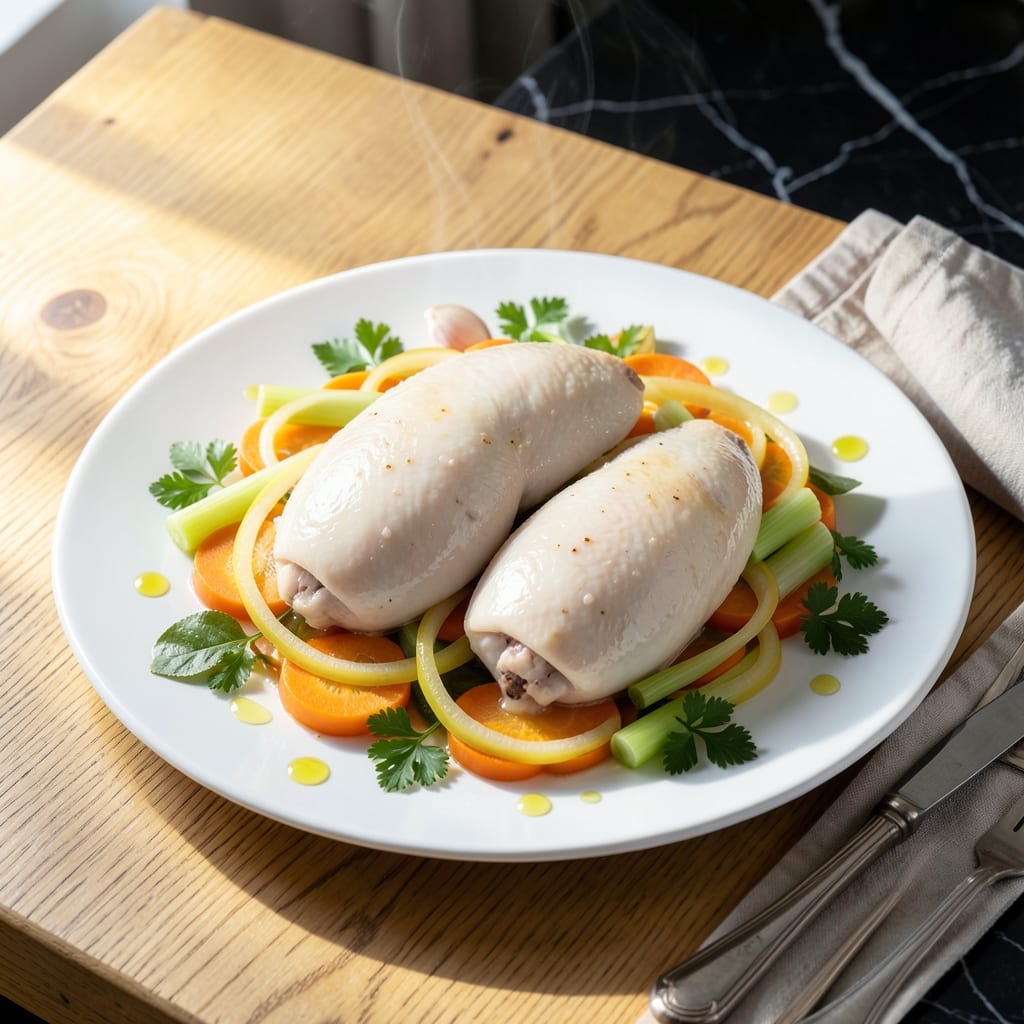
Poaching chicken produces the most tender protein with minimal effort. This gentle cooking method keeps meat moist while infusing subtle flavor from aromatic vegetables and herbs.
I developed this technique after years of overcooking chicken breasts. The key is maintaining a steady simmer, never a boil, which ensures even cooking without drying out the meat.
The result is perfectly cooked chicken that shreds effortlessly or stays intact for slicing. It works beautifully in salads, soups, or as a simple main course with your favorite sides.
This method requires no special equipment, just a pot, water, and about 15 minutes of simmering time. The versatility of poached chicken makes it a staple in my kitchen rotation.
Ingredients for Poached Chicken Recipe Ideas
Simple ingredients, big flavor. Everything you need for perfectly poached protein.
| Ingredient | Amount | Notes |
|---|---|---|
| Boneless Skinless Chicken Breasts 🍗 | 1 ½ lb | Uniform thickness for even cooking |
| Water 💧 | 8 cups | Enough to fully submerge chicken |
| Carrots 🥕 | 2 whole | Peeled and sliced into chunks |
| Celery Stalks 🌿 | 2 whole | Cut into large pieces |
| Yellow Onion 🧅 | 1 whole | Quartered for aroma |
| Garlic Cloves 🧄 | 4 cloves | Lightly crushed, unpeeled |
| Fresh Parsley Stems 🌿 | 1 whole | Tied with kitchen twine |
| Bay Leaves 🍃 | 2 pieces | Dried is fine here |
| Kosher Salt 🧂 | 1 tbsp | Adjust to taste later |
| Black Peppercorns 🌶️ | 1 tsp | Whole, not pre-ground |
| Lemon 🍋 | 1 whole | Sliced for acidity |
| Dry White Wine 🍷 | ½ cup | Optional for depth of flavor |
Chicken quality is non-negotiable here. Look for free-range or organic at Whole Foods or your local butcher if possible—better texture, less water content. The carrots and celery should be fresh and firm; limp veggies won’t infuse much flavor. I grab my aromatics from the farmers market when I can (the smell alone tells you they’re good). Bay leaves from Penzeys or the international aisle pack more punch than the dusty jars in the spice rack.
No white wine? Extra water plus a splash of vinegar mimics the acidity. Out of fresh parsley? Dried thyme or a sage sprig works in a pinch. If you don’t have whole peppercorns, pre-ground at half the amount is fine (just add it directly to the water). The lemon can be swapped for lime or even a few drops of bottled juice. Don’t stress over exact measurements here—this method is forgiving.
Poached chicken keeps beautifully. Store it submerged in its liquid in the fridge for up to 4 days, or shred and freeze for 3 months. The broth? Strain and save for soups or cooking grains—it’s packed with flavor (don’t waste it).
Why You’ll Love This Recipe
- Set It and Forget It: I just toss the chicken, carrots, celery, and onion in a pot with water and walk away—no babysitting required.
- Gentle, Pure Flavor: The chicken stays juicy and soaks up the subtle sweetness from the carrots and onion, no heavy spices needed.
- Meal Prep MVP: I make a big batch Sunday and it’s ready for salads, soups, or sandwiches all week long.
- Budget Stretcher: One package of chicken breasts turns into multiple meals, and the veggies in the broth get used up too.
Step-by-Step Instructions for Poached Chicken
Here’s how I get fall-apart tender chicken every single time.
Step 1: Build the Aromatic Broth Base
In a large stockpot, combine the 8 cups water, 2 whole carrots, 2 whole celery stalks, 1 whole yellow onion, 4 cloves garlic cloves, 1 whole fresh parsley stems, 2 pieces bay leaves, 1 tbsp kosher salt, and 1 tsp black peppercorns.
Bring to a gentle simmer over medium heat—you should see small bubbles breaking the surface occasionally, not a rolling boil. This slow heat extraction ensures the vegetables infuse the liquid with flavor without breaking down into mush.
Add the 1 whole lemon slices and 0.5 cup dry white wine just before adding the chicken. The wine adds depth, while the lemon brightens the broth and helps tenderize the meat.
Step 2: Add Chicken and Maintain the Simmer
Gently lower the 1.5 lb boneless skinless chicken breasts into the simmering liquid. Make sure they’re fully submerged—if not, add a splash more water to cover completely. The chicken should be just barely quivering in the liquid.
If the liquid threatens to boil, reduce the heat to medium-low. You want the gentlest possible simmer here. Too much agitation will make the chicken tough, while a proper poach keeps it juicy and delicate.
Partially cover the pot with a lid to retain heat while allowing some steam to escape. This prevents the temperature from spiking and keeps the cooking environment stable.
Step 3: Poach Until Just Cooked Through
Cook the chicken for 12-15 minutes, depending on thickness. You’ll know it’s done when the internal temperature reaches 165°F in the thickest part, or when the meat is opaque and a knife slides in with no resistance.
Don’t overcook—this is the secret to tender poached chicken. The moment it hits temperature, remove it from the broth. The chicken will continue cooking slightly as it rests, so pulling it early ensures it stays moist.
If you’re unsure, err on the side of caution. You can always return it to the hot broth for another minute if needed, but you can’t undo overcooked meat.
Step 4: Rest and Serve or Store
Using a slotted spoon, transfer the chicken to a plate and let it rest for 5 minutes before slicing or shredding. This brief rest allows the juices to redistribute, so they don’t all spill out onto your cutting board.
The poaching liquid is liquid gold—strain and reserve it for soups, sauces, or cooking grains. It’s packed with flavor from the aromatics and chicken, and it freezes beautifully for later use.
Serve the chicken warm in salads, sandwiches, or tacos, or chill it for meal prep. It’ll stay tender and juicy for up to 4 days in the fridge when stored in its poaching liquid.
Pro Tips For Making Poached Chicken Recipe Ideas
- Use a Thermometer: I learned this the hard way—pull the chicken at 160°F and let it rest to 165°F, or it’ll dry out faster than you can say “overcooked.”
- Skim the Foam: As soon as the water starts to simmer, skim off the scum that rises—it keeps the broth clean and your chicken tasting fresh, not bitter.
- Keep Breasts Even: Pound thicker parts of the chicken breasts to an even 1-inch thickness so they cook uniformly; no one wants half dry, half raw chicken.
- Reuse the Broth: After poaching, strain and save that flavor-packed liquid—it’s perfect for soups, sauces, or cooking rice later in the week.
Essential Equipment for poached chicken recipe ideas
Stockpot Selection
I always reach for my 8-quart enameled cast iron pot—it distributes heat evenly and holds enough liquid for 1.5 lb of chicken plus aromatics. A heavy-bottomed stainless steel stockpot from All-Clad is another excellent choice that won’t react with acidic ingredients like lemon. 🔥
Precision Thermometer
A quality instant-read thermometer is non-negotiable. I use the ThermoWorks ThermoPop for its accuracy and fast response time. You’ll need to monitor both the poaching liquid (180-190°F) and the chicken’s internal temperature (165°F).
Slotted Utensils
For removing the chicken, a large slotted spoon or skimmer prevents breaking the delicate meat. I prefer a stainless steel spider strainer—it’s perfect for lifting the chicken while letting the broth drain back into the pot.
Kitchen Scale
Consistent results come from precise measurements. My OXO Good Grips scale ensures I hit 1.5 lb of chicken every time. It also helps portion the chicken evenly if I’m making multiple batches for meal prep.
Lid and Heat Control
A tight-fitting lid is essential for maintaining a gentle simmer. I use my pot’s glass lid to monitor the process without losing heat. For gas stoves, a diffuser plate helps prevent hot spots that could cause uneven cooking.
Storage Solutions
Once cooled, I store poached chicken in glass containers with airtight lids from Pyrex. These keep the chicken submerged in its broth for up to 4 days in the fridge. For longer storage, I use quart-sized freezer bags that lay flat to save space. ✨
Nutrition Facts
Frequently Asked Questions
Can I use chicken thighs instead of breasts?
Yes! Bone-in thighs need 20-25 minutes to reach 165°F. They stay extra juicy and handle poaching beautifully.
How do I prevent dry chicken?
Keep the liquid at a gentle simmer, never a boil. Remove chicken immediately at 165°F and let it rest for 5 minutes before serving.
What can I make with the leftover broth?
Strain and use it for soups, risotto, or cooking grains. It freezes well for up to 3 months in airtight containers.
Can I poach chicken in advance?
Store it in its broth in the fridge for up to 4 days. It’s perfect for meal prep!

- BBQ Sausage Recipe Oven: Smoky Depth Without the Grill - September 28, 2026
- BBQ Chicken Bowl Recipe Rice: Smoky Sweetness Over Fluffy Grains - September 28, 2026
- Beef Cutlet Recipe Ideas: Crispy Breaded Patties With Bold Seasonings - September 28, 2026