
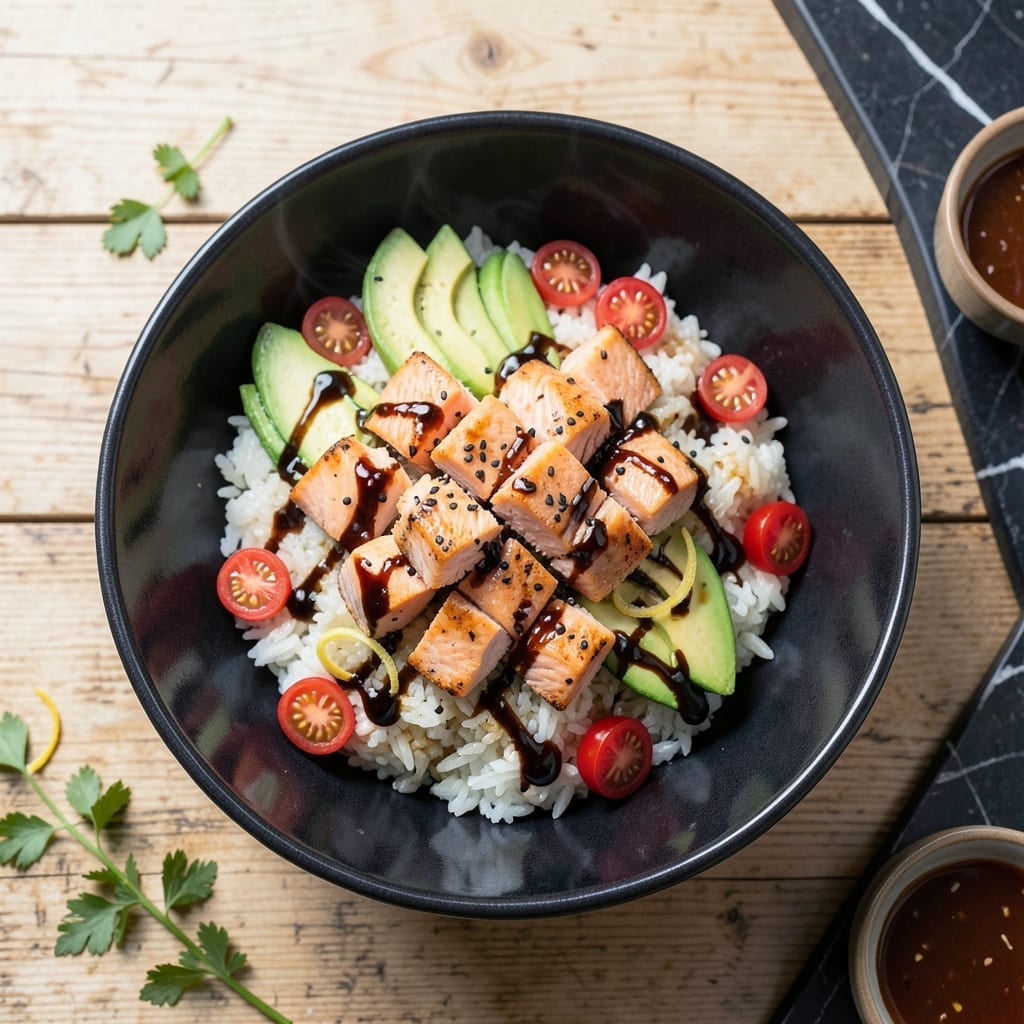
This poke bowl brings the vibrant flavors of Hawaii to your kitchen with a modern twist. The cooked fish offers a safer alternative while maintaining the dish’s authentic taste and texture.
I’ve perfected a method that ensures the fish stays tender and flavorful, paired with sushi rice that’s seasoned just right. Fresh toppings and sauces complete the bowl with bright, balanced flavors.
The beauty of this recipe lies in its versatility. You can customize it with your favorite vegetables, proteins, or sauces while keeping the essence of a traditional poke bowl.
Ready in 30 minutes, this dish is both satisfying and visually stunning, making it perfect for any meal.
Ingredients for Poke Bowl Recipe with Cooked Fish
Fresh fish, vibrant veggies, and sushi rice come together for this Hawaiian-inspired dish.
| Ingredient | Amount | Notes |
|---|---|---|
| Sushi Rice 🍚 | 2 cups | Short-grain, rinsed until clear |
| Fresh Salmon Fillet 🐟 | 1 ½ lb | Skinless, cubed (or sub tuna) |
| Rice Vinegar 💧 | ¼ cup | Seasoned or unseasoned |
| Sugar 🍬 | 1 tbsp | Granulated white sugar |
| Salt 🧂 | 1 tsp | Kosher or sea salt |
| Soy Sauce 🫒 | ¼ cup | Low-sodium preferred |
| Sesame Oil 🫒 | 1 tbsp | Toasted for nutty flavor |
| Green Onions 🧅 | 4 whole | Thinly sliced for garnish |
| Cucumber 🥒 | 1 whole | Peeled, seeded, diced |
| Avocado 🥑 | 1 whole | Ripe, pitted, sliced |
| Carrots 🥕 | 1 whole | Julienned or shredded |
| Edamame 🫛 | 1 cup | Shelled, thawed if frozen |
| Nori Sheets 🌿 | 2 sheets | Cut into thin strips |
| Sesame Seeds 🌾 | 1 tbsp | Toasted for crunch |
| Sriracha 🌶️ | 1 tbsp | Adjust to spice preference |
The salmon is the star here. Wild-caught from Whole Foods or Costco is my go-to—firm, fresh, and already skinless (saves time). If you’re near a good fishmonger, ask for sushi-grade tuna as an alternative. The rice matters too—short-grain Japanese rice gives that sticky texture poke bowls need. Rinse it until the water runs clear to avoid gummy results.
No salmon? Firm white fish like halibut or cod works great (just cook it gently). Fresh out of edamame? Thinly sliced bell peppers or snap peas add crunch. For the rice vinegar, apple cider vinegar in a pinch—flavor’s a bit different but still bright. Sriracha too spicy? Swap in sweet chili sauce for a milder kick. The avocado can be swapped with mango if you want something fruity.
Everything preps ahead except the avocado (which browns fast). Cooked fish keeps for 2 days in the fridge, rice for 3-4 days. Make a big batch of the sushi rice base—it reheats well with a splash of water. Leftovers? Pack them in airtight containers for lunches.
Why You’ll Love This Recipe
- No-Fuss Assembly: I just cook the rice, pan-sear the salmon, and toss it all together—no raw fish handling or fancy techniques.
- Sweet-Savory Balance: The rice vinegar with a touch of sugar and salt makes the rice so good I could eat it plain.
- Lunchbox Hero: Honestly, it packs beautifully for work lunches and stays fresh for two days in the fridge.
- Stretches Far: One salmon fillet and a batch of rice feeds me for three meals without breaking the bank.
Step-by-Step Instructions for Poke Bowl With Cooked Fish
Here’s how to build your bowl with perfect texture and flavor in every layer.
Step 1: Cook and Season the Sushi Rice
Rinse the 2 cups sushi rice under cold water until the water runs clear to remove excess starch. Cook according to package instructions, then transfer to a large bowl while still warm.
In a small bowl, whisk together the 0.25 cup rice vinegar, 1 tbsp sugar, and 1 tsp salt until dissolved. Gently fold this mixture into the warm rice with a wooden spoon—you want the grains to stay intact. Let it cool to room temperature, occasionally fanning it to achieve that signature sticky yet separate texture.
Step 2: Prepare the Cooked Salmon
Preheat your oven to 375°F. Pat the 1.5 lb fresh salmon fillet dry and cut into 1-inch cubes. Toss the salmon with 1 tbsp sesame oil, 0.25 cup soy sauce, and 1 tbsp sriracha in a bowl, ensuring each piece is evenly coated.
Spread the salmon on a parchment-lined baking sheet in a single layer. Bake for 12-15 minutes until the fish flakes easily with a fork and reaches an internal temperature of 145°F. Remove from the oven and let it cool slightly—it should be tender but still hold its shape for your bowl.
Step 3: Prep the Fresh Vegetables and Toppings
Thinly slice the 4 whole green onions on a diagonal for a professional touch. Peel, seed, and dice the 1 whole cucumber into small, uniform pieces. Pit and slice the 1 whole avocado just before assembly to prevent browning.
Julienne the 1 whole carrots or use a peeler to create thin ribbons. Thaw the 1 cup edamame if frozen, then drain and pat dry. Toast the 1 tbsp sesame seeds in a dry pan over medium heat for 1-2 minutes until fragrant and golden. Cut the 2 sheets nori sheets into thin strips for garnish.
Step 4: Assemble the Poke Bowl
Divide the seasoned sushi rice among four bowls, pressing it gently into the bottom. Arrange the cooked salmon cubes in a neat section on top of the rice. Scatter the diced cucumber, sliced avocado, julienned carrots, and edamame around the salmon.
Drizzle any remaining marinade from the salmon over the top for extra flavor. Sprinkle with the toasted sesame seeds, sliced green onions, and nori strips. The contrast of warm rice with cool vegetables and tender salmon creates the perfect bite every time.
Pro Tips For Making Poke Bowl Recipe With Cooked Fish
- Poach, Don’t Boil: Cook your salmon in barely simmering water—around 160°F—so it stays tender and flaky. I learned this the hard way after turning my first few fillets into rubber.
- Rinse the Rice: Wash your sushi rice until the water runs clear to remove excess starch, otherwise your poke base will be gummy instead of sticky.
- Season While Warm: Toss the cooked salmon with rice vinegar, sugar, and salt while it’s still warm—it absorbs the flavors better than when it’s cool.
- Chill Before Cubing: Let the salmon cool completely in the fridge before dicing, or it’ll fall apart into mushy bits. Takes 15 minutes, but it’s worth the wait.
Creative Variations of This Recipe
Spicy Thai Twist
Swap the sriracha for 1 tbsp Thai red curry paste in the salmon marinade. Add ½ cup shredded red cabbage and ¼ cup chopped cilantro as toppings. The curry paste adds depth while keeping the dish approachable. 🌶️
Mediterranean Fusion
Replace soy sauce with ¼ cup olive oil and 2 tbsp lemon juice in the marinade. Top with ½ cup cherry tomatoes, ¼ cup crumbled feta, and 2 tbsp chopped kalamata olives. This version feels like a Greek vacation in a bowl.
Teriyaki Glazed
Brush the cooked salmon with ¼ cup teriyaki sauce before baking. Use 1 cup steamed broccoli florets and ½ cup shredded purple cabbage for vibrant colors. The sweet-savory glaze pairs perfectly with the sticky rice.
Tropical Paradise
Add ½ cup diced pineapple and ¼ cup diced mango to your toppings. Swap avocado for ½ cup diced jicama for extra crunch. This version brings a sweet, refreshing twist to the classic savory profile. 💛
Korean BBQ Style
Marinate the salmon with 2 tbsp gochujang and 1 tbsp honey instead of sriracha. Top with ½ cup kimchi and 1 tbsp pickled ginger. The spicy-sweet marinade and tangy kimchi create bold, complex flavors.
Vegetable-Only Option
Skip the fish and double the veggies: add 1 cup cooked sweet potato cubes and ½ cup marinated tofu. Drizzle with extra soy sauce and sesame oil. This hearty version keeps all the texture and flavor without the protein.
Nutrition Facts
Frequently Asked Questions
Can I use frozen salmon instead of fresh?
Yes, thaw frozen salmon overnight in the fridge before using. Pat it very dry to remove excess moisture for better texture. Avoid refreezing after thawing.
How do I know when the fish is fully cooked?
Salmon is done when it reaches an internal temperature of 145°F and flakes easily with a fork. It should appear opaque throughout with no translucent areas.
Can I make this ahead of time?
Cook and season the rice up to 1 day ahead, but assemble bowls fresh. Cooked fish keeps for 2 days refrigerated. Store components separately for best texture.
What’s the best way to season sushi rice?
Mix 0.25 cup rice vinegar, 1 tbsp sugar, and 1 tsp salt until dissolved. Gently fold into warm rice while fanning to achieve the perfect sticky texture.

- Potato Candy Recipe 1933: Vintage Peanut Butter Roll Delight - October 30, 2026
- Potato Chip Cookie Recipe With Pecans: Buttery Crunch Meets Nutty Richness - October 30, 2026
- Potato Patty Recipe No Egg: Crispy Edges Without the Binder - October 30, 2026