
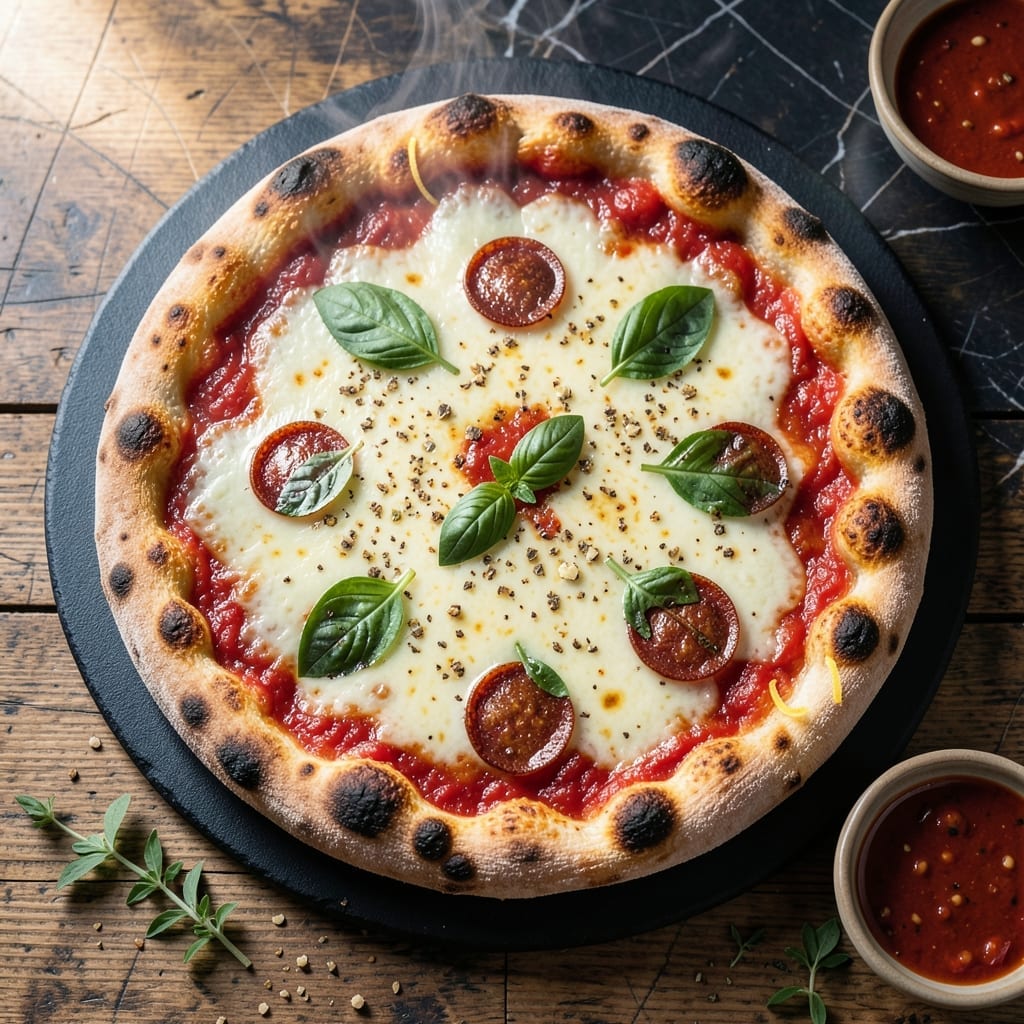
Making perfect pizza at home is simpler than you think with this proven method. I’ve refined every step to ensure a crisp crust, melty cheese, and balanced flavors every time.
This approach combines a no-fail dough recipe with precise baking techniques. The dough rises slowly for better texture, while a hot oven guarantees a golden, bubbly finish.
You’ll achieve a homemade pie that rivals your favorite pizzeria, with a chewy interior and a shatteringly crisp base. Toppings stay fresh and vibrant, never soggy.
Follow these steps exactly, and you’ll never settle for delivery again. The process is straightforward, and the results are consistently impressive.
Ingredients for Pizza Recipe Steps
Pantry staples and a few fresh items create restaurant-quality pie at home.
| Ingredient | Amount | Notes |
|---|---|---|
| All-Purpose Flour 🌾 | 3 ½ cups | Plus extra for dusting |
| Active Dry Yeast 🍞 | 1 package | 2 1/4 tsp equivalent |
| Warm Water 💧 | 1 ¼ cups | About 110°F |
| Olive Oil 🫒 | 2 tbsp | Extra-virgin preferred |
| Salt 🧂 | 1 tsp | Fine sea salt |
| Sugar 🍚 | 1 tsp | Granulated white sugar |
| Pizza Sauce 🍅 | 1 cup | Marinara or tomato sauce |
| Shredded Mozzarella Cheese 🧀 | 8 oz | Low-moisture, part-skim |
| Parmesan Cheese 🧀 | ½ cup | Freshly grated |
| Pepperoni Slices 🍕 | 3 oz | Or your favorite toppings |
| Fresh Basil Leaves 🌿 | ¼ cup | For garnish |
| Garlic Powder 🧄 | 1 tsp | For seasoning sauce |
| Dried Oregano 🍃 | 1 tsp | For seasoning sauce |
| Red Pepper Flakes 🌶️ | ½ tsp | Optional for heat |
| Cornmeal 🌽 | 2 tbsp | For dusting pan |
The flour is the foundation—King Arthur or Gold Medal give consistent results. Yeast freshness matters (check the expiration date), and warm water at the right temp (think bathwater, not hot) wakes it up properly. For the cheese, whole-milk mozzarella melts better than part-skim, but either works. I grab my yeast from the fridge section at Kroger—those little packets last forever.
No pizza sauce? Crushed tomatoes seasoned with salt and oregano work in a pinch. Don’t like pepperoni? Swap in sliced bell peppers, mushrooms, or prosciutto. Fresh mozzarella needs to be patted dry first (trust me on this) to avoid a soggy crust. The garlic powder can be swapped for fresh minced garlic—just use half the amount.
Dough rises best in a warm spot (75-80°F), like on top of the fridge. Leftover pizza keeps 3-4 days in the fridge—reheat in a dry skillet for crispiness. Sauce and cheese can be prepped ahead, but assemble just before baking for the freshest results.
Why You’ll Love This Recipe
- Minimal Effort: I just mix flour, yeast, water, and olive oil—no fancy skills needed.
- Crispy Chewy Magic: That olive oil in the dough gives it the perfect texture every time.
- Feeds Everyone: Honestly, I make this for movie nights, lazy Sundays, even last-minute dinner guests.
- Penny Pincher: All-purpose flour and yeast cost next to nothing, and one batch makes multiple pizzas.
Step-by-Step Instructions for Homemade Pizza
This foolproof method delivers restaurant-quality results right from your kitchen every time.
Step 1: Activate the Yeast and Prepare the Dough
In a large bowl, combine the 1.25 cups warm water, 1 tsp sugar, and 1 package active dry yeast. Let it sit for 5-10 minutes until the mixture becomes foamy—this confirms your yeast is alive and active. I always check the water temperature first; it should feel like warm bathwater.
Add the 2 tbsp olive oil, 1 tsp salt, and 3.5 cups all-purpose flour to the yeast mixture. Stir with a wooden spoon until a shaggy dough forms. The texture should be slightly sticky but pull away from the sides of the bowl. This is where the magic starts to happen.
Step 2: Knead and Let the Dough Rise
Turn the dough out onto a lightly floured surface and knead for 8-10 minutes until smooth and elastic. I press my thumb into the dough occasionally—if it springs back slowly, it’s ready. The gluten development here is what gives your crust that perfect chewy texture.
Place the dough in a lightly oiled bowl, cover with a damp towel, and let it rise in a warm place for 1-2 hours or until doubled in size. I like to turn my oven on to its lowest setting for 2 minutes, then turn it off and place the dough inside to rise. The dough should look puffy and jiggle slightly when shaken.
Step 3: Shape the Dough and Prepare the Pan
Punch down the risen dough and turn it out onto a surface dusted with 2 tbsp cornmeal. This adds a nice crisp texture to the bottom crust. Divide the dough into 4 equal portions for individual pizzas or use it all for one large pie. I find it easier to work with smaller portions.
Roll out each portion to your desired thickness—I prefer about ¼-inch thick for a perfect balance between crisp and chewy. Transfer to a baking sheet or pizza stone dusted with more cornmeal to prevent sticking during baking.
Step 4: Add Sauce, Cheese, and Toppings
Spread a thin layer of 1 cup pizza sauce over the dough, leaving a ½-inch border for the crust. For extra flavor, I mix 1 tsp garlic powder, 1 tsp dried oregano, and 0.5 tsp red pepper flakes into the sauce before spreading.
Sprinkle 8 oz shredded mozzarella cheese evenly over the sauce, then add 3 oz pepperoni slices and 0.5 cup parmesan cheese. The mozzarella should be low-moisture to prevent a soggy crust. Don’t overload the toppings—this ensures even cooking and that perfect crust-to-topping ratio.
Step 5: Bake to Golden Perfection
Preheat your oven to 475°F with a pizza stone or inverted baking sheet inside. This high heat mimics a professional pizza oven. Slide your pizza onto the preheated stone or sheet and bake for 12-15 minutes.
You’ll know it’s done when the crust is deep golden brown and the cheese is bubbly with some lightly browned spots. Remove from the oven, let cool for 2 minutes, then garnish with 0.25 cup fresh basil leaves. The basil adds a bright, fresh contrast to the rich flavors. Slice and serve immediately for the best experience.
Pro Tips For Making Pizza Recipe Steps
- Proof the Yeast: Always bloom your active dry yeast in warm water (105–110°F) with a pinch of sugar for 5–10 minutes until foamy—I learned this the hard way after a few flat, sad crusts.
- Rest the Dough: Let the dough rise for at least 1–2 hours at room temperature, or overnight in the fridge for deeper flavor. Rushing this step gives you a dense, chewy base.
- Skip Cold Ingredients: Use warm water and room-temperature flour to help the yeast activate properly. Cold ingredients slow down fermentation and leave your crust underproofed.
- Oil the Bowl: Coat your rising bowl with about 1 tablespoon of olive oil before adding the dough—this keeps it from sticking and makes cleanup a breeze. Sounds simple, but it works.
Regional Styles of pizza recipe steps
New York Style
This iconic version features a thin, foldable crust that’s crisp on the outside and chewy inside. Use high-gluten flour for extra chew, and stretch the dough paper-thin. Bake at 500°F for 10-12 minutes until the edges bubble and brown. 🗺️
Chicago Deep Dish
Press your dough into a deep, buttered 9-inch pan to create thick, flaky layers. Layer cheese first, then toppings, then sauce on top. Bake at 375°F for 30-40 minutes until golden. The sauce stays vibrant since it’s not buried under cheese.
Neapolitan Classic
Use 00 flour for an authentic, airy crust with leopard-spotted char. Keep it simple with San Marzano tomatoes, fresh mozzarella, and basil. Bake at 800°F for 60-90 seconds in a pizza oven for that signature blistered edge.
Sicilian Thick Crust
Stretch the dough into a greased 12×17-inch pan for a thick, fluffy base. Par-bake the crust for 10 minutes before adding toppings, then finish at 425°F for 15-20 minutes. This prevents a soggy bottom.
California Gourmet
Roll the dough thin and top with unconventional ingredients like goat cheese, sun-dried tomatoes, and arugula. Bake at 450°F for 12-15 minutes. Add fresh toppings like avocado or prosciutto after baking to preserve texture.
Nutrition Facts
Frequently Asked Questions
What’s the best flour for crispy crust?
Use high-gluten flour or bread flour for extra chew. For a lighter texture, 00 flour works best, especially for Neapolitan-style pies. All-purpose flour also works but may yield a slightly softer crust.
Why did my dough not rise?
Check your yeast freshness and water temperature. Yeast needs 110°F water to activate. If it’s too hot or cold, it won’t foam. Also, ensure your rising spot is warm, around 75-80°F.
Can I use fresh mozzarella instead of shredded?
Yes, but pat it dry first to avoid excess moisture. Fresh mozzarella can make the crust soggy if not prepped properly. Use it in thin slices for even melting and better texture.
How do I prevent a soggy crust?
Pre-bake the crust for 5-7 minutes before adding toppings. Use low-moisture cheese and don’t overload with saucy toppings. A pizza stone or preheated baking sheet also helps.

- Potato Candy Recipe 1933: Vintage Peanut Butter Roll Delight - October 30, 2026
- Potato Chip Cookie Recipe With Pecans: Buttery Crunch Meets Nutty Richness - October 30, 2026
- Potato Patty Recipe No Egg: Crispy Edges Without the Binder - October 30, 2026