
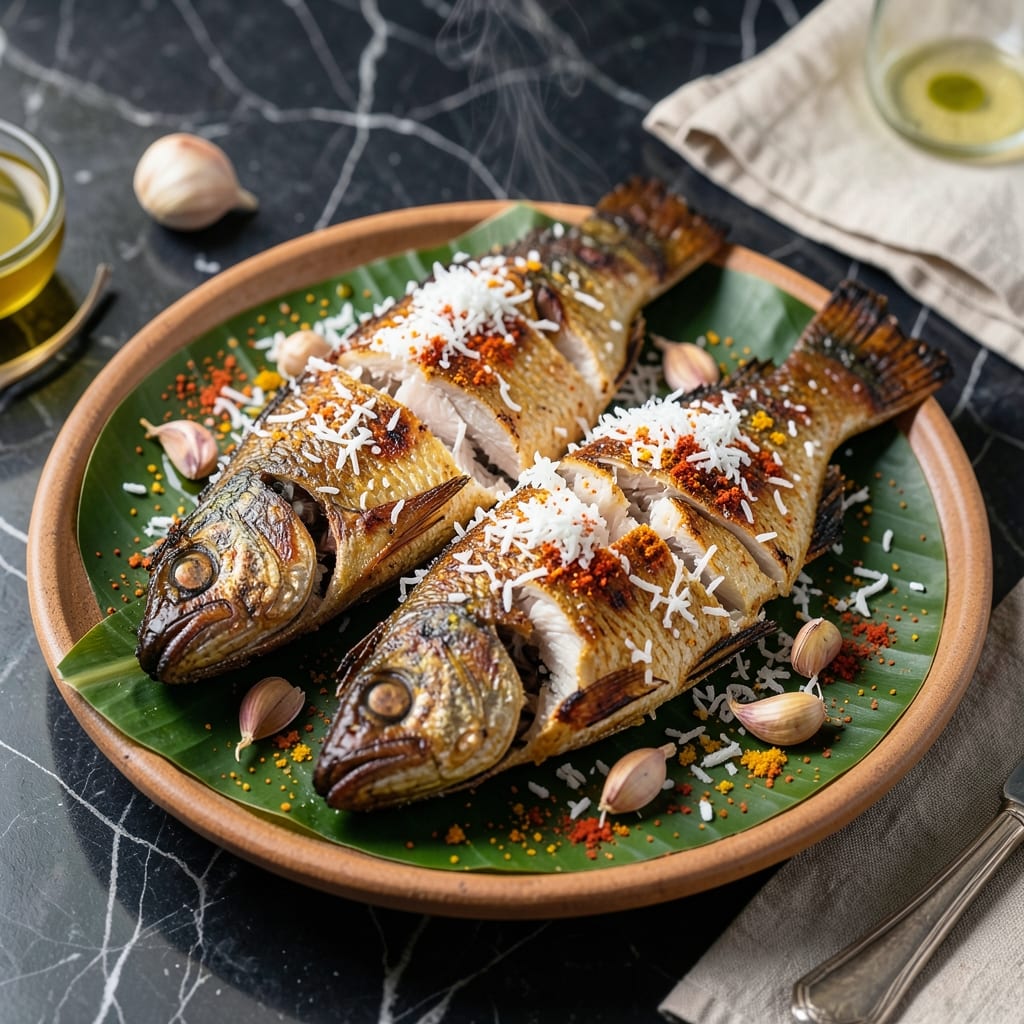
This Kerala-style pomfret fry delivers a crisp golden coating with a subtle coconut undertone that’s pure coastal tradition.
The secret lies in the marinade—a blend of turmeric, chili powder, and freshly grated coconut that infuses every bite with layered flavor. The fish is shallow-fried to achieve that ideal shatter when you cut into it.
What emerges is tender, flaky pomfret encased in a fragrant, perfectly textured crust that stays crisp long after frying. The coconut zest adds a unique regional twist that sets this apart from ordinary fried fish.
Serve hot with rice, lemon wedges, and a side of onion salad for the full experience. This is how Kerala does fried fish right.
Ingredients for Pomfret Fry Recipe Kerala
Pantry staples and fresh fish come together for this coastal Kerala classic.
| Ingredient | Amount | Notes |
|---|---|---|
| Pomfret 🐟 | 2 whole | Cleaned and scored, about 1 lb each |
| Turmeric Powder 🌿 | 1 tsp | For vibrant color and earthiness |
| Kashmiri Chili Powder 🌶️ | 2 tbsp | Mild and vibrant red color |
| Coriander Powder 🌿 | 1 tbsp | Freshly ground preferred |
| Fresh Coconut 🥥 | ½ cup | Grated or finely chopped |
| Garlic Cloves 🧄 | 6 cloves | Minced for marinade |
| Ginger 🌿 | 1 tbsp | Freshly grated for marinade |
| Green Chilies 🌶️ | 3 whole | Slit lengthwise, adjust to taste |
| Lemon Juice 🍋 | 2 tbsp | Freshly squeezed for brightness |
| Curry Leaves 🍃 | 10 pieces | Fresh for authentic flavor |
| Rice Flour 🌾 | ½ cup | For crisp coating |
| Salt 🧂 | 1 tsp | Adjust to taste |
| Coconut Oil 🫒 | 1 cup | For shallow frying |
| Coconut Zest 🥥 | 1 tbsp | Finely grated for garnish |
The pomfret needs to be fresh—look for bright eyes and firm flesh at your local fish market. If you can’t find pomfret, mackerel or sea bass work well too. The coconut should be fresh (the pre-packaged shredded kind won’t cut it). Most Indian grocery stores carry all the spices you need, but regular supermarkets work if you’ve got a well-stocked international aisle.
No Kashmiri chili powder? Regular chili powder plus a pinch of paprika gets you close. Fresh coconut can be swapped for frozen grated coconut (thaw it first). The rice flour is key for that shatter-crisp texture—don’t skip it. If you’re out of curry leaves, a bay leaf plus a pinch of asafoetida works in a pinch.
This is best eaten fresh and hot, straight from the pan. Leftovers keep in the fridge for 1-2 days, but the crust won’t stay as crisp. Reheat in a dry skillet to revive some of the crunch. The marinade can be prepped a day ahead—just add the coconut right before frying.
Why You’ll Love This Recipe
- Minimal Effort: I just rub the spices on the pomfret, let it sit, and fry—no fancy steps.
- Crispy Perfection: That Kashmiri chili and coconut combo? Ridiculously good with every bite.
- Weeknight Hero: Between us, it’s my go-to for quick dinners when time’s tight.
- Budget Friendly: One whole pomfret feeds four, and the spices are pantry staples I always have.
Step-by-Step Instructions for Pomfret Fry Kerala
Here’s how I get that perfect crispy coating with a tender inside every time.
Step 1: Prepare and Marinate the Pomfret
First, clean the 2 whole Pomfret thoroughly and make 3-4 diagonal slashes on each side. This helps the marinade penetrate and ensures even cooking. Pat them completely dry with paper towels—moisture is the enemy of crispiness.
In a bowl, combine the 1 tsp Turmeric Powder, 2 tbsp Kashmiri Chili Powder, 1 tbsp Coriander Powder, 6 cloves minced Garlic Cloves, 1 tbsp Ginger, 3 whole Green Chilies, 2 tbsp Lemon Juice, and 1 tsp Salt. Rub this mixture all over the pomfret, including inside the slashes. Let it marinate for 20-30 minutes. The fish should take on a vibrant red color as the spices work their magic.
Step 2: Coat with Coconut and Rice Flour
After marinating, gently press the 0.5 cup Fresh Coconut onto all sides of the pomfret, ensuring it sticks well to the spiced surface. This adds texture and authentic Kerala flavor. Then, sprinkle the 0.5 cup Rice Flour evenly over both sides, pressing lightly to create a thin, even coating.
The rice flour is key here—it gives that signature crispness without absorbing too much oil. Make sure every nook and cranny is covered, especially the slashes where the marinade pooled. Shake off any excess flour so it doesn’t burn in the oil.
Step 3: Shallow Fry to Golden Perfection
Heat the 1 cup Coconut Oil in a wide, heavy-bottomed pan over medium heat. You want enough oil to come about halfway up the sides of the fish. To test if it’s ready, drop in a pinch of rice flour—if it sizzles immediately, you’re good to go.
Carefully slide the fish into the hot oil and fry for 4-5 minutes per side until the coating turns deep golden brown and the edges look crispy. Don’t crowd the pan—fry one fish at a time if needed. The coconut should sizzle gently, not smoke aggressively.
I like to baste the fish with the hot oil occasionally to ensure even cooking. Add the 10 pieces Curry Leaves during the last 1-2 minutes of frying for an aromatic finish. They’ll crisp up beautifully in the oil.
Step 4: Drain, Garnish, and Serve
Once the pomfret is evenly golden and crisp, transfer it to a plate lined with paper towels to drain excess oil. The fish should flake easily when tested with a fork but hold its shape. Let it rest for 2-3 minutes so the coating sets.
Sprinkle the 1 tbsp Coconut Zest over the top just before serving. The zest adds a bright, citrusy note that cuts through the richness. Serve immediately while the coating is still at its crispiest—this dish doesn’t wait well, and that’s part of its charm.
Pro Tips For Making Pomfret Fry Recipe Kerala
- Score the Fish: Make shallow diagonal cuts on both sides of the pomfret—about 3-4 per side. This helps the spices penetrate deeper and prevents the fish from curling up while frying.
- Dry the Pomfret: Pat the fish completely dry with a paper towel before marinating. I learned this the hard way—wet fish steams instead of frying, leaving you with a soggy coating.
- Medium-Hot Oil: Heat the oil to medium-hot, not smoking. If it’s too hot, the outside burns before the inside cooks, and if it’s too cool, the fish absorbs oil like a sponge.
- Grate Fresh Coconut: Use freshly grated coconut instead of desiccated—it adds a moist, sweet contrast to the spices. Sounds like extra work, but it actually changes the outcome.
Creative Variations of This Recipe
Spicy Masala Twist
For extra heat, add 1 tsp black pepper powder and ½ tsp garam masala to the marinade. This creates a more complex spice profile that’s popular in Northern Kerala. The black pepper adds a sharp bite that pairs perfectly with the coconut. 🌶️
Crispy Semolina Coating
Replace rice flour with ½ cup semolina (rava) for an even crunchier texture. Semolina creates a slightly thicker crust that holds up well to sauces. I find it absorbs less oil, making the dish a bit lighter.
Tamarind Glaze
In the final 2 minutes of frying, drizzle 1 tbsp tamarind paste mixed with 1 tsp honey over the fish. This creates a tangy-sweet glaze that’s a signature of some coastal Kerala variations. The tamarind cuts through the richness beautifully.
Stuffed Pomfret
Make deeper slashes and stuff with a mixture of 2 tbsp grated coconut, 1 tbsp chopped cilantro, and 1 tsp green chili paste. This adds an extra layer of flavor with every bite. Secure with toothpicks before frying.
Air Fryer Method
For a healthier version, use an air fryer at 375°F for 12-15 minutes. Lightly spray the fish with coconut oil before air frying. Flip halfway through and add curry leaves in the last 3 minutes. The texture won’t be identical, but it’s still delicious. 💡
Mango Powder Kick
Add 1 tsp amchur (dry mango powder) to your marinade for a tangy twist. This is a trick I picked up from Mangalore-style preparations. The mango powder adds a subtle sourness that brightens all the other flavors.
Nutrition Facts
Frequently Asked Questions
What’s the best oil for authentic flavor?
Coconut oil is traditional and essential for that authentic Kerala taste. It complements the fish and spices perfectly. Avoid refined oils for the best results.
Can I use other fish instead of pomfret?
Yes! Mackerel or sea bass work well as substitutes. Just ensure the fish is fresh and firm. The cooking time may vary slightly based on thickness.
How do I keep the coating crispy?
Pat the fish completely dry before marinating. Fry in medium heat and avoid overcrowding the pan. Drain on paper towels immediately after frying.
Why add coconut zest at the end?
The zest adds a bright, citrusy note that balances the richness. It also enhances the aroma and gives that final touch of authenticity to the dish.

- Potato Candy Recipe 1933: Vintage Peanut Butter Roll Delight - October 30, 2026
- Potato Chip Cookie Recipe With Pecans: Buttery Crunch Meets Nutty Richness - October 30, 2026
- Potato Patty Recipe No Egg: Crispy Edges Without the Binder - October 30, 2026