
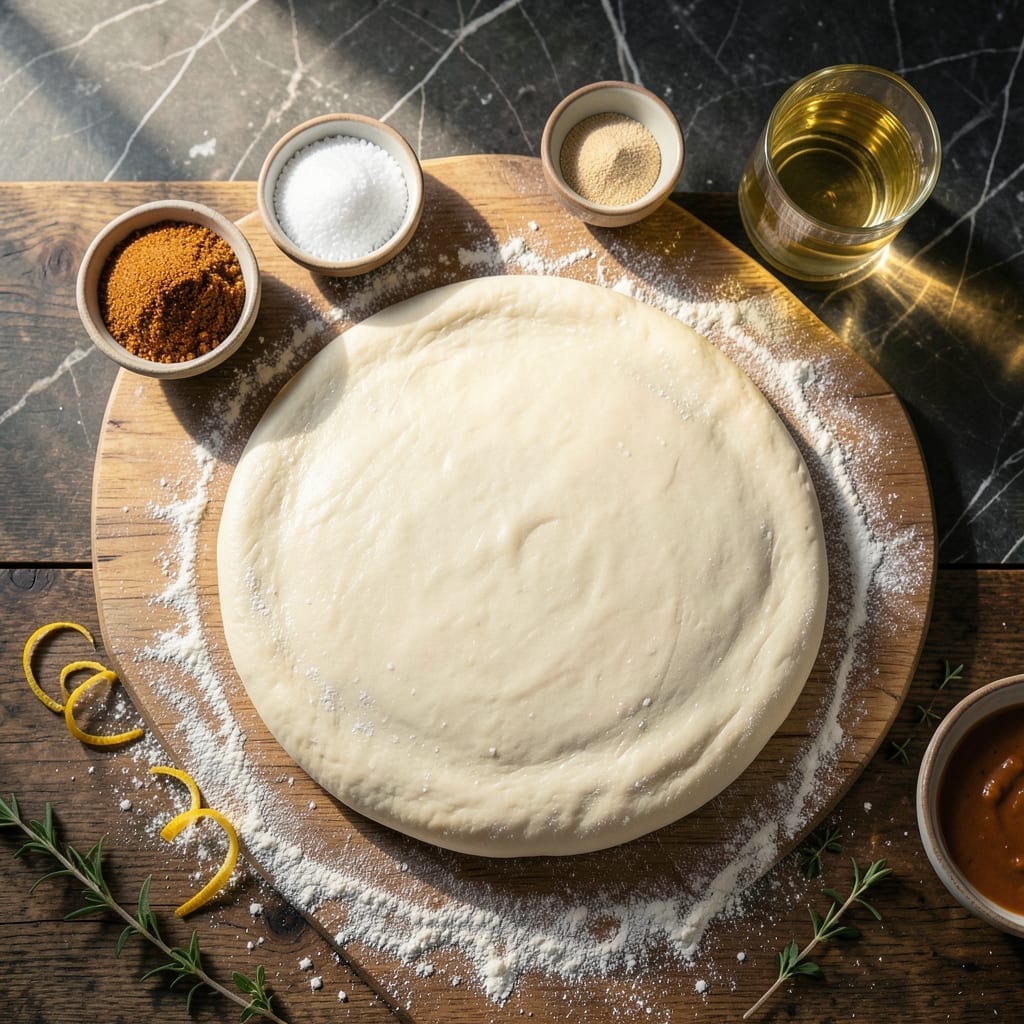
This no-oil pizza dough proves you don’t need fats to achieve a soft, elastic base that bakes up golden and tender. I developed this recipe after running out of olive oil mid-batch, and the results surprised even me.
The secret lies in precise hydration and a long, slow rise. Water replaces oil entirely, while a touch of sugar feeds the yeast for optimal lift. The dough comes together in minutes, then rests to build flavor and structure.
What emerges is a blank canvas for any topping—crisp on the bottom, chewy in the center, with enough strength to hold sauces and toppings without sagging. It’s foolproof and adaptable.
Make the dough the night before for deeper flavor, or use it same-day for convenience. Here’s how to craft the perfect foundation.
Ingredients for Pizza Dough Recipe No Olive Oil
Pantry staples and a little patience. No oil, no problem.
| Ingredient | Amount | Notes |
|---|---|---|
| All-Purpose Flour 🌾 | 3 ½ cups | Plus extra for dusting |
| Active Dry Yeast 🍞 | 2 ¼ tsp | One packet, proofed in warm water |
| Granulated Sugar 🍚 | 1 tsp | Feeds the yeast |
| Warm Water 💧 | 1 ½ cups | 110°F, divided |
| Salt 🧂 | 1 tsp | Kosher or fine sea salt |
| Cornmeal 🌽 | ¼ cup | For dusting baking surface |
| Nonstick Cooking Spray 🫒 | 1 can | Or oil for greasing bowl |
The flour is your foundation—King Arthur or Gold Medal work great. Don’t overthink the yeast; just check the expiration date (yes, it matters). Warm water should feel like a baby’s bath—too hot kills the yeast, too cold won’t wake it up. I use a thermometer for precision, but your wrist works in a pinch (should feel warm, not scalding).
No all-purpose flour? Bread flour adds chew but needs an extra splash of water. Out of cornmeal? Semolina or extra flour keeps it from sticking. Sugar can be swapped for honey (same amount), but stick to granulated if you’re vegan. The salt is non-negotiable—skipping it makes the dough taste flat.
Dough keeps in the fridge for 2-3 days (flavor gets better) or freezes for 1 month. Let it thaw overnight before shaping. Always bring it to room temp before stretching—cold dough tears.
Why You’ll Love This Recipe
- Five Ingredients Only: I love that I can make this with just flour, yeast, sugar, water, and salt—no last-minute grocery runs for olive oil.
- Crisp Yet Tender: The crust bakes up golden with a satisfying chew, and the sugar adds just the right hint of sweetness to balance savory toppings.
- Weeknight Hero: Honestly, it’s my go-to for impromptu movie nights or when the kids demand homemade pizza on a Tuesday.
- Pantry Staples: Between us, I always have these basics on hand, so it’s a reliable, budget-friendly option when takeout isn’t in the plan.
Step-by-Step Instructions for Pizza Dough with No Olive Oil
Here’s my tested method for creating the perfect base—soft, elastic, and ready for any topping.
Step 1: Activate the Yeast
In a small bowl, combine the 2.25 tsp Active Dry Yeast, 1 tsp Granulated Sugar, and ½ cup of the 1.5 cups Warm Water. Let it sit for 5-10 minutes until the mixture becomes frothy and bubbly. This is your visual cue that the yeast is alive and ready to work.
I always check the water temperature—it should feel warm but not hot to the touch, around 110°F. If it’s too hot, you’ll kill the yeast; too cold, and it won’t activate. Stir once gently after 5 minutes to confirm those bubbles are forming consistently across the surface.
Step 2: Mix and Knead the Dough
In a large mixing bowl, combine the 3.5 cups All-Purpose Flour and 1 tsp Salt. Make a well in the center and pour in the yeast mixture along with the remaining 1 cup Warm Water. Stir with a wooden spoon until a shaggy dough forms.
Turn the dough onto a lightly floured surface and knead for 8-10 minutes until smooth and elastic. You’ll know it’s ready when the dough springs back slowly when pressed with your finger. If it sticks, dust with a bit more flour, but don’t overdo it—too much flour makes the dough tough.
Step 3: First Rise in a Greased Bowl
Lightly grease a large bowl with the Nonstick Cooking Spray and place the dough inside, turning once to coat the surface. Cover with a clean kitchen towel and let it rise in a warm, draft-free place for 1 to 1.5 hours, or until it has doubled in size.
I like to place my bowl near a sunny window or on top of the fridge where it’s slightly warmer. The dough should look puffy and jiggle slightly when you gently shake the bowl. If your kitchen is cold, this might take closer to 2 hours, but don’t rush it—proper rising is key to that soft texture.
Step 4: Shape and Second Rise
Punch down the risen dough to release the air and turn it onto a surface dusted with the 0.25 cup Cornmeal. The cornmeal adds a subtle crunch and prevents sticking when you transfer the dough to your baking sheet later.
Divide the dough into 4 equal portions for individual pizzas or leave it whole for a large pie. Shape each portion into a ball, then flatten and stretch into your desired shape. Let the dough rest for 10-15 minutes before adding toppings—this relaxes the gluten for easier shaping and prevents shrinking during baking.
Step 5: Pre-Bake or Top and Bake
For extra crispiness, you can pre-bake the shaped dough at 400°F for 5-7 minutes before adding toppings. Otherwise, add your sauce, cheese, and toppings directly to the shaped dough and bake as usual.
Look for the edges to turn light golden brown and the crust to puff slightly. The cornmeal on the bottom will create a lovely, slightly crispy texture that complements the soft, chewy interior. Let it cool for 2-3 minutes before slicing to allow the cheese to set.
Pro Tips For Making Pizza Dough Recipe No Olive Oil
- Test Yeast First: Always bloom your active dry yeast in the warm water with sugar for 5-10 minutes—if it doesn’t foam, your dough won’t rise and you’ll waste flour.
- Use Hotter Water: Since there’s no oil to keep the dough tender, use water around 110°F (not just warm) to activate the yeast faster and get a better rise.
- Skip Cold Flour: I learned this the hard way—cold flour straight from the bag can shock the yeast, so let it sit at room temp for 15 minutes before mixing.
- Add Sugar Last: Hold off on adding sugar until after the yeast blooms to avoid over-feeding it early, which can make the dough rise too fast and collapse.
Perfect Pairings for This Recipe
Simple Salad Pairings
A crisp arugula salad with lemon vinaigrette cuts through the richness. Toss 4 cups baby arugula with 2 tbsp olive oil, 1 tbsp lemon juice, and shaved Parmigiano-Reggiano. Honestly, this combo never fails me. 🥗
Wine Recommendations
For white lovers, Pinot Grigio from Italy offers bright acidity that complements the dough’s simplicity. Prefer red? A light Chianti with its cherry notes pairs beautifully without overwhelming the crust. I grab mine from New Seasons Market.
Beer Options
A crisp Italian lager like Peroni cleanses your palate between slices. For craft fans, Portland’s Ecliptic Brewing Starburst IPA adds a citrusy contrast. The carbonation works wonders with the chewy texture.
Appetizer Ideas
Start with garlic knots made from extra dough—toss with melted butter and minced garlic. Or serve marinated olives from the farmers market. These small bites buy time while the oven preheats.
Dessert Pairings
End with tiramisu or cannoli for a classic Italian finish. The coffee in tiramisu contrasts nicely with the savory flavors. I make mine with Mascarpone from Local butchers for that authentic touch. 💫
Nutrition Facts
Frequently Asked Questions
Can I use a stand mixer for kneading?
Use the dough hook attachment on low speed for 6-8 minutes. The dough should pull away from the bowl sides and feel elastic.
Why did my dough not rise?
Check your yeast expiration date first. If that’s fine, the water may have been too hot or cold. Ideal temperature is 110°F—warm but not scalding.
Can I make this dough ahead?
Yes! Refrigerate the dough after kneading for up to 2-3 days. The flavor improves with time. Bring to room temp before shaping.
What if my dough tears when stretching?
Let it rest for 10-15 minutes to relax the gluten. If it’s still difficult, use your hands to gently press from the center outward.

- Potato Candy Recipe 1933: Vintage Peanut Butter Roll Delight - October 30, 2026
- Potato Chip Cookie Recipe With Pecans: Buttery Crunch Meets Nutty Richness - October 30, 2026
- Potato Patty Recipe No Egg: Crispy Edges Without the Binder - October 30, 2026