
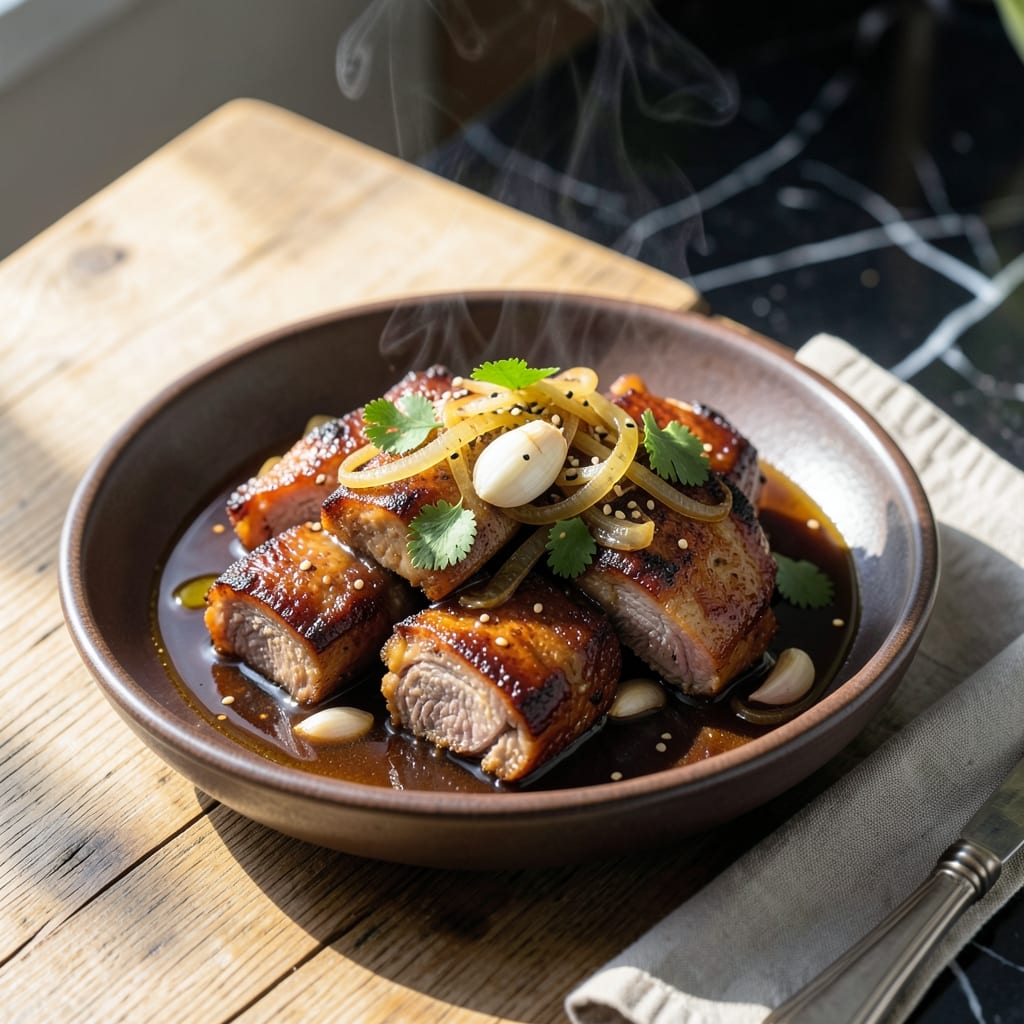
This Hawaiian-inspired braise brings a tropical twist to the classic Filipino adobo. The balance of tangy vinegar, salty soy, and island flavors creates a dish that’s both familiar and exciting.
I’ve spent years perfecting this method, and the key lies in the slow simmer. The pork absorbs every bit of flavor from the marinade, becoming incredibly tender while the sauce reduces to a rich, glossy glaze.
What you get is fall-off-the-bone meat in a sauce that’s perfectly balanced between sweet, sour, and savory. The addition of local ingredients gives it that distinct Hawaiian character.
Serve this with steamed rice to soak up every last drop of the delicious sauce. The results are always worth the wait.
Ingredients for Pork Adobo Recipe Hawaii
Rich, tangy, and packed with island flavors. Everything you need for this braise.
| Ingredient | Amount | Notes |
|---|---|---|
| Pork Shoulder 🐖 | 2 lb | Cut into 2-inch chunks |
| Soy Sauce 🥫 | ¾ cup | Regular or low-sodium |
| White Vinegar 💧 | ¾ cup | Cane vinegar preferred |
| Brown Sugar 🍚 | ¼ cup | Packed, for sweetness |
| Garlic Cloves 🧄 | 8 cloves | Minced for depth |
| Yellow Onion 🧅 | 1 whole | Sliced into strips |
| Bay Leaves 🌿 | 3 pieces | Dried, for aroma |
| Black Peppercorns 🌶️ | 1 tsp | Crushed for freshness |
| Pineapple Juice 🍍 | ½ cup | For tropical touch |
| Green Onions 🧅 | 4 pieces | Thinly sliced, for garnish |
| Ginger Root 🌿 | 1 tbsp | Fresh, peeled and minced |
| Vegetable Oil 🫒 | 2 tbsp | For searing pork |
The pork should have good marbling—pork shoulder or butt works best and stays tender after the long simmer. Costco or Sam’s Club are great for bulk cuts (just freeze what you don’t use). For the vinegar, cane vinegar is traditional in Filipino cooking, but any white vinegar works in a pinch. I like Kikkoman soy sauce, but whatever you’ve got in the pantry is fine too.
Out of brown sugar? Coconut sugar or honey (if not vegan) adds a similar depth. No pineapple juice? Orange juice at half the amount brings a nice sweetness. Fresh ginger is ideal, but ground ginger at one-quarter the amount works if you’re desperate. The bay leaves are worth hunting down—they add a subtle complexity that dried thyme just can’t replicate.
This tastes even better the next day. Keeps in the fridge for up to 5 days or freezes for 3 months. The sauce thickens as it cools, so warm it gently with a splash of water if needed (worth the extra minute).
Why You’ll Love This Recipe
- One Pot Wonder: I dump everything in a single pot—pork shoulder, soy sauce, vinegar—and let the simmering do the work.
- Umami Bomb: The garlic and soy sauce hit that sweet-savory spot, with just enough vinegar to cut through.
- Meals for Days: This tastes even better the next day, so I always double the batch for lunches.
- Budget Feeder: Pork shoulder stays cheap, and a little goes a long way with all that rich adobo sauce.
Step-by-Step Instructions for Pork Adobo Hawaii
This method builds layers of flavor while keeping the process simple and foolproof.
Step 1: Sear the Pork Shoulder
Heat the 2 tbsp vegetable oil in a large pot or Dutch oven over medium-high heat. Add the 2 lb pork shoulder chunks in a single layer, working in batches if needed. Sear undisturbed for 3-4 minutes per side until deeply browned.
You want a rich, caramelized crust—this adds depth to the final dish. Don’t overcrowd the pot, or the meat will steam instead of sear. Once browned, transfer the pork to a plate and set aside.
Step 2: Build the Aromatic Base
In the same pot, add the 1 whole yellow onion (sliced into strips) and cook for 3-4 minutes until softened and translucent. Stir in the 8 cloves garlic cloves (minced) and 1 tbsp ginger root (peeled and minced), cooking for 1 minute until fragrant.
Next, add the 0.25 cup brown sugar and stir until it dissolves into the onions, creating a glossy base. This step ensures the sweetness melts evenly, balancing the tangy vinegar later.
Step 3: Add Liquids and Simmer
Pour in the 0.75 cup soy sauce, 0.75 cup white vinegar, 0.5 cup pineapple juice, 3 pieces bay leaves, and 1 tsp black peppercorns (crushed). Stir to combine, scraping up any browned bits from the bottom of the pot.
Return the seared pork to the pot, along with any accumulated juices. Bring the mixture to a boil, then reduce the heat to low. Cover and simmer for 1.5 to 2 hours, stirring occasionally, until the pork is fork-tender.
Step 4: Reduce the Sauce and Finish
Once the pork is tender, uncover the pot and increase the heat to medium. Simmer for an additional 10-15 minutes until the sauce thickens slightly and coats the back of a spoon.
Taste and adjust seasoning if needed—though the balance of sweet, salty, and tangy should already be perfect. Remove the 3 pieces bay leaves before serving.
Step 5: Garnish and Serve
Transfer the pork and sauce to a serving dish. Sprinkle with the 4 pieces green onions (thinly sliced) for a fresh, vibrant finish.
Serve hot over steamed rice, allowing the rich, island-inspired sauce to soak into every bite. The pork should be meltingly tender, and the sauce should have a glossy, slightly syrupy consistency.
Pro Tips For Making Pork Adobo Recipe Hawaii
- Brown the Pork: Sear the pork shoulder in batches over medium-high heat until deeply browned—about 4-5 minutes per side. This builds a rich fond that makes the adobo sauce taste like it simmered for hours.
- Balance the Vinegar: I learned this the hard way—add the white vinegar at the end of cooking, not the beginning, or it’ll turn the pork tough. Stir it in during the last 10 minutes for brightness without the bite.
- Crush the Garlic: Skip mincing and crush the garlic cloves with the flat of your knife instead. It releases more oils into the sauce, giving that bold Hawaiian adobo flavor with half the effort.
- Reduce the Sauce: After the pork is tender, remove it and boil the sauce for 5-7 minutes until it thickens slightly. Sounds weird, but it works—this keeps the dish from being watery and coats every piece.
Dietary Considerations for pork adobo recipe hawaii
Gluten-Free Adaptation
This dish is naturally gluten-free when made with tamari or certified gluten-free soy sauce. I recommend San-J brand for consistently reliable results. Always check your vinegar and pineapple juice labels too, as some brands may process with gluten-containing equipment. 💪
Low-Sodium Option
Cut the soy sauce by half and replace with low-sodium soy sauce. Boost flavor with an extra 1 tbsp ginger and 2 crushed garlic cloves. The pineapple juice adds natural sweetness, so you won’t miss the salt. I’ve tested this version—still packed with island flavor.
Dairy-Free and Vegan
Swap the pork shoulder for 2 lb mushrooms (cremini or shiitake) or tofu cubes. Use coconut aminos instead of soy sauce for a completely plant-based version. The braising method remains identical—just reduce simmer time to 30-45 minutes.
Diabetic Considerations
Replace the ¼ cup brown sugar with 2 tbsp erythritol or your preferred sugar substitute. The pineapple juice already provides natural sweetness. Monitor portion sizes, as the sauce contains concentrated flavors. I often serve this with cauliflower rice to reduce carbs.
Allergy Notes
This recipe is nut-free, dairy-free, and egg-free by default. The only potential allergen is soy (from the soy sauce). For soy allergies, use coconut aminos instead. Always verify ingredient labels for cross-contamination warnings.
Nutrition Facts
Frequently Asked Questions
Can I use chicken instead of pork?
Use 2 lb bone-in chicken thighs and reduce simmer time to 45 minutes. The flavors work beautifully with poultry.
Why does the sauce need time to reduce?
Reducing concentrates the flavors and thickens the sauce. Skipping this step leaves it watery and less flavorful. 10-15 minutes makes all the difference.
What if my sauce is too salty?
Balance it with a splash of pineapple juice or a pinch of brown sugar. Taste as you go—it’s easier to add than fix.
Can I make this in a slow cooker?
Yes! Sear the pork first, then cook on low for 6-8 hours. Skip the sauce reduction step—it’ll thicken naturally.

- Potato Candy Recipe 1933: Vintage Peanut Butter Roll Delight - October 30, 2026
- Potato Chip Cookie Recipe With Pecans: Buttery Crunch Meets Nutty Richness - October 30, 2026
- Potato Patty Recipe No Egg: Crispy Edges Without the Binder - October 30, 2026