
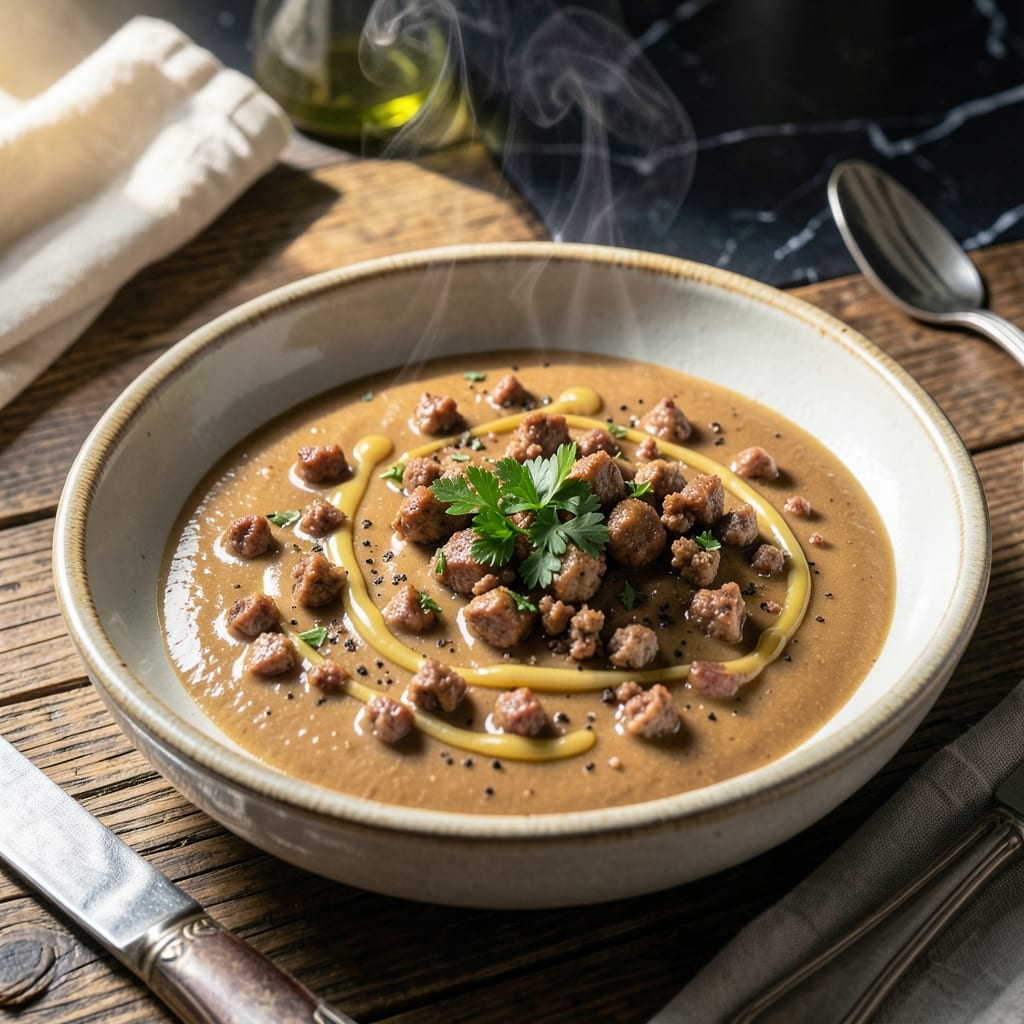
Creating rich pork gravy without drippings is simpler than you think. This homemade version uses a flavorful pork base and a few pantry staples to achieve that classic depth.
I developed this method after years of testing in professional kitchens, perfecting a technique that delivers restaurant-quality results without the traditional pan drippings. The key is building layers of savory flavor through careful seasoning and reduction.
The result is a velvety, deeply flavored gravy that pairs perfectly with mashed potatoes, biscuits, or roasted meats. It’s the same rich taste you’d expect from a Sunday dinner, made accessible for any day of the week.
No special equipment needed—just a saucepan and about 20 minutes of your time. Here’s how to make it.
Ingredients for Pork Gravy Recipe No Drippings
Nine pantry-friendly staples build deep, savory flavor without traditional drippings.
| Ingredient | Amount | Notes |
|---|---|---|
| Pork Stock 🍲 | 2 cups | Low-sodium preferred for control |
| All-Purpose Flour 🌾 | 3 tbsp | For thickening the gravy |
| Unsalted Butter 🧈 | 3 tbsp | Creates rich, velvety texture |
| Ground Pork Sausage 🐖 | ½ lb | Browns for deep pork flavor |
| Worcestershire Sauce 🫒 | 1 tbsp | Adds umami depth (check for anchovies if avoiding fish) |
| Dijon Mustard 🟡 | 1 tsp | Sharp tang balances richness |
| Kosher Salt 🧂 | 1 tsp | Diamond Crystal preferred for consistency |
| Freshly Ground Black Pepper 🌶️ | ½ tsp | Essential for classic gravy flavor |
| Dried Thyme 🌿 | ½ tsp | Earthy note complements pork |
| Garlic Powder 🧄 | ½ tsp | Savory depth without moisture |
The pork stock is your foundation—homemade is ideal but Better Than Bouillon or Swanson work in a pinch (go for low-sodium). The sausage should be plain ground pork (not Italian seasoned) for clean flavor. I grab mine from Whole Foods since their pork is consistently high quality. For the butter, European-style (higher fat content) gives the silkiest texture.
No pork stock? Chicken stock plus 1 tsp bacon fat gets you close. Skip the sausage? Crumbled bacon or smoked paprika adds that porky depth. The flour can be gluten-free 1:1 blend—just whisk vigorously to avoid lumps. For extra richness, a splash of heavy cream at the end is chef’s secret (not traditional, but delicious).
Gravy thickens as it cools. Store in an airtight container for up to 4 days in the fridge, or freeze for 3 months. Reheat gently with a splash of water to restore that velvety consistency.
Why You’ll Love This Recipe
- No Drippings Needed: I love that this skips the whole pan-drippings step—just brown the sausage, whisk in flour and butter, and let the pork stock work its magic.
- Rich & Savory: The combo of pork sausage and Worcestershire gives it a deep, meaty flavor that’s way more exciting than plain gravy.
- Weeknight Hero: Honestly, it’s my go-to for mashed potatoes or biscuits on busy evenings—ready before the kids start asking what’s for dinner.
- Budget Stretcher: One batch makes enough for leftovers, and ground pork sausage keeps it affordable without skimp on taste.
Step-by-Step Instructions for Pork Gravy No Drippings
Here’s my method for building deep flavor without relying on pan drippings.
Step 1: Brown the Ground Pork Sausage
Heat a heavy-bottomed saucepan over medium heat and add the 0.5 lb Ground Pork Sausage. Break it up with a wooden spoon and cook for 5-7 minutes, stirring occasionally, until the meat is fully browned and crumbled into small, uniform pieces.
You’ll notice the sausage starts to render its fat—this is exactly what we want. The browned bits at the bottom of the pan (fond) will dissolve into the gravy later, creating that rich, meaty base. Once the sausage is no longer pink and has developed a light crust, you’re ready for the next step.
Step 2: Create a Roux with Butter and Flour
Reduce the heat to medium-low and add the 3 tbsp Unsalted Butter to the pan with the browned sausage. Stir until the butter melts completely, which should take about 1 minute.
Next, sprinkle in the 3 tbsp All-Purpose Flour and stir constantly for 2-3 minutes to cook the flour. You’re looking for a light golden color—this indicates the flour is toasted enough to remove its raw taste but not so dark that it overpowers the gravy. The mixture should resemble wet sand and smell slightly nutty.
Step 3: Deglaze and Build the Gravy Base
Slowly pour in the 2 cups Pork Stock, a little at a time, while whisking continuously to prevent lumps. This gradual addition ensures the roux incorporates smoothly into the liquid. Once all the stock is added, increase the heat to medium-high.
Stir in the 1 tbsp Worcestershire Sauce, 1 tsp Dijon Mustard, 1 tsp Kosher Salt, 0.5 tsp Freshly Ground Black Pepper, 0.5 tsp Dried Thyme, and 0.5 tsp Garlic Powder. Bring the mixture to a gentle boil, then reduce the heat to medium-low to maintain a steady simmer.
Step 4: Simmer to Perfection
Let the gravy simmer uncovered for 8-10 minutes, stirring occasionally. You’ll see it gradually thicken as the roux does its work. The gravy should coat the back of a spoon and leave a clear path when you run your finger through it.
Taste and adjust the seasoning if needed—I often find the sausage and pork stock provide enough salt, but the Kosher Salt helps balance the flavors. If the gravy seems too thick, add a splash of water or additional pork stock. If it’s too thin, let it simmer a few minutes longer.
Step 5: Strain and Serve
For an ultra-smooth gravy, strain it through a fine-mesh sieve to remove any remaining bits of sausage or herbs. This step is optional—if you prefer a rustic texture, skip the straining and serve it as is.
Transfer the gravy to a serving bowl or gravy boat while it’s still hot. It will continue to thicken slightly as it cools. Serve immediately over mashed potatoes, biscuits, or your favorite pork dish. The rich, savory flavor of this homemade gravy will elevate any meal.
Pro Tips For Making Pork Gravy Recipe No Drippings
- Brown the Sausage Well: Cook the ground pork sausage until deeply browned, not just gray—this builds the flavor base your gravy needs since there are no drippings. I learned this the hard way when my first batch tasted flat.
- Use Cold Stock: Add cold pork stock to your roux instead of hot to prevent lumps and give you more control over thickness. Sounds weird, but it works.
- Skip the High Heat: Keep your roux at medium-low heat to avoid burning the flour, which can make the gravy bitter. After scorching one batch, I finally figured out patience pays off here.
- Bloom the Worcestershire: Stir the Worcestershire sauce into the cooked sausage and let it simmer for 1-2 minutes before adding stock—this deepens the umami flavor in your gravy. My grandmother swore by this, and she was right.
Pro Cooking Tips for Perfect Results
Roux Perfection
Cook your roux for exactly 2-3 minutes at medium-low heat—just until golden. I use a light-colored saucepan to monitor the color easily. Undercooked flour tastes raw, while overcooked can make gravy bitter. David always notices when I nail this step. 🌟
Stock Temperature
Use room-temperature pork stock to prevent the roux from seizing up. Cold stock causes the fat to solidify, creating lumps. I keep a Better Than Bouillon paste in my pantry for emergencies—just dissolve 2 tsp in 2 cups hot water.
Whisking Technique
Pour stock in slowly while whisking constantly in a figure-eight motion. This creates a vortex that fully incorporates the roux. I tested this with a flat whisk versus a balloon whisk—both work, but the flat one reaches pan corners better.
Seasoning Balance
Taste before final seasoning. The Worcestershire and Dijon add saltiness, so you may need less Kosher Salt. I often add ½ tsp at a time, then adjust. Remember, flavors intensify as gravy reduces.
Consistency Check
Test thickness by running a spoon through the gravy. It should leave a clean path that slowly closes. If too thick, add 1 tbsp hot water at a time. If too thin, simmer 2-3 more minutes. 💡
Straining Tip
For silky gravy, press the sausage bits in the strainer with a spoon to extract maximum flavor. I use a fine-mesh sieve from OXO—it fits perfectly over my saucepan. Skip straining if you prefer a heartier texture.
Nutrition Facts
Frequently Asked Questions
What can I use if I don’t have pork stock?
Chicken stock plus 1 tsp bacon fat makes a great substitute. For extra depth, add a pinch of smoked paprika or a splash of liquid smoke.
Can I make this gluten-free?
Yes! Swap the all-purpose flour for a gluten-free 1:1 baking blend. Whisk vigorously to avoid lumps, and let it simmer a few extra minutes to thicken properly.
Why is my gravy lumpy?
Lumps usually mean the stock was added too quickly or the roux wasn’t smooth. Fix it by whisking vigorously or straining through a fine-mesh sieve.
How do I thin out gravy that’s too thick?
Add warm liquid—1 tbsp at a time—until it reaches your desired consistency. Water, stock, or even milk work well. Stir between additions.

- Potato Candy Recipe 1933: Vintage Peanut Butter Roll Delight - October 30, 2026
- Potato Chip Cookie Recipe With Pecans: Buttery Crunch Meets Nutty Richness - October 30, 2026
- Potato Patty Recipe No Egg: Crispy Edges Without the Binder - October 30, 2026