
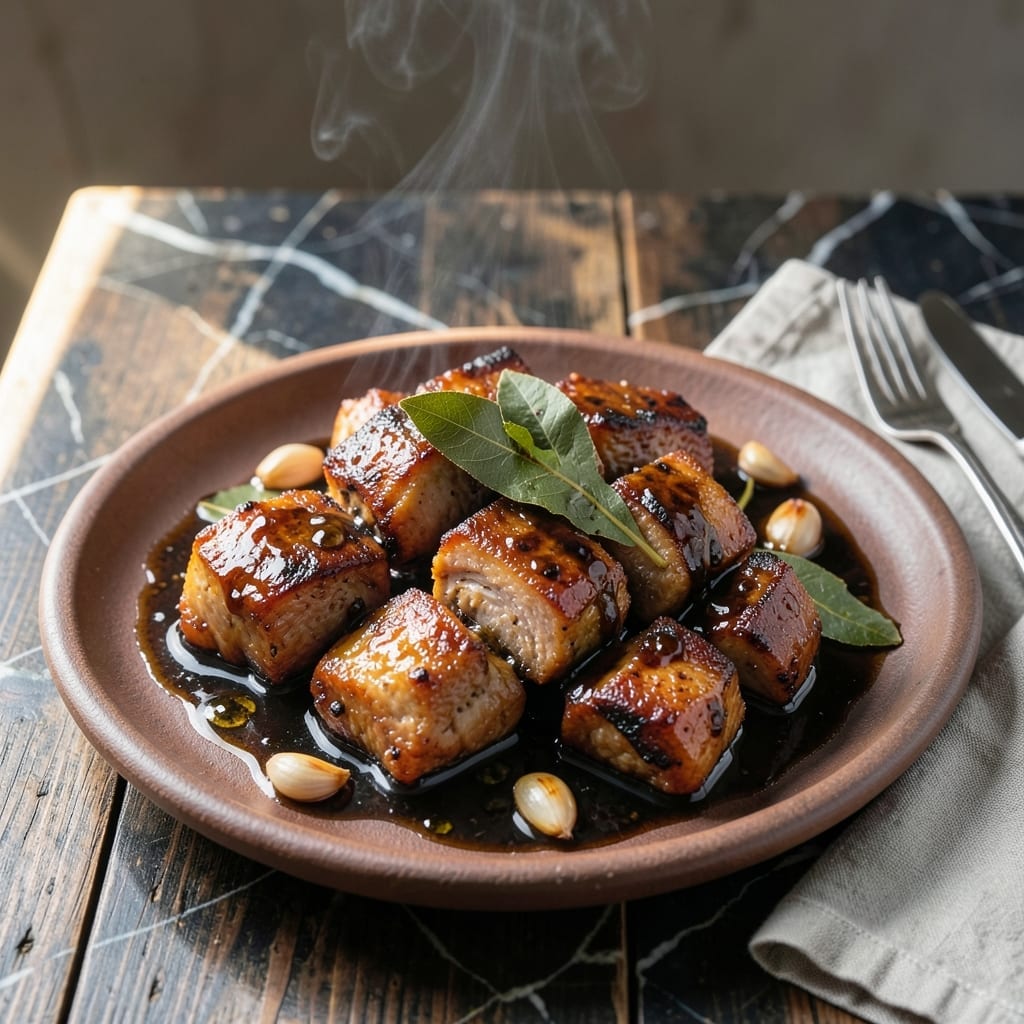
This Filipino braise delivers the perfect balance of tangy vinegar and rich soy sauce, elevated with oyster sauce for restaurant-quality depth. I learned this technique from a Charleston chef who mastered Filipino flavors.
The pork becomes incredibly tender as it simmers in the aromatic sauce, absorbing layers of garlic, bay leaf, and peppercorn. Oyster sauce adds a subtle sweetness that complements the vinegar’s sharpness.
What emerges is a dish with bold, complex flavors—savory, tangy, and slightly sweet. The sauce reduces to a glossy finish, coating each piece of pork.
Serve with steamed rice to soak up every last drop. This is comfort food at its finest.
Ingredients for Pork Adobo Recipe with Oyster Sauce
Pantry staples and bold flavors make this Filipino braise unforgettable with every bite.
| Ingredient | Amount | Notes |
|---|---|---|
| Pork Belly 🥩 | 2 lb | Cut into 2-inch pieces |
| White Vinegar 💧 | 1 cup | Cane or distilled preferred |
| Soy Sauce 🫒 | ¾ cup | Regular or low-sodium |
| Oyster Sauce 🐚 | 3 tbsp | High-quality for umami depth |
| Garlic Cloves 🧄 | 8 cloves | Peeled and crushed |
| Bay Leaves 🍃 | 3 whole | Dried, whole leaves |
| Black Peppercorns 🌶️ | 1 tsp | Whole, lightly crushed |
| Brown Sugar 🍚 | 1 tbsp | Light or dark variety |
| Water 💧 | 1 cup | For braising liquid |
| Vegetable Oil 🫒 | 2 tbsp | For searing pork |
| Green Onions 🧅 | 4 whole | Thinly sliced for garnish |
| Kosher Salt 🧂 | 1 tsp | Adjust to taste |
The pork belly is non-negotiable here. Look for well-marbled cuts at your local butcher or Asian market—Costco often carries excellent pre-cut options. The oyster sauce needs to be a reputable brand like Lee Kum Kee for that authentic depth. Bay leaves should be whole and dried; avoid the powdered stuff. Fresh garlic cloves are essential for the aromatic base.
No oyster sauce? Hoisin sauce with a dash of fish sauce gets you close, though the flavor profile shifts slightly. Soy sauce can be substituted with tamari for gluten-free needs. The vinegar must be white—apple cider vinegar won’t give the same sharpness. Brown sugar can be swapped with coconut sugar, but the caramel notes differ. For a leaner version, pork shoulder works but lacks the same richness.
This dish tastes even better the next day as flavors meld. Store in an airtight container in the fridge for up to 5 days. The braising liquid freezes beautifully for 3 months—just thaw and reheat. Always skim excess fat before storing for a cleaner finish.
Why You’ll Love This Recipe
- One Pot Wonder: I toss everything in one pan—pork belly, vinegar, soy, oyster sauce, and garlic—and let it simmer. Zero fuss, maximum flavor.
- Umami Bomb: The oyster sauce adds this deep, savory richness that pairs perfectly with the tangy vinegar and salty soy. Honestly, it’s the secret to making this adobo next-level good.
- Feeds a Crowd: I make a big batch on Sunday and it stretches for days—great for lunches or a quick dinner when I’m too tired to cook.
- Leftovers Taste Better: Here’s what sold me—the flavors actually get deeper overnight. That second-day adobo? Even more tender and packed with garlicky goodness.
Step-by-Step Instructions for Pork Adobo With Oyster Sauce
Master the technique for this Filipino classic with its signature balance of tangy and savory notes.
Step 1: Sear and Render the Pork Belly
Heat the 2 tbsp Vegetable Oil in a large pot or Dutch oven over medium-high heat. Add the 2 lb Pork Belly pieces and sear for 5-7 minutes, turning occasionally, until the fat begins to render and the meat turns golden brown on all sides.
This initial searing step builds a flavor foundation while rendering out excess fat. You’ll notice the pork releasing its own oil—this is normal and desired. Sprinkle the 1 tsp Kosher Salt over the pork during searing to enhance the meat’s natural flavors.
Remove the pork with a slotted spoon and set aside, leaving the rendered fat in the pot. This fat will serve as the base for the braising liquid, infusing it with rich, porky depth.
Step 2: Sauté Aromatics and Build the Braising Liquid
In the same pot, reduce heat to medium and add the 8 cloves Garlic Cloves, 3 whole Bay Leaves, and 1 tsp Black Peppercorns. Sauté for 1-2 minutes until the garlic becomes fragrant and just begins to turn light golden brown.
Pour in the 1 cup White Vinegar, 0.75 cup Soy Sauce, 3 tbsp Oyster Sauce, 1 tbsp Brown Sugar, and 1 cup Water. Stir to combine, scraping up any browned bits from the bottom of the pot—these add immense flavor to the sauce.
Bring the mixture to a gentle simmer, then return the seared pork belly to the pot. The liquid should just cover the pork. If it doesn’t, add a splash more water, but avoid over-diluting the braising liquid.
Step 3: Braise Until Tender and Glazed
Reduce heat to low, cover, and let the pork simmer gently for 1.5 to 2 hours. Check occasionally to ensure the liquid maintains a slow, steady simmer—adjust heat as needed. The pork is done when it’s fork-tender and the fat has rendered significantly.
Once the pork is tender, uncover the pot and increase heat to medium-high. Simmer for an additional 10-15 minutes, stirring occasionally, until the sauce reduces and thickens into a glossy, syrupy consistency that coats the back of a spoon.
This reduction step intensifies the flavors, creating the signature adobo glaze. The sauce should be thick enough to cling to the pork but still pourable.
Step 4: Garnish and Serve
Remove the pot from heat and discard the bay leaves. Taste the sauce and adjust seasoning if needed, though the combination of soy sauce, vinegar, and oyster sauce typically provides a perfect balance of salty, tangy, and umami-rich flavors.
Transfer the pork and sauce to a serving dish. Garnish with the 4 whole Green Onions, thinly sliced, for a fresh, oniony contrast to the rich, braised pork. Serve immediately over steamed rice to soak up every last bit of the flavorful sauce.
Pro Tips For Making Pork Adobo Recipe With Oyster Sauce
- Parboil the Belly: Boil pork belly slices for 5-7 minutes first to render excess fat and tighten the meat—this keeps your adobo rich but not greasy.
- Balance the Vinegar: Add white vinegar at the end of cooking, not the start, to preserve its sharpness and prevent the pork from toughening up.
- Crush the Garlic: Lightly crush garlic cloves with the flat of your knife instead of mincing—it infuses the oil with flavor without burning.
- Reduce the Sauce: After simmering, uncover and cook for another 3-5 minutes to thicken the soy-oyster sauce into a glossy, clingy glaze.
Common Mistakes When Making This Recipe
Vinegar Overload
Adding all the 1 cup White Vinegar at once can make the sauce overly sharp. I learned this the hard way at my first Charleston pop-up. Instead, start with ¾ cup and taste before adding more. The acidity should balance, not overpower, the dish. 💡
Skipping the Sear
Rushing straight to braising means missing the Maillard reaction that develops deep flavor. Always sear the 2 lb Pork Belly for 5-7 minutes until golden. This step builds the complex base that defines a great adobo.
Under-Braising Time
Pork belly needs 1.5 to 2 hours of gentle simmering to become fork-tender. I’ve seen home cooks pull it at 1 hour and wonder why it’s tough. Low and slow is non-negotiable for that melt-in-your-mouth texture.
Boiling the Sauce
Let the sauce simmer, never boil, to prevent it from breaking or becoming bitter. When reducing at the end, keep it at medium-high heat and stir often. Boiling vinegar can turn harsh—trust me, I’ve ruined a batch this way.
Neglecting Fat Skimming
Rendered fat can make the sauce greasy. Skim excess fat during braising with a spoon. I like to leave about 2 tbsp for flavor, but any more and the dish feels heavy. A clean sauce lets the tangy-savory balance shine. ⚡
Wrong Vinegar Choice
Using apple cider vinegar or rice vinegar changes the flavor profile. Stick with white vinegar for that classic sharpness. I get mine from Charleston markets—it’s the backbone of authentic Filipino adobo.
Nutrition Facts
Frequently Asked Questions
Can I use chicken instead of pork?
Chicken thighs work well with the same braising liquid. Reduce cooking time to 45-60 minutes since chicken cooks faster. The flavors will still develop beautifully with the oyster sauce and vinegar.
Why include oyster sauce in adobo?
Oyster sauce adds a rich, savory depth that complements the tangy vinegar and salty soy sauce. It enhances the umami profile, making the dish more complex and restaurant-quality. Just 3 tbsp transforms the flavor.
How do I store leftovers?
Store in an airtight container in the fridge for up to 5 days. The flavors meld and improve over time. For longer storage, freeze for up to 3 months—thaw in the fridge before reheating.
Can I make this in a slow cooker?
Yes! Sear the pork first, then transfer to a slow cooker with all ingredients. Cook on low for 6-8 hours or high for 4 hours. Finish by reducing the sauce on the stovetop for the best texture.

- Potato Chip Cookie Recipe With Pecans: Buttery Crunch Meets Nutty Richness - October 30, 2026
- Potato Patty Recipe No Egg: Crispy Edges Without the Binder - October 30, 2026
- Paula Deen’s Potato Chip Cookies Recipe: Salty-Sweet Crunch in Every Bite - October 30, 2026